

By the end of this guide you will know how to find, book and use a telehealth psychiatrist in Australia (including bulk billing and Medicare pathways), which takes about 2–4 hours of active setup and initial bookings and assumes a basic comfort with video calls and online forms.
Telehealth psychiatrist services bring specialist psychiatric care to your device: this hands-on guide walks you step-by-step from searching to booking, understanding costs and using an online Mental Health Care Plan so you can access ongoing psychiatric support without unnecessary delay.
Before you start
- Device with camera and microphone (laptop, tablet or smartphone) and a stable internet connection (minimum 5 Mbps upload/download recommended).
- Your Medicare card, contact details for your GP, and any recent mental health reports or medication lists (dates and doses).
- A quiet, private room for sessions (15–45 minutes depending on consult type) and basic video platform familiarity (Zoom, Clinic platform or telehealth portal).
- An email address you check regularly and a payment method prepared if private fees apply.
What is a Telehealth Psychiatrist and How Does Telehealth Psychiatry Work?
This section explains what a telepsychiatry service is, who provides it and precisely how an online psychiatric consultation runs from referral to follow-up.
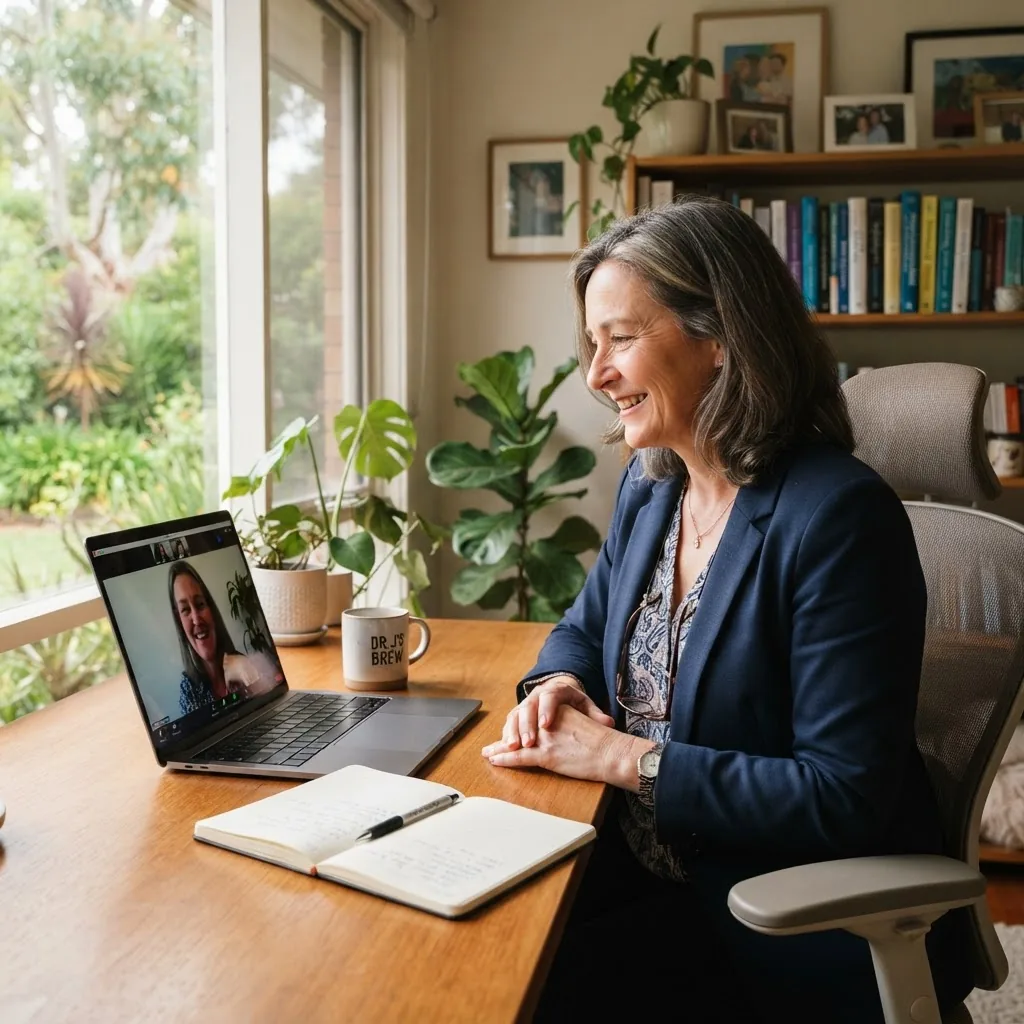
- Define who a telehealth psychiatrist is. A psychiatrist is a medical doctor who specialises in diagnosing and treating mental illness, permitted to prescribe medication and manage complex psychiatric conditions. In telehealth, the psychiatrist performs assessments, medication reviews and therapy planning by secure video or phone. For official standards on psychiatrist qualifications see RANZCP.
- Understand the consultation workflow. Typical telehealth psychiatry workflow:
- Referral or direct booking: some clinics accept GP referrals; others allow self-referral for first-time triage.
- Pre-assessment forms: complete questionnaires (PHQ-9, GAD-7) and medication history online 24–72 hours before the session.
- Initial video consultation (45–60 minutes) for diagnosis and treatment planning.
- Follow-up telehealth check-ins (15–30 minutes) and shared care communication with your GP for prescriptions and monitoring.
- Example patient scenario (case study). “Sarah”, a 34-year-old in suburban Sydney with escalating anxiety, used an online referral form, received a 60-minute initial telepsychiatry assessment within five business days, was started on a low-dose SSRI with a safety plan, and had fortnightly 20-minute telehealth reviews for medication adjustment. This mirrors typical timelines reported in regional telehealth rollout summaries (according to a 2023 Australian Government telehealth adoption report).
- Assessments and tools used. Telepsychiatrists use structured interviews, standardised rating scales (PHQ-9, GAD-7, CAARS for ADHD), and e-prescribing. Many clinics rely on secure telehealth platforms integrated with practice management systems; these platforms support document uploads, repeat prescriptions and Medicare claiming.
- Clinical scope and limitations. Telehealth is excellent for medication reviews, diagnostic assessments for mood/anxiety/ADHD, and psychotherapy integration. However, assessments requiring physical exam or immediate crisis management will trigger in-person or emergency pathways; a psychiatrist may recommend inpatient care if there is significant risk.
- Privacy, security and record keeping. Reputable clinics use encrypted video platforms and secure clinical records, with consent forms that explain telehealth risks. For Australian privacy obligations and telehealth advice, see the Department of Health.
- Where telehealth fits in a care pathway. Telepsychiatry often sits alongside your GP and psychologist in a shared-care model. The psychiatrist focuses on diagnosis, complex medication management and specialist recommendations while your GP or psychologist provides regular local follow-up and therapy.
- Training and qualifications. Psychiatrists hold medical degrees plus specialist training accredited by RANZCP. They maintain continuing professional development and telehealth competency. For detailed credential requirements see RANZCP. psychiatrist training and qualifications and mental health practitioner training.
Transition: Now that you know how telehealth psychiatry works, let’s look at the concrete advantages that make this a practical option for Australians.
Benefits of Using Telehealth Psychiatrist Services in Australia
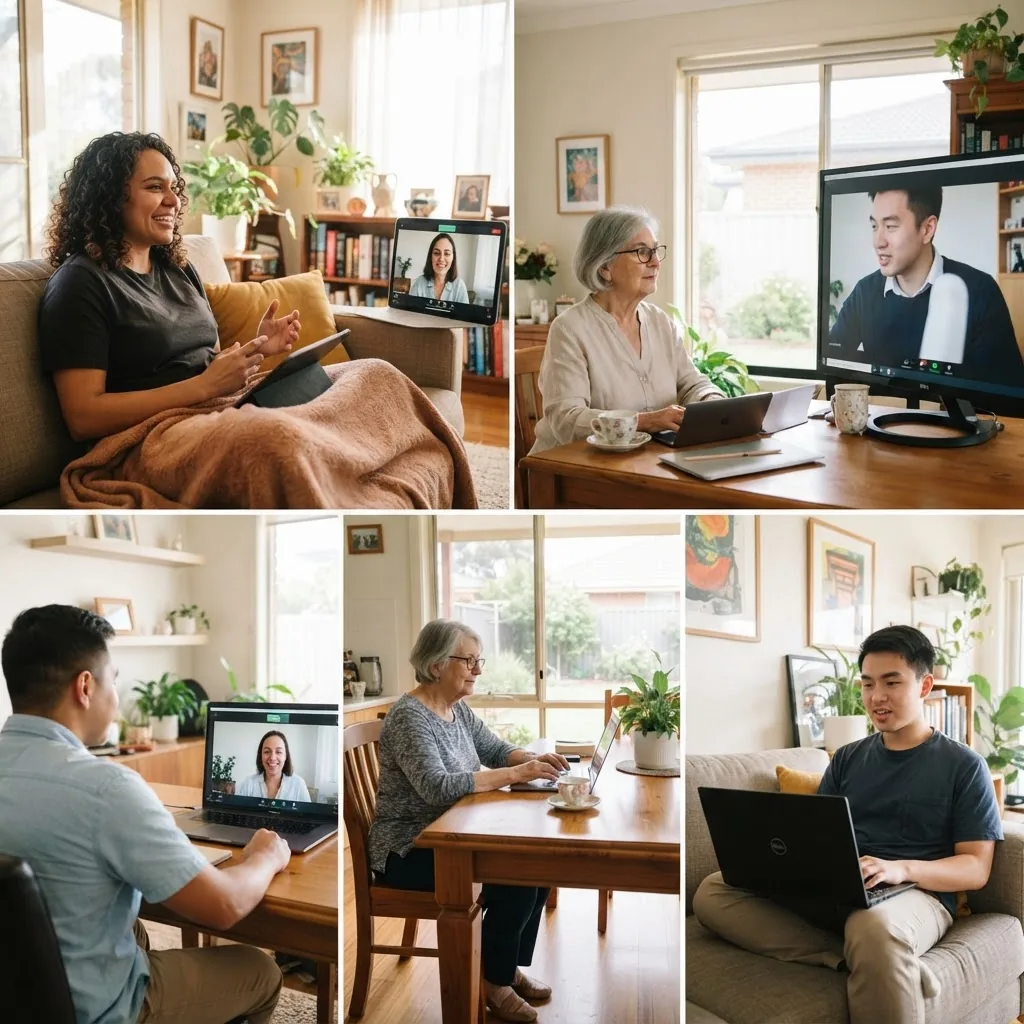
- Convenience and time savings. Book within minutes and avoid travel—typical telehealth sessions last 20–60 minutes. For city commuters this can save 1–2 hours per appointment.
- Improved access for rural and regional patients. Telehealth reduces geographic barriers: patients in remote NSW or regional Tasmania can see specialists who are otherwise unavailable locally. According to a 2023 Australian Government telehealth uptake report, rural telehealth use increased by over 30% since 2020.
- Reduced wait times. Many telepsychiatry services offer faster initial appointments than in-person clinics—initial triage often within 3–10 business days depending on demand.
- Affordability options including bulk billing. Some psychiatrists offer bulk billing telehealth psychiatry for eligible referrals and care plans—see the bulk billing section for how to find these options.
- Continuity of care and flexibility. Easy follow-ups and medication checks via 15–20 minute telehealth consults ensure consistent monitoring without repeated clinic travel.
- Anonymity and comfort. For patients concerned about stigma, telehealth can feel less exposing; many report increased openness in their home environment.
- Family involvement when appropriate. With consent, family members in separate locations can join video consultations for care planning—useful in child/adolescent or shared decision-making scenarios.
- Integrated digital health tools. Electronic forms, outcome measures and e-prescribing speed up the administrative side and reduce errors in medication management.
Transition: With those benefits in mind, here’s a practical, step-by-step approach for finding and booking an online psychiatrist appointment in Sydney and across Australia.
How to Find and Book an Online Psychiatrist Appointment in Sydney and Australia
This section lays out a stepwise booking workflow—search, screen, confirm and prepare—so you can convert research into an appointment within hours.
how to find and book a psychologist appointment
- Search with specific terms and region filters. Use queries like “telehealth psychiatrist Sydney”, “telehealth psychiatrist Melbourne” or “online psychiatrist Canberra” and add “bulk bill” if needed. Check clinic sites for telehealth-specific pages and initial wait-times (commonly displayed on booking widgets).
- Screen providers for scope and billing. Confirm the clinician is a qualified psychiatrist (FRANZCP or RANZCP listed), check whether they accept Medicare claims or bulk bill telehealth, and whether they treat your specific condition (anxiety, ADHD, bipolar). Look for short clinician bios, areas of interest and patient testimonials.
- Confirm referral requirements. Many psychiatrists will require a referral from a GP or another specialist for Medicare rebates. Check the clinic’s booking page for “referral required” labels and what documentation to upload. For details on referral logistics see the pillar referral process.
- Use clinic booking portals or phone. Book through the clinic’s online scheduler, selecting “telehealth/online” as the appointment type. If options aren’t clear, call reception—reception can confirm platform (Zoom vs clinic portal), appointment length (20–60 minutes) and any pre-consult forms.
- Complete pre-consult paperwork. Fill out intake forms, PHQ-9/GAD-7 and upload medicare details at least 24–72 hours before your slot. Many platforms lock video links behind completed forms to reduce no-shows.
- Check technical requirements and do a test call. Open the telehealth link 10 minutes early, allow camera/mic permissions, and test audio/video. Have a phone nearby in case the platform fails and the clinician needs to call you.
- Prepare a concise history and questions. Bring a one-page summary: current medications with doses, past diagnosis and emergency contacts; plan to summarise symptoms with dates and impact on work/sleep within 5 minutes of the consult start.
- During the consult, confirm follow-up and prescriptions. Ask about e-prescribing, GP communication and the next telehealth review schedule. If you require a repeat script, confirm how many days will be issued and whether the psychiatrist will communicate with your GP for shared care.
- Book follow-ups and secure documentation. Arrange your next telehealth review before logging off and request written treatment summary and any safety plan via the clinic’s portal or email.
Transition: Cost is often the deciding factor — the next section breaks down bulk billing, Medicare rebates and private fees so you can plan payments and eligibility.
Understanding Bulk Billing and Costs for Telehealth Psychiatrist Services
This section explains how bulk billing works for psychiatry, Medicare rebates for telehealth psychiatry, and how to locate fully or partially bulk-billed options.
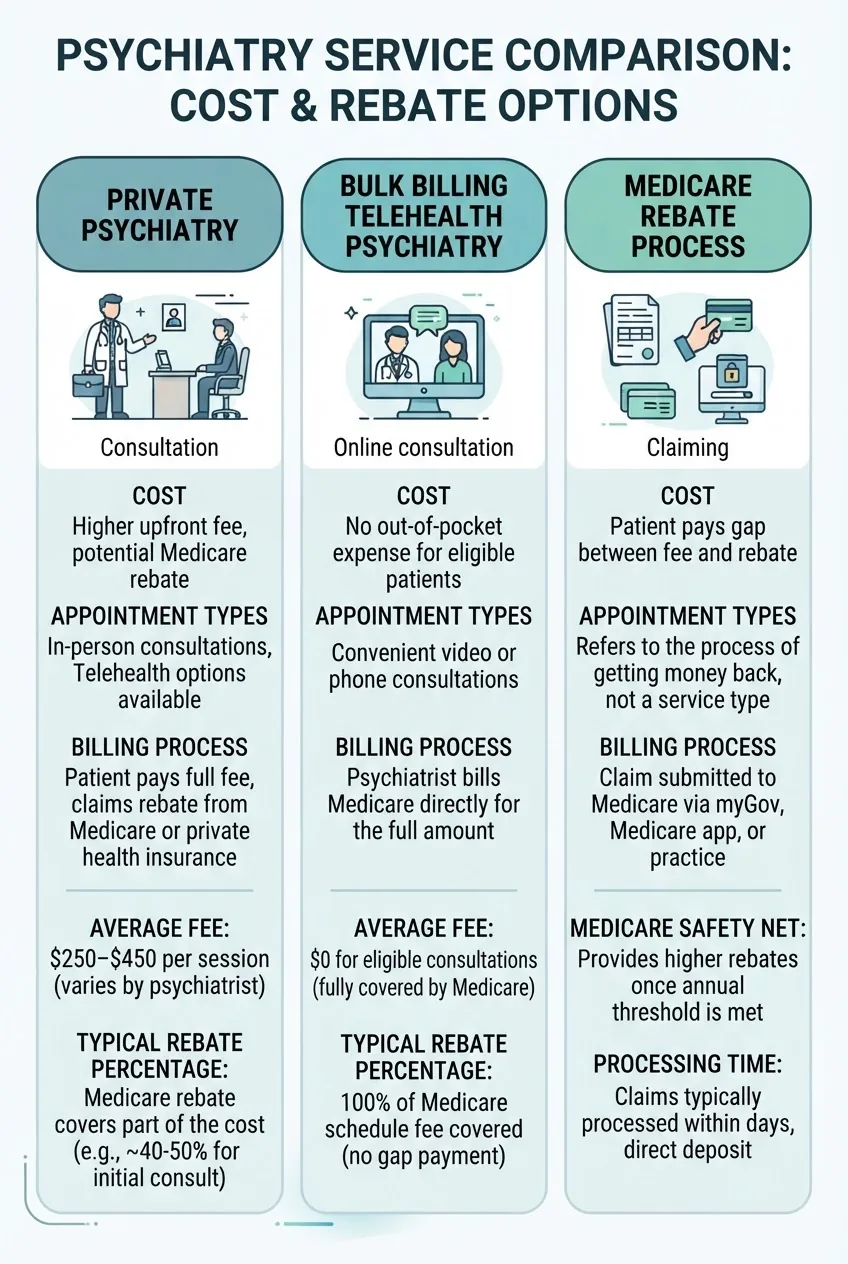
| Model | Typical cost (AUD) | Medicare rebate & notes |
|---|---|---|
| Private psychiatry (in-person or telehealth) | $250–$450 initial; $120–$250 follow-up | Partial Medicare rebate may apply for eligible referrals; patient pays gap. |
| Bulk billing telehealth psychiatry | $0 at point of care for eligible patients | Clinic accepts Medicare payment in full under specific conditions (e.g., GP referral with MHCP or clinic policy). |
| Medicare Mental Health Services | N/A — rebate based | Rebates depend on referral type and item numbers; see Medicare for exact allowances. |
- How bulk billing works for psychiatry. Bulk billing means the clinic accepts the Medicare benefit as full payment. For psychiatry this is less common than for GPs, but some services offer bulk-billed telehealth sessions for certain patients (e.g., concession card holders, children, or under specific clinic policies).
- Medicare rebates and telehealth item numbers. Psychiatrists use specific Medicare item numbers; rebates vary by consultation length and whether a GP referral/MHCP is in place. For exact item numbers and rebate values consult Medicare: Medicare Australia. Medicare mental health services.
- Search tactics for bulk-billing psychiatrists. Use keywords “telehealth psychiatrist bulk bill”, “bulk billing psychiatrist near me” and check clinic FAQs. If a listing is unclear, phone the clinic and ask: “Do you bulk bill telehealth psychiatry consults with a GP referral or MHCP?”
- Comparison — how to choose. Consider urgency, complexity and cost:
- If you need rapid specialist input (complex medication or suicidal ideation), prioritise appointment speed even if private fees apply.
- If affordability is the main concern, target clinics advertising bulk billing telehealth psychiatry and ask about eligibility criteria upfront.
- Regional and condition-specific bulk billing links. For ADHD-specific bulk billing pathways see bulk billing ADHD psychiatrists in Adelaide. For national options see bulk bill psychiatrist options.
- Sydney-specific guidance. In Sydney, many private psychiatrists offer partial rebated telehealth appointments; some community mental health services and hospital outpatient clinics provide bulk-billed telehealth clinics—ask directly about the Sydney bulk billing psychiatrist process.
Transition: Now that you understand costs, here’s how to obtain and use a Mental Health Care Plan (MHCP) online so you can access rebates and coordinated care.
Telehealth Mental Health Care Plans: How to Get One Online and Use It
A Mental Health Care Plan (MHCP) documents your diagnosis and treatment goals and is often the key to accessing Medicare rebates for allied and specialist services. The steps below show how to obtain and use an MHCP remotely.
GP referral and mental health care plans and mental health care plan guide are useful companion resources.
- Step 1: Book a GP telehealth appointment. Most MHCPs are issued by your GP after assessment. Book a telehealth GP consult (usually 10–20 minutes for triage or 20–40 minutes for full MHCP consideration). Expect to pay GP fees unless your GP bulk bills.
- Step 2: Prepare documentation. Send the GP a summary of symptoms, previous diagnoses, medications and functional impact 48 hours before the appointment. Attach any specialist letters or hospital discharge summaries to speed assessment. Use secure patient portals or email as advised by the practice.
- Step 3: GP assessment and creation of MHCP. The GP will assess, document diagnosis and treatment goals, and can prepare a team-based plan that includes referrals to psychiatrists, psychologists or allied health. A standard MHCP allows for Medicare-rebated allied mental health sessions (often up to 10 per year for psychologists under older programs—check current Medicare rules).
- Step 4: GP sends referral to psychiatrist or issues referral letter. Your GP can provide a referral letter that you upload to the psychiatrist’s booking portal. Some clinics accept the GP’s emailed referral directly if you consent. If you need the psychiatrist to bulk bill, the clinic will verify the referral and MHCP before confirming the appointment.
- Step 5: Claiming rebates online. Psychiatrists who bulk bill will claim Medicare directly. For partly rebated services, clinics will provide a receipt with item numbers so you can claim via the Medicare app or online at Medicare Services Australia.
- Step 6: Use the MHCP in ongoing care. Share the plan with your treating GP, psychologist and psychiatrist. Ensure your psychiatrist documents follow-up reviews and medication changes in the shared plan so your GP can continue shared prescribing and monitoring.
- Practical thresholds and timings. Obtain the MHCP within one GP appointment in many cases; expect administrative processing of referrals to take 1–5 business days depending on clinic workflows. Keep scanned ID and Medicare card on hand to speed e-forms.
Disclaimer: This guide does not replace clinical advice. Individual eligibility for bulk billing, Medicare rebates and MHCP details vary—consult your GP or the clinic directly. If you are at immediate risk, call 000 or your local crisis line.
Transition: If you’re unsure whether to see a telehealth psychiatrist or an in-person psychologist, the next section compares both options and gives scenarios for each.
When to Choose a Telehealth Psychiatrist vs. Seeing a Psychologist In-Person
Use this comparison to decide when psychiatric input (medical assessment, prescribing) is required versus psychological therapy. The table below shows pros and cons and typical scenarios.
| Service | When to choose | Pros / Cons |
|---|---|---|
| Telehealth Psychiatrist | Severe mood disorder, medication needs, complex diagnostic questions, ADHD medication management | Pros: can prescribe, manage complex cases, fast remote access. Cons: fewer bulk-billing options; not suitable for immediate physical risk management. |
| In-person Psychologist | Talk therapy, CBT for anxiety/depression, trauma-focused therapy | Pros: hands-on therapy techniques, in-person observation. Cons: may have longer wait times; cannot prescribe medication. |
- Clinical scenarios:
- If you need medication review or suspect a biological contributor (e.g., bipolar, psychosis), choose a psychiatrist—telehealth is usually suitable for these assessments.
- If you primarily need structured psychotherapy (CBT, ACT), a psychologist is appropriate and sometimes can be seen via telehealth as well.
- If risk is high (suicidal intent or severe self-harm), phone emergency services first and expect an in-person psychiatric or hospital pathway.
- Role clarity and referrals. Psychiatrists diagnose and prescribe; psychologists deliver therapy and psychological testing. For a clear explainer see difference between psychologists and psychiatrists. For referral steps see referral process for psychologists and psychiatrists and referral process.
- When inpatient care complements telehealth. If a psychiatrist recommends hospital admission for intensive monitoring, telehealth can continue after discharge for follow-up. For inpatient guidance see inpatient psychiatry services and psychiatry treatment options.
Transition: For readers outside Sydney, here’s a practical regional overview with local notes and referral tips for Melbourne, NSW, Canberra and nearby areas.
Regional Telehealth Psychiatrist Services Overview (Melbourne, NSW, Canberra)
This section summarises how telehealth psychiatry is delivered across key Australian regions and provides local links for deeper regional pages.
- Melbourne and Victoria. Melbourne offers numerous telepsychiatry clinics with both private and public options. Check waiting lists on clinic sites and use the search term “telehealth psychiatrist Melbourne.” For detailed local booking guidance see Melbourne telehealth psychiatrist appointment.
- New South Wales (Sydney, Wollongong, regional NSW). Sydney has a mix of private specialists and community mental health teleclinics. If affordability is key, search for “Sydney bulk billing psychiatrist process” and verify eligibility. For Wollongong referrals check Wollongong telehealth psychiatry referrals.
- Canberra and ACT. Canberra residents can access both ACT Health telepsychiatry and private telehealth clinics; search for “online psychiatrist Canberra” and confirm whether public outpatient clinics offer bulk-billed telehealth. See Canberra telehealth psychiatrist services.
- Brisbane and Queensland. Many Queensland clinics provide telepsychiatry across metropolitan and regional areas—if you’re local to Brisbane see Brisbane telehealth psychiatry services.
- Adelaide, Hobart and Perth notes. Adelaide offers specific ADHD telehealth options—see ADHD telehealth psychiatrist options and bulk billing ADHD psychiatrists in Adelaide. For Hobart see Hobart telehealth psychiatrist services. If you prefer gender-specific clinicians, search for “female psychiatrists available online in Perth” and review local Perth listings: female psychiatrists available online in Perth.
- Practical regional tips. In all regions, clarify whether telehealth consults cross state boundaries (most private psychiatrists can consult nationally, but public clinics are state-limited). Confirm follow-up prescriptions with local pharmacies and whether your local GP will accept shared-care arrangements.
Transition: Below are concise FAQs that directly answer common operational and security questions about telehealth psychiatry.
Frequently Asked Questions
What is a telehealth psychiatrist and how do their services work?
A telehealth psychiatrist is a medical specialist who diagnoses and treats mental disorders via secure video or phone. Sessions include assessment, medication management and safety planning; pre-consult forms and GP referrals are often required. Clinics use encrypted platforms and share summaries with your GP for ongoing care.
How do telehealth psychiatrist appointments differ from in-person visits?
Telehealth appointments are remote (video/phone) but clinically similar: histories, mental state exams and medication reviews are done verbally. Non-verbal cues are observed via video; physical examinations are limited, so in-person assessment is needed for physical concerns or acute risk.
How can I find a telehealth psychiatrist who bulk bills near me in Sydney?
Search “bulk billing telehealth psychiatrist Sydney,” check clinic FAQs and call reception to confirm eligibility. Community clinics and hospital outpatient services are likelier to bulk bill; ask about GP referral or concession card criteria to qualify.
What steps do I need to take to book an online psychiatrist appointment?
Find a clinician, confirm telehealth and referral/billing policy, book via the clinic portal or phone, complete intake forms 24–72 hours before, test your device 10 minutes early and have medication history ready for the consult.
How much does a telehealth psychiatry consultation cost and is it covered by Medicare?
Costs vary: private initial consults often $250–$450; follow-ups $120–$250. Some telehealth psychiatry is bulk billed or partially rebated under Medicare when specific referrals or MHCPs apply—check item numbers on the Medicare website.
What should I do if I experience technical issues during a telehealth psychiatry session?
Have your clinic’s phone number ready and a backup device. If video fails, switch to the clinician’s phone call option. If you cannot reconnect, reschedule promptly and ask the clinic for a written summary to avoid care gaps.
Are telehealth psychiatry services secure and confidential?
Most clinics use encrypted, health-grade platforms; they require consent and follow privacy laws. Ask about platform encryption, recording policies and how clinical records are stored before your first session.
How can I get a mental health care plan online to access telehealth psychiatrist services?
Book a telehealth GP appointment, provide your history and request an MHCP. The GP will document diagnosis and goals and can issue referrals. Submit the MHCP to the psychiatrist during booking to access Medicare rebates or bulk billing where available.
Common mistakes and how to avoid them
I’ve seen these errors repeatedly and how they wasted time—here’s what I do to prevent them:
- Missing referral paperwork: I once scheduled a telehealth psychiatry consult without uploading a GP referral; the appointment was cancelled and my place lost. Always upload or email referral 48–72 hours before the appointment.
- Not testing video setup: I’ve had sessions start late because participants hadn’t enabled camera/mic. I now test the link 10 minutes before and keep a phone ready as backup.
- Assuming bulk billing applies: I assumed a clinic bulk-billed telehealth because they bulk-billed GPs; they didn’t. Phone and confirm bulk-bill policy specifically for psychiatric consults.
- Unclear follow-up plans: I once left a consult without confirming the next steps for prescriptions and GP shared care. Always finalize the next appointment and ask for a written summary.
Step-by-step checklist (verify before and after booking)
- Referral or MHCP uploaded to clinic portal (if required).
- Intake forms (PHQ-9/GAD-7) completed 24–72 hours before appointment.
- Telehealth link tested 10 minutes before session; camera/mic permissions enabled.
- Medication list, emergency contact and consent forms ready to share.
- Confirmed billing: bulk-billed, Medicare rebate or private fees; receipt item numbers requested.
- Follow-up appointment scheduled and written summary requested.
When to call in a professional instead
Arrange urgent in-person psychiatric or emergency care if there is active suicidal intent, severe psychosis, inability to care for self, or sudden deterioration in safety. If you have complex medication interactions or urgent medical issues, ask your GP to arrange a same-day assessment or emergency referral.
Conclusion
Telehealth psychiatrist services let you access specialist psychiatric care quickly, flexibly and often affordably across Australia. Follow the steps above to search, confirm billing, obtain an MHCP and prepare for telehealth sessions so you get timely diagnosis, medication management and coordinated care with your GP and psychologist. Ready to take the next step? Book a telehealth assessment or speak to your GP about an online Mental Health Care Plan to start your pathway to care today.