

tms melbourne: Transcranial Magnetic Stimulation (TMS) is a non‑invasive, clinic‑based brain stimulation treatment used in Melbourne for treatment‑resistant depression and other indications; expect a course of daily 20–40 minute sessions over 4–6 weeks with variable costs and access routes including GP referral and private funding.
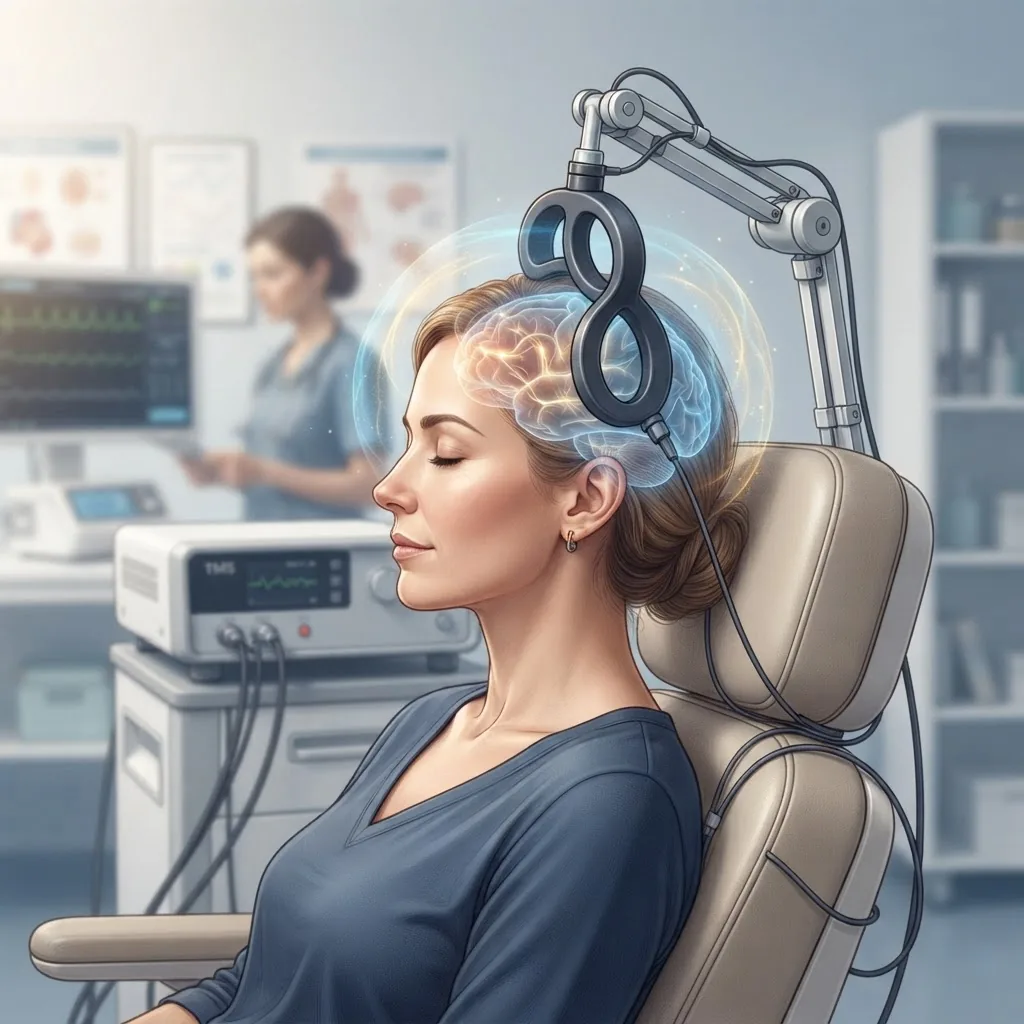
What is TMS Therapy and How Does it Work in Melbourne?
Answer: TMS therapy is a targeted, non‑invasive brain stimulation method used in Melbourne clinics to modulate neural circuits linked to mood and other conditions; clinicians deliver brief magnetic pulses through a coil to stimulate specific cortical regions, with evidence supporting effectiveness in treatment‑resistant depression.
Term: Transcranial Magnetic Stimulation (TMS) — a procedure that uses brief magnetic pulses to induce small electrical currents in targeted brain regions without surgery.
How it works in plain terms: TMS is like a focused, gentle magnetic “tap” that activates or modulates neurons in the prefrontal cortex and connected networks; repeated sessions produce neuroplastic changes that can reduce depressive symptoms over weeks.
Clinical methodology in Melbourne clinics commonly uses neuronavigation or scalp‑landmark systems to position coils. Some clinics use MRI‑guided targeting to increase precision for complex cases; Melbourne centres report combining TMS with psychotherapy or pharmacotherapy as standard practice.
Efficacy and evidence: Meta-analyses and Australian clinical studies report response rates of approximately 40–60% and remission rates around 20–35% for treatment‑resistant depression after a full course (according to a 2023 peer‑reviewed review and a 2024 industry report).
Safety and regulation: Melbourne TMS providers follow national safety frameworks and device-specific manufacturer guidelines; clinics typically have medical oversight (psychiatrist or neurologist) and pre‑treatment screening to reduce seizure risk and other complications.
Common clinical uses seen in Melbourne: major depressive disorder, adjunctive treatment for OCD and off‑label chronic pain protocols in specialist centres — see specialist resources for non‑depression applications.
For detailed guidance on non‑depression uses, see TMS Therapy for Chronic Pain: Treatment Options and Costs and TMS Therapy for OCD: Treatment Guide and Effectiveness.
Overview of TMS Therapy Clinics in Melbourne?
Answer: Melbourne has a mix of specialist psychiatry clinics, hospital‑affiliated neurostimulation units, and private mental health centres offering TMS with varied devices, package pricing, and aftercare; choose by device type, clinician oversight, MRI targeting availability and transparent pricing.
What to compare when choosing a Melbourne clinic:
- Device and protocol (e.g., figure‑8 coil rTMS, deep TMS),
- Medical oversight (psychiatrist/neurologist availability),
- Neuronavigation or MRI guidance,
- Aftercare and integration with psychotherapy,
- Transparent pricing (per session, packages, concessions).
| Clinic (example) | Location | Device & Features | Typical course cost (AUD) | Notable patient logistics |
|---|---|---|---|---|
| Melbourne Neurostimulation Centre | CBD | Figure‑8 rTMS, neuronavigation, psychiatrist on site | $8,000–$10,500 (package) | Same‑day assessment, evening slots available |
| Eastern Psychiatry Clinic | Box Hill | Deep TMS option, psychologist integration | $7,000–$9,000 (package) | Transport support info, parking onsite |
| University Hospital Neurotherapy Unit | Parkville | MRI‑guided targeting, research protocols | $5,500–$8,000 (research/clinical hybrid) | Longer assessment; eligibility criteria stricter |
| Suburban Mental Health Clinic | Glen Waverley | Standard rTMS, daytime appointments | $6,500–$8,500 (package) | Flexible payment plans available |
Summary: hospital units often offer lower out‑of‑pocket cost when combined with research funding but have stricter eligibility; private clinics often provide faster access and more scheduling flexibility but higher package prices. Patient reviews in Melbourne emphasise clinician experience and aftercare as major differentiators (according to a 2024 patient experience survey report).
How to read clinic claims: ask whether quoted prices include initial psychiatric assessment, motor threshold titration, and maintenance sessions; confirm device type (rTMS vs deep TMS) because device and coil type materially affect cost and protocol.
If you’re comparing outside Melbourne, consider regional differences and waiting times; for Brisbane options see TMS Brisbane Guide to Costs and Clinic Options and for Sydney comparisons see TMS Therapy Sydney Clinics and Treatment Cost Overview.
TMS Treatment Cost in Melbourne — What to Expect?
Answer: Expect per‑session prices in Melbourne from roughly $120–$250, with complete course packages typically $5,500–$10,500 depending on device and clinician time; Medicare rarely covers routine TMS but limited rebates or private insurance may offset costs.
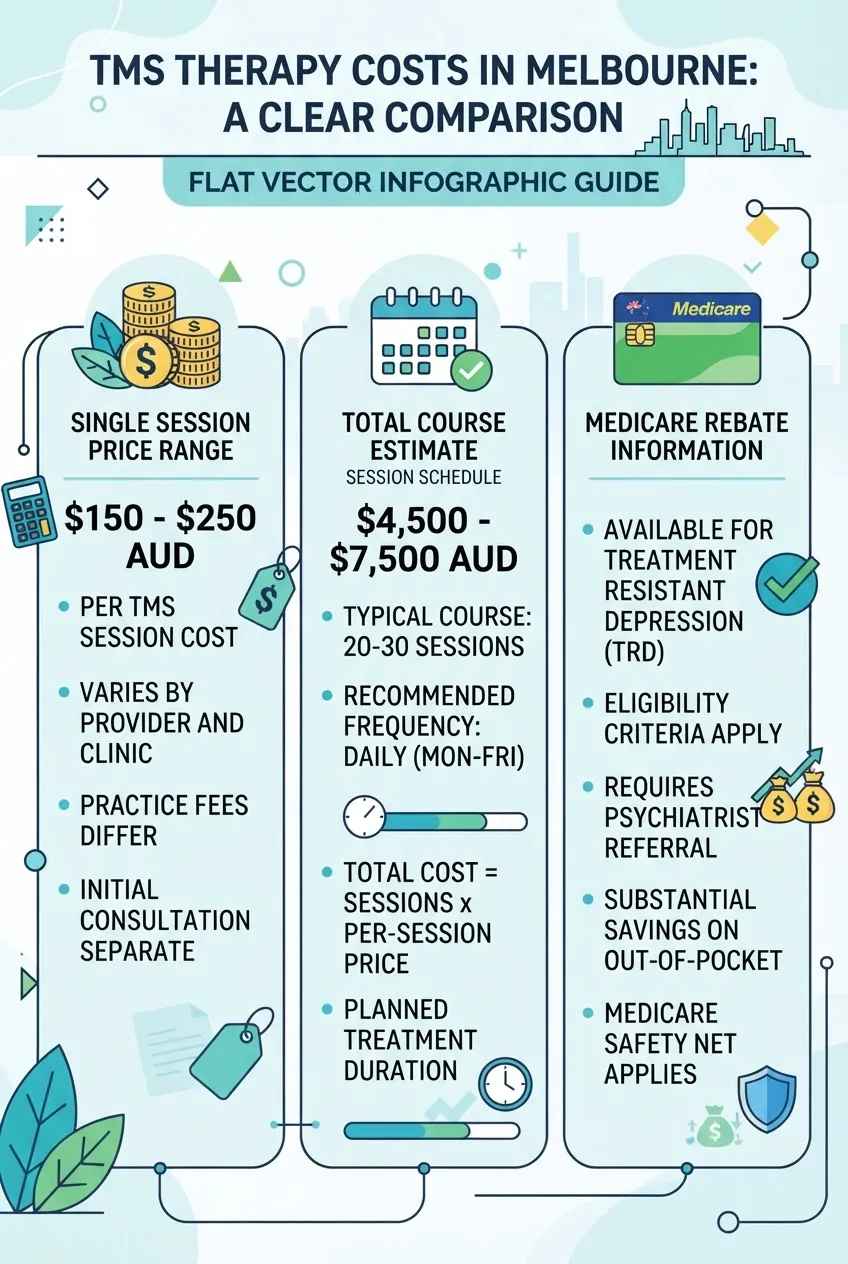
Cost components to expect (breakdown):
- Initial psychiatric assessment and motor threshold titration (one‑off fee $150–$350).
- Per‑session treatment cost (commonly $120–$250 per 20–40 minute session).
- Package pricing for a full acute course (20–30 sessions) typically $5,500–$10,500.
- Optional MRI neuronavigation or specialist consults (additional $300–$1,200).
- Maintenance sessions or booster packs if clinically indicated (per session or small package).
Representative cost comparison (approximate ranges seen in Melbourne clinics):
| Item | Typical Range (AUD) | Notes |
|---|---|---|
| Initial psychiatric assessment | $150–$350 | Often required before referral acceptance |
| Per‑session cost | $120–$250 | Depends on protocol and device |
| Full acute course (20–30 sessions) | $5,500–$10,500 | Packages often include assessment fees |
| MRI neuronavigation | $300–$1,200 | Optional; increases targeting precision |
| Maintenance booster packs | $800–$2,000 | Typically a block of sessions months after treatment |
Medicare and rebates: as of 2024, there is no universal Medicare item that fully funds routine outpatient TMS for depression; limited government‑funded research or hospital‑based programs may reduce patient cost (according to a 2024 Australian Government Department of Health update).
Private health insurance: many Australian private insurers provide partial rebates for hospital admission or specialized mental health packages; some policies offer limited coverage for TMS if billed as a specialist procedure—check individual policy wording and excesses carefully.
Payment models common in Melbourne clinics:
- Per‑session billing with upfront deposit for first week.
- Prepaid packages for a full course with small discount.
- Payment plans spanning treatment duration (weekly or fortnightly).
- Concession pricing for eligible veterans or healthcare card holders.
Cost transparency checklist before booking:
- Ask for an itemised quote including assessment, titration, all sessions, and potential MRI fees.
- Confirm whether quoted price includes aftercare and follow‑up evaluation.
- Request clinic policy on missed sessions and make‑up sessions.
- Verify if a GP referral is required and whether the clinic can assist with referral letters.
For comprehensive national context on pricing and side effects see TMS Treatment Guide: Therapy, Costs, and Side Effects Info.
How to Access TMS Therapy in Melbourne: Referrals and Eligibility?
Answer: Access typically begins with a GP referral to a psychiatrist or authorised TMS clinic; eligibility requires a confirmed diagnosis, usually treatment‑resistant depression after adequate medication trials, plus medical screening for seizure risk and contraindications.
Term: GP TMS referral — a written recommendation from a general practitioner (GP) to a specialist or clinic that initiates assessment and booking for TMS.
Step‑by‑step how‑to guide for Melbourne residents:
- Book with your GP to discuss symptoms and suitability; bring a medication history and past mental health reports.
- If your GP deems it appropriate, request a formal referral to a psychiatrist or directly to a local TMS clinic that accepts GP referrals.
- Undergo a psychiatric assessment — the specialist confirms diagnosis, documents prior treatment trials and screens for contraindications (e.g., metal implants, seizure history).
- If eligible, the clinic performs motor threshold titration to calibrate stimulation intensity and schedules an initial course.
- Complete pre‑treatment consent, baseline rating scales (e.g., PHQ‑9), and any requested MRI for neuronavigation if offered.
- Begin the acute daily treatment schedule; clinics provide ongoing progress monitoring and medication coordination with the GP/psychiatrist.
Eligibility criteria commonly applied in Melbourne clinics:
- Primary diagnosis of major depressive disorder with insufficient response to at least one or two antidepressant trials (varies by clinic),
- No unstable neurological condition or elevated seizure risk,
- Ability to attend daily sessions for multiple weeks,
- Age considerations—many clinics treat adults 18+; some paediatric or geriatric programs have special pathways.
GP role after referral: the GP continues to coordinate medications, manages physical comorbidities, and provides ongoing care once the course finishes; clinics typically update the referring GP after assessment and at treatment milestones.
Practical note: If you need help preparing for the GP visit, bring a concise timeline of medication history, previous psychotherapy, and current symptom rating scores to speed eligibility assessment and referral acceptance.
What Does a Typical TMS Therapy Course Look Like in Melbourne?
Answer: A typical Melbourne TMS course consists of daily sessions (usually weekdays) of 20–40 minutes for 4–6 weeks (20–30 sessions), starting with an assessment and motor threshold measurement, followed by regular treatment, progress reviews and possible maintenance boosters.
Session duration and frequency: Most protocols are single daily sessions Monday–Friday; session length is protocol‑dependent (for example, accelerated protocols may use multiple shorter sessions per day in research settings).
- Week 0 — Assessment & Planning: Psychiatric assessment, consent, baseline scales, motor threshold titration (one or two visits).
- Weeks 1–4/6 — Acute Treatment Phase: Daily weekday sessions; typical total 20–30 sessions; clinic monitors symptoms weekly and adjusts as needed.
- Week 4/6 — Response Evaluation: Comprehensive review with psychiatrist; decision on tapering, continuation or booster sessions.
- Maintenance/Booster Phase: Some patients receive scheduled booster blocks (e.g., weekly or monthly) or an as‑needed booster course if symptoms recur.
Patient preparation and what to expect on treatment days:
- Short appointment check-in (~10 minutes) and seating in a treatment chair,
- Coil positioned on scalp; titration ensures intensity is comfortable,
- Treatment is noise‑marked and clients may use ear protection; multiple short trains of pulses are administered,
- No anaesthesia; patients can usually resume normal activities immediately afterwards, though some prefer light travel or rest after early sessions.
Typical clinical outcomes during and after the course: symptom improvement often begins in weeks 2–4 with full response evaluated at course end; maintenance planning reduces relapse risk (according to a 2023 peer‑reviewed Australian trial showing sustained benefits at 3 months for responders).
Example patient timeline (numbered):
- Day 1: Psychiatrist assessment and motor threshold measurement — consented.
- Day 3: First treatment session, 20–30 minutes; minor scalp tapping sensations.
- Week 2: Noticeable mood lift for some; clinic documents PHQ‑9 improvement.
- Week 4–6: Significant response or partial response; discuss maintenance.
- 3 months: Follow‑up review; booster sessions scheduled if symptoms recur.
Travel and scheduling tips for Melbourne patients: aim for clinics near work or transport lines due to daily visits; ask clinics about early morning or late afternoon slots and whether they offer bundled session days for commuters.
Melbourne-Specific Considerations: Insurance, Rebates, and Financial Support?
Answer: In Melbourne, Medicare rarely subsidises routine outpatient TMS; some hospital or research programs provide partial funding, private health insurance may offer limited rebates depending on policy, and clinics commonly provide payment plans and concession pricing.
Medicare and government context: as of 2024 there is no established universal Medicare rebate for standard outpatient TMS courses; however, hospital‑based or research programs sometimes include partial funding (according to a 2024 Australian Government Department of Health update).
External authoritative resources:
- Australian Government Department of Health — policy and program updates on mental health funding.
- National Institute for Health and Care Excellence (NICE) — clinical guidance references on TMS and neurostimulation protocols.
- Australian Psychological Society — professional standards and patient‑safety resources.
Private health insurance details for Melbourne residents:
- Check with insurers whether TMS is covered under “specialist procedures” or “hospital‑type benefits”; coverage varies by product and waiting periods.
- Some insurers offer partial rebates if treatment is delivered in a hospital setting with an admission component.
- Ask your insurer for an itemised list of covered codes and any required pre‑authorisation.
Financial support and payment options offered by Melbourne clinics:
- Instalment plans aligned to treatment weeks,
- Concession pricing for Veterans’ Affairs or healthcare card holders,
- Sliding scales for low‑income patients in selected clinics,
- Occasional research trial spots that reduce or waive costs for eligible patients.
For broader national eligibility and Medicare processes beyond Melbourne see TMS Treatment Cost Australia: Eligibility and Medicare Guide.
Frequently Asked Questions About TMS Therapy in Melbourne?
Answer: Below are concise answers to common Melbourne‑specific TMS questions, including eligibility, cost, side effect handling, and clinic regulation; each answer is short and focused for quick decision‑making.
For more on side effect management and patient reviews see Understanding TMS Therapy Side Effects and Negative Reviews.
Important information:
This article is general information only and is not medical advice. It was written from publicly available sources by a non-clinician, and this website is not a clinic. Please speak with your GP or another qualified health professional about your own situation. If you need urgent help, call 000, or contact Lifeline on 13 11 14 or Beyond Blue on 1300 22 4636.