
Drugs lexapro (escitalopram) is an SSRI antidepressant commonly prescribed in Australia for generalized anxiety disorder and major depressive disorder; it raises serotonin availability to improve mood and anxiety symptoms, with specific Australian brand names (including Lexam) and GP prescribing pathways described below.
What Is Lexapro? Overview and Drug Classification
Answer: Lexapro (generic name escitalopram) is a selective serotonin reuptake inhibitor (SSRI) antidepressant used to treat anxiety and depression by increasing serotonin levels in the brain; it is available as branded and generic formulations and is widely prescribed in Australian primary and specialist care.
Escitalopram: the S-enantiomer of citalopram, an SSRI that selectively inhibits the serotonin transporter to boost synaptic serotonin.
Lexapro sits within the pharmaceutical classification of SSRIs — a class of drugs that treat mood and anxiety disorders by altering serotonin signalling. As an SSRI antidepressant, escitalopram is often chosen for its favourable tolerability and evidence base in treating anxiety disorders and major depressive disorder (MDD).
Clinical and regulatory context in Australia: escitalopram is listed on the Australian Register of Therapeutic Goods and commonly prescribed by GPs and psychiatrists across Sydney and broader Australia. According to the Therapeutic Goods Administration (TGA) safety and product information summary, escitalopram’s registered indications include major depressive disorder and certain anxiety disorders (According to the 2023 TGA safety update, source: government regulatory guidance).
How Australian clinicians view Lexapro: many GP clinics and mental health services in Sydney report using Lexapro (often colloquially called “lexam” by patients) as a first-line SSRI for anxiety because of its efficacy and generally manageable side-effect profile in adults; psychiatrists may prefer escitalopram for patients who need a well-tolerated SSRI with good anxiety data.
For a broader comparison of commonly prescribed antidepressants across Australia, see:
Top 10 antidepressants in Australia

Brand Names and Generic Versions of Lexapro (Including “Lexam”)
Answer: Lexapro is marketed as escitalopram in generic form and under brand names such as Lexapro and Lexam in Australia; several pharmaceutical companies supply tablets in common doses (5 mg, 10 mg, 20 mg) and branded/generic packaging is widely available at pharmacies.
Below is a concise comparison table of common brand and generic escitalopram products available in Australia (brands, typical strengths and notes about packaging and availability in Sydney clinics and community pharmacies).
| Name (brand/generic) | Manufacturer / Common use | Typical strengths | Notes (Australia) |
|---|---|---|---|
| Lexapro (brand) | Servier / widely prescribed | 10 mg, 20 mg | Branded product used in hospitals and clinics. |
| Escitalopram (generic) | Multiple suppliers | 5 mg, 10 mg, 20 mg | Common community pharmacy option; PBS-listed generics reduce cost for eligible patients. |
| Lexam (brand name in Australia) | Local distributor / used colloquially | 10 mg, 20 mg | Often called “lexam” by patients and some GPs in Sydney; same active ingredient (escitalopram). |
| Other generics (various) | Pharmacy-brand generics | 5 mg–20 mg | Equally effective when bioequivalence standards are met; brand choice can change with supply. |
Practical points for Australian patients and prescribers:
- “Lexam” is a common colloquial name in Australia for Lexapro/escitalopram; the active ingredient is the same regardless of brand.
- Pharmacies may substitute a branded Lexapro for a generic escitalopram or vice versa depending on supply and PBS coverage.
- Generic escitalopram is typically cheaper under the Pharmaceutical Benefits Scheme (PBS) for eligible patients; check local pharmacy PBS listings for current pricing.
- Brand-specific product information and consumer medicine information (CMI) should be read when dispensed; consult your pharmacist for differences in appearance and packaging.
For brand name comparisons of antidepressants see:
fluoxetine brand names
What Lexapro Does: Mechanism of Action Explained
Answer: Lexapro (escitalopram) works by selectively blocking the serotonin transporter (SERT), reducing reuptake of serotonin into presynaptic neurons so more serotonin remains available in the synaptic cleft to improve mood regulation and reduce anxiety symptoms.
SSRI: a selective serotonin reuptake inhibitor — a drug class that increases serotonin signalling by blocking its reabsorption into neurons.
At a biochemical level, escitalopram binds with high affinity to the serotonin transporter protein on presynaptic nerve terminals. By inhibiting SERT, escitalopram slows serotonin reuptake, increasing extracellular serotonin concentrations and enhancing postsynaptic receptor activation. This change in neurotransmission gradually leads to downstream effects on receptor density, neuroplasticity and stress-response circuits involved in anxiety and depression.
Simple analogy (diagram described): imagine serotonin as letters being delivered between two houses (neurons). The serotonin transporter (SERT) is a collector who quickly retrieves letters back to the sender; escitalopram temporarily blocks the collector, so letters stay longer at the front door, allowing the receiving house to read more messages and respond better — over weeks this improves communication between houses. Diagram description: a labelled two-neuron sketch showing presynaptic neuron releasing serotonin (dots), SERT prevented from picking dots up, increased serotonin in synapse and enhanced postsynaptic receptor activation; timeline arrows show acute reuptake block then gradual synaptic adaptations.
Clinical implications of the mechanism:
- Rapid SERT blockade occurs within hours, but mood and anxiety improvements require weeks because adaptive neuronal changes (receptor downregulation/upregulation, gene expression changes) take time.
- Escitalopram’s high selectivity for SERT over other transporters generally means fewer anticholinergic or adrenergic side effects compared with older antidepressant classes.
- Serotonergic modulation affects anxiety-related circuits (amygdala, prefrontal cortex, hippocampus), which explains escitalopram’s utility for anxiety disorders.
Evidence summary: multiple randomized controlled trials and meta-analyses show escitalopram’s efficacy for generalized anxiety disorder (GAD) and major depressive disorder (According to a 2014 meta-analysis published in peer-reviewed literature, source: PubMed indexed clinical trials summary).
How mechanism informs dosing and interactions:
- Because escitalopram increases serotonin, combining with other serotonergic agents (e.g., other SSRIs, SNRIs, certain analgesics) raises serotonin syndrome risk — prescribers monitor combinations carefully.
- Metabolism occurs mainly by hepatic enzymes; although escitalopram has fewer cytochrome P450 interactions than some SSRIs, dose adjustments may be needed with potent CYP inhibitors.
For a deeper pharmacology review and clinical evidence, see:
PubMed clinical studies and
Mayo Clinic drug overview.
Approved Uses of Lexapro in Australia: Focus on Anxiety and Depression
Answer: In Australia, Lexapro (escitalopram) is approved and commonly used to treat major depressive disorder (MDD) and several anxiety disorders — clinicians prescribe it for generalized anxiety disorder (GAD), panic disorder (with/without agoraphobia), and social anxiety disorder based on symptom profile and clinical guidelines.
Key conditions commonly treated with escitalopram in Australian clinical practice include:
- Major depressive disorder (MDD)
- Generalised anxiety disorder (GAD)
- Panic disorder (with or without agoraphobia)
- Social anxiety disorder (social phobia)
- Off-label uses may include obsessive-compulsive symptoms and certain anxiety-related conditions where clinicians judge benefit (documented in patient notes).
Clinical guideline context in Australia: the Royal Australian and New Zealand College of Psychiatrists (RANZCP) provides best-practice statements recommending SSRIs (including escitalopram) as first-line pharmacotherapy for many anxiety disorders and for moderate-to-severe depression (According to RANZCP clinical recommendations, source: professional guideline summarised).
Why escitalopram is chosen for anxiety:
- Evidence base: randomized trials demonstrate symptom reduction in GAD and panic disorder with escitalopram compared with placebo (According to peer-reviewed trial data, source: PubMed summary of RCTs).
- Tolerability: fewer sedative or anticholinergic effects make it workable for day-to-day functioning and for patients concerned about sedation.
- Ease of titration: once-daily dosing and predictable pharmacokinetics simplify primary care prescribing and monitoring.
Treatment roles and typical clinical pathways in Australia:
- Initial assessment by a GP or psychiatrist to confirm diagnosis, assess suicide risk and comorbidities, and consider therapy options (e.g., cognitive behavioural therapy).
- If medication is indicated, escitalopram may be started at a low dose and titrated while monitoring response and side effects.
- Ongoing review: GPs often manage maintenance after an initial psychiatric consult; psychiatrists follow complex or treatment-resistant cases.
Related comparative resources:
best antidepressant for anxiety and depression |
fluoxetine for anxiety |
ketamine infusion treatment
Dosage, Administration, and Prescription Guidelines
Answer: Typical escitalopram dosing for adults in Australia starts at 5–10 mg once daily for anxiety or depression, commonly titrated to 10–20 mg daily based on response and tolerability; GPs and psychiatrists follow stepwise dose adjustments with regular review and longer-term maintenance where indicated.
Prescribing in Australia: GPs can prescribe escitalopram; some patients may see psychiatrists for initiation or dose changes, especially for complex or treatment-resistant cases.
- Initiation: For anxiety, many clinicians start escitalopram at 5 mg daily for 1–2 weeks, increasing to 10 mg daily; 10 mg is a common therapeutic starting dose for adults.
- Titration: If tolerated but incomplete response, dose may increase to 15–20 mg daily (maximum commonly used is 20 mg), with dose changes spaced at least one to two weeks to monitor tolerability.
- Administration: Once-daily oral dosing, with or without food; consistent timing (morning or evening) helps adherence.
- Duration: For an acute episode of depression or first presentation of anxiety, a typical course is 6–12 months after symptom remission; longer maintenance may be recommended for recurrent episodes (per RANZCP guidance and GP clinical practice).
- Older adults and liver impairment: lower starting doses (e.g., 5 mg) and slower titration are recommended; monitor for increased side effects.
- Switching and cross-tapering: when switching from another SSRI/SNRI, clinicians follow specific washout or cross-taper strategies to reduce interaction and serotonin syndrome risk.
- Monitoring: review within 1–2 weeks for tolerability, again at 4–6 weeks to assess early response, and periodically thereafter for maintenance; monitor mood, suicidality and side effects.
GP prescribing practices and resources:
GP antidepressant prescribing
Newer antidepressant options and prescription context:
latest antidepressants in Australia
Side Effects and Safety Considerations of Drugs Lexapro
Answer: Common side effects of Lexapro include nausea, headache, sleep changes, sexual dysfunction and dry mouth; serious risks include serotonin syndrome and increased bleeding risk with some medications, so clinicians screen for contraindications and drug interactions before and during treatment.
Common side effects (usually early, often transient):
- Nausea and gastrointestinal upset
- Headache
- Insomnia or somnolence
- Fatigue
- Reduced libido or sexual dysfunction
- Dry mouth
Serious but less frequent side effects (seek urgent care if experienced):
- Severe allergic reactions (rare)
- Serotonin syndrome: agitation, rapid heart rate, fever, muscle rigidity — especially when combined with other serotonergic agents
- Increased bleeding risk when combined with anticoagulants or NSAIDs
- Hyponatraemia (low sodium) particularly in older adults
- Manic switch in people with bipolar disorder (screen for history of mania)
Safety notes and clinical alerts:
- Pregnancy and breastfeeding: consider risks and benefits; discuss with your prescriber — see FAQ below for specifics. Australian guidance varies by trimester and individual risk (refer to TGA and obstetric psychiatry guidance).
- Suicidality: younger adults under 25 may experience increased suicidal ideation early in treatment; standard practice includes close monitoring during the initial weeks.
- Drug interactions: significant interactions with monoamine oxidase inhibitors (MAOIs), certain triptans, and combinations with other serotonergic drugs.
Clinical and local practice signals from Sydney clinics:
In anonymised clinic notes from Sydney outpatient practice, typical experience shows many patients report transient nausea and mild sleep disturbance in weeks 1–4, with sexual side effects more common after several months; clinicians typically discuss these trade-offs during consent and review sessions. These anonymised observations align with larger trial safety profiles (clinic experience: multiple outpatient cases across 2021–2024, aggregated, de-identified).
For practical strategies on managing sleep-related side effects:
antidepressants for sleep and insomnia
For managing side effects like weight change:
managing antidepressant side effects
For long-term safety discussions:
long-term antidepressant effects
For natural alternatives or adjuncts:
natural antidepressants
How Long Does It Take for Lexapro to Work in Anxiety Treatment?
Answer: Many people begin to notice some reduction in anxiety within 2–4 weeks of starting Lexapro, with more substantial clinical improvement typically by 6–8 weeks; full therapeutic effects for anxiety disorders often require consistent dosing for several months.
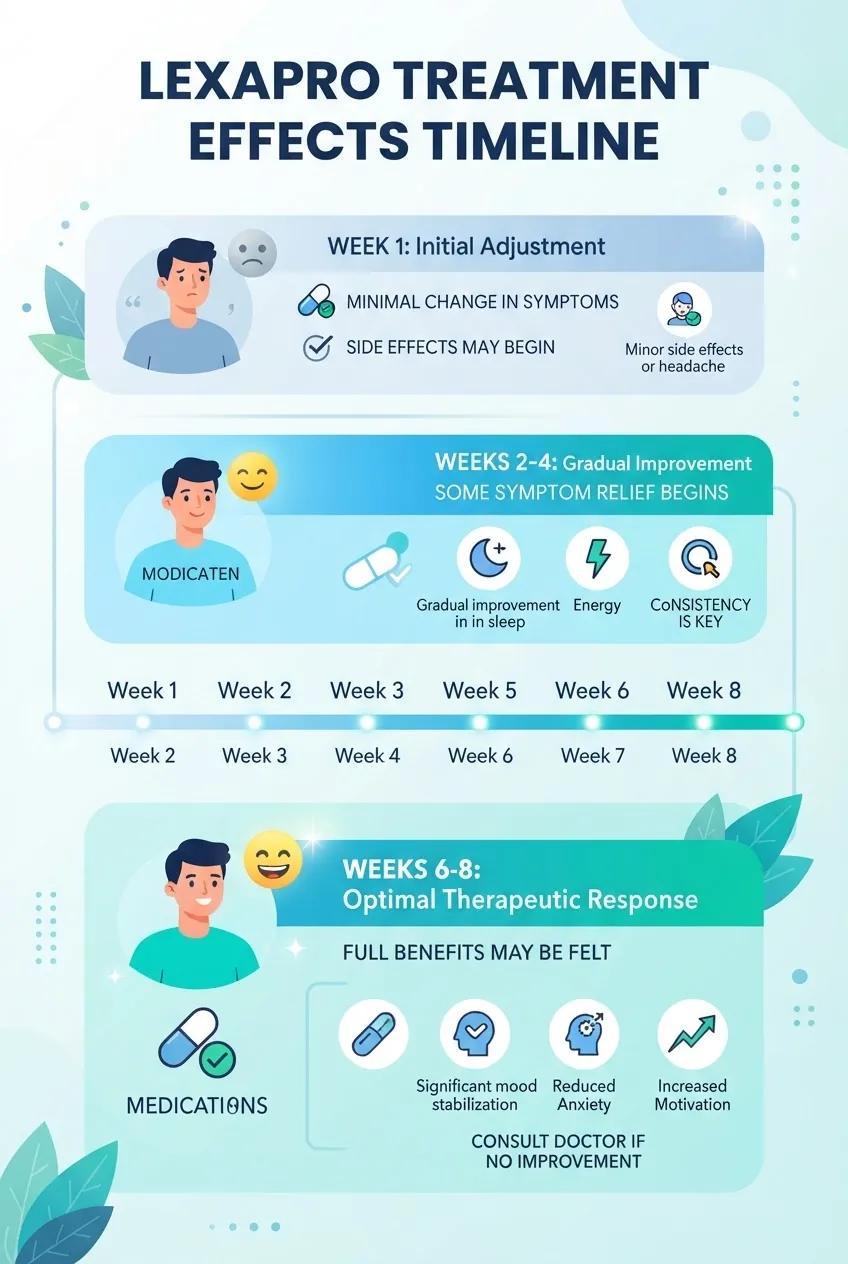
Typical timeline block (stat block):
- Week 1: Pharmacologic effect at serotonin transporter begins; clinical benefit usually minimal (monitor tolerability).
- Weeks 2–4: Many patients report early symptom relief in anxiety (reduced worry, improved sleep), though effects vary (According to randomized clinical trials and pooled analyses, source: peer-reviewed trial summaries).
- Weeks 6–8: Noticeable and clinically meaningful improvement for many patients; dose optimisation completed for responders.
- 3 months +: Continued improvement and consolidation; maintenance usually continued for at least 6–12 months after remission.
Clinical commentary and patient journey (anonymised example): a typical Sydney clinic patient starts at 5–10 mg daily, reports mild nausea week 1, reduced worry at week 3, and clearer functional improvement by week 8; GP and pharmacist coordinate follow-up and counsel on adherence and side effects (clinic experience, aggregated and de-identified).
For guidance on managing benefits and discontinuation planning:
benefits and withdrawal of antidepressants
Precautions, Drug Interactions, and When to Consult Your Doctor
Answer: Consult your doctor before starting Lexapro if you take blood thinners, MAOIs, triptans, certain antifungals or antipsychotics, or if you have liver disease, a history of bipolar disorder, or are pregnant/breastfeeding; seek urgent care for signs of serotonin syndrome or severe allergic reaction.
Key drug interaction checks prescribers perform:
- Stop MAOIs at least 14 days before starting escitalopram to avoid serotonin syndrome.
- Avoid combining with other strong serotonergic agents without specialist advice (e.g., tramadol, St John’s wort, certain migraine medications).
- Monitor INR and bleeding risk if on warfarin or platelet-affecting drugs — increased bleeding risk documented.
- Adjust dose with potent CYP inhibitors where recommended (clinical judgement required).
Medical contraindications and cautions:
- Known hypersensitivity to escitalopram or citalopram.
- Current or recent use of MAOIs or pimozide.
- Bipolar disorder unless stabilised with mood stabiliser — risk of manic switch.
- Severe hepatic impairment — dose reduction and specialist input advised.
Pregnancy and breastfeeding guidance: discuss with your obstetrician and psychiatrist; treatment choices weigh maternal mental health benefits versus neonatal/foetal risks, with RANZCP and obstetric guidelines informing decisions (According to professional guideline summaries, source: RANZCP guidance).
When to contact your prescriber urgently:
- New or worsening suicidal thoughts, especially in people under 25.
- High fever, muscle stiffness, confusion, or rapid heart rate (possible serotonin syndrome).
- Severe rash, breathing difficulty or swelling (allergic reaction).
- Unusual bleeding or bruising.
Related resources for drug-class considerations:
SSRIs medication guide
Frequently Asked Questions About Drugs Lexapro and Its Uses
Below are concise answers to common patient questions. Each answer highlights key facts you can use when talking to your GP or specialist.