

A bulk-billed psychiatrist in Sydney provides a psychiatrist consultation where the practitioner bills Medicare directly so eligible patients pay nothing up-front; you usually need a GP referral and, for Medicare rebates under the Mental Health Care Plan, a documented care plan and appropriate MBS item claim. This article explains steps, eligibility and local options.
Overview of Psychiatric Services in Sydney
Answer: Sydney offers a mix of public and private psychiatric services including hospital-based outpatient clinics, community mental health teams, private psychiatrists (some bulk-billing), child and adolescent services, and specialised clinics for depression, ADHD and complex conditions.
Term: Psychiatrist — a medical specialist trained to diagnose and treat mental illnesses, able to prescribe medications and provide medical management.
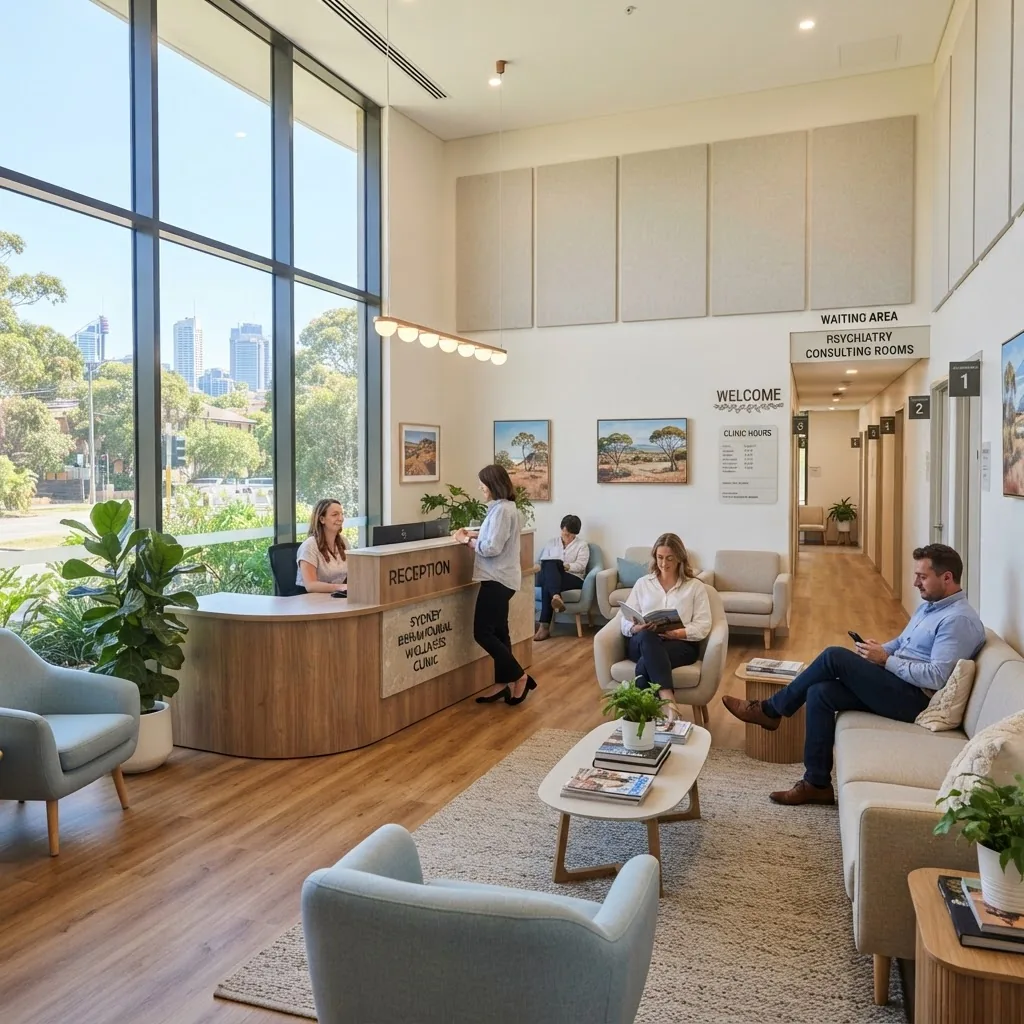
The Sydney mental health system combines public hospital psychiatry, community mental health centres and private clinics. Public services are generally referral-driven and focused on acute care and community support; private clinics offer outpatient assessments and ongoing management, often with variable billing arrangements including full fee, partial rebates and occasional bulk billing.
Public options include Local Health District (LHD) community mental health teams and public outpatient psychiatry linked to major hospitals; private options include specialist psychiatrists in practice groups and multidisciplinary clinics. According to a 2024 health services survey, metropolitan areas like Sydney have higher psychiatrist-per-capita availability than regional zones, but distribution varies by suburb.
Many Sydney clinics specialise by patient group and presenting issue:
- Adult psychiatry clinics for mood disorders and psychotic illnesses
- Child and adolescent psychiatry services for developmental and behavioural concerns
- Specialist clinics for conditions such as depression, bipolar disorder and ADHD
- Consultation-liaison psychiatry in hospitals for medically complex patients
For clarity on how roles differ across professions:
psychiatrist vs psychologist roles
Service settings:
- Hospital outpatient clinics (public and private)
- Community mental health centres (public)
- Private specialist practices and multidisciplinary clinics
- Child and adolescent outpatient teams and inpatient units
Typical wait times and booking pathways depend on urgency, referral type and whether you seek private or public care; urgent assessments can be routed through emergency departments or community mental health teams, while routine outpatient referrals may have multi-week waits.
Evidence and authority: Psychiatrist training and qualifications in Australia are regulated by the Royal Australian and New Zealand College of Psychiatrists; see their standards for specialist practice. External guidance: Royal Australian and New Zealand College of Psychiatrists.
What Is Bulk Billing and How Does It Work with Psychiatrists in Sydney?
Answer: Bulk billing is when a clinician charges Medicare directly for an eligible service so the patient has no out-of-pocket fee; with psychiatrists in Sydney, bulk billing is subject to clinician policy, patient eligibility and correct MBS item use linked to a GP referral or Mental Health Care Plan when required.
Term: Bulk billing — a Medicare billing method where the provider accepts the Medicare benefit as full payment and bills Medicare directly, leaving the patient with no gap fee.
How bulk billing works in practice for psychiatry in Sydney:
- GP or referral source consults: Many patients begin with a GP who assesses and may prepare a Mental Health Care Plan (MHCP) for allied services or a referral letter for a psychiatrist.
- Clinic policy check: Confirm with the psychiatry clinic whether they offer bulk billing for new or review consultations and for which patient groups (e.g., children, concession card holders).
- Appropriate MBS item: The psychiatrist or clinic must bill the correct MBS item number for the consultation when claiming Medicare — check the current Medicare schedule. According to 2024 Medicare guidelines, rebate eligibility depends on correct item use and documentation.
- Attend appointment: The clinic bills Medicare directly and accepts the Medicare benefit as full payment; some clinics will bulk bill initial assessment but charge for follow-ups, so clarify before booking.
Practical how-to steps for patients seeking bulk-billed psychiatry in Sydney:
- Ask your GP for a referral and a Mental Health Care Plan if appropriate.
- When calling clinics, explicitly ask “Do you bulk bill psychiatry services for new patients?”
- Confirm what documentation to bring (referral letter, concession card, Medicare card).
- If bulk billed, provide your Medicare card and the clinic will lodge the claim directly.
Patient scenario (anonymised): “Maya, a 29-year-old with severe depressive symptoms, was referred by her GP and found a private psychiatrist who bulk-billed her first 60‑minute assessment after verifying concession card status; follow-ups were partially rebated.” This demonstrates common mixed-billing models.
Note: bulk billing availability varies by clinician and time; call several clinics and ask about concession or bulk-bill slots. For Medicare policy details see the Australian Government Department of Health: Australian Government Department of Health.
Step-by-Step Psychiatrist Referral Process in Sydney
Answer: The referral process typically follows 6 clear steps: consult your GP, obtain a referral or Mental Health Care Plan, identify bulk-billing options, request the referral be directed to a psychiatrist, book the appointment, and claim Medicare on the day of the consultation.
Term: Referral — a formal written or electronic request from a GP or other authorised referrer directing a patient to a specialist psychiatrist for assessment and treatment.


-
Step 1 — See your GP and explain concerns.
Your GP documents symptoms, medical history and decides if a specialist psychiatric referral is appropriate. They can prepare a referral letter and, if needed, a Mental Health Care Plan. For details: Mental Health Care Plan process.
-
Step 2 — Request the specific referral content your psychiatrist needs.
Make sure the referral includes current symptoms, previous treatments, medications and functional impact; some clinics require GP letters that explicitly state clinical urgency and reason for psychiatric review.
-
Step 3 — Identify psychiatrists and confirm bulk-billing policy.
When searching, clarify whether the psychiatrist bulk bills new patients or only certain groups (e.g., children or concession holders). Ask what MBS items they will claim. For a national comparison of referral practices see the pillar explanation: referral process explained.
-
Step 4 — Book the appointment and submit paperwork.
Provide the clinic with your referral letter, Medicare card and any concession documentation. Many clinics accept emailed referrals or online uploads alongside booking. If the clinic bulk bills, they will note that in booking confirmation.
-
Step 5 — Attend the consultation and understand billing.
On the day, the clinic will either bulk bill Medicare directly (no out-of-pocket cost) or charge a fee and provide you a receipt to claim a rebate. Confirm whether long assessments (first visits) are bulk-billed or only shorter reviews are.
-
Step 6 — Follow-up care and shared care with your GP.
Psychiatrists often provide a management plan and coordinate with your GP for ongoing prescriptions and monitoring. Shared care arrangements are common in NSW public and private models; ask your psychiatrist about recommended follow-up intervals and who will manage medication changes.
Administrative notes: Referrals are usually valid for 12 months for specialist outpatient services unless otherwise specified. For telehealth referral comparisons see Canberra telehealth psychiatrist referral and psychiatrist referrals and booking in Melbourne for cross-city comparisons.
GP role and legal framework: GPs in Australia operate within Medicare and primary care frameworks to provide referrals; for a deeper GP-focused explanation see GP mental health care and referral requirements.
Case example: An anonymised case: “Tom (age 16) had escalating school anxiety; his GP prepared an MHCP and a referral to a child psychiatrist. The family contacted two clinics; one offered bulk-billed initial assessment for under-18s and scheduled a 4-week appointment.” This highlights practical booking variability and the need to call multiple clinics.
For regional referral comparisons: psychiatrist referral process in Brisbane.
Finding the Best Psychiatrist in Sydney for Your Needs
Answer: Match your clinical needs (depression, child psychiatry, ADHD, female psychiatrist preference) with a psychiatrist’s expertise, check bulk-billing or fee policy, compare wait times and contact multiple clinics for availability to identify the best psychiatrist in Sydney.
Term: Specialist psychiatrist — a psychiatrist with sub-specialty experience (child and adolescent, mood disorders, forensic psychiatry, etc.) relevant to your condition.
Key comparison points when choosing a psychiatrist:
| Factor | What to ask | Why it matters |
|---|---|---|
| Clinical expertise | Do you specialise in depression/child psychiatry/ADHD? | Matches treatment approach and outcomes |
| Billing model | Do you bulk bill new patients or bulk bill concession card holders? | Affects affordability and access |
| Wait time | What is the wait for an initial appointment? | Urgency of care needs determines choice |
| Gender preference | Do you have female psychiatrists available? | Comfort and therapeutic rapport |
For those prioritising gender-matched care, many Sydney clinics list availability of female psychiatrists; for comparative options in other cities see best female psychiatrists in Perth.
If you are seeking a psychiatrist for depression, ask about their outcomes and treatment approach (psychotherapy integration, pharmacotherapy strategies, ECT use where indicated). Use direct language when contacting clinics: “I need an assessment for major depressive disorder; do you bulk bill initial assessments?” For specialised online ADHD assessment and treatment options see ADHD psychiatric care options.
Geographic alternatives near Sydney can help reduce wait times — for nearby regional clinics see Wollongong psychiatrist services.
Practical tips:
- Make a short list of 3–5 psychiatrists who treat your condition and call to compare availability and billing.
- Ask for a brief phone triage or admin note confirming whether your presentation fits their patient profile for bulk-billed slots.
- Consider multi-disciplinary clinics if you want integrated psychological and psychiatric care (ask clinics about coordinated referrals).
Eligibility and Costs: Who Qualifies for Bulk Billing in Sydney?
Answer: Bulk billing is offered at the clinician’s discretion, often prioritised for children, concession card holders, low-income patients and urgent referrals; eligibility relies on Medicare enrolment, correct referral documentation and clinic policy rather than an automatic entitlement.
Term: Medicare Benefits Schedule (MBS) — the list of services subsidised by Medicare, with item numbers that determine rebate values and billing rules.
Eligibility factors that commonly influence bulk-billing decisions:
- Medicare enrolment and valid Medicare card
- Concession or pensioner card status (many clinics prioritise these patients)
- Age group (children or adolescents may receive priority bulk-billed slots)
- Referral urgency (clinics may bulk bill acute or high-risk referrals)
- Clinic funding model — public community clinics are more likely to offer bulk billing than private solo practices
Cost comparison (typical ranges in Sydney, indicative only):
| Service | Bulk-billed | Private fee (example) |
|---|---|---|
| Initial psychiatry assessment (60 min) | $0 out-of-pocket if bulk-billed | $250–$500, rebated via Medicare |
| Review visit (20–30 min) | Often bulk-billed for select patients | $120–$250, partial Medicare rebate |
Medicare rebate process: clinics submit the claim to Medicare using the correct MBS item; the Medicare rebate is paid to the provider (bulk billing) or to the patient (if the patient pays upfront and claims back). According to 2024 Medicare guidelines, rebates depend on updated MBS item values and correct documentation — verify live MBS listings at the Department of Health website: Australian Government Department of Health.
For geographic comparisons about bulk billing availability elsewhere, clinics sometimes mirror eligibility criteria — for example see regional services such as bulk billing psychiatrist services in Adelaide and psychiatrist referral services in Hobart.
Clinic quote:
“We reserve some bulk-billed appointments each week for concession card holders and urgent referrals. New patients should call reception to discuss eligibility and required documentation,” — Clinic Manager, Human Health Clinics, Sydney.
Common Conditions Treated by Bulk Billing Psychiatrists in Sydney
Answer: Bulk-billing psychiatrists in Sydney commonly treat depression, anxiety disorders, bipolar disorder, ADHD (including assessment and medication management), child and adolescent conditions, and provide medication management and crisis assessment when triaged as necessary.
Term: Depression — a mood disorder marked by persistent low mood, loss of interest and functional impairment.
Examples of conditions and typical psychiatric interventions:
- Depression: assessment, psychopharmacology, collaborative care with psychotherapy referrals. For depression specialists see local clinic listings for depression psychiatrist Sydney.
- Anxiety disorders: diagnostic clarity (panic disorder, GAD), medication options and relapse-prevention planning.
- Bipolar disorder: mood stabiliser management, monitoring, and hospital liaison as needed.
- ADHD in adolescents and adults: assessment, stimulant/non-stimulant medication management and coordination with psychologists — for online ADHD pathways see ADHD psychiatric care options.
- Child and adolescent psychiatry: developmental and behavioural assessments, family-focused interventions and school liaison.
- Medication management: initiation, titration and monitoring of psychotropics with shared care planning.
For severe cases requiring inpatient care or specialised services, psychiatrists coordinate with hospitals and mental health facilities; see options including psychiatric wards and specialised facilities: psychiatric ward and facility services and mental health hospital and treatment options.
Clinical note: bulk-billing for complex or long-duration specialist assessments is less common; clinics that do bulk-bill long assessments may prioritise paediatric or low-income patients. According to a 2024 industry report, demand for specialist child psychiatry outstrips supply in major cities, producing longer waits without targeted bulk-billing pathways.
How to Prepare for Your First Bulk-Billing Psychiatrist Appointment in Sydney
Answer: Bring your Medicare card, GP referral, Mental Health Care Plan if applicable, a concise medical and medication history, a symptom diary, and any relevant school or workplace reports; arrive early to complete registration and confirm bulk-billing arrangements.
Term: Mental Health Care Plan — a GP-prepared plan documenting agreed mental health goals and outlining referrals to mental health services, often needed for allied mental health rebates.
-
Step 1 — Gather ID and Medicare details.
Bring your Medicare card and photo ID; if you have a concession or pension card, bring it to confirm eligibility for bulk billing.
-
Step 2 — Bring GP referral and any Mental Health Care Plan.
Bring the signed referral letter, recent summary from your GP and the MHCP if available; this speeds triage and confirms eligibility for certain Medicare-rebated pathways. For a detailed MHCP guide see Mental Health Care Plan process.
-
Step 3 — Prepare a symptom diary and medication list.
Note onset, frequency, triggers, sleep, appetite, suicidal thoughts and prior treatment responses; list all current medications and dosages for safe prescribing.
-
Step 4 — Collect supporting documents.
Bring recent discharge summaries, school or workplace reports, and any psychological testing reports if available to help diagnostic clarity.
-
Step 5 — Confirm logistics and billing before appointment.
Call reception to reconfirm the appointment, how to access the clinic, whether the appointment is bulk-billed and if telehealth is an option. If a gap fee is charged, ask for an estimate and whether a Medicare claim will be provided.
-
Step 6 — Attend and ask for written follow-up.
At the end of the consultation ask for a summary letter to your GP and a clear plan for follow-up and prescriptions. Confirm if future appointments are bulk-billed or will incur fees.
Practical tip: if anxious about the first appointment, ask whether a shorter initial phone triage is possible to establish basic safety and urgency; many clinics offer admin triage to prioritise urgent cases.
Frequently Asked Questions About Psychiatrist Bulk Billing and Referrals in Sydney
Answer: Common FAQs cover what bulk billing means, referral requirements, waiting times, what to bring and how gender preference affects availability; short answers below link to deeper sections in this guide.
- What is a bulk billing psychiatrist in Sydney?
- Do I need a referral to see a psychiatrist in Sydney?
- How do I find the best psychiatrist in Sydney for depression?
- How does the Mental Health Care Plan affect bulk billing eligibility?
- How long does it take to get a bulk billed psychiatrist appointment in Sydney?
- What should I bring to my first psychiatrist appointment in Sydney?
- Are female psychiatrists available for bulk billing in Sydney?
- How can I verify that a bulk billing psychiatrist meets professional standards?
Transition: The next section lists practical resources and support services in Sydney and nationally to help you book, access and navigate psychiatric care.
Resources and Support for Sydney Psychiatric Patients
Answer: Sydney patients can access Medicare centres, mental health helplines, community support services and online booking platforms; use government and professional resources to verify eligibility and find appropriate clinicians.
Helpful local and national resources:
- Medicare mental health services — for information on services, eligibility and booking assistance.
- Medicare Mental Health Phone Service — phone-based access and triage information.
- mental health support lines and contacts — crisis and ongoing supports.
- searching for psychologists in Australia — for integrated care options.
- bulk bill psychiatrist telehealth services — telehealth alternatives for remote or time-limited access.
- online and telehealth psychiatry services — national telehealth directories and providers.
National authoritative resources:
- Australian Government Department of Health — Medicare rules, MBS schedule and national policy (verify current item numbers and rebate values).
- Royal Australian and New Zealand College of Psychiatrists — training standards and specialist listings.
- Mental Health Australia — patient support programs and national statistics.
Additional practical links within this site to guide booking and local service navigation:
- psychiatrist qualifications and training
- psychiatrist career paths and workplaces
- Telehealth Psychiatrist Services and Online Mental Health Care
- mental health practitioner roles and qualifications
- searching for psychologists in Australia
For urgent support in Sydney, contact local crisis services and national helplines (see the support lines link above). If you need phone-based Medicare mental health access, see Medicare Mental Health Phone Service.
Conclusion and Next Steps
Answer: To access bulk-billed psychiatry in Sydney, start with your GP for a referral and Mental Health Care Plan, phone multiple clinics to confirm bulk-billing availability, and prepare the correct documents to speed booking; if urgent, seek public community mental health or emergency services.
Key takeaways:
- Bulk billing is clinician-dependent — call clinics to confirm.
- A GP referral and clear paperwork accelerate access and Medicare processing.
- Check for specialist match (depression, child psychiatry, ADHD) and compare wait times.
- Use the listed resources and the Department of Health for MBS item verification.
If you need help finding a psychiatrist in Sydney or want to discuss availability at our clinics, contact your GP to start a referral and then call clinics on your shortlist — many patients find calling three clinics yields the fastest appointment. For detailed referral steps see referral process explained.