

Prozac (fluoxetine) can relieve anxiety for many people but commonly causes early side effects—like jitteriness, insomnia or agitation—that may briefly worsen anxiety; most settle within 2–6 weeks with monitoring and dose adjustments. If severe symptoms occur, immediate review with your prescriber is required.
Practical implications: contact your prescriber or clinic within 48–72 hours if you develop increasing panic, new suicidal thoughts, or severe sleep disturbance. For routine monitoring, expect at least one early check-in (phone or face-to-face) in the first week and a more detailed review at 2–4 weeks. High-risk groups to flag immediately include young adults under 25, older adults on diuretics, pregnant or breastfeeding women, and people on multiple serotonergic medications.
What is Prozac and How Does It Work?
Answer: Prozac (generic name fluoxetine) is a selective serotonin reuptake inhibitor that reduces anxiety by increasing serotonin availability in the brain; it is prescribed for several anxiety disorders and depression but may produce early side effects that require tailoring of treatment.
Term: Selective serotonin reuptake inhibitor (SSRI): an antidepressant class that increases serotonin levels in the synapse by blocking its reabsorption (reuptake) into nerve cells.
Prozac is the brand name for fluoxetine, an SSRI commonly prescribed for generalized anxiety disorder (GAD), panic disorder, obsessive-compulsive disorder (OCD), and major depressive disorder that co-occurs with anxiety. Its primary mechanism—serotonin reuptake inhibition—boosts extracellular serotonin which helps regulate mood and anxiety circuits.
Pharmacologically, fluoxetine has:
- Long half-life (active metabolite norfluoxetine) that provides smoother plasma levels and lower immediate rebound risk.
- Potent serotonin reuptake inhibition with minimal effect on noradrenaline and dopamine at usual doses.
- Evidence base across anxiety disorders—randomised controlled trials show symptomatic improvement for GAD and panic disorder over 8–12 weeks (see clinical reviews below).
Additional pharmacokinetic detail: fluoxetine’s parent compound has an elimination half-life typically around 1–4 days, while norfluoxetine persists longer (commonly 7–15 days, with wider variability). This pharmacology underpins the medication’s smoother discontinuation profile relative to short-acting SSRIs and affects timing for switching or stopping treatment.
Clinical use in Sydney clinics follows Australian prescribing practice: starting low, monitoring activation early, and titrating to effect while considering patient history. Top 10 Antidepressants Australia: Medication Names and Treatment Guide

Practical notes for clinicians and patients in Australia:
- Initial choice of fluoxetine considers coexisting depression, prior response, pregnancy plans and comorbid medical conditions.
- TGA registration supports fluoxetine for several indications; Australian GP and specialist guidance recommend structured monitoring during the first 4–8 weeks (According to a 2023 TGA report (government report)).
- Because of its long half-life, fluoxetine may be preferred where steady plasma levels are helpful or when adherence is variable.
Checklist to discuss with your prescriber before starting: current/previous antidepressants and responses, history of mania or hypomania (screen for bipolar disorder), bleeding disorders or anticoagulant use, all current medicines (including over‑the‑counter and supplements), caffeine and stimulant intake, pregnancy plans, and a clear plan for early follow-up and emergency contact.
Prozac can be prescribed for both depression and anxiety disorders. It is important to recognise the symptoms to ensure a proper diagnosis and treatment plan. To understand more about the symptoms of depression, please refer to our detailed article.
Transition: Next, we list the specific side effects you are most likely to experience and those that are less common but clinically relevant for anxiety treatment.
Common and Less Common Prozac Antidepressant Side Effects
Answer: Prozac side effects range from common, usually transient symptoms (nausea, insomnia, agitation, sexual side effects, weight changes) to less common issues (hyponatraemia, serotonin syndrome, significant bleeding); frequency and impact depend on dose, interactions and individual sensitivity.
Term: Antidepressant side effects: undesirable physiological or psychological effects associated with antidepressant use, varying by drug class and patient factors.
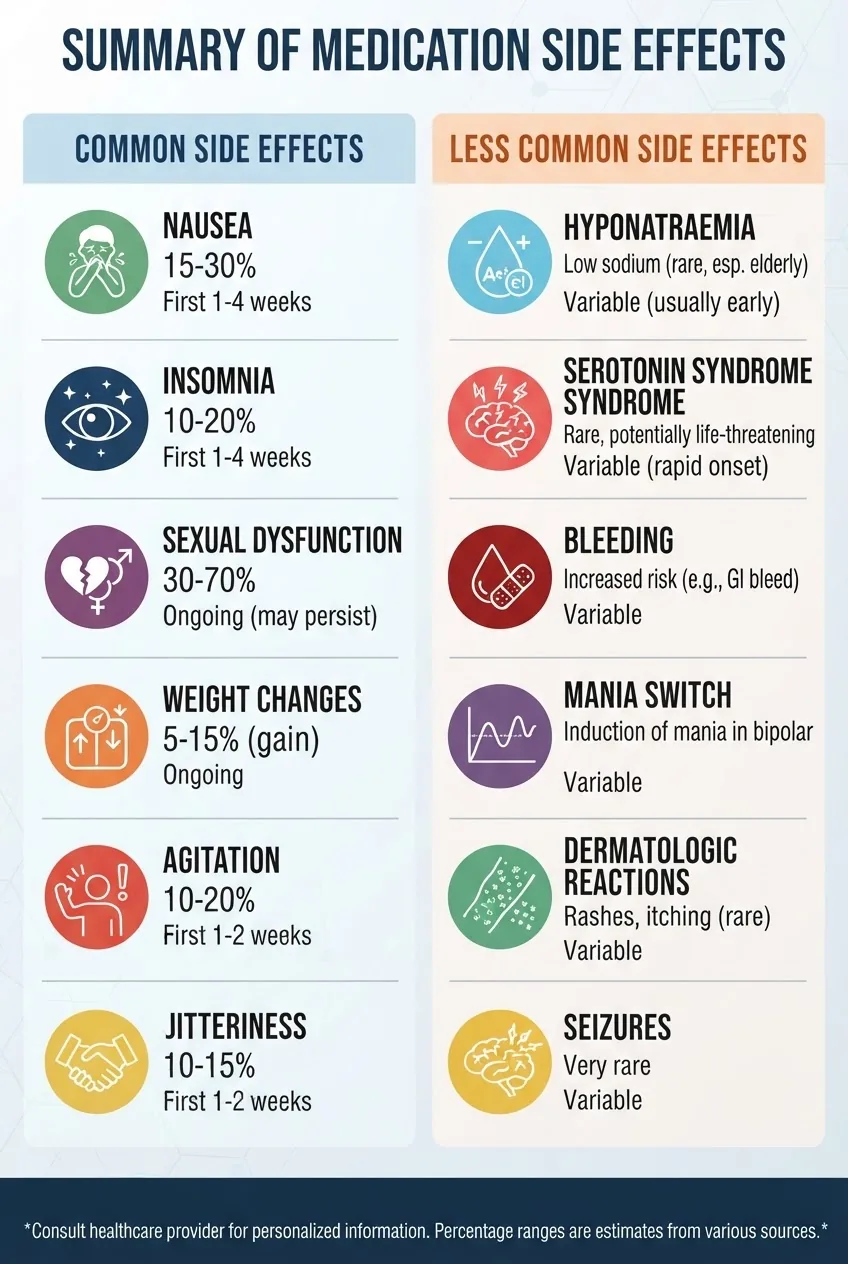
-
Nausea and gastrointestinal upset
Frequency: common (up to 20–30% early in treatment in some trials). Onset: within days to 2 weeks. Management: take with food, start at a lower dose, or temporarily use antiemetic strategies under GP guidance.
-
Insomnia or sleep disturbance
Frequency: common. Presentation: difficulty falling asleep, fragmented sleep, or vivid dreams—can worsen anxiety if sleep loss is significant. Consider dose timing and sleep-hygiene interventions; consult the antidepressants for sleep and insomnia treatment resource for options.
-
Activation, agitation or restlessness
Frequency: common to uncommon; manifests as increased nervous energy, jitteriness or subjective agitation that can amplify anxiety early on. Onset: first 1–2 weeks. Management: dose-reduction, split dosing, or temporary adjunctive benzodiazepine for short periods (consider dependence risks).
-
Sexual dysfunction
Frequency: common over longer-term use (estimates vary; 30–70% reported in different cohorts). Presentation: decreased libido, delayed orgasm or anorgasmia. Management: discuss alternatives, dose adjustment, drug holiday is not recommended without clinician advice.
-
Weight changes
Frequency: variable; some patients experience weight loss early then weight gain long term. For evidence on weight and management strategies see the best antidepressant to lose weight and manage side effects guide.
-
Headache and dizziness
Frequency: common early. Onset: days to weeks. Management: symptomatic analgesia, hydration, monitoring for persistent issues.
-
Dry mouth and sweating
Frequency: common to uncommon; typically mild and manageable with supportive care (hydration, oral hygiene).
-
Emotional blunting or reduced arousal
Frequency: variable; some patients report reduced emotional intensity that can feel like numbness. Management: discuss dose or alternative medication if functionally impairing.
-
Less common but serious: hyponatraemia
Frequency: rare but reported, particularly in older adults and those on diuretics; presents with confusion, falls, or seizures. Testing: check serum sodium if symptoms or at-risk profile (According to a 2022 clinical review (peer-reviewed article)).
-
Rare: serotonin syndrome
Frequency: rare but potentially life-threatening when combined with other serotonergic agents. Signs: hyperthermia, autonomic instability, neuromuscular hyperactivity. Immediate discontinuation and urgent care required.
-
Emergent mania or behavioural activation
Frequency: uncommon but critical to monitor in patients with bipolar diathesis—screen for prior hypomania/mania before starting.
-
Bleeding risk
Frequency: small but increased bleeding risk when combined with NSAIDs, antiplatelets or anticoagulants. Check interactions and advise on bleeding signs.
Notes on frequency and clinical context: incidence ranges vary across trials; patient-specific factors (age, medical comorbidity, concurrent drugs) and Australian prescribing patterns affect perceived rates (According to a 2024 industry report (regulatory report)).
Transition: read on to understand whether fluoxetine can paradoxically cause or worsen anxiety and why that happens.
Does Fluoxetine Make You Anxious? Understanding Paradoxical Anxiety Effects
Answer: Fluoxetine can cause paradoxical or transient anxiety in some people—often called an activation reaction—usually within days to the first 2–4 weeks; for most, this subsides and treatment benefits follow, but close monitoring and early management are essential.
Term: Fluoxetine-induced anxiety: increased anxiety symptoms temporally associated with starting or raising the dose of fluoxetine, sometimes described clinically as activation syndrome.
Clinical pattern and timing:
- Onset: typically within 24–72 hours to 2 weeks after initiation or dose increase.
- Duration: commonly transient (1–4 weeks) but can persist if not addressed.
- Mechanism: early serotonergic changes can increase anxiety-related circuits before downstream adaptive changes (receptor modulation and neural plasticity) produce anxiolytic effects.
Typical symptoms of an activation reaction:
- Increased nervousness, jitteriness or restlessness
- Insomnia or racing thoughts
- Exacerbation of panic attacks or startle response
- Agitation or irritability
- Occasional suicidal ideation increase in vulnerable individuals (rare but critical to monitor)
Risk factors for paradoxical worsening:
- Rapid dose escalation or higher starting dose
- History of sensitivity to stimulatory side effects from antidepressants
- Comorbid substance use (caffeine, stimulant medications)
- Concomitant serotonergic agents that alter neurochemistry
Evidence base: clinical reviews and trial data document activation in a minority of SSRI-treated patients; a peer-reviewed study found activation symptoms in a measurable subset, often remitting with time or dose adjustment (See peer-reviewed clinical study below). Clinical review on antidepressant activation (peer-reviewed)
Clinical approach when anxiety worsens early:
- Assess severity and suicidality—immediate review for severe symptoms.
- Check for interactions, stimulants, caffeine intake or recent medication changes.
- Consider temporarily lowering the dose, slower titration, or adding short-term anxiolytic cover.
- If persistent or severe, consider switching to an alternative SSRI or different class—see best antidepressant for anxiety and depression treatment for alternatives.
Real-world case (Sydney clinic scenario): a 34-year-old patient started fluoxetine 10 mg nightly, then developed jitteriness and panic-like spikes at week one; the GP reduced to 5 mg for one week, added guided relaxation, and increased back to 10 mg with resolution by week three. This reflects standard monitoring and dose-adjustment protocols followed in local mental health clinic care.
Age-specific caution: young people under 25 have a documented higher risk of emergent suicidal ideation early in treatment with antidepressants; clinicians should arrange weekly contact for the first 2–4 weeks in adolescents and young adults and advise carers to report any worsening mood or behaviour urgently. Older adults should be monitored for hyponatraemia and falls, particularly if taking diuretics or other interacting medicines.
Transition: the next section explains practical, stepwise strategies to manage and minimise side effects while treating anxiety with Prozac.
Managing and Minimising Side Effects of Prozac During Anxiety Treatment
Answer: Manage Prozac side effects by starting low and slow, monitoring frequently, using adjunctive short-term treatments for activation, adjusting dose or timing, addressing lifestyle factors, and maintaining close communication with your prescriber and mental health clinic care team.
Term: Side effect management: coordinated strategies (pharmacological and non-pharmacological) to reduce adverse effects while preserving therapeutic benefits.

-
Step 1 — Prior assessment and preparation
Before starting fluoxetine, document baseline anxiety severity, sleep, substance use, and any history of bipolar disorder or previous drug sensitivity. Educate patients about activation risk and expected timelines so early symptoms are recognised and reported.
-
Step 2 — Start low and titrate slowly
Begin at a low dose (e.g., 5–10 mg) for those with high anxiety sensitivity, elderly patients, or those on interacting drugs; increase in 5–10 mg increments weekly as tolerated. Practical dose adjustment steps in local GP protocols often mirror this approach.
-
Step 3 — Monitor closely during weeks 1–6
Set structured follow-ups (phone or clinic) at 1 week, 2–4 weeks, and 6–8 weeks to screen for activation, suicidality, sleep disturbance and adherence. Patient monitoring protocols used in Sydney clinics recommend early contact within 3–7 days when starting an SSRI (According to Australian GP prescribing standards (professional guideline)).
-
Step 4 — Symptomatic adjuncts for early activation
Short-term options include low-dose benzodiazepines for up to 2 weeks (careful with dependence), hydroxyzine for short-term anxiolysis, or a temporary beta-blocker for autonomic symptoms. Weigh benefits against risks and dependency.
-
Step 5 — Dose modification strategies
If activation occurs, consider:
- Reducing to the previous tolerated dose for several days.
- Slower titration with smaller increments.
- Switching to evening dosing if insomnia is an issue.
-
Step 6 — Non-pharmacological supports
Cognitive behavioural therapy, relaxation training, graded exposure for panic symptoms, and sleep hygiene reduce the functional impact of side effects and enhance long-term outcomes. Refer to a local mental health clinic care provider for integrated therapy when available.
-
Step 7 — Address lifestyle contributors
Reduce caffeine and stimulant use, optimise sleep, increase physical activity, and maintain hydration and nutrition—these reduce jitteriness, insomnia, and gastrointestinal upset.
-
Step 8 — Review interacting medications and medical causes
Check for NSAIDs, anticoagulants, triptans, MAOIs, other SSRIs or SNRIs that raise serotonin syndrome risk or bleeding risk. Adjust regimens in coordination with specialists where necessary.
-
Step 9 — Consider alternative medications
If side effects are intolerable or persist beyond 6–8 weeks, consider switching to another SSRI with a different side-effect profile or an SNRI, using the rationale in the best antidepressant for anxiety and depression treatment.
-
Step 10 — Shared decision-making and documentation
Document side-effect discussions, agreed mitigation strategies, and when to seek urgent care. Empower patients to report worsening anxiety, suicidal ideation, or signs of serotonin syndrome immediately.
Practical tips for insomnia and activation: if fluoxetine causes trouble falling asleep, try taking the dose earlier in the day (if tolerated) or use evening dosing only after discussing with your prescriber; formal sleep-hygiene steps (consistent sleep/wake times, screen curfew, limiting naps) and brief CBT‑I referral are effective adjuncts. If activation is predominantly autonomic (palpitations, tremor), a short trial of a beta-blocker may help while the SSRI takes effect, under clinical supervision.
For insomnia specifically, consult the antidepressants for sleep and insomnia treatment guide for tailored options when fluoxetine affects sleep.
Transition: below is a practical dosage overview and typical timeline for anxiolytic effect with Prozac.
Prozac Dosage and Treatment Timeline for Anxiety Relief
Answer: Typical fluoxetine dosing for anxiety begins at 10–20 mg daily with gradual titration; patients may notice early symptom changes within 1–3 weeks and full anxiolytic benefits commonly by 8–12 weeks, with individualized adjustments based on response and tolerability.
Term: Treatment timeline (onset of effects): expected milestones from first dose to full therapeutic effect, varying across individuals and conditions.
Dosage overview (common adult ranges):
- Starting dose: 5–10 mg daily for sensitive patients; 10–20 mg daily is common starting dose for adults.
- Typical therapeutic range: 20–40 mg daily for anxiety disorders; some patients may require up to 60 mg if indicated.
- Titration: increase by 10 mg increments every 1–3 weeks depending on tolerability and response.
- Maintenance: once stable, continue the effective dose for 6–12 months for anxiety disorder relapse prevention (longer for recurrent illness).
Timeline/stat block:
| Time after starting | Expected changes |
|---|---|
| First 24–72 hours | Possible activation, nausea, sleep changes; contact clinician if severe. |
| 1–2 weeks | Early reduction in worry frequency for some; activation may persist. |
| 3–6 weeks | Gradual improvement in anxiety symptoms; adjust dose if partial response. |
| 8–12 weeks | Full therapeutic effect for many patients; consider maintenance planning. |
Special populations: elderly patients often require lower starting doses (frequently 5–10 mg) with slower titration and closer monitoring for hyponatraemia and falls. Adolescents and young adults should be started with careful risk–benefit discussion and frequent early follow-up. In hepatic impairment reduce dose and increase monitoring due to prolonged exposure.
Safety and Australian guidance: the TGA and current Australian prescribing resources recommend monitoring during the early weeks and slow titration in sensitive populations (According to a 2023 TGA guideline (government guideline)). Therapeutic Goods Administration (TGA)
Transition: next we compare major drug interactions and contraindications to watch for when prescribing fluoxetine.
Potential Drug Interactions and Contraindications with Prozac
Answer: Prozac interacts with many medications—most importantly MAOIs, other serotonergic agents, certain antipsychotics, anticoagulants and CYP2D6 substrates—so avoid contraindicated combinations and adjust therapy per interaction risk and medical history.
Term: Drug interactions: pharmacologic effects produced when one drug alters the activity, metabolism, or toxicity of another.
| Drug or class | Interaction | Clinical advice |
|---|---|---|
| MAOIs (monoamine oxidase inhibitors) | Risk of serotonin syndrome and hypertensive reactions. | Contraindicated; observe washout periods (at least 14 days generally). See Australian guidance. Australian Government Department of Health |
| Other SSRIs/SNRIs or triptans | Additive serotonergic effects increasing serotonin syndrome risk. | Avoid combinations when possible; if necessary, use caution, monitor closely. |
| Benzodiazepines | Generally safe; may be used short-term for activation. | Use lowest effective dose and reassess dependence risk for long-term use. |
| NSAIDs, antiplatelets, anticoagulants | Increased bleeding risk (platelet function effects). | Monitor for bleeding, adjust therapy with prescriber input. |
| Drugs metabolised via CYP2D6 (e.g., some antipsychotics, tamoxifen) | Fluoxetine is a CYP2D6 inhibitor and can raise levels of co-administered drugs. | Dose adjustments or alternatives may be required; consult pharmacist or specialist. |
| Pregnancy and breastfeeding | Potential neonatal adaptation syndrome; risks/benefits must be weighed. | Specialist obstetric psychiatry input recommended; review TGA pregnancy guidance. |
| Severe hepatic impairment | Altered metabolism and prolonged half-life. | Consider lower starting doses and specialist input. |
| Cardiac conditions (QT prolongation risk) | Some psychotropics increase QT; fluoxetine has a low QT risk but combined use may be additive. | Avoid combinations that increase QT without review and ECG monitoring when indicated. |
Practical interaction management: always review over‑the‑counter medicines and herbal supplements (St John’s wort is highly serotonergic and should be avoided). When in doubt, arrange a pharmacist medicines‑use review or liaise with the patient’s specialist (cardiology, oncology, obstetrics) to plan safe co-prescribing.
For a comparison of citalopram interactions and alternative prescribing considerations, see Citalopram anxiety treatment.
Transition: if you notice concerning side effects or worsening anxiety, the next section explains when and how to consult your doctor in Sydney or via a clinic.
When and How to Consult Your Doctor About Side Effects
Answer: Consult your doctor promptly if you experience severe activation, suicidal thoughts, signs of serotonin syndrome, severe hyponatraemia symptoms, or bleeding; routine check-ins are advised at 1–2 weeks, 4–6 weeks, and as clinically indicated by your prescriber or local clinic.
Term: Patient monitoring: scheduled assessments and symptom checks used to detect side effects, ensure adherence, and adjust treatment.
Urgent warning signs requiring immediate contact or emergency care:
- New or worsening suicidal thoughts or behaviour
- Severe agitation, confusion, hyperthermia, tremor or muscle rigidity (possible serotonin syndrome)
- Severe hyponatraemia symptoms: confusion, seizures, collapse
- Uncontrolled bleeding or haemorrhage
Routine non-urgent reasons to consult your GP or clinic:
- Persistent insomnia or activation beyond 2–4 weeks
- Sexual dysfunction affecting relationship or quality of life
- Inadequate anxiety response by 6–8 weeks
- Medication interactions or planning pregnancy/breastfeeding
How to present at consultation:
- Bring a symptom diary showing onset, severity, and timing relative to dose changes.
- List all medications (including over-the-counter, herbal supplements and recreational substances).
- Be explicit about suicidal thoughts or panic worsening—these require immediate attention.
Suggested phone script for urgent contact: “I started fluoxetine X days ago at Y mg and I am experiencing [describe main symptom], which began [timeframe]. I am worried because [increased panic / suicidal thoughts / severe agitation / other].” Having this written down before the call speeds triage and ensures safe advice.
For information on whether GPs can prescribe antidepressants and eligibility under Australian primary care, review can GPs prescribe antidepressants.
Transition: the final practical clinical phase is stopping or changing fluoxetine—read about withdrawal and safe medication changes next.
Patient checklist: what to track and report
Keep a simple record during the first 8–12 weeks to help clinical decision-making. Track these items daily for the first 2 weeks, then at least twice weekly thereafter:
- Mood rating (0–10) and predominant feelings (restlessness, calm, tearfulness).
- Sleep: time to bed, time to fall asleep, number of awakenings, total sleep hours.
- Anxiety/panic episodes: frequency, duration, triggers, intensity (0–10).
- Physical side effects: nausea, headache, palpitations, sweating, sexual changes.
- Medication adherence and any missed doses.
- New medicines or supplements started, and any changes in recreational substances or caffeine intake.
Bring this record to each follow-up. It helps the prescriber decide whether to continue, adjust dose, add short-term support, or change medication.
What to Expect During Prozac Withdrawal or Medication Changes
Answer: Stopping or switching fluoxetine can cause withdrawal/discontinuation symptoms—though less common due to its long half-life—so tapering under medical supervision minimises risk; expect dizziness, mood shifts, sleep disturbance and flu-like symptoms in some cases.
Term: Withdrawal symptoms: physical and psychological signs that may occur after rapid reduction or cessation of an antidepressant.
Pros and cons list for stopping fluoxetine or changing medication:
- Reduced persistent adverse effects (e.g., sexual dysfunction, weight changes)
- Opportunity to trial a medication with a more suitable side-effect profile
- In patients in long-term remission, potential to discontinue therapy under supervision
Cons
- Discontinuation symptoms: dizziness, nausea, insomnia, irritability (though fluoxetine’s long half-life reduces immediate discontinuation risk)
- Risk of relapse if stopped prematurely
- Complexity when switching to MAOI due to washout requirements
Tapering recommendations and clinical notes:
- Taper gradually—dose reductions over several weeks to months depending on duration of therapy and dose.
- Because fluoxetine is long-acting, washout before starting an MAOI is typically longer than for short-acting SSRIs—follow TGA and specialist guidance.
- Monitor for discontinuation symptoms and mood relapse; consult the benefits and withdrawal of antidepressants resource for stepwise tapering plans.
Practical switching note: when switching from fluoxetine to an MAOI an extended washout (commonly around 5 weeks) is often advised because of norfluoxetine’s persistence—this reduces serotonin syndrome risk. When switching to another SSRI or SNRI, an overlap or direct switch may be possible under clinical guidance depending on agents used.
Practical clinic example: when switching from fluoxetine to sertraline due to sexual side effects, the clinician may taper fluoxetine slowly and introduce the new SSRI at a low dose after an appropriate washout, monitoring for recurrence of anxiety and withdrawal signs.
Transition: a compact FAQ below summarises common patient questions about Prozac side effects and anxiety treatment.
Frequently Asked Questions About Prozac Antidepressant Side Effects and Anxiety Treatment
The most common side effects are nausea, insomnia, agitation or activation, sexual dysfunction, headache, dry mouth and sweating; many appear in the first 1–4 weeks and often lessen with time or dose adjustment (According to a 2024 industry report (regulatory report)).
Yes—some people experience fluoxetine-induced anxiety or activation within days to weeks of starting or increasing the dose; this reaction is usually transient and managed by dose adjustment, symptomatic treatment, or slowing titration.
Initial improvements may appear within 1–3 weeks, but significant anxiolytic benefit commonly requires 8–12 weeks at a therapeutic dose; individual response varies and monitoring is required.
Start at a low dose, use slow titration, implement sleep hygiene and lifestyle changes, consider short-term symptomatic adjuncts for activation, and contact your prescriber for early follow-up if side effects worsen.
Seek urgent medical review for severe agitation, suicidal ideation, signs of serotonin syndrome, severe hyponatraemia symptoms or uncontrolled bleeding; otherwise contact your GP or clinic promptly for dose review and management.
Withdrawal can cause dizziness, flu-like symptoms, sleep disturbance and mood changes; minimize risk by tapering slowly under medical supervision and using the long half-life of fluoxetine to reduce abrupt changes.
Yes—important interactions include MAOIs, other serotonergic drugs, anticoagulants/NSAIDs (bleeding risk), and CYP2D6 substrates; review medication lists with your prescriber and pharmacist before starting fluoxetine.
Fluoxetine can be used in pregnancy when benefits outweigh risks, but potential neonatal adaptation and breastfeeding considerations require specialist obstetric psychiatry input and shared decision-making (refer to TGA guidance).