
Citalopram is an SSRI (selective serotonin reuptake inhibitor) commonly prescribed for anxiety disorders in Australia; it reduces excessive anxiety by raising serotonin availability in the brain, with typical GP-starting doses, monitored titration, and clinical safety checks for heart and drug interactions.
What is Citalopram and Its Drug Class?
Answer: Citalopram is an SSRI antidepressant — a selective serotonin reuptake inhibitor — commonly used off-label and on-label to treat anxiety disorders by increasing serotonin levels in the brain.
Term: SSRI — a selective serotonin reuptake inhibitor is a class of medications that increase serotonin activity by blocking its reabsorption (reuptake) into neurons.
Citalopram belongs to the SSRI class, which includes drugs prescribed for depression and several anxiety disorders such as generalised anxiety disorder (GAD) and panic disorder. SSRIs work by modulating serotonin, a neurotransmitter often described as a mood messenger. Citalopram is a racemic mixture of two mirror-image molecules; its close relative, escitalopram, is the S-enantiomer and is marketed separately.
In Australian clinical practice, SSRIs are a first-line pharmacological option for moderate-to-severe anxiety and for patients where psychotherapy alone has been insufficient. Compared with older classes (tricyclic antidepressants), SSRIs generally have safer overdose profiles and more tolerable side effects for most patients.
Key drug-class comparisons:
- SSRIs (e.g., citalopram, escitalopram, fluoxetine) — first-line for many anxiety disorders.
- SNRIs (serotonin–norepinephrine reuptake inhibitors) — alternative class with overlap in indications.
- Tricyclic antidepressants — effective but with more anticholinergic and cardiac risks.
For an overview of antidepressant options available in Australia, see Top 10 Antidepressants Australia: Medication Names and Treatment Guide.

Regulatory note: Therapeutic Goods Administration (TGA) lists citalopram as an approved medicine in Australia; prescribing follows TGA labeling and local clinical guidelines.
How Does Citalopram Work to Treat Anxiety?
Answer: Citalopram reduces anxiety by inhibiting serotonin reuptake in the brain, increasing serotonin at synapses, which helps regulate mood and fear circuits over weeks.
Term: Serotonin reuptake inhibition — the process by which a drug blocks transporter proteins that normally remove serotonin from the synapse, prolonging its action on receptors.
Mechanism explained plainly: think of serotonin as a mood messenger travelling between brain cells; citalopram makes that messenger linger longer at the receiving end so signals related to calmness and emotional regulation strengthen. This modulation adjusts neural pathways involved in anxiety, including circuits in the amygdala, prefrontal cortex and hippocampus.
Physiology and timeline:
- Immediate pharmacology: citalopram blocks the serotonin transporter (SERT) within hours of dosing, increasing synaptic serotonin concentration.
- Cellular adaptation: receptor sensitivity, downstream signalling and neural plasticity change over days to weeks — this is why symptom relief often lags behind pharmacological action.
- Clinical effect: measurable anxiety reduction commonly appears after 2–6 weeks, while full benefit can require 8–12 weeks depending on disorder severity.
Analogies to clarify: if anxiety is an overactive alarm system, serotonin helps retrain the sensors; citalopram reduces “false alarm” signalling so responses become less exaggerated over time.
Clinical nuance: response to citalopram varies by disorder subtype — panic disorder, GAD and social anxiety respond differently in trial data — and is influenced by dose, adherence, comorbidities and concurrent psychotherapy.
Evidence sources: meta-analyses and RCTs report moderate effect sizes for SSRIs in anxiety disorders; consult the Cochrane and specialty guideline reviews for disorder-specific outcomes. For safety and approval information, see the TGA website and Australian Department of Health mental health resources: Australian Government Department of Health.
Citalopram Prescription Guidelines for Anxiety in Australia?
Answer: In Australia, GPs can initiate and manage citalopram for anxiety following assessment, with a typical stepwise process: diagnosis, baseline checks (including ECG when indicated), starting low (commonly 10–20 mg), scheduled review, and dose titration guided by response and side effects.
Step-by-step prescribing process (Australian GP context):
- Assessment: Confirm anxiety disorder criteria (e.g., GAD, panic disorder) and suicide risk; consider psychological therapy first-line for mild cases.
- Discuss options: Explain SSRI benefits, side effects, expected onset and duration; obtain informed consent for treatment.
- Baseline investigations: Medication history, current medications (for interactions), liver function as clinically indicated, and ECG if the patient has cardiac history or is on other QT-prolonging drugs.
- Prescribe initial dose: commonly 10–20 mg daily for anxiety; a lower start may be used for older adults or those with comorbidities.
- Provide safety plan: instruct on side effects, when to seek urgent care (suicidal thoughts, severe allergic reaction), and avoid abrupt cessation.
- Arrange follow-up: review at 1–2 weeks (phone or in-person) for tolerability, 4–6 weeks for early response, then 8–12 weeks to assess full effect and need for maintenance.
- Consider Mental Health Care Plan: for psychotherapy access and shared care; discuss with patient Mental Health Care Plan entitlements and referral pathways.
Clinical case (anonymised):
Case: A 34-year-old female with GAD unresponsive to CBT reported daily panic symptoms. GP started citalopram 10 mg nightly, increased to 20 mg at two weeks due to partial response. At six weeks anxiety scores reduced by 50%; ECG was normal and no significant side effects. Ongoing review scheduled at three months to consider 6–12 month maintenance.
Dosage protocol table (anxiety vs depression):
| Indication | Typical GP starting dose | Usual effective range | Notes |
|---|---|---|---|
| Generalised anxiety disorder | 10–20 mg daily | 20–40 mg daily | Start low; titrate based on response and tolerability. |
| Panic disorder | 10–20 mg daily | 20–40 mg daily | May require slower titration due to initial activation effects. |
| Major depressive disorder | 20 mg daily | 20–40 mg daily | Often started at 20 mg for depression; same upper dosing limits apply. |
Dosing limits and safety: TGA and product information advise maximum daily doses (commonly 40 mg) and caution with high doses due to QT interval risk, particularly in older adults or with interacting medications. For full prescribing information consult the TGA and product monographs: Therapeutic Goods Administration (TGA).
Shared care and referrals: GPs can continue prescribing but may refer to psychiatrists for complex cases, treatment resistance, or comorbidities. For information on GP prescribing authority and eligibility see Can GPs Prescribe Antidepressants? Eligibility and Guide.

Documentation and continuity: create a clear treatment plan, document baseline measures, discuss expected timeline, and provide written information and emergency contacts. Utilize a Mental Health Care Plan when psychotherapy is also indicated and eligible under Medicare.
Effectiveness of Citalopram in Anxiety Treatment?
Answer: Citalopram demonstrates moderate effectiveness for many anxiety disorders with response often seen by 4–8 weeks; pooled clinical trials show meaningful symptom reduction versus placebo, though effect sizes vary by disorder.
Clinical trial summary: systematic reviews and randomized controlled trials typically report that SSRIs, including citalopram, produce statistically significant improvements in anxiety symptoms compared with placebo. Response rates commonly range from 50–70% depending on disorder, baseline severity and definition of response.
Timeframe to relief:
- Initial tolerability phase: first 1–2 weeks — side effects may predominate before benefit.
- Early improvement: 2–4 weeks — some patients notice reduced worry intensity or panic frequency.
- Substantial response: 6–12 weeks — many clinical trials assess primary endpoints at 8–12 weeks.
Disorder-specific notes:
- Generalised anxiety disorder: SSRIs show moderate benefit; long-term maintenance reduces relapse risk.
- Panic disorder: SSRIs reduce frequency and severity of panic attacks but may initially cause activation; slow titration can help.
- Social anxiety disorder: SSRIs reduce avoidance and distress, but combined therapy (CBT) often enhances outcomes.
Real-world effectiveness in Australia: According to a 2023 Australian Government report on primary care mental health, many patients initiating SSRIs in GP settings report partial-to-good improvement within three months, although individual response varies and some require dose adjustments or medication changes.
Treatment-resistant cases: For patients who fail two adequate SSRI/SNRI trials, specialist referral and alternative treatments (e.g., psychotherapy intensification, augmentation strategies, or esketamine in specialised settings) may be considered. See Is Ketamine Infusion Covered by Insurance Australia? Cost Guide and Spravato Clinics Australia: Esketamine Treatment and Prescribing Guide.
Limitations and heterogeneity: Recent clinical meta-analyses show variable effect sizes across anxiety subtypes; patient comorbidity (e.g., substance use, bipolar spectrum) and adherence affect outcomes. According to a 2022 Cochrane-style meta-analysis, SSRIs reduce anxiety symptoms overall but individual benefit should be reviewed regularly.
Common Side Effects and Safety Considerations?
Answer: Citalopram commonly causes nausea, headache, sleep disturbance and sexual dysfunction; serious safety concerns include QT interval prolongation, serotonin syndrome, and significant drug interactions that require monitoring and dose adjustments.
Term: QT interval — a measurement on the electrocardiogram representing the heart’s electrical recovery time; prolongation can raise the risk of dangerous arrhythmias.
Common side effects (typical and usually transient):
- Nausea and gastrointestinal upset — often improves in 1–2 weeks.
- Headache — common during initiation.
- Sleep changes — insomnia or drowsiness may occur.
- Sexual dysfunction — decreased libido, delayed orgasm or erectile difficulties.
- Sweating and tremor — reported by some patients.
Serious risks and warnings (monitor closely):
- QT prolongation — dose-dependent risk; assess cardiac history and interacting drugs; consider ECG before higher-dose therapy or if risk factors present.
- Serotonin syndrome — rare but potentially life-threatening when combined with other serotonergic agents (e.g., MAOIs, some opioids, triptans); presents with agitation, autonomic instability and neuromuscular hyperactivity.
- Increased suicidal ideation in young adults — monitor mood and suicidal thoughts, particularly in the first month; according to a 2021 meta-analysis young adults show higher relative risk early in treatment.
- Hyponatraemia — particularly in older adults, presenting as confusion or falls.
Drug interactions and contraindications:
- Avoid concurrent MAO inhibitors — risk of serotonin syndrome.
- Use caution with other QT-prolonging drugs (e.g., certain antipsychotics, macrolide antibiotics) — check interaction databases.
- Careful management with anticoagulants and NSAIDs — bleeding risk can increase when SSRIs are combined with platelet-affecting drugs.
Monitoring tips for prescribers and patients:
- Baseline: obtain medication list, cardiac history; consider ECG if the patient is over 65, on interacting drugs, or has cardiac disease.
- Early follow-up: phone or visit within 1–2 weeks for tolerability and safety checks; assess suicidal ideation.
- Ongoing: review at 4–6 weeks for early response and at 8–12 weeks for full effect; continue monitoring for sexual side effects and weight changes.
Management scenarios (practical advice):
- If nausea occurs: take with food or switch dosing to evening; consider temporary antiemetic for short-term management.
- If insomnia: try morning dosing (if tolerated), sleep hygiene or short-term sedating strategies; consider referral to the Guide to Antidepressants for Sleep and Insomnia Treatment for alternatives.
- If sexual dysfunction is significant: discuss dose reduction, drug holidays are not recommended; consider switching antidepressants or adding an adjunctive treatment in specialist care.
Long-term safety concerns: Some patients worry about cognitive or structural brain effects from long-term antidepressant use. See Negative Effects of Antidepressants on the Brain: Long-Term Guide for a review of evidence and uncertainties.
Weight and metabolic effects: weight change can occur but varies; see Best Antidepressant to Lose Weight and Manage Side Effects and Non Weight Gaining Antidepressants: Side Effects and Treatment Guide.
For more on sleep-related side effects and choices tailored to insomnia comorbidity see Guide to Antidepressants for Sleep and Insomnia Treatment.
Patient safety reminder: All prescribing decisions should be supervised by a clinician; if worrying symptoms occur, contact your GP or emergency services. This article summarises typical risks; individual circumstances vary.
Best Antidepressant to Lose Weight and Manage Side Effects
Negative Effects of Antidepressants on the Brain: Long-Term Guide
Side Effects Lexapro Women Experience: Treatment and Safety Guide
Comparing Citalopram with Other SSRIs for Anxiety?
Answer: Citalopram is broadly similar to other SSRIs in efficacy for anxiety but differs in side-effect profile, half-life, and formulation; escitalopram often has slightly faster onset and better tolerability for some, while fluoxetine has a longer half-life and activation effects.
Comparison table (Citalopram vs Escitalopram vs Fluoxetine):
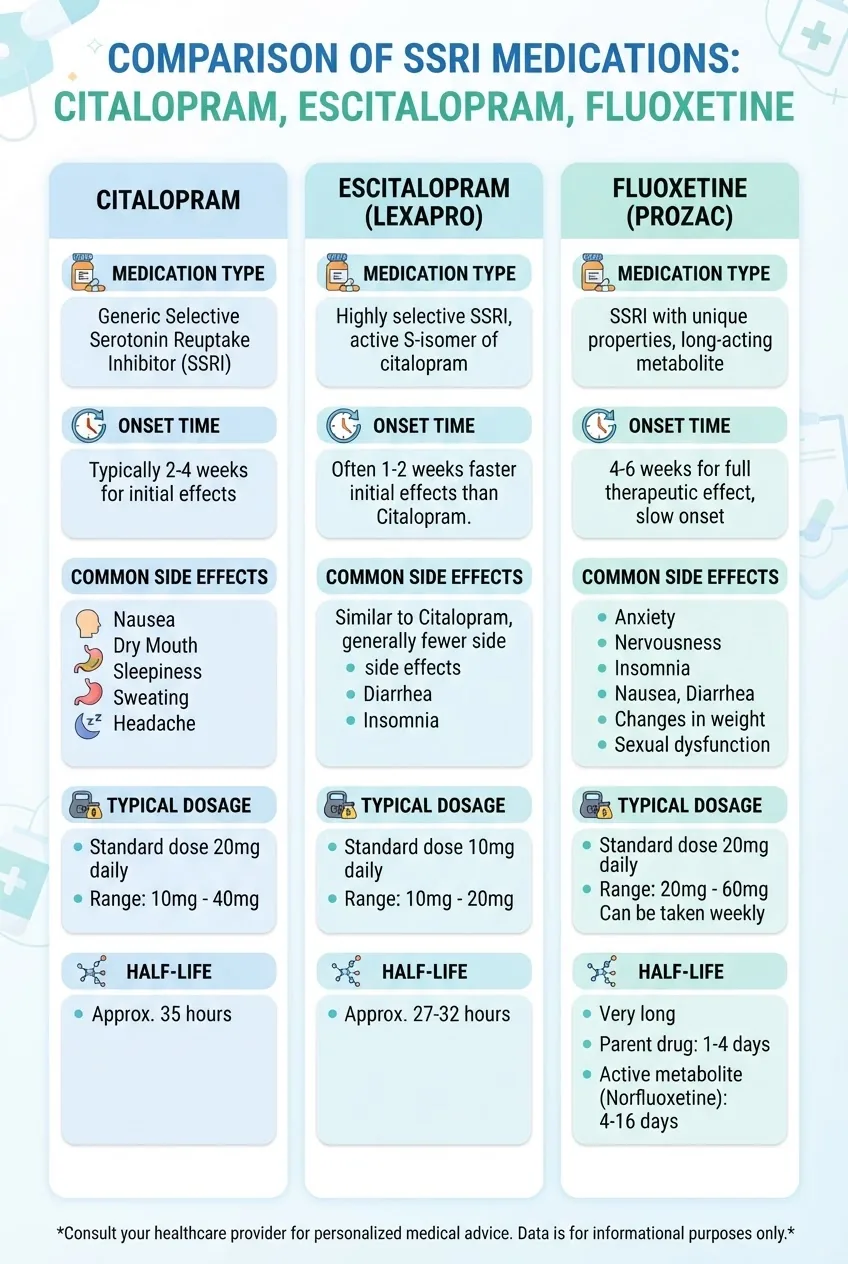
| Feature | Citalopram | Escitalopram (Lexapro) | Fluoxetine (Prozac) |
|---|---|---|---|
| Typical onset | 2–6 weeks | 2–4 weeks (sometimes faster) | 2–6 weeks |
| Common side effects | Nausea, sexual dysfunction, QT risk | Similar to citalopram; often rated better tolerated | Nervousness/activation, insomnia, appetite changes |
| Typical adult dose | 20 mg (10–40 mg) | 10 mg (5–20 mg) | 20 mg (10–80 mg) |
| Half-life | 35 hours approx. | 27–32 hours | 4–6 days (active metabolite extends effect) |
Pros and cons in short:
- Citalopram: often effective and familiar in GP practice; watch QT interval in higher-risk patients.
- Escitalopram: may be better tolerated and slightly more selective; often chosen for anxiety where tolerability is key — see Drugs Lexapro Overview: Uses, Names, and Anxiety Treatment Guide.
- Fluoxetine: long half-life reduces withdrawal issues but can cause activation; see Fluoxetine for Anxiety: Uses, Drug Class, and Treatment Guide and Fluoxetine Other Names and Prescription Information Guide.
Choosing between SSRIs:
- Prescriber considers patient history, side effect susceptibility (sexual issues, activation, sedation), comorbid conditions, drug interactions and patient preference.
- Evidence shows class effects for anxiety; differences are usually in tolerability, pharmacokinetics and cost/availability.
Wider antidepressant comparisons: when SSRIs fail, SNRIs or other classes (e.g., tricyclics, mirtazapine) may be considered; for comparisons see Serotonin and Norepinephrine Reuptake Inhibitors (SNRIs) Guide and Tricyclic Antidepressants: Drug List and Treatment Guide Overview.
For a broader discussion of the best antidepressant choices for anxiety and depression, see Best Antidepressant for Anxiety and Depression Treatment Guide.
Prozac Antidepressant Side Effects and Anxiety Treatment Guide
Sertraline Antidepressant Side Effects and Anxiety Usage Guide
What to Expect During Citalopram Treatment and Follow-Up?
Answer: Expect initial side effects within days, possible early mood fluctuation, scheduled follow-ups at 1–2 weeks (safety), 4–6 weeks (response check) and 8–12 weeks (efficacy), and gradual tapering if stopping to reduce withdrawal risk.
Practical monitoring steps for prescribers and patients:
- First-week contact: check tolerability and suicidal ideation; adjust advice as required.
- Two- to four-week review: assess early symptom movement and side effects; consider dose increase if tolerated and insufficient response.
- Eight- to twelve-week comprehensive review: determine whether to continue, switch, or augment; document symptom scales (e.g., GAD-7) and functional improvement.
- Maintenance planning: if response achieved, continue treatment typically for 6–12 months (or longer if recurrent anxiety), with periodic reviews every 3 months.
- Stopping strategy: taper slowly (e.g., gradual dose reduction over several weeks) under clinician supervision to minimise discontinuation symptoms.
Recognising and managing withdrawal/discontinuation:
Stopping SSRIs suddenly can cause discontinuation symptoms (dizziness, electric shock sensations, flu-like symptoms). Brief mention per brief: see Understanding Benefits and Withdrawal of Antidepressants Guide for a full protocol on tapering and withdrawal management.
Adherence strategies:
- Discuss expectations: outline typical timeline for benefit and common early side effects.
- Use reminder tools: dosing apps, pillboxes, or pharmacist blister packs.
- Address side effects proactively: practical tips (timing doses, symptomatic treatments) improve persistence.
Indicators to revisit treatment plan or seek specialist input:
- Worsening symptoms or emergence of suicidal thoughts.
- Minimal improvement after 8–12 weeks at adequate dose.
- Complex comorbidities (bipolar disorder, psychosis, substance dependence) or pregnancy planning.
Natural and complementary approaches: some patients ask about supplements or herbal options; these may interact with SSRIs (e.g., St John’s Wort) and require clinician review — see Natural Antidepressant Drugs: Over-the-Counter and Treatment Guide.
Communication plan: provide emergency contact details, crisis resources, and written treatment information. Encourage engagement with CBT or other evidence-based psychotherapies for best outcomes.
Who Should Avoid Citalopram? Eligibility and Contraindications?
Answer: Avoid citalopram in patients with recent MAOI use, known allergy to SSRIs, significant uncontrolled heart disease or marked QT prolongation, and use cautiously in pregnancy, breastfeeding and bipolar disorder without mood stabiliser cover.
Eligibility checklist before prescribing:
- Confirm diagnosis where pharmacotherapy is indicated (moderate-to-severe anxiety or functional impairment).
- Review current medications for interactions (MAOIs, triptans, some antipsychotics, QT-prolonging agents).
- Assess cardiac history — syncope, arrhythmia, or congenital long QT syndrome — consider ECG.
- Evaluate pregnancy plans and breastfeeding status; discuss risks/benefits with obstetric care as relevant.
- Screen for bipolar disorder; antidepressant monotherapy may precipitate mania without mood stabiliser.
Specific contraindications and cautions:
- Concurrent or recent (within 14 days) MAOI therapy — contraindicated due to serotonin syndrome risk.
- Known hypersensitivity to citalopram or excipients in the formulation.
- Marked QT prolongation or concomitant use of drugs known to prolong QT interval without specialist oversight.
- Severe hepatic impairment — dose adjustment or alternative may be required.
Pregnancy and breastfeeding:
Pregnancy decisions balance maternal benefits and fetal risks; discuss options with obstetric services. According to an Australian perinatal pharmacology review, SSRIs can be used when clinically indicated but require shared decision-making and specialist input if needed.
When mood stabilisers or alternative agents are preferable:
If bipolar spectrum disorder or treatment-resistant mood instability is present, consider Mood Inhibitors and Stabilizers for Depression: Treatment Guide and specialist referral before starting SSRIs.
Older adults: start at lower doses due to higher sensitivity to side effects, drug interactions and QT risk; consider falls risk and hyponatraemia monitoring.
If in doubt, refer to specialist psychiatry or consult local guidelines and the TGA product information: Therapeutic Goods Administration.
Conclusion — Key takeaways and next steps
Citalopram is an SSRI commonly used by Australian GPs to treat anxiety with demonstrated effectiveness when combined with appropriate monitoring. Start low, monitor for side effects (notably QT prolongation and serotonin syndrome), review progress at 4–12 weeks, and involve specialists for complex or treatment‑resistant cases. Speak with your GP about whether citalopram suits your specific needs and about access to psychotherapy via a Mental Health Care Plan.
If you’re considering medication for anxiety, book a consultation with your GP to review eligibility, baseline checks, and a personalised plan for starting or adjusting citalopram.