
XR Effexor (venlafaxine extended-release) is an SNRI antidepressant used to reduce anxiety symptoms by increasing serotonin and norepinephrine signalling; when prescribed and monitored in Australia it offers a predictable once-daily regimen with documented efficacy for generalized and panic-type anxiety, plus guidance on dosing, safety and follow-up.
What is XR Effexor and How Does It Work for Anxiety Disorder?
Answer: XR Effexor (venlafaxine extended-release) is an SNRI that treats anxiety disorder by boosting serotonin and norepinephrine in the brain, reducing excessive worry and panic over weeks, while XR (extended‑release) provides a steady daily drug level to improve tolerability and adherence.
Term: SNRI (serotonin‑norepinephrine reuptake inhibitor) is a class of medication that increases the availability of the neurotransmitters serotonin and norepinephrine by blocking their reabsorption (reuptake) into nerve cells.
Venlafaxine extended‑release (often written as venlafaxine XR) works primarily by inhibiting transporters that clear serotonin (5‑HT) and norepinephrine (NE) from the synaptic cleft. At common therapeutic doses for anxiety, venlafaxine has a stronger effect on serotonin and a dose‑dependent increasing effect on norepinephrine. This dual action improves mood regulation, reduces hypervigilance, and calms autonomic symptoms (palpitations, sweating) that accompany many anxiety disorders.
Pharmacokinetics: the extended‑release formulation uses a slow-release matrix so a single daily dose yields smoother plasma levels than immediate‑release venlafaxine, lowering peaks and troughs that can contribute to side effects or poor sleep. XR acts like a slow drip of medication rather than a single spike, improving tolerability for many patients.
Clinical rationale for anxiety disorder treatment: anxiety disorders such as generalized anxiety disorder (GAD) and panic disorder are associated with dysregulated serotonergic and noradrenergic systems; by restoring balance in these pathways, XR Effexor reduces both cognitive (worry, catastrophic thinking) and somatic (muscle tension, tremor) symptoms.
XR Effexor should be considered as part of a broader treatment plan that includes scheduled monitoring and psychological therapies. For a broader medication landscape, see Top 10 Antidepressants Australia: Medication Names and Treatment Guide.

Approved Indications and Off-label Uses of XR Effexor in Australia?
Answer: In Australia XR Effexor is approved and commonly used for generalized anxiety disorder (GAD), panic disorder (with or without agoraphobia), and social anxiety disorder in clinical practice, and may be used off‑label for other anxiety presentations and comorbid conditions under clinician supervision.
Regulatory and funding context: venlafaxine XR is registered with the Therapeutic Goods Administration (TGA) for several anxiety‑related indications; PBS listing and subsidy depend on indication and prescribing rules — clinicians in Australia should reference TGA and PBS for current status.
Common approved indications and typical Australian use-cases (concise bullet list):
- Generalised anxiety disorder (GAD) — commonly prescribed when symptoms are moderate to severe or when psychological therapy alone is insufficient.
- Panic disorder with or without agoraphobia — effective at reducing panic frequency and anticipatory anxiety.
- Social anxiety disorder — used when social avoidance or performance anxiety impairs functioning.
- Comorbid depression — often chosen when depressive symptoms coexist; see brief note on effect on comorbid depression further below.
- Off‑label uses (selected) — some clinicians use venlafaxine XR for obsessive‑compulsive disorder (OCD) or PTSD when first‑line treatments are unsuitable, but evidence varies and these are off‑label decisions.
Where to check official Australian guidance: for current registered indications and safety updates consult the TGA — Therapeutic Goods Administration (TGA) — and PBS prescribing rules — Pharmaceutical Benefits Scheme (PBS).
Practical prescribing note for Australian GPs and specialists: whether a GP or psychiatrist initiates XR Effexor will depend on symptom severity and PBS eligibility criteria; see advice on whether GPs can prescribe in the Dosage section, and consult local clinic pathways for shared care.
Dosage Guidelines and Administration Instructions for XR Effexor?
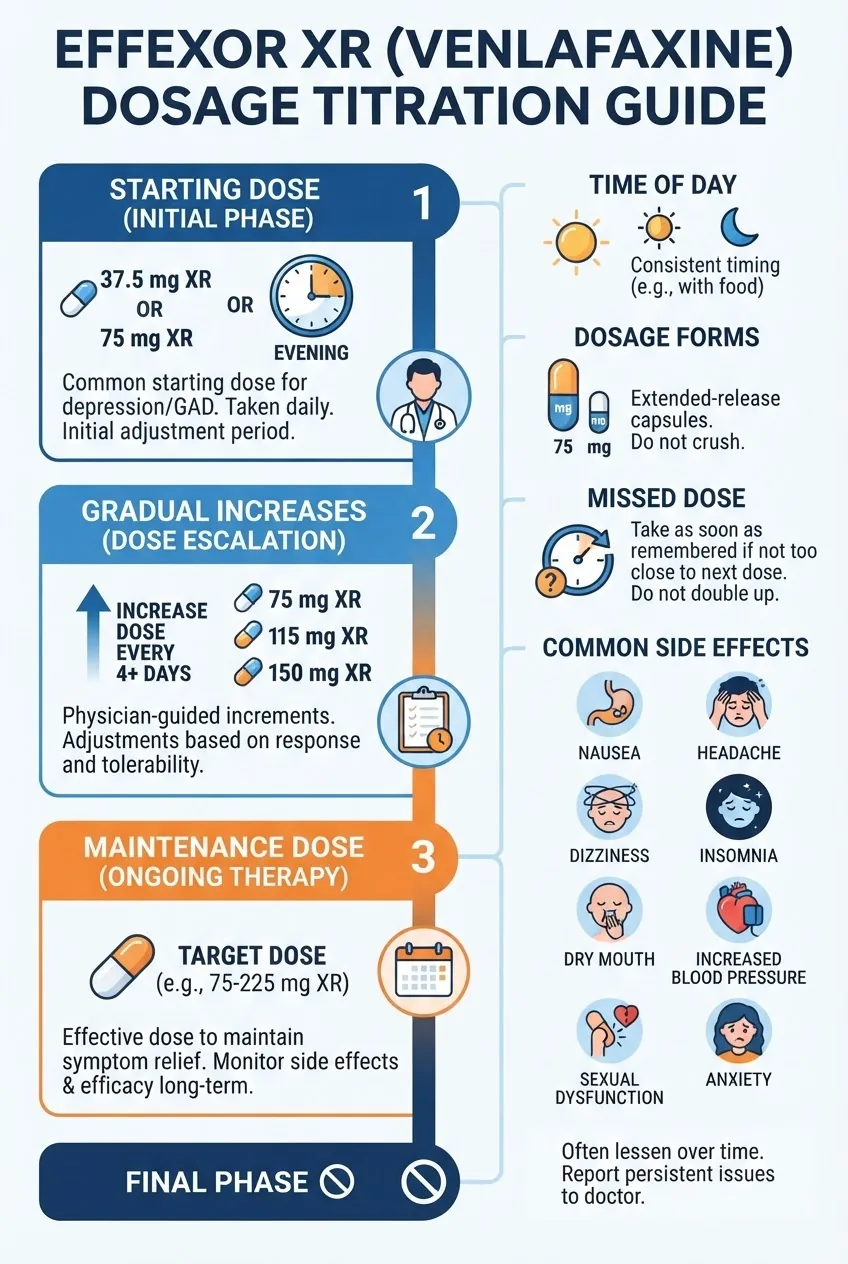
Answer: Typical adult starting dose for XR Effexor in anxiety is 37.5–75 mg once daily, titrated gradually to 75–225 mg daily depending on response and tolerability; take the extended‑release capsule once a day with food, follow a clinician’s titration plan and adhere to missed‑dose instructions.
Term: extended‑release capsule is a formulation that releases the active drug slowly over many hours to maintain steadier blood concentrations with once‑daily dosing.
- Starting regimens commonly used in Australian practice
- Conservative start: 37.5 mg once daily for 3–7 days, then increase to 75 mg once daily if tolerated (common when patients are anxious about side effects).
- Standard start: 75 mg once daily as the initial dose for adults with moderate anxiety when immediate up‑titration is appropriate.
- Older adults or those with frailty: initiate at 37.5 mg and escalate slowly with close monitoring.
- Dose titration and therapeutic range
Escalation typically occurs in 75 mg increments every 1–2 weeks, assessing response and adverse effects. Many adults achieve benefit between 75–150 mg/day for GAD; some patients with severe symptoms may require up to 225 mg/day, with diminishing incremental benefit beyond that and increased side‑effect risk.
- Administration timing
Take XR Effexor once daily, preferably at the same time each day (morning or evening) with food to reduce nausea. If insomnia occurs, consider moving dose to morning; if sedation predominates, evening dosing can help.
- Missed dose instructions
If a dose is missed and it is more than 12 hours until the next scheduled dose, take the missed dose; otherwise skip it and resume the normal schedule—do not double dose. Contact your clinic if you miss several doses or have symptom recurrence.
- Switching from immediate‑release (IR) venlafaxine
When converting IR to XR, match total daily dose (e.g., 75 mg IR twice daily → 150 mg XR once daily) under clinician supervision, adjusting schedule to maintain steady levels and reduce withdrawal risk from missed doses.
- Paediatrics and adolescents
Use in under‑18s is limited and requires specialist psychiatric input; dosing is individualized and benefit‑risk must be carefully assessed due to altered side‑effect patterns.
- Renal and hepatic impairment
Dose adjustments may be required in significant liver impairment; start low and titrate cautiously. Check baseline liver function tests when indicated.
How prescriptions and eligibility work in Australia: PBS criteria and prescribing rights affect who can initiate and subsidise XR Effexor; for details on GP prescribing eligibility see GPs prescribing antidepressants eligibility.
Practical examples used in Australian clinics (experience signal):
- Example A (mild‑moderate GAD): 37.5 mg daily × 1 week → 75 mg daily maintenance; review at 4–6 weeks.
- Example B (panic disorder, frequent attacks): 75 mg daily × 1–2 weeks → 150 mg daily if attacks persist; consider psychologist referral and safety planning.
- Example C (comorbid depression and anxiety): 75 mg daily → 150 mg daily if depressive symptoms persist; blend pharmacotherapy with psychotherapy.
Monitoring schedule recommended in practice:
- Baseline assessment: BP, weight, medication list, pregnancy test if relevant.
- Early follow‑up: within 1–2 weeks for tolerability, then 4 weeks for efficacy, then every 3 months when stable.
- Long‑term: annual reviews, monitoring blood pressure especially at higher doses, and reassessment of ongoing need after 6–12 months of remission.
Common and Serious Side Effects of XR Effexor for Anxiety?
Answer: Common side effects include nausea, headache, insomnia, dizziness and sexual dysfunction; serious but less frequent effects include increased blood pressure, serotonin syndrome, severe hyponatraemia and suicidal thoughts—monitor and report these urgently to a clinician.

Common (frequent, usually transient) side effects — typical clinical frequency and management:
- Nausea: occurs early, often improves in 1–2 weeks; take with food and consider antiemetic advice for persistent symptoms.
- Headache: usually mild; simple analgesics and hydration help.
- Insomnia or sleep disturbance: consider dosing time change (morning) or sleep‑hygiene strategies; for persistent insomnia review other medications and comorbid conditions or consider antidepressants for sleep and insomnia.
- Dizziness, light‑headedness: usually early and dose‑related; rise slowly from sitting/lying positions.
- Dry mouth and sweating: symptomatic treatment and hydration.
- Sexual dysfunction: decreased libido, delayed orgasm or erectile difficulties; discuss options with prescriber as switching or dose adjustments may help — see strategies for managing side effects and weight considerations.
Serious side effects and required precautions (clinical elaboration):
- Increased blood pressure: venlafaxine can elevate BP, commonly at doses ≥150 mg; measure baseline BP and repeat during titration. Severe hypertension requires dose reduction or switch.
- Serotonin syndrome: rare but life‑threatening when combined with other serotonergic agents (e.g., triptans, SSRIs, MAOIs); presents with agitation, hyperreflexia, autonomic instability — seek urgent care.
- Severe hyponatraemia (SIADH): more likely in older adults; monitor sodium if confused, weak or hyponatraemic symptoms appear.
- Mania or hypomania: can unmask bipolar disorder; screen for personal/family history of mania before starting.
- Suicidal ideation: antidepressants can increase suicidal thoughts in young people—monitor closely, especially in the first few months (see withdrawal FAQ for related guidance).
Long‑term effects and brain health concerns: long‑term safety data support venlafaxine as effective when clinically indicated; for broader discussion about enduring effects see negative effects of antidepressants on the brain.
Managing side effects in practice (patient education signal):
- Start low and go slow: initiating at lower doses reduces early adverse effects.
- Symptom‑specific strategies: antiemetics for nausea, melatonin or sleep hygiene for insomnia, blood pressure checks for sympathomimetic effects.
- When to seek urgent care: severe chest pain, very high BP, sudden confusion, shivering and muscle rigidity suggest severe reactions that need emergency assessment.
Comparisons with other agents for side‑effect burden: when weight, sexual side effects or sleep effects are a priority, review alternative classes such as SSRIs or non‑weight‑gaining options in non weight gaining antidepressants.
What Important Precautions, Contraindications, and Drug Interactions Should I Know?
Answer: XR Effexor is contraindicated with monoamine oxidase inhibitors (MAOIs) and in patients with uncontrolled hypertension or known venlafaxine hypersensitivity; major interactions include other serotonergic drugs, certain triptans, strong CYP2D6/CYP3A4 modulators and alcohol — manage with careful review and monitoring.
Term: Contraindication means a condition or factor that makes a particular treatment inadvisable because it may be harmful.
Key contraindications:
- Concurrent or recent (within 14 days) use of MAOIs — risk of serotonin syndrome and hypertensive crisis.
- Known allergy or hypersensitivity to venlafaxine or formulation excipients.
- Uncontrolled severe hypertension — venlafaxine may raise BP.
Important drug interactions to check and manage:
- Other serotonergic medications (SSRIs, SNRIs, MAOIs, triptans, linezolid, tramadol): increased serotonin syndrome risk — stagger discontinuation/avoid combination or monitor closely.
- Antiplatelet agents and NSAIDs: combined use can increase bleeding risk (platelet function effects), especially in older adults.
- Potent CYP450 inhibitors/inducers: drugs affecting CYP2D6 and CYP3A4 can alter venlafaxine metabolism — consider dose adjustments.
- Alcohol: may worsen sedation and reduce anxiety control; advise minimising alcohol intake while stabilising on treatment.
Pregnancy and breastfeeding considerations:
- Pregnancy: weigh risks and benefits — some data suggest neonatal adaptation symptoms if used late in pregnancy; consult an obstetrician and psychiatrist.
- Breastfeeding: venlafaxine is excreted in breast milk; discuss risks and monitor infant for irritability and poor feeding.
Laboratory and physiological monitoring (clinical best practice):
- Baseline and periodic blood pressure checks, especially at doses ≥150 mg/day.
- Liver and renal function tests if clinically indicated or in those with pre‑existing disease.
- Serum sodium in older adults or those on diuretics.
Practical interaction checklist for clinicians (experience signal):
- Obtain full medication, supplement and OTC list at baseline.
- Ask specifically about herbal serotonergic supplements (e.g., St John’s Wort) and recreational drugs.
- Coordinate with other prescribers when adding triptans or opioids to avoid serotonin excess.
How Long Does XR Effexor Take to Start Working for Anxiety Symptoms and What Should I Expect?
Answer: Some patients notice reduced anxiety within 1–2 weeks on XR Effexor, but meaningful clinical improvement commonly occurs by 4–6 weeks and full benefit may take 8–12 weeks; adherence and regular follow‑up are key to assessing response and adjusting dose.
Evidence and timelines: clinical trials and guidelines report early anxiolytic signals within 1–2 weeks (reduced autonomic symptoms), with robust improvements in worry and functional measures typically by 6–12 weeks. For example, guideline synthesis and peer‑reviewed trials report measurable reduction in HAM‑A or panic frequency by week 4–8 (source: peer‑reviewed psychiatry literature).
Practical monitoring milestones and what to expect:
- Week 1–2: side effects may peak; small reduction in somatic anxiety (palpitations, tension) possible.
- Week 3–6: improved sleep, decreased worry intensity; clinician can consider dose increase if tolerability is good but benefit limited.
- Week 8–12: expect clear symptom reduction and functional gains; reassess for continued treatment vs maintenance planning.
Key points for patients (bulleted):
- Adherence matters: skip few doses can reduce drug plasma levels and delay benefit.
- Keep a symptom diary: note panic frequency, worry severity and side effects to review with your clinician.
- Combine medication with CBT or psychotherapy for faster, more durable improvement.
Clinical monitoring and outcome measures: clinicians commonly use validated scales (e.g., GAD‑7, HAM‑A) at baseline and periodically to quantify response; shared decision‑making at 8–12 weeks guides maintenance or change.
How Should Discontinuation and Withdrawal Effects from XR Effexor Be Managed?
Answer: Discontinuation should be gradual under medical supervision—tapering by small dose reductions over weeks to months prevents withdrawal symptoms; abrupt cessation often causes dizziness, electric shock sensations, anxiety and flu‑like symptoms that respond to reinstatement and slower taper.
Term: Withdrawal (discontinuation symptoms) are physical or psychological effects that occur after reducing or stopping a medication that the body has adapted to.
Why venlafaxine discontinuation requires caution: venlafaxine has a relatively short half‑life compared with some antidepressants, so stopping suddenly often leads to rapid onset of withdrawal symptoms within days. Extended‑release formulations mitigate fluctuations but do not eliminate withdrawal risk.
- General tapering approach (how‑to steps):
- Step 1: Assess duration of treatment and baseline risk (longer treatment and higher dose increase withdrawal risk).
- Step 2: Plan a slow taper—common schedule is reduce dose by 25–50% every 1–2 weeks initially, then slower reductions (10–25%) as lower doses are reached; individualise pace to symptoms.
- Step 3: If significant withdrawal occurs, return to last tolerated dose and slow the taper further (for example, smaller fractional reductions every 2–4 weeks).
- Specific example taper used in clinics (experience signal)
Example: patient on 150 mg XR daily → reduce to 112.5 mg (if capsule can be dosed or via split formulation) for 2–4 weeks → 75 mg for 2–4 weeks → 37.5 mg for 2–4 weeks → stop. Adjust per symptoms and consider alternate-day dosing only under supervision.
- Recognising withdrawal symptoms
Common symptoms: dizziness, electric “brain zaps”, nausea, insomnia, anxiety rebound, irritability and flu‑like symptoms. Severe or prolonged symptoms warrant clinician review and possible reinstatement and slower taper.
- Relapse prevention
Differentiate withdrawal from relapse by timing (withdrawal typically begins within days of dose change); if core anxiety returns and is persistent beyond 2–4 weeks after tapering, consider restarting at a therapeutic dose and reassessing ongoing need with psychotherapy support.
- When to involve specialist care
Complex cases—history of severe withdrawal, multiple antidepressants, bipolar disorder, pregnancy—benefit from psychiatrist input and a formal tapering plan. For broader withdrawal context see understanding benefits and withdrawal of antidepressants.
Patient advice during taper:
- Report new or worsening symptoms promptly to your prescriber.
- Maintain psychotherapy appointments and coping strategies during taper.
- Consider slow taper for at least several weeks to months depending on dose and sensitivity.
What Practical Tips Should Patients Using XR Effexor for Anxiety Follow?
Answer: Adhere to prescribed dosing, attend scheduled reviews, monitor blood pressure and side effects, avoid alcohol and interacting drugs, keep a symptom diary, and combine medication with therapy and lifestyle measures for best outcomes.
- Take XR Effexor at the same time each day with food to reduce nausea and stabilise blood levels.
- Keep a simple symptom and side‑effect diary (date, dose, anxiety score, side effects) to review with your clinician at follow‑ups.
- Monitor blood pressure at home if advised and report sustained increases; elevated BP is dose‑related.
- Avoid starting or stopping other medications (including herbal supplements) without consulting your prescriber—some interact with venlafaxine.
- Stay engaged with psychotherapy (CBT) and self‑help strategies—combined care often accelerates recovery.
- If sleep problems emerge, discuss alternatives—see antidepressants for sleep and insomnia and behavioural sleep measures.
- If you plan pregnancy or are breastfeeding, discuss medication choices early with your clinician.
- If considering advanced treatments later (e.g., esketamine), check coverage and clinic options — see ketamine infusion cost and coverage.
- Ask about non‑pharmacological supports and “natural antidepressant” options when wishing to combine supplements—see natural antidepressant options.
Adherence and practical troubleshooting: if side effects are limiting, do not stop suddenly—contact your prescriber to adjust timing or dose. Clinics often schedule a check at 1–2 weeks and 4–6 weeks to support adherence and manage tolerability.
Conclusion
XR Effexor (venlafaxine extended‑release) is an effective SNRI option for treating anxiety disorders in Australia when prescribed with careful dosing, monitoring and patient education. Expect gradual improvement over weeks, watch for blood pressure changes and serotonergic interactions, and use slow, supervised tapering to stop safely. Discuss individual risks and alternatives with your clinician and combine medication with therapy for best outcomes—contact your local prescriber to review suitability and monitoring plans.
For a detailed comparison of antidepressant classes and alternatives, consider the wider resources on medication types and new agents like mental health medication types and options, and consult Australian regulatory guidance at the TGA (Therapeutic Goods Administration) and PBS (Pharmaceutical Benefits Scheme).