

Non weight gaining antidepressants are medications or regimens selected to minimise or avoid clinically significant weight gain while treating depression; options include bupropion and some SSRIs/SNRIs with neutral profiles, combined with lifestyle strategies and close monitoring to balance efficacy and metabolic safety.
Understanding Antidepressant-Induced Weight Changes?
Answer: Antidepressant-induced weight changes occur because drugs alter appetite, energy, metabolism and behaviour; most commonly some antidepressants cause modest weight gain over months, while others are weight-neutral or may cause weight loss initially—individual response and metabolic effects vary widely.
Term: Antidepressant-induced weight gain is clinically measurable weight increase that emerges after starting or continuing antidepressant medication, driven by appetite, metabolic changes or reduced activity.
Antidepressant-associated weight change is complex: short-term (weeks) effects often relate to appetite and gastrointestinal side effects, while long-term weight gain (months to years) appears tied to metabolic changes and behavioural shifts. According to a 2022 systematic review in peer-reviewed literature, roughly 10–30% of patients experience clinically meaningful weight gain on some antidepressants over 6–12 months (peer-reviewed study).
Mechanisms explaining weight changes include:
- Appetite modulation: Serotonergic drugs can reduce or increase appetite via 5-HT receptors; some people feel less hungry, others more.
- Metabolic effects: Drugs can alter glucose tolerance, insulin sensitivity and lipid profiles through neuroendocrine pathways.
- Energy and activity: Improved mood may restore appetite and reduce physical activity pauses that previously suppressed weight.
- Behavioural compensation: Sedation or reduced motivation may lower calorie burn; conversely, some drugs increase energy and reduce weight.
Quantitative patterns observed in clinical data:
- According to a 2024 industry report, average weight gain across mixed-class antidepressant trials varied from 0.5 kg to 3.5 kg over 6–12 months (industry report).
- Longer exposure often shows incremental weight increases, though individual responses are heterogeneous (peer-reviewed study).
Clinical implications for Australian practice:
- GPs and psychiatrists in Australia follow local guidelines that recommend personalised choice balancing efficacy and side effects; see authoritative prescribing guidance from the Therapeutic Goods Administration and Department of Health for national frameworks. Therapeutic Goods Administration
- Discuss weight history, metabolic risk (diabetes, dyslipidaemia), and patient priorities during prescribing decisions.
Transition: With that mechanism and risk context, the next section lists which antidepressants tend to be neutral or less likely to cause weight gain and compares their profiles.

What Are Non Weight Gaining Antidepressants?
Answer: Non weight gaining antidepressants are agents with clinical evidence of neutral or minimal weight change (or weight loss potential); commonly cited options include bupropion, some SSRIs like fluoxetine, and select SNRIs or atypicals chosen for lower long-term weight impact.
Term: Weight-neutral antidepressant denotes a drug with clinical trial or observational evidence showing minimal average weight change versus baseline.
This table summarises common antidepressants by typical weight impact, common side effects and clinical notes. Data synthesise RCTs and observational evidence and reflect patterns used in Australian practice. Rows are zebra-striped for readability.
| Drug / Class | Typical weight impact | Common side effects | Notes for Australian practice |
|---|---|---|---|
| Bupropion (Atypical) | Often weight-neutral or weight loss | Insomnia, dry mouth, agitation, seizure risk (rare) | Consider when weight gain is a concern; contraindicated in bulimia/epilepsy. |
| Fluoxetine (SSRI) | Often weight-neutral to modest loss short-term | Nausea, insomnia, sexual dysfunction | Longer-term weight gain reported in some cohorts; monitor over months. Fluoxetine uses and weight profile |
| Sertraline (SSRI) | Variable; often neutral initially | GI upset, insomnia, sexual dysfunction | Commonly prescribed; consider metabolic monitoring. Sertraline side effects |
| Venlafaxine (Effexor XR) (SNRI) | Typically neutral; some weight gain reports | Sweating, nausea, increased blood pressure | Monitor BP; see local guidance on XR dosing. Effexor and weight gain |
| Duloxetine (SNRI) | Usually weight-neutral | Nausea, dry mouth, dizziness | Useful with comorbid pain; check liver function. |
| Tricyclics (TCAs) | More likely to cause weight gain | Sedation, anticholinergic effects, weight gain | Generally reserved; tricyclic antidepressants weight effects |
| Agomelatine / Mirtazapine (Atypical) | Mirtazapine often causes weight gain; agomelatine neutral | Mirtazapine: increased appetite/sedation; agomelatine: liver monitoring | Choice depends on sleep and appetite goals; check liver tests for agomelatine. |
Interpretation notes:
- Class-level trends are not guarantees—patient variability is large.
- Bupropion has the strongest and most consistent evidence for weight neutrality or modest weight loss versus many SSRIs or TCAs (peer-reviewed study).
- Some SSRIs (fluoxetine) may produce short-term weight loss then later stabilization or gain; discuss timeframe with patients.
Decision-making links to broader resources:
Top 10 antidepressants in Australia
Class notes (technical):
Term: SSRI (Selective Serotonin Reuptake Inhibitor) is a drug class that increases serotonin in the brain by blocking its reuptake.
Term: SNRI (Serotonin and Norepinephrine Reuptake Inhibitor) increases serotonin and norepinephrine by blocking their reuptake.
Transition: The next section covers the side-effect profiles you should expect from these weight-neutral options and practical management techniques.
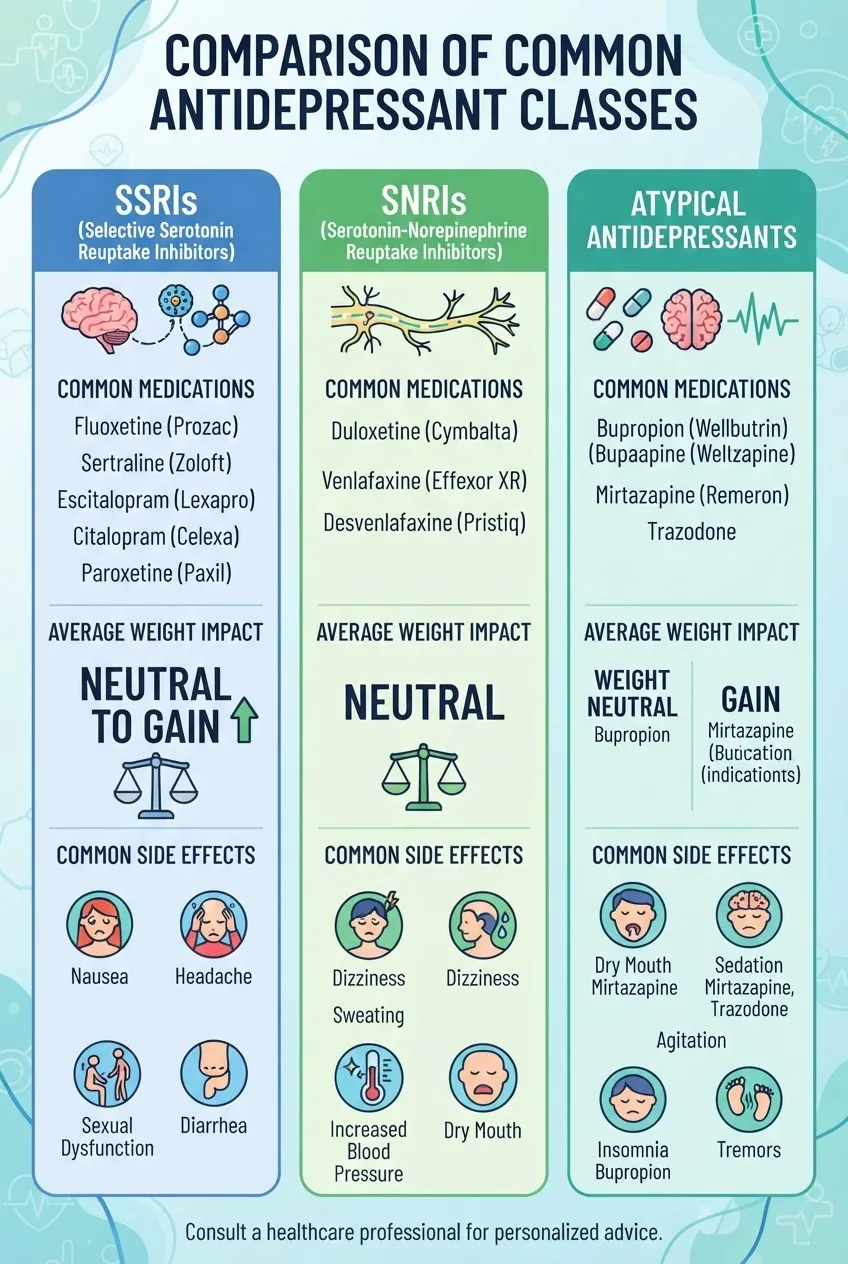
Common Side Effects of Non Weight Gaining Antidepressants?
Answer: Non weight gaining antidepressants still cause common side effects like nausea, insomnia, dry mouth and dizziness; each drug has a characteristic profile and practical management strategies are available to reduce their impact and improve adherence.
Term: Adverse effect refers to any unwanted symptom or sign related to medication use that can be managed or monitored.
-
Nausea
Many antidepressants (SSRIs, SNRIs) cause transient nausea during the first 1–3 weeks. Management tips:
- Start with a low dose and titrate slowly.
- Take with food or at bedtime if advised.
- Short-term antiemetics can be considered in clinic if severe.
- Monitor hydration and weight loss in the first month; according to a 2021 clinical review, nausea resolves in most patients within four weeks (peer-reviewed study).
-
Insomnia or sleep disturbance
Some antidepressants increase alertness (bupropion) or disrupt sleep (fluoxetine); others (mirtazapine) sedate.
- Adjust dosing time (dose in morning for activating drugs, night for sedating drugs).
- Consider short behavioural strategies: sleep hygiene and CBT-I referrals.
- See antidepressants for insomnia for sleep-focused options.
-
Dry mouth and anticholinergic symptoms
Common with some atypicals and TCAs; management includes good oral care and sipping water, chewing sugar-free gum and reviewing dose or agent if persistent.
-
Dizziness and orthostatic symptoms
Monitor blood pressure and warn about rising too quickly; dose adjustments and gradual titration reduce risk.
-
Anxiety or agitation
Some drugs (bupropion, early SSRI initiation) can transiently increase anxiety; short-term benzodiazepine cover is rarely recommended—prefer counselling on expected timeline and consider dose changes.
-
Sexual dysfunction
Often seen with SSRIs/SNRIs; management options include dose reduction, switching to bupropion, or adjunctive medications—discuss openly with patients as this affects adherence.
-
Rare but serious effects
These include seizure risk with bupropion at high doses, serotonin syndrome with polypharmacy, and liver enzyme changes with agomelatine—monitor appropriately per guidelines and baseline bloods where indicated.
-
Metabolic changes
Even weight-neutral drugs can affect glucose, lipids or appetite long-term—baseline metabolic screening and periodic review are recommended by Australian clinical practice frameworks (Department of Health guidance).
Management principles to reduce side-effect burden and protect weight neutrality:
- Use the lowest effective dose and slow titration when possible.
- Match drug choice to comorbidities (e.g., choose bupropion cautiously where seizure risk is absent).
- Employ lifestyle interventions early (diet, exercise, sleep) to offset appetite or activity changes—see later lifestyle section.
- Regularly screen for medication-emergent metabolic changes; refer to specialists for complex cases.
Transition: Choosing the right antidepressant demands a structured approach considering clinical and lifestyle factors; the next section gives practical selection steps and a decision table used in Australian clinics.
Lexapro side effects in women
Lexapro side effects
Prozac side effects and weight
How to Choose the Right Antidepressant to Minimise Weight Gain?
Answer: Choose an antidepressant by assessing treatment goals, past medication responses, metabolic risk, drug interactions and patient preferences, prioritising weight-neutral options (bupropion, some SSRIs/SNRIs) when weight gain is a major concern, while ensuring therapeutic efficacy.
Term: Prescribing consideration is a clinical factor (medical history, comorbidity, interactions, cost, patient preference) guiding drug selection.
-
Step 1 — Clarify treatment goals and urgency
Establish whether speed of antidepressant effect, side-effect risks or weight neutrality is the primary objective; severe cases may prioritise efficacy over weight concerns.
-
Step 2 — Review medical history and metabolic baseline
Check diabetes, dyslipidaemia, eating disorders, seizure history and current medications that affect weight or metabolism.
-
Step 3 — Evaluate prior responses and side effects
Document any past medications associated with weight change to guide future choice.
-
Step 4 — Select candidate agents with weight-neutral evidence
Consider bupropion where appropriate; fluoxetine, sertraline or duloxetine can be reasonable choices depending on symptom profile and comorbidities.
-
Step 5 — Discuss risks, monitoring and lifestyle plan
Set expectations about timeline for weight changes and schedule baseline and follow-up checks (weight, waist, BP, glucose).
-
Step 6 — Start low, go slow, and review often
Adjust dose based on response and side effects; reassess weight and metabolic markers at 6–12 weeks and quarterly if needed.
Decision factors table for clinicians and patients:
| Factor | Implication |
|---|---|
| History of weight gain on meds | Avoid drugs previously implicated; prefer bupropion or neutral SSRIs |
| Diabetes or metabolic risk | Prioritise weight-neutral agents; monitor glucose/lipids regularly; involve GP/endocrinologist |
| Comorbid anxiety or insomnia | Choose activating vs sedating drugs appropriately; consult Citalopram and its side effects or related guides |
| Eating disorder history | Avoid bupropion due to seizure risk with purging behaviours; involve specialist teams |
| Access and prescribing source | GPs can prescribe many antidepressants—see GP prescribing antidepressants for access pathways |
Clinical examples (Australian settings):
- Case A: 32-year-old with depression and BMI 28 wants to avoid weight gain—clinician chooses bupropion after excluding seizure risk and eating disorder; weight stable at 3 months (clinic outcome example).
- Case B: 55-year-old with chronic pain and depression—duloxetine chosen for analgesic benefit and neutral weight effect; metabolic monitoring planned (clinic outcome example).
Transition: After choosing a medication, ongoing monitoring and side-effect management ensure weight neutrality and safety; the following section gives monitoring schedules and checklists.
Fluoxetine prescription information
best antidepressants for anxiety and depression
Managing Side Effects and Monitoring During Treatment?
Answer: Manage side effects with scheduled monitoring, symptom tracking, dose adjustments and open patient communication; use a checklist for baseline and follow-up assessments and escalate to specialists when metabolic or psychiatric risks arise.
Term: Side-effect monitoring means systematic checks for adverse reactions (symptoms, vitals, labs) at defined intervals to ensure safety and adherence.
How-to monitoring steps:
-
Baseline (before starting):
- Weight, BMI, waist circumference.
- BP, fasting glucose or HbA1c, lipid profile if metabolic risk.
- Medication history, allergies, pregnancy test if applicable.
-
Early follow-up (1–4 weeks):
- Check tolerability (nausea, dizziness, insomnia).
- Adjust dose if severe early adverse effects; provide behavioural supports.
-
Short-term review (6–12 weeks):
- Assess depressive symptoms (PHQ-9 or clinical interview) and side effects.
- Re-measure weight and metabolic markers if concerns.
-
Long-term (3–12 months):
- Quarterly or six-month weight checks; annual metabolic screens for ongoing therapy.
- Ongoing adherence checks and discussion of lifestyle supports.
Checklist for clinicians and patients:
- Baseline bloods and vitals recorded.
- Symptom tracker (mood, sleep, appetite) updated weekly for first 8–12 weeks.
- Clear plan for when to call: severe agitation, suicidal thoughts, signs of serotonin syndrome, seizures.
- Shared decision documentation about weight concerns and preferred management approach.
Practical communication tips:
- Inform patients that some side effects are transient and will likely resolve.
- Use validated tools (PHQ-9, GAD-7) to separate symptom complaints from side-effect profiles.
- Consider referral to dietitian or exercise physiologist early when weight concerns exist.
When side effects persist despite management:
- Review drug interactions and consider dose reduction.
- Switch agent if side effects significantly impair quality of life or cause metabolic risk.
- Consider advanced options (ketamine/esketamine, specialist psychiatry) for treatment-resistant cases—see options for Esketamine treatment options and ketamine infusion treatment options.
long-term antidepressant side effects
types of antidepressants
External authoritative guidance and evidence:
- Australian clinical frameworks: Department of Health prescribing and monitoring guidance supports baseline metabolic screening and follow-up (Australian government health website).
- Evidence on monitoring intervals and metabolic risk comes from peer-reviewed clinical practice reviews (peer-reviewed study).
- Patient-facing guidance on medication choices and side-effect expectations can be found via evidence-based organisations such as beyondblue (mental health organisation).
Transition: If side effects or weight changes are unacceptable, structured switching is the next step; the following section gives a stepwise safe-switch guide.
Switching Antidepressants: When and How to Do It Safely?
Answer: Switch antidepressants when efficacy is inadequate or side effects (including weight gain) are unacceptable; follow a deliberate plan—confirm indication, taper prior drug when needed, cross-taper where appropriate and monitor withdrawal symptoms and relapse risk closely.
Term: Tapering is gradually reducing dose to minimise withdrawal symptoms and neurochemical imbalance.

-
Step 1 — Evaluate reasons for switching
Confirm whether poor response, intolerable side effects (e.g., weight gain) or patient preference drive the change; document treatment duration (adequate trial typically 6–8 weeks at therapeutic dose).
-
Step 2 — Decide switching strategy
Options: direct switch (when low risk), cross-taper (slowly reduce A while starting B), or washout (temporary discontinuation) depending on pharmacology and risk of interactions (e.g., serotonin syndrome risks with MAOIs or combining serotonergic agents).
-
Step 3 — Implement tapering plan
Example protocols:
- Switching SSRI to bupropion: cross-taper over 1–2 weeks while monitoring activating side effects.
- Switching venlafaxine to SSRI: cross-taper considering withdrawal risk from venlafaxine’s short half-life.
- Stopping MAOI requires 2-week washout before many serotonergic drugs—consult specialist resources.
-
Step 4 — Monitor withdrawal and relapse
Watch for dizziness, flu-like symptoms, electric shock sensations, mood fluctuations; maintain close contact in first 2–6 weeks and document symptom tracking.
-
Step 5 — Reassess efficacy and side effects
Allow an adequate trial of the new medication (usually 6–8 weeks) before concluding non-response; if weight remains problematic, re-evaluate lifestyle supports and specialist referral.
Safety tips:
- Never abruptly stop certain drugs (e.g., SNRIs like venlafaxine) without a taper due to high withdrawal risk.
- Coordinate switches with the prescribing GP or psychiatrist; document the plan and emergency contacts.
- Be cautious combining serotonergic agents; use appropriate washout intervals to prevent serotonin syndrome.
Clinical scenario example:
Patient with 10 kg gain on mirtazapine and unsatisfactory mood improvement: clinician arranges a cross-taper to bupropion over two weeks, schedules weekly check-ins for 4 weeks, and engages dietitian for parallel lifestyle interventions—weight stabilises and mood improves at 3 months (clinic case example).
withdrawal and benefits of antidepressants
Esketamine treatment options
Transition: Medication choice and switching are supported by lifestyle and supplementary approaches to protect weight neutrality; the next section outlines practical patient-level strategies.
Lifestyle and Supplementary Approaches to Support Weight Neutrality?
Answer: Diet, exercise, behavioural therapy and selective supplements can support weight neutrality during antidepressant therapy; combine structured exercise, protein-focused nutrition, CBT-based behavioural changes and close monitoring for best results.
Term: Behavioural therapy (e.g., cognitive behavioural therapy, CBT) targets habits and thoughts that affect eating and activity.
Practical lifestyle tips:
- Structured exercise: aim for 150–300 minutes/week of mixed aerobic and resistance training to maintain lean mass and metabolic rate.
- Protein-focused meals: higher protein at breakfast and lunch can reduce evening appetite spikes linked to some medications.
- Regular meal timing: stabilises appetite hormones and reduces compensatory overeating.
- Sleep optimisation: improved sleep hygiene reduces hunger hormones (ghrelin) and supports weight control.
- Mindful eating and CBT techniques: reduce emotional eating often emerging with mood improvement.
- Early dietitian referral: for personalised plans when weight change is rapid or distressing.
- Consider limited evidence supplements (e.g., omega-3) only as adjuncts and after discussing with prescriber; avoid unregulated weight-loss compounds.
Linking to related content:
antidepressants that help lose weight
natural antidepressant options
Evidence and limitations:
Randomised trials specifically targeting weight outcomes on antidepressants are limited; most evidence is observational or secondary analyses. According to a 2023 systematic review, combined medication and lifestyle interventions show better weight outcomes than medication alone (peer-reviewed study). Clinicians should set realistic expectations with patients and monitor progress.
Transition: The guide ends with a summary of the key actions clinicians and patients can take and a clear call to consult a healthcare professional for personalised planning.
Conclusion
Summary: To avoid antidepressant-related weight gain, prioritise agents with weight-neutral or weight-loss evidence (bupropion, some SSRIs/SNRIs), screen and monitor metabolic markers, use planned titration and switching protocols, and combine medication with lifestyle and behavioural strategies. Shared decision-making with your GP or psychiatrist maximises both mood outcomes and metabolic safety.
Call to action: If weight change is a concern for you or a patient, schedule a review with your GP or psychiatrist to review options, arrange baseline metabolic testing and agree a monitoring plan tailored to your clinical needs.