
Answer: Serotonin and norepinephrine reuptake inhibitors (SNRIs) are a class of antidepressant drugs that boost levels of the chemical messengers serotonin and norepinephrine by blocking their reuptake into nerve terminals, improving mood, anxiety and certain pain states; they are commonly prescribed in Australia under clinical supervision.
What Are Serotonin and Norepinephrine Reuptake Inhibitors (SNRIs)?
Answer: SNRIs are antidepressant medications that inhibit the reuptake of both serotonin and norepinephrine to increase availability of these neurotransmitters for mood and pain regulation.
Term: SNRIs — abbreviation for serotonin and norepinephrine reuptake inhibitors, a medication class that blocks transporter proteins removing serotonin and norepinephrine from the synaptic cleft.
SNRIs are part of modern antidepressant pharmacology and are prescribed for major depressive disorder, generalized anxiety disorder and some neuropathic pain conditions. They act on the brain’s neurotransmission system by reducing the action of transporter proteins (SERT for serotonin, NET for norepinephrine), so chemical messengers remain available longer at the synapse. Imagine neurotransmitters as “chemical messengers” or traffic signals; SNRIs slow the removal crew so signals persist and circuits function more effectively.
SNRIs differ from older tricyclic antidepressants (TCAs) by being generally more selective with fewer anticholinergic and cardiac side effects at therapeutic doses, though they still carry risks such as increased blood pressure (with some agents) and withdrawal phenomena if stopped abruptly.
Clinical practice in Australia commonly considers SNRIs when first-line selective serotonin reuptake inhibitors (SSRIs) are ineffective or when patients have coexisting neuropathic pain or significant lethargy. Choice between agents is guided by side-effect profiles, comorbidities and Australian prescribing availability.

How Do SNRIs Work in Depression Treatment?
Answer: SNRIs improve depressive symptoms by blocking reuptake transporters for serotonin and norepinephrine, increasing synaptic concentrations that enhance mood regulation and stress-response pathways.
Term: Reuptake inhibition — the pharmacological process of preventing transporter proteins from removing neurotransmitters from the synaptic gap, prolonging receptor activation.
Biochemically, serotonin (5-HT) and norepinephrine (NE) modulate mood, arousal, cognition and pain perception. In depression there can be dysregulation of these systems; SNRIs reduce the activity of SERT and NET transporters so more 5-HT and NE remain available to postsynaptic receptors. This improves signal strength in mood circuits (e.g., limbic system, prefrontal cortex) and can restore homeostatic neurotransmission over weeks.
Clinically, neurotransmitter increases are followed by downstream adaptive changes — receptor regulation, neurotrophic factor expression and altered network connectivity — which explain the typical latency of symptomatic improvement (often several weeks). A common clinical trajectory in Australia: partial response at 2–4 weeks, clearer improvement by 6–8 weeks, and full trial of 8–12 weeks before judging efficacy.
Evidence basis: randomised controlled trials and meta-analyses have shown SNRIs have efficacy comparable to SSRIs for major depressive disorder, with additional advantages for neuropathic pain and certain anxiety disorders. For example, international systematic reviews report clinically meaningful response rates over placebo while noting side-effect trade-offs (source: peer-reviewed psychiatric meta-analyses).
Practical relevance: because SNRIs affect two neurotransmitter systems, clinicians weigh benefits against risks such as blood pressure elevation (noted with higher-dose venlafaxine) and noradrenergic side effects. Monitoring and dose titration are therefore part of the treatment algorithm.
SNRIs are mainly prescribed for those who experience persistent depression and may not have fully responded to other medication types. Recognising the symptoms of depression is an important step before starting any antidepressant therapy. Learn more about the signs and symptoms of depression in our comprehensive symptoms of depression guide.
Common Serotonin and Norepinephrine Reuptake Inhibitor Drugs in Australia
Answer: The main SNRIs available in Australia are venlafaxine, duloxetine and desvenlafaxine, each with specific indications, formulations and PBS availability that influence prescribing choices.
Below is a numbered list of commonly used SNRIs with their indications, available forms and Australian availability notes for GPs and specialists.

-
Venlafaxine — Indications: major depressive disorder, generalized anxiety disorder, panic disorder, social anxiety disorder; also used off-label for neuropathic pain.
Available forms: immediate-release (IR) capsules/tablets, extended‑release (XR) capsules/tablets.
Australian notes: Venlafaxine XR is widely available in community pharmacies and listed on the Pharmaceutical Benefits Scheme (PBS) for certain indications with restrictions; higher doses (>150 mg/day) shift pharmacology toward greater noradrenergic activity and increased blood pressure risk (monitoring required). -
Duloxetine — Indications: major depressive disorder, generalized anxiety disorder, diabetic peripheral neuropathic pain, chronic musculoskeletal pain (e.g., low back pain), fibromyalgia in some regions.
Available forms: delayed-release capsules (commonly 30 mg, 60 mg).
Australian notes: Duloxetine is PBS-listed for depression and diabetic neuropathic pain under specified criteria; it is often chosen when pain symptoms co-occur with depression. -
Desvenlafaxine — Indications: major depressive disorder (approved); sometimes used off-label for anxiety and vasomotor symptoms.
Available forms: extended-release tablets (e.g., 50 mg).
Australian notes: Desvenlafaxine is available in Australia but less commonly used than duloxetine and venlafaxine; PBS listing and cost may differ from other agents. - Other agents and formulations (less common) — Certain markets carry additional dual-action antidepressants with mixed SNRI-like properties; clinicians select these based on tolerability and comorbidities. For the latest options, see the Top 10 Antidepressants Australia: Medication Names and Treatment Guide for broader choices and PBS updates.
- Formulation notes — XR/ER formulations reduce peak-related adverse effects and ease once-daily dosing. Immediate-release forms may be used when titration flexibility is required.
- Availability and PBS rules — PBS subsidy status changes; verify current listings through the Australian Department of Health or local pharmacy. For example, some indications require a PBS authority script from a specialist or a GP after specialist recommendation.
- Generic vs branded — Generic venlafaxine and duloxetine are available in Australia; generics reduce cost and improve access but may require counselling about formulation appearance differences.
- Patient example (Sydney clinic) — A 38-year-old Sydney patient with moderate depression and diabetic neuropathy began duloxetine 30 mg daily, increased to 60 mg after two weeks with improvement in mood and neuropathic pain at 6 weeks; blood pressure and liver function tests remained stable (clinician case summary).
- Latest market updates — Check the Australian PBS listing and the latest antidepressants available for newly listed SNRI-related agents or formulations.
What Antidepressants Are SNRIs? Comparison With Other Classes
Answer: SNRIs include venlafaxine, duloxetine and desvenlafaxine; they are distinct from SSRIs, TCAs and MAO inhibitors by their dual reuptake inhibition profile and differing side-effect spectra.
Below is a comparison table summarising SNRIs versus common antidepressant classes and key clinical considerations.
| Class | Examples | Primary action | Clinical notes |
|---|---|---|---|
| SNRIs | Venlafaxine, Duloxetine, Desvenlafaxine | Block serotonin and norepinephrine reuptake | Useful for depression with pain; monitor BP and withdrawal |
| SSRIs | Sertraline, Fluoxetine, Citalopram, Escitalopram | Primarily block serotonin reuptake | First-line for depression/anxiety; favourable tolerability |
| TCAs | Amitriptyline, Nortriptyline | Block monoamine reuptake plus receptor antagonism | Effective but higher anticholinergic/cardiac risks; used at low doses for pain |
| MAOIs | Phenelzine, Tranylcypromine | Inhibit monoamine oxidase enzymes | Effective for atypical depression; significant diet and drug interactions |
| Other dual-action agents | Bupropion (NDRI), Mirtazapine (NaSSA) | Different neurotransmitter targets (dopamine/noradrenaline; noradrenergic/enhanced serotonin) | Used for specific side-effect or symptom profiles (e.g., weight change, sedation) |
Brief prose: SSRIs primarily modulate serotonin and are often first-line due to tolerability and safety; SNRIs add norepinephrine modulation which can help energy, concentration and pain symptoms. TCAs and MAOIs are older, sometimes more effective for treatment-resistant cases but have greater safety constraints. For comparisons focused on anxiety and depression treatment choices, see the best antidepressant choices for anxiety and depression and for SSRI specifics compare agents such as Citalopram and its drug class, Lexapro medication overview, and Fluoxetine drug class and uses.
Benefits and Risks of SNRI Treatment
Answer: SNRIs can improve mood, anxiety and neuropathic pain but carry risks including nausea, dizziness, elevated blood pressure and withdrawal symptoms; benefits and risks should be balanced per patient.
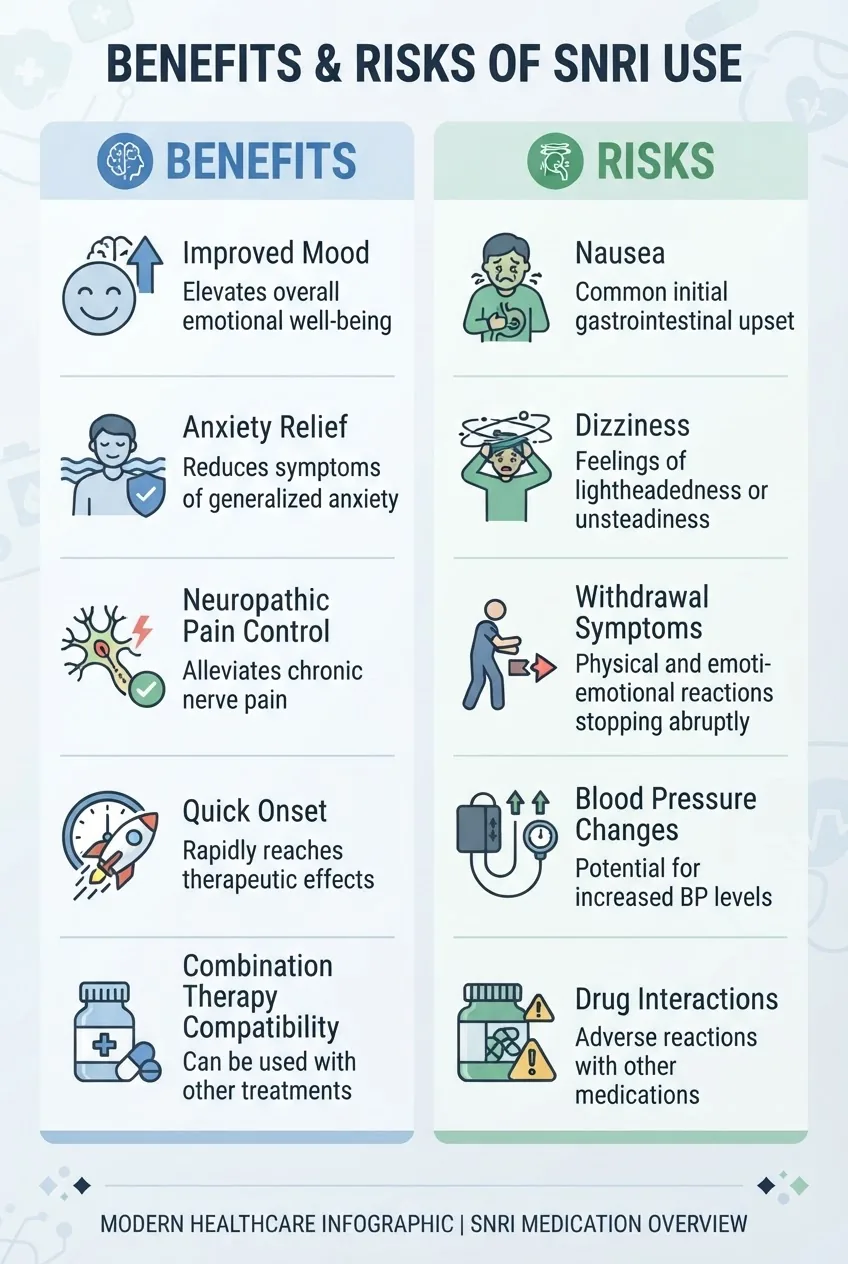
Below are evidence-informed benefits and risks to discuss when considering SNRIs in Australia.
Benefits
- Improved core depressive symptoms (mood, anhedonia) with evidence from randomised trials.
- Effective for several anxiety disorders (GAD, panic disorder) when indicated.
- Demonstrated benefit for neuropathic pain (duloxetine and venlafaxine data), allowing dual symptom control.
- Once-daily extended-release formulations can make adherence easier for many patients.
- May be combined cautiously with psychotherapy and other pharmacotherapies under supervision for better outcomes.
Risks
- Common adverse effects: nausea, headache, insomnia or somnolence, dry mouth, constipation, sexual dysfunction.
- Noradrenergic effects: increases in blood pressure, especially with higher doses of venlafaxine — requires monitoring.
- Potential for significant withdrawal symptoms (discontinuation syndrome) if stopped abruptly.
- Drug interactions: risk of serotonin syndrome when combined with other serotonergic agents, contraindicated with MAOIs without washout period.
- Rare but serious risks: hyponatraemia (particularly in older adults), liver enzyme elevations (monitor with duloxetine in hepatic risk), and increased bleeding risk with concomitant NSAIDs/antiplatelets.
Evidence and guidelines: The National Institute for Health and Care Excellence (NICE) recommends considering dual-action agents when symptom profiles or prior response suggest benefit; Australian prescribing guidance echoes this while emphasising monitoring (see NICE guideline on depression and Australian Department of Health). Peer-reviewed meta-analytic data support SNRIs’ efficacy for depression and neuropathic pain (source: Lancet comparative efficacy analyses).
Practical risk management:
- Baseline assessment: blood pressure, hepatic function (if indicated), medication review for interactions and pregnancy planning.
- Start low, go slow: titrate dose upward based on tolerability and response.
- Education: warn about discontinuation symptoms and advise against sudden cessation.
- Follow-up: early review at 1–2 weeks for tolerability and at 4–6 weeks for efficacy, with ongoing monitoring every 3 months or as clinically indicated.
For patients experiencing sleep disturbances or insomnia related to antidepressant therapy, consider reviewing options in our antidepressants for sleep and insomnia. For weight or metabolic concerns and side-effect mitigation, see guidance on managing side effects and weight concerns. For advanced or alternative treatments like ketamine, compare risks and coverage in alternative depression treatments like ketamine.
Evidence caveat: Response to antidepressants varies; according to a 2023 Australian Department of Health report, treatment outcomes differ across subgroups and require tailored management (source: government health report, 2023).
How Are SNRIs Prescribed and Monitored in Australia?
Answer: In Australia, SNRIs are prescribed by GPs and specialists following clinical assessment, with dosing protocols, PBS restrictions for subsidised scripts, and monitoring for efficacy and safety per national guidelines.
Term: PBS — Pharmaceutical Benefits Scheme, the Australian government subsidy program that affects medicine cost and prescribing requirements.
Prescribing pathway (typical clinical workflow):
- Initial assessment: GP or psychiatrist documents diagnosis (MDD, GAD, neuropathic pain), medical history, current medications, pregnancy plans and baseline vitals, including blood pressure.
- Risk screening: suicide risk assessment, alcohol/substance use, comorbid medical conditions (hypertension, liver disease), and review of contra-indicated drugs (e.g., MAOIs, certain triptans).
- Discussion of options: clinician explains expected benefits, side effects, monitoring and estimated timeline to response (usually 4–8 weeks), with informed consent.
- Initiation and titration: typical approach is start at a low dose and titrate upward over 1–4 weeks depending on tolerability; for example, venlafaxine XR often starts 75 mg daily and may be increased, while duloxetine commonly starts at 30 mg then increases to 60 mg daily.
- Follow-up schedule: early contact within 1–2 weeks for side-effect review, 4–6 weeks to assess response, then quarterly reviews or as clinically needed; blood pressure checks periodically and liver tests if risk factors exist.
- Access and PBS: many SNRI prescriptions are subsidised under PBS for specified indications; some scripts require authority from a specialist or GP after specialist recommendation — confirm via local pharmacy or the PBS website.
- Shared-care: GPs commonly manage long-term prescribing when the diagnosis and management plan are stable; refer to psychiatry when response is inadequate or side effects complex.
Clinical examples and clinician insight: At a Sydney community clinic, GPs typically document baseline blood pressure and advise home monitoring for patients on venlafaxine due to dose-related hypertensive risk; psychiatrists may recommend switching to duloxetine if comorbid neuropathic pain is prominent. These practical steps reflect Australian prescribing norms and PBS considerations.
Regulatory references and guidance: clinicians consult the Australian Department of Health for PBS details (Australian Department of Health) and national/international guidelines (e.g., NICE depression guideline) to align treatment duration and monitoring with best practice.
GP prescribing eligibility and antidepressant guidance
Treatment duration and stopping rules: Antidepressant courses for a first depressive episode commonly continue for at least 6 months after remission to reduce relapse risk; longer-term maintenance may be required for recurrent episodes. When discontinuing, clinicians advise gradual dose reduction to minimise withdrawal symptoms.
Managing Side Effects and Withdrawal From SNRIs
Answer: Manage SNRI side effects by dose adjustments, symptomatic treatments and planned gradual tapering; withdrawal is minimised by slow dose reduction over weeks to months under clinician supervision.
Stepwise management approach:
- Early side-effect care (first 1–4 weeks): counsel that nausea and headaches often settle; take medication with food, adjust timing (evening vs morning) and consider temporary antiemetics if needed.
- Address sleep issues: if insomnia arises, modify dose timing or consider short-term non-benzodiazepine sleep hygiene and CBTi referral as appropriate.
- Sexual dysfunction: discuss alternatives or adjunct strategies (dose timing, switching to a different class, or adding interventions); specialist referral may be required.
- Blood pressure changes: baseline and periodic monitoring; if sustained elevation occurs, consider dose reduction or switching away from agents with stronger noradrenergic effects.
- Liver monitoring: for duloxetine, check baseline hepatic function when indicated and repeat if symptoms or risk factors present.
Withdrawal (discontinuation) syndrome management:
- Symptoms: flu‑like symptoms, dizziness, electric shock sensations, insomnia, irritability and sensory disturbances.
- Risk factors: short half-life agents, abrupt cessation, higher doses and individual sensitivity.
- Mitigation: gradual dose taper over weeks to months; typical schedules reduce dose by 10–25% every 1–2 weeks depending on agent and symptoms.
- Treatment of severe withdrawal: reinstate previous dose then re-taper more slowly; specialist psychiatry input for complex cases.
For a more detailed review of discontinuation strategies and long-term benefit-risk analysis, see our sibling guide on withdrawal and benefits of antidepressants.
Patient scenario (Sydney): A 52‑year-old woman on venlafaxine XR 150 mg noted dizziness and electric shock sensations after stopping; reinstitution at 75 mg with slow four-week taper resolved symptoms. This illustrates why GPs and psychiatrists emphasise planned tapers and early contact.
Frequently Asked Questions
What does SNRI mean and how do these antidepressants work?
SNRI means serotonin and norepinephrine reuptake inhibitor; these drugs block transporter proteins that remove serotonin and norepinephrine from synapses, increasing their availability and improving mood regulation and pain pathways within weeks.
How do SNRIs differ from SSRIs in treating depression?
SNRIs block both serotonin and norepinephrine reuptake whereas SSRIs primarily block serotonin; this dual action can benefit energy and neuropathic pain but may increase noradrenergic side effects such as blood pressure changes.
Which antidepressants are classified as SNRIs?
Common SNRIs in Australia include venlafaxine, duloxetine and desvenlafaxine; each has specific indications, formulations and PBS availability that influence prescribing decisions.
How long does it take for SNRIs to start working?
Initial improvement is often seen in 2–4 weeks, with clear clinical response by 6–8 weeks; a full therapeutic trial is typically 8–12 weeks before changing treatment.
Can SNRIs be prescribed by a GP in Australia?
Yes; GPs commonly initiate and continue SNRIs within Australian clinical practice, following assessment and PBS rules, with specialist referral for complex or treatment-resistant cases.
How do I manage side effects from SNRI medication?
Manage side effects by adjusting dose, timing, symptomatic treatments and monitoring; discuss persistent or severe effects with your GP who may switch agents or refer to a specialist.
What should I do if I miss a dose of my SNRI?
If you miss a dose, take it as soon as you remember unless it’s near the next dose; do not double up. Check with your prescriber for agent-specific instructions and safety advice.
Are SNRIs safe for long-term use?
Long-term SNRI use is safe for many patients when monitored; ongoing review for efficacy, side effects, blood pressure and metabolic risks is recommended, with treatment duration individualized to relapse risk.