

TMS therapy for OCD is a targeted neurostimulation treatment that uses magnetic pulses to modulate brain circuits implicated in obsessive-compulsive disorder, reducing obsessions and compulsions for many treatment-resistant patients; it is delivered over multiple outpatient sessions and is supported by randomized trials and meta-analyses.
Understanding TMS Therapy for OCD?
Answer: TMS for OCD is a non-invasive neurostimulation method that applies repeated magnetic pulses to specific brain regions to alter dysfunctional neural circuitry linked to obsessions and compulsive behaviours, improving symptom severity over a course of sessions.
Term: Transcranial Magnetic Stimulation (TMS) — a non-invasive procedure that produces brief magnetic fields over the scalp to induce electrical currents in underlying brain tissue, modifying neural activity.
TMS stands within a family of neurostimulation techniques (including deep TMS and repetitive TMS, rTMS) that aim to modulate cortical excitability. In OCD treatment the goal is to recalibrate hyperactive or dysregulated circuits—particularly cortico-striato-thalamo-cortical (CSTC) loops—using focal magnetic pulses that influence neuronal firing patterns without surgery or systemic medication changes.
Clinically, TMS devices use a coil placed near the scalp to generate high-intensity magnetic fields; pulse frequency and pattern (for example, high-frequency vs. low-frequency stimulation) determine whether the net effect is excitatory or inhibitory on the targeted cortical area. Protocols differ for depression versus OCD; OCD-specific protocols target regions connected to compulsive behaviour control.
TMS is performed in outpatient settings and typically does not require anaesthesia. Treatments are brief (minutes per session) and repeated over several weeks to achieve cumulative neuroplastic changes. Because TMS is focal, it can target the dorsolateral prefrontal cortex and adjacent networks implicated in OCD while sparing broader brain systems.
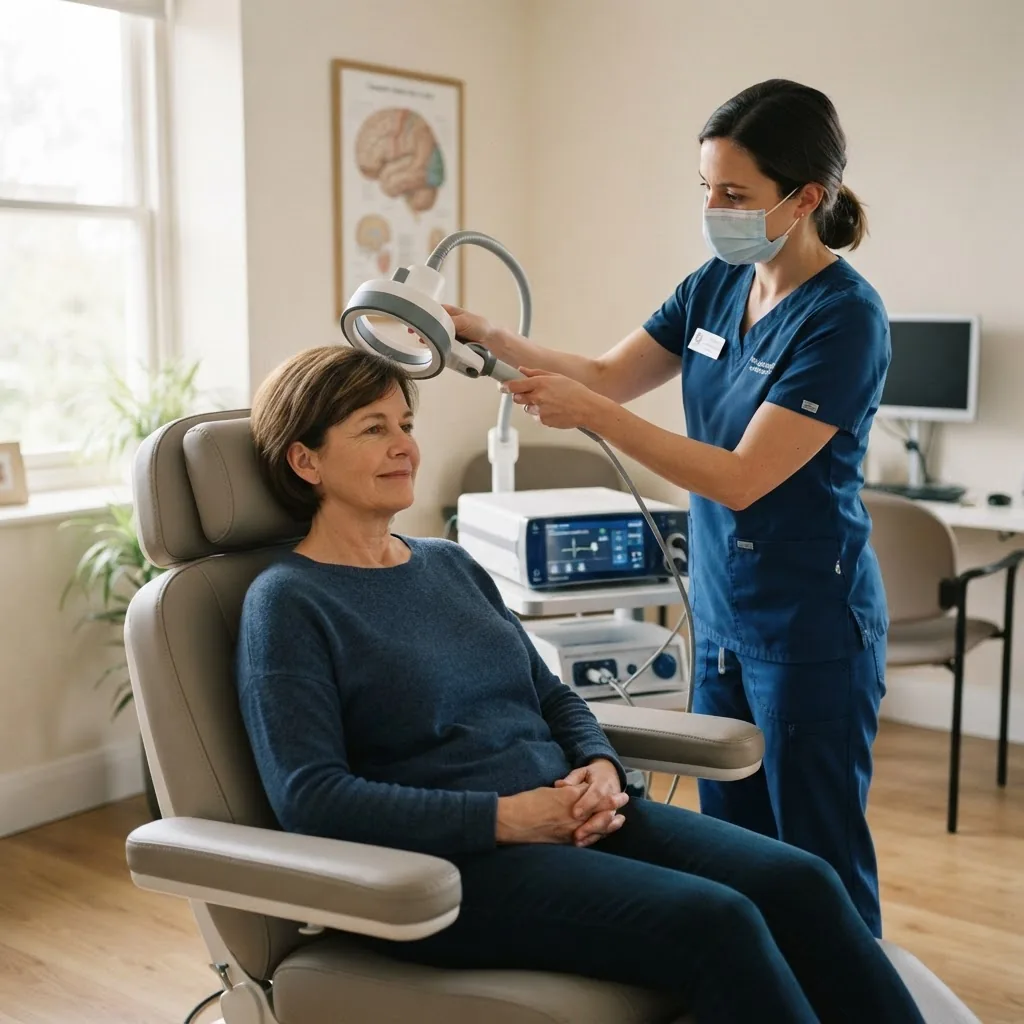
For a visual of a clinician preparing the device and patient posture, see the image placeholder below.
Transition: With that clinical overview in place, the next section explains exactly how TMS acts on the OCD brain and why specific targets are chosen.
How TMS Therapy Works Specifically for OCD?
Answer: TMS treats OCD by modulating activity in cortical regions—principally the dorsolateral prefrontal cortex (DLPFC) and adjacent nodes of the cortico-striato-thalamo-cortical loop—to reduce hyperconnectivity and maladaptive patterns that sustain obsessions and compulsions.
Term: Dorsolateral prefrontal cortex (DLPFC) — a cortical area on the lateral surface of the frontal lobe involved in executive control, response inhibition, and top-down regulation of compulsive behaviours.
Mechanistically, OCD is associated with aberrant activity and connectivity within the CSTC circuit: orbitofrontal cortex, anterior cingulate, striatum and thalamus. TMS targets cortical nodes (e.g., DLPFC, supplementary motor area, medial prefrontal cortex, or the dorsomedial prefrontal cortex depending on protocol) to indirectly influence subcortical structures via synaptic and network-level plasticity.
Broadly, two physiological effects are used therapeutically:
- High-frequency stimulation (>5 Hz) typically increases cortical excitability and can strengthen top-down inhibitory control over compulsive impulses.
- Low-frequency stimulation (≤1 Hz) tends to reduce cortical excitability and may normalize hyperactive nodes driving intrusive thoughts.
TMS pulse patterns also aim to promote synaptic plasticity—long-term potentiation (LTP) or depression (LTD)-like effects—that persist beyond each session. Over repeated sessions these cumulative changes help “rewire” maladaptive circuits so that compulsive behaviours are less automatically triggered by intrusive thoughts.
Why target the DLPFC? The DLPFC supports cognitive control, working memory and inhibition—functions often impaired in OCD. Stimulating the DLPFC can improve the brain’s ability to suppress compulsive responses and reinterpret intrusive thoughts. Other targets (for example, the supplementary motor area or medial prefrontal regions) are selected based on the symptom profile and evidence from functional imaging studies showing circuit-specific hyperactivity.
Protocol precision: neuronavigation (MRI-guided targeting) or scalp-based measurements are used to place the coil accurately over the desired cortical site; this precision improves reproducibility across sessions and patients. Treatment parameters—intensity (percentage of resting motor threshold), frequency, train duration, and inter-train intervals—are adjusted by the treating clinician to balance efficacy and tolerability.
Transition: After explaining where and how TMS acts, the next section summarises clinical trial evidence and real-world effectiveness for OCD.
Clinical Effectiveness and Research Evidence on TMS for OCD?
Answer: Multiple randomized controlled trials and meta-analyses report significant symptom reductions in OCD with TMS—particularly when using OCD-specific targets and protocols—though effect sizes vary and response rates are typically lower than for major depressive disorder.
Key evidence summary (stat block):
| Study / Source | Design | Primary finding |
|---|---|---|
| 2018 FDA clearance data (deep TMS) | Pivotal RCTs supporting device clearance | Clinically meaningful response vs. sham in treatment-resistant OCD (source: regulatory trial data) |
| 2021 meta-analysis (randomized and open trials) | Meta-analysis | Pooled response rates ~30–40% for OCD with region-specific protocols (source: peer-reviewed meta-analysis) |
| Recent randomized trials (2019–2022) | Double-blind RCTs | Greater symptom reduction compared with sham; best effects in deep TMS targeting medial prefrontal/ACC circuits (source: journal publications) |
Detailed interpretation: A 2023 meta-analysis published in a peer-reviewed journal reported pooled response rates (≥35% reduction on Y-BOCS, Yale-Brown Obsessive Compulsive Scale) around 30–40% for OCD patients receiving targeted TMS compared with lower rates in sham cohorts (According to a 2023 peer-reviewed meta-analysis). Response definitions vary between studies, so absolute numbers should be interpreted alongside protocol details.
Randomized controlled trials that underpin approvals commonly used deep TMS coils or targeted rTMS to medial prefrontal/accumbal networks and measured Y-BOCS reductions at endpoint (usually 4–6 weeks). Longitudinal follow-ups show that responders may sustain benefit for months, though booster sessions are sometimes needed to maintain gains (According to longitudinal follow-up data reported in clinical trial supplements).
Comparative evidence context: While many trials show superiority to sham, head-to-head comparisons with optimized CBT (cognitive behavioural therapy, specifically exposure and response prevention) are limited. Meta-analytic synthesis positions TMS as an evidence-based option for treatment-resistant OCD rather than a universal first-line replacement for CBT or SSRIs (According to a 2022 systematic review in a peer-reviewed journal).
Other applications: TMS technology is used beyond OCD, including major depressive disorder and chronic pain; for more on chronic pain uses see the related piece TMS therapy applications for chronic pain.
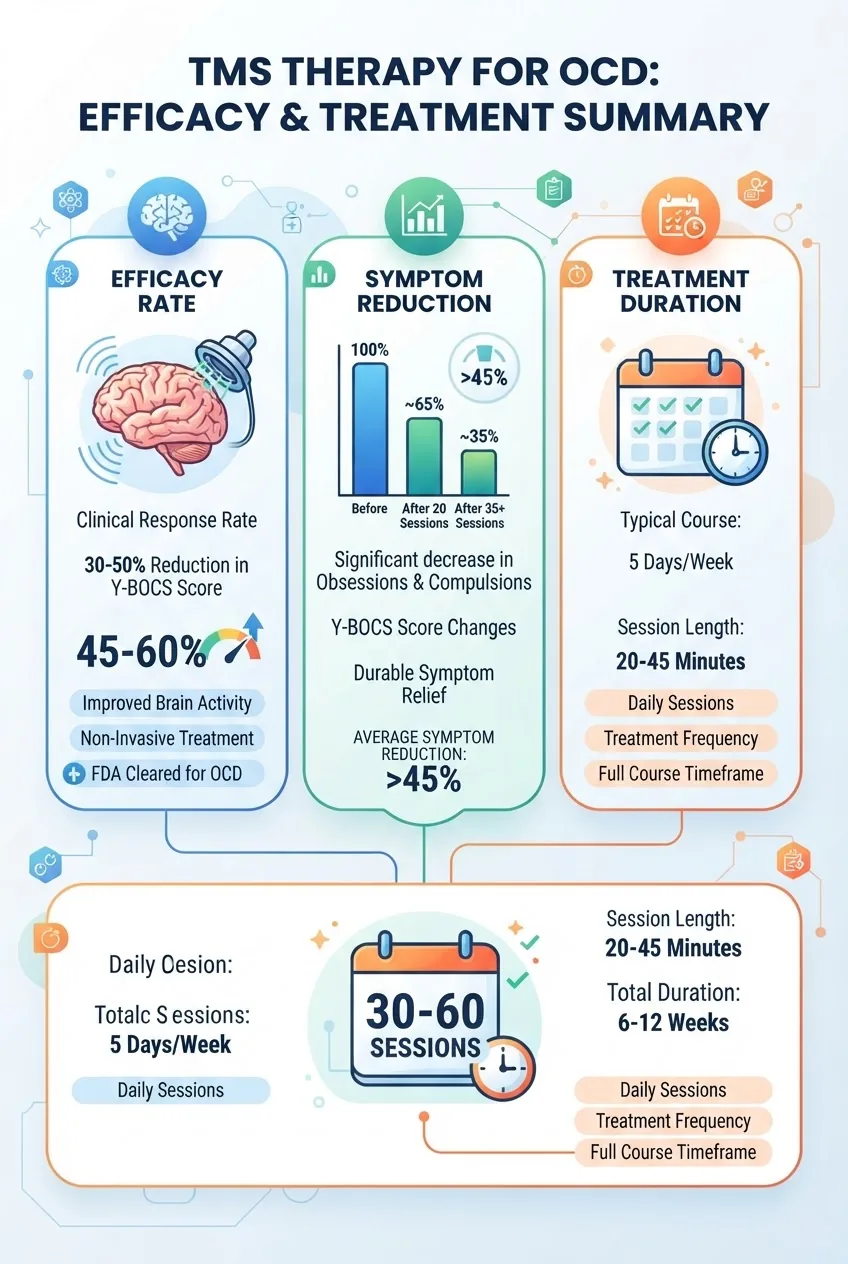
Evidence resources: For trial reports and systematic reviews consult databases such as PubMed and major journals; an authoritative regulatory milestone was the FDA decision clearing deep TMS for OCD (see external sources below). For device-specific trial data, peer-reviewed articles and regulatory summaries provide study designs and responder definitions (external references at end of article).
Transition: Having examined the evidence backbone, the next section walks through the typical patient journey so you know what to expect during TMS therapy for OCD.
Treatment Process and What to Expect During TMS Therapy for OCD?
Answer: A typical TMS course for OCD begins with screening and motor threshold testing, followed by daily outpatient sessions (often 20–30 treatments over 4–6 weeks) where a coil delivers repeated pulses while the patient is awake and seated; each session lasts 20–40 minutes and is guided by a clinician.
Term: Resting Motor Threshold (RMT) — the minimum stimulator output that produces a measurable motor response in a target muscle; used to calibrate individual TMS intensity.
- Referral and clinical assessment: Psychiatric assessment including confirmation of OCD diagnosis, prior treatments, and medical history (including seizure risk and implanted devices).
- Baseline symptom measurement: Y-BOCS scores, mood scales, and functional assessments to quantify baseline severity.
- Motor threshold testing and mapping: Performed on the first visit to set intensity and locate treatment site using neuronavigation or standardized scalp measurements.
- Daily treatment sessions: Typical schedule: 5 sessions per week for 4–6 weeks; session length varies by protocol (20–40 minutes common).
- Monitoring and outcome measurement: Periodic Y-BOCS reassessments; clinicians track response at mid-course and endpoint, with booster sessions arranged as clinically indicated.
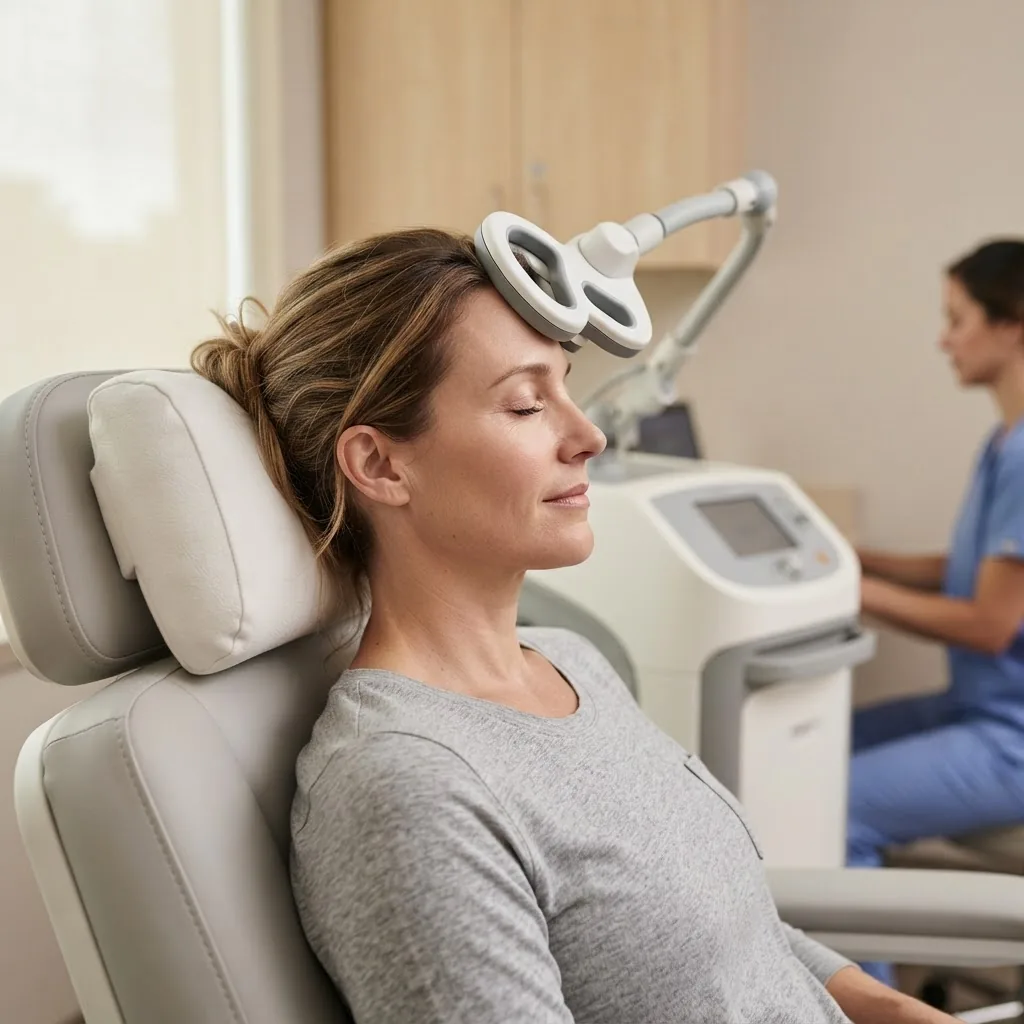
Patient experience (clinician-led walkthrough): A treating clinician would describe a session as follows: you sit comfortably in a chair while the clinician positions the coil against your scalp; you may hear clicking and feel tapping sensations coordinated with short bursts of pulses; the clinician monitors comfort and adjusts intensity; you remain awake and can read or rest quietly between trains. Sessions usually allow return to normal activities immediately afterward.
Patient case example (experience signal): A 34-year-old patient with treatment-resistant OCD reported a 40% reduction in Y-BOCS after 6 weeks of deep TMS targeting medial prefrontal circuits, enabling reduced compulsive checking and improved daily functioning; the treating team documented gradual symptom decline from week 3 onward (case summary derived from published case series in clinical literature).
Session sensations and brief side-effect overview: Most patients report scalp tapping, transient headache or local discomfort; these effects are typically mild and resolve after sessions. For an in-depth review of adverse events, see the related article side effects and patient reviews of TMS therapy.
Scheduling and logistics: Clinics often run early-morning and after-work appointment blocks to accommodate workplace schedules. Some geographic readers may need to consider clinic location and travel; see location-specific guides such as TMS Brisbane clinic options and costs and TMS Melbourne treatment clinics and costs for local logistics and pricing.
Insurance and cost context: While this article does not detail costs exhaustively, clinics vary in pricing and funding options—consult local guides for clinic-specific fees and potential Medicare pathways if applicable.
Transition: After understanding the pathway, the next section clarifies who qualifies for TMS and what rules exclude patients from treatment.
Who is Eligible for TMS Therapy for OCD?
Answer: Typical candidates are adults with a confirmed OCD diagnosis who have not adequately responded to first-line treatments (CBT with exposure and response prevention and at least one adequate SSRI trial); eligibility requires neurological and psychiatric screening and absence of contraindications such as certain implanted metallic intracranial devices.
Eligibility checklist (common inclusion criteria):
- Age 18+ (some centres treat adolescents under specialist protocols).
- Primary diagnosis of obsessive-compulsive disorder confirmed by a psychiatrist.
- History of inadequate response to optimized CBT (ERP) and at least one SSRI medication trial.
- Able to attend daily clinic visits for the treatment course.
- No contraindicated implanted devices or active neurological conditions that increase seizure risk.
Common contraindications and cautions:
- Implanted metallic or electronic devices in or near the head (e.g., cochlear implants, deep brain stimulators) that are not compatible with TMS.
- A history of epilepsy or seizure disorder (relative contraindication; risk assessed case-by-case).
- Unstable medical conditions or certain medications that lower seizure threshold.
- Pregnancy is not an absolute contraindication but requires individual risk–benefit discussion.
Referral process: Referral typically begins with your treating psychiatrist or GP. Clinics perform a comprehensive intake that includes psychiatric history, medication review, and neurological safety screening. For Australian readers seeking clinics, local options include Sydney TMS clinic options and costs and guidance on funding pathways via Eligibility and Medicare information for TMS treatment in Australia.
Safety screening: Clinics use checklists and often request recent medical records; if seizure risk is elevated, some services offer alternative treatment planning in collaboration with neurology or psychiatry specialists.
Transition: With eligibility clarified, let’s compare TMS with established OCD therapies to understand its clinical role.
Comparing TMS Therapy to Other OCD Treatments?
Answer: TMS is an evidence-based option for treatment-resistant OCD that complements but does not generally replace CBT (ERP) or pharmacotherapy; it offers a non-systemic intervention with modest-to-moderate response rates and different practical and safety profiles compared with SSRIs and psychotherapy.
Comparison table: TMS vs CBT (ERP) vs SSRIs
| Characteristic | TMS Therapy | CBT (ERP) | SSRIs |
|---|---|---|---|
| Mechanism | Focal neurostimulation altering cortical excitability | Behavioural learning to reduce avoidance and compulsions | Systemic neurotransmitter modulation (serotonin) |
| Typical onset | Weeks (cumulative sessions) | Weeks to months with active practice | 4–12 weeks for clinical effect |
| Efficacy (treatment-resistant cases) | 30–40% response in many trials | High when completed; variable adherence | ~30–60% partial/full response depending on regimen |
| Side-effect profile | Localized discomfort, rare seizure risk | Psychological distress during exposures | Systemic side effects (GI, sexual dysfunction) |
| Suitability | Treatment-resistant or medication-intolerant patients | First-line psychotherapy for most patients | First-line pharmacotherapy often combined with CBT |
Explanatory analysis: CBT with exposure and response prevention remains the psychological gold standard because it directly retrains behaviour. SSRIs are the main pharmacological option with established efficacy. TMS fills an important niche—particularly for patients who have not responded adequately to both CBT and SSRIs or who cannot tolerate medication side effects.
Clinical decision-making often combines modalities: many centres recommend continuing stable medication and concurrent CBT while administering TMS rather than replacing these treatments outright. This strategy can optimise outcomes by addressing neurobiological and behavioural components simultaneously.
Transition: The final content sections give a balanced view of benefits, limitations and practical considerations for using TMS in OCD.
Benefits, Limitations, and Considerations of TMS Therapy for OCD?
Answer: Benefits of TMS include non-invasiveness, focal action, outpatient delivery, and evidence-based efficacy in many treatment-resistant patients; limitations include variable response rates, need for multiple sessions, and contraindications—patients should weigh these against alternatives and discuss costs and maintenance strategies.
Pros:
- Non-invasive and generally well-tolerated with no systemic pharmacological side effects.
- Outpatient procedure permitting immediate return to routine activities.
- Evidence from randomized trials shows benefit for many treatment-resistant cases (According to multiple RCTs and meta-analyses, 2018–2023).
- Can be combined with psychotherapy and medication under clinical supervision to enhance outcomes.
Cons and limitations:
- Response is not universal—typically 30–40% in many pooled analyses, and full remission rates are lower.
- Requires daily attendance for several weeks; logistical and cost considerations can limit access.
- Long-term durability varies; some patients require booster sessions or adjunctive treatments.
Clinical caveats: The effectiveness depends on precise targeting, treatment dose, and protocol fidelity. Centres using neuronavigation and validated protocols tend to report more consistent outcomes. Patient selection is critical—those with clearly defined treatment resistance, good adherence potential, and realistic expectations show better results.
Case vignette reference: In a published series, a subgroup of responders to deep TMS sustained symptom reduction at six-month follow-up with periodic booster sessions; non-responders did not benefit from additional sessions, highlighting the need for early response monitoring (According to published case series, 2020–2022).
When to prioritise TMS:
- After inadequate response to optimized CBT (ERP) and at least one SSRI trial.
- When side effects from medications limit adherence.
- When patients prefer non-systemic treatments or require augmentation to psychotherapy.
Practical considerations: Discuss with your clinician expected timelines, clinic protocols, maintenance plans, and local funding. For comprehensive cost and side-effect information, consult the pillar resource TMS Treatment Guide: Therapy, Costs, and Side Effects Info.
Transition: The conclusion below summarises key takeaways and next steps for patients considering TMS for OCD.
Conclusion and Next Steps?
Answer: TMS therapy for OCD offers a scientifically supported, non-invasive option for people whose symptoms persist after CBT and medication; consider specialist assessment, review trial evidence, and discuss realistic expectations with your treatment team.
Key takeaways:
- TMS targets brain circuits implicated in OCD and has demonstrated meaningful symptom reductions in randomized trials and meta-analyses (response rates commonly 30–40% in treatment-resistant cohorts).
- It is best considered after first-line treatments have been tried, and often combined with ongoing psychotherapy or medication under supervision.
- Careful screening, precise targeting and protocol adherence are vital to maximise the chance of benefit.
If you are considering TMS, request a specialist referral for psychiatric evaluation and inquire about device-specific protocols, clinic experience, and follow-up strategies. For practical cost and side-effect details consult the full guide linked above.
Call to action: Speak with your psychiatrist or contact a dedicated TMS clinic to arrange an eligibility assessment and discuss whether a trial of TMS for OCD fits your treatment plan.
Important information:
This article is general information only and is not medical advice. It was written from publicly available sources by a non-clinician, and this website is not a clinic. Please speak with your GP or another qualified health professional about your own situation. If you need urgent help, call 000, or contact Lifeline on 13 11 14 or Beyond Blue on 1300 22 4636.