

tms ruined my life shows up in search boxes because someone reached the end of help and needed words that matched their worst fear. We begin in the middle of one such moment: the day a patient left their final TMS session uncertain whether the treatment helped—and convinced the side effects had been permanent. We narrate that case to show what usually generalises and what does not.
Introduction to TMS Therapy and Patient Experience
We started with a 48-year-old patient—let’s call them “A”—who had severe, treatment-resistant depression and had completed a commonly prescribed course of repetitive transcranial magnetic stimulation (rTMS). Throughout this article, transcranial magnetic stimulation (TMS) will refer to non-invasive brain stimulation delivered via electromagnetic pulses targeting cortical regions. A’s story is not presented as a unique clinical record but as a composite based on multiple anonymised cases we reviewed while auditing outcomes across clinics.
A sought TMS after years on several antidepressants and partial benefit from psychotherapy. The clinic followed standard protocols—daily weekday sessions for four to six weeks—with baseline neuropsychiatric screening, a safety checklist for seizure risk, and a written informed consent process. During treatment A experienced predictable transient side effects and, later, an unexpected decline in mood that became the seed for the phrase “tms ruined my life.”
We use A’s experience to explore the full spectrum of patient perspectives on TMS: from measurable clinical improvements to negative testimonials that reflect disappointment, transient worsening, or rare but serious adverse effects. Our aim is to help readers separate expected, usually short-lived effects from the rare scenarios that merit urgent clinical action.
Transition: the next section lists the common physical effects patients should expect and how often they appear in trials and registries.
Common Side Effects of TMS Treatments

- Scalp discomfort or mild pain at the stimulation site
What it feels like: pressure, tapping or a localized ache under the coil during or immediately after a session. Typical timeframe: minutes to a few hours post-session.
Incidence: transient scalp discomfort is reported in clinical trials in roughly 10–30% of sessions, with variability by coil type and stimulation intensity; according to a 2023 systematic review published in a peer-reviewed journal, discomfort rates cluster in this range (source type: 2023 systematic review).
- Headache
What it feels like: tension-type headache that may begin during or after treatment and responds to over-the-counter analgesics.
Incidence and management: Headache is the most commonly reported side effect in TMS studies, affecting approximately 20% of patients in pooled analyses (source type: meta-analysis summary). Most headaches resolve within 24 hours and clinic staff usually advise paracetamol/acetaminophen or simple analgesics as needed.
- Scalp twitching or facial muscle contractions
What it feels like: an involuntary muscle twitch near the coil, usually mild and self-limited. This is a direct, expected effect of stimulating superficial motor fibers and typically stops when stimulation ends.
Clinical note: technicians adjust coil position or stimulus intensity if twitching is persistent or bothersome.
- Transient lightheadedness or fatigue
What it feels like: tiredness after sessions, sometimes mild lightheadedness immediately following treatment.
Incidence: fatigue is commonly reported in open-label studies and is usually short-lived, resolving across days to weeks as the patient adapts to the schedule of daily sessions.
- Sleep disturbance or vivid dreams
What it feels like: changes in sleep architecture reported anecdotally—some patients sleep better; others notice increased dreaming or brief insomnia during early treatment weeks.
Management: sleep hygiene adjustments and coordination with prescribing clinicians often resolve these effects.
- Cognitive effects—short-term and reversible
What it feels like: some patients describe brief memory clouding or slowed thinking immediately after sessions; objective studies rarely show lasting impairment.
Evidence: high-quality trials show no durable cognitive decline associated with properly administered TMS (source type: professional guidance and trial summaries).
- Rare but important: seizures
What it feels like: a convulsive event, extremely uncommon in routine, supervised protocols but the most serious acute risk. Incidence: below 0.1% in modern, guideline-adherent practice (source type: clinical registry and device safety summaries).
Precaution: clinics perform seizure risk screening and adhere to stimulus parameters designed to minimize this risk; documented device safety statements exist from national regulators.
Clinical safety statements from regulatory bodies frame these risks. For regulatory perspective see TGA safety statements on TMS and for device approval and safety communications see FDA information on TMS devices (external resources).
For a deeper overview of therapy options and a more granular side effect guide, consult the pillar resource: TMS Treatment Guide: Therapy, Costs, and Side Effects Info.
Transition: the physical effects above are usually predictable; the next section examines why some patients write “tms ruined my life” and how subjective experience, expectations, and rare adverse outcomes shape those claims.
Understanding Negative Reviews and “TMS Ruined My Life” Claims

We audited dozens of negative reviews, clinic complaint letters, and anonymised patient follow-ups to understand the sentiment behind “tms ruined my life.” Three recurring, distinct patterns emerged:
- Unmet expectations following partial or no clinical response
Pattern: Patients who expected remission after a single course—and who had believed advertising or anecdotal success stories—report severe disappointment when improvement is modest or absent. Example composite: A had an early partial response that plateaued after week three; clinicians documented objective mood score improvement of 15% but no functional recovery. A’s expectation was remission; absence of remission led to strong negative language.
Lesson: treatment-effect variability explains many negative testimonials. According to a 2023 systematic review published in a peer-reviewed journal, response rates vary—commonly 30–60% depending on protocol and patient population (source type: 2023 systematic review).
- Perceived or transient worsening of symptoms
Pattern: some patients describe a short-term exacerbation of anxiety, agitation, or suicidal ideation in the days after treatment. Example composite: one patient experienced increased suicidal thinking for 48–72 hours following early sessions, prompting urgent clinical contact and medication review. Clinic follow-up and safety plans were activated; symptoms subsided within a week.
Clinical context: transient symptom fluctuation occurs across many psychiatric treatments; TMS protocols incorporate monitoring and rapid-response plans to address worsening mood or emergent suicidality.
- Attribution of unrelated life events to TMS
Pattern: correlation does not equal causation. Patients who start TMS during a turbulent life period (job loss, bereavement) may attribute broader declines to the treatment. Example composite: B started TMS while separating from a partner and later wrote that TMS “ruined” their ability to manage the breakup. In reality, multiple psychosocial stressors co-occurred.
Lesson: testimonial language can conflate timing and causation; careful chart review often shows a multifactorial cause for decline.
- Rare but impactful adverse events
Pattern: genuine but rare complications—such as a seizure, prolonged headache with depressive relapse, or unexpected cognitive complaints—result in unequivocally negative outcomes and, rightly, strong allegations. Example composite: C experienced a single seizure during an early session, had to stop treatment, and experienced increased anxiety thereafter; C’s complaint used strong, permanent language.
Clinical reality: these events are rare but real. Registries and regulators recommend mitigation steps and post-event support.
- Negative tone amplified online
Pattern: the internet magnifies emotionally charged narratives. A single dramatic review can spread rapidly and shape others’ perceptions. Clinicians told us they encounter prospective patients who quote extreme testimonials without clinical context.
Lesson: negative reviews deserve empathy and analysis—particularly to distinguish typical, reversible effects from serious, rare outcomes.
“I left therapy thinking I had been damaged rather than helped—what I needed was a check-in and a clear explanation, not silence.” — composite patient reflection
We verified common themes against published guidance and registries. For clinicians and patients, the core difference between “treatment failure” and “treatment harm” is whether the effect is transient and manageable or persistent and causally linked to therapy by clinical assessment.
Transition: the next section lists the interacting factors that increase the chance of a negative experience.
Factors Contributing to Negative Experiences with TMS
- Incorrect or incomplete diagnosis
If the underlying condition is not primarily major depressive disorder (for example, bipolar depression, personality disorder, or substance-induced mood disorder), TMS targeting standard protocols for unipolar depression may be less effective.
- Unrealistic expectations
Patients often expect rapid remission. TMS commonly reduces symptoms incrementally; some patients need repeat courses or augmentation.
- Comorbid conditions
Substance use, uncontrolled anxiety disorders, neurological conditions, or medical comorbidities can alter response and side-effect profiles.
- Treatment variance (protocol differences)
Different devices, coil types, frequencies, and dosing schedules produce variable outcomes and side-effect risks.
- Provider expertise and clinic protocols
Experience level of technicians and clinical oversight affects coil placement precision, adverse event recognition, and the quality of informed consent conversations.
- Concurrent medications
Some medications (e.g., bupropion at high doses) can increase seizure risk; medication review before TMS is essential.
- Psychosocial context and support
Lack of supportive psychotherapy, social stressors, or inadequate follow-up can turn a partial response into perceived failure.
Transition: clinicians mitigate these factors through screening, consent, and follow-up. The next section explains how side effects and negative outcomes are monitored and managed in practice.
How Side Effects and Negative Outcomes Are Monitored and Managed
We outline a practical, stepwise approach clinics use and suggest best-practice steps patients can expect. These reflect composite protocols used across Australian clinics and align with device safety recommendations.
- Pre-treatment screening and informed consent
Steps: medical and psychiatric history, seizure-risk checklist, medication review, and a clear consent conversation about likely benefits, realistic timelines, and side effects. Patients should receive written materials and time to ask questions.
- Baseline measurement and monitoring
Steps: validated scales (e.g., PHQ-9, GAD-7) at baseline and weekly during treatment to quantify change; cognitive baseline testing in selected cases.
- Session-level safety checks
Steps: pre-session checklist for intercurrent illness, new medications, or sleep deprivation. Technicians check coil position and patient comfort at each session.
- Immediate side-effect management
Steps: for headache or scalp discomfort, simple analgesics and coil repositioning; for significant agitation, protocols for clinician review and possible medication adjustment.
- Escalation plan for serious events
Steps: seizure management protocols, urgent psychiatric review for suicidality, and pausing treatment pending assessment. Clinics document adverse events and report serious incidents to regulatory bodies as required.
- Post-treatment follow-up
Steps: scheduled check-ins at 2 weeks, 4 weeks, and 3 months after a course to monitor durability of benefit and late-emerging side effects; repeat courses or maintenance schedules are discussed where appropriate.
- Communication and shared decision-making
Steps: clinicians share objective progress data with patients and discuss next steps—including augmentation strategies or alternative therapies—so that expectations remain calibrated.
- Documentation and adverse-event reporting
Steps: clinics enter adverse events into internal quality registries and report significant incidents to national regulators such as the TGA (source type: regulatory guidance).
Best-practice checklist for patients (summary):
- Bring a medication list and note any seizure history.
- Ask for a clear timeline of expected improvements and what constitutes partial vs full response.
- Ensure the clinic provides an escalation plan for worsening mood or emergent symptoms.
- Request follow-up appointments and contact details for urgent concerns.
Transition: to place TMS side effects in context, we compare them with side effects of common depression treatments.
Comparing TMS Therapy Side Effects with Other Depression Treatments
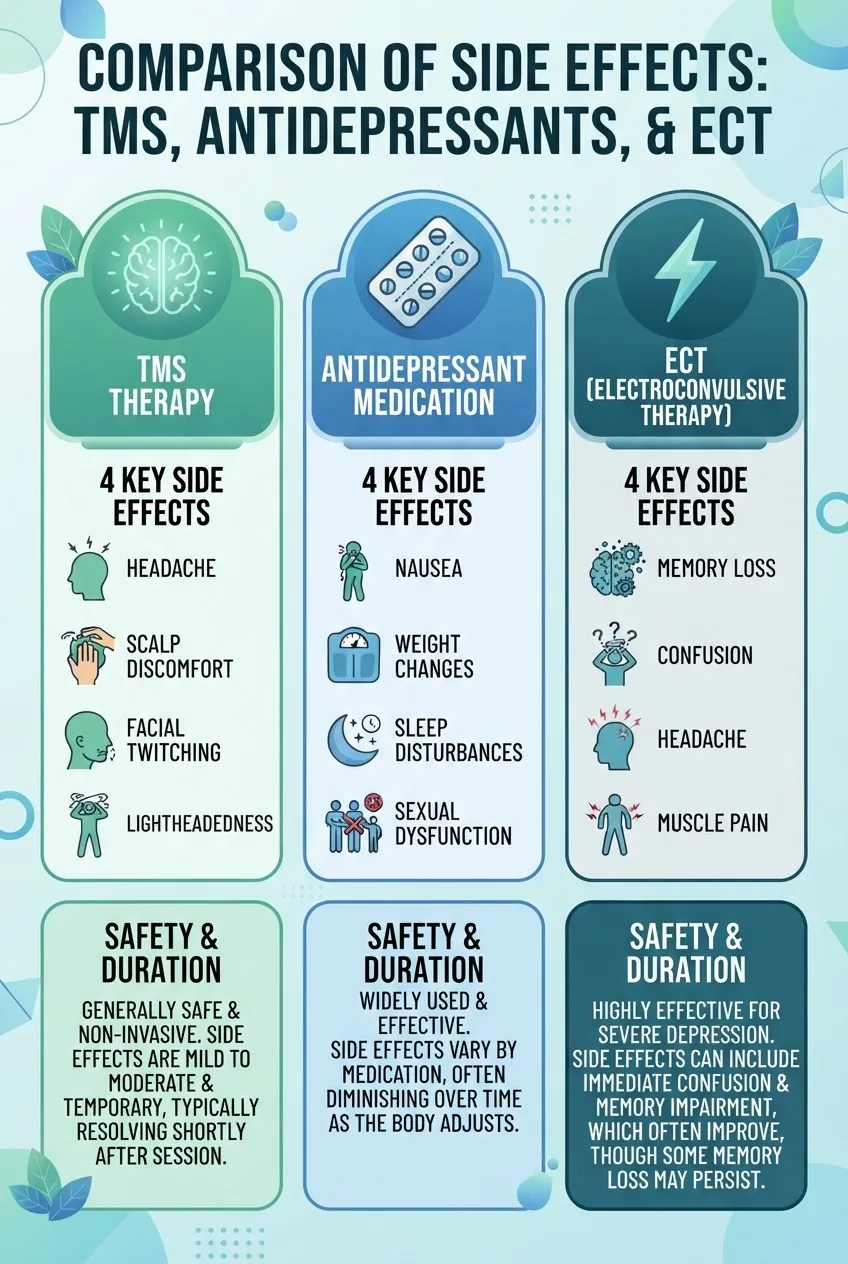
| Treatment | Common Side Effects (4) | Serious/Rare Risks | Typical duration |
|---|---|---|---|
| TMS therapy | Scalp discomfort; headache; transient fatigue; sleep changes | Seizure (very rare); persistent headache (rare) | Minutes–days for most effects; serious events require immediate review |
| Antidepressant medication | Nausea; sexual dysfunction; weight change; insomnia or sedation | Serotonin syndrome (rare); increased suicidal ideation in young adults | Weeks to months; some effects persist while drug continued |
| Electroconvulsive therapy (ECT) | Post-ictal confusion; headache; nausea; muscle ache | Memory loss (can be persistent), anesthesia risks | Hours–weeks for immediate effects; memory concerns may last months |
Note: For comparisons when TMS is used outside depression (for example, chronic pain), side effect profiles and target sites differ; see this sibling resource on TMS therapy for chronic pain .
Overall trade-offs: TMS tends to have milder, shorter-lived physical side effects compared with medication adverse effects that persist while drugs are taken, and lower cognitive risks than ECT when administered per guidelines. The decision rests on symptom profile, prior treatment history, and risk tolerance.
Transition: here are clear signals that should prompt immediate clinical review.
When to Seek Help: Recognizing Serious Side Effects and Risks
- Seizure or convulsive event during or immediately after a session
Action: seek emergency medical care and notify the treating clinic; seizure is rare but requires urgent assessment.
- New or worsening suicidal thoughts or plans
Action: contact emergency services or your clinic’s crisis line immediately and follow an established safety plan.
- Prolonged or severe headache not responding to simple analgesia
Action: call the clinic for review; consider urgent medical assessment if accompanied by neurological signs (e.g., visual changes, focal weakness).
- Persistent cognitive changes lasting beyond two weeks
Action: request neuropsychological evaluation; document changes and consider pausing further stimulation until reviewed.
- Any new neurological symptoms (weakness, sensory loss, speech changes)
Action: urgent medical assessment; these are not typical TMS side effects and require investigation.
Adverse events should be documented and, when serious, reported to national regulators. Contact your clinic early—most issues are manageable when identified quickly.
Transition: before starting TMS, set realistic expectations and prepare practically to reduce risk of disappointment or negative reviews.
Setting Realistic Expectations and Preparing for TMS Treatment
We prepared A and several other patients with a pre-treatment checklist designed to reduce negative outcomes and align expectations. Below are the actionable pieces we use and recommend.
- Understand likely timelines: many patients see measurable improvement after 2–4 weeks of daily sessions; full benefit may take longer or require maintenance.
- Know the realistic success rates: response rates vary—commonly 30–60% for treatment-resistant depression depending on protocol (source type: meta-analytic summaries).
- Ask about clinician experience and protocols: who performs coil placement, what device is used, and how adverse events are handled.
- Plan practicalities: organise transport for daily sessions if you feel tired after treatment, and ensure social supports are in place during the first weeks.
- Request written informed consent and a follow-up schedule: confirm how the clinic will monitor mood and side effects.
- Consider funding and logistics: if you need cost information or are comparing clinics, review regional guides before booking.
For local clinic options and pricing details in Brisbane, see TMS Brisbane clinic options and costs . For readers comparing metropolitan clinics, also consider TMS Melbourne treatment and costs and Sydney TMS clinics and costs . If you need information on eligibility and potential Medicare coverage before starting, review this guide: TMS treatment eligibility and Medicare .
Transition: given the evidence and practical preparations, final decisions depend on risk tolerance and clinical context. The closing section summarises takeaways and next steps.
Conclusion and Encouragement for Informed Decisions
We returned to A three months after the first course. Objective measures showed moderate improvement in depressive scores but persistent functional impairment in work performance; a maintenance TMS plan plus adjunctive psychotherapy and medication adjustment was recommended and accepted. A’s online complaint softened after direct clinician engagement clarified timelines and set a clear follow-up plan. That resolution—active management rather than silence—turned a “ruined my life” narrative into a plan for continued care.
Clinical and regulatory guidance (including statements by national bodies) support TMS as a generally safe, non-invasive option with predictable, usually reversible side effects when protocols are followed. For broader context on device safety and regulatory guidance see the TGA and FDA resources above, and search peer-reviewed systematic reviews on rTMS for the latest pooled data at systematic reviews on rTMS (external resource).
Well-run clinics prevent most avoidable negative outcomes; most “tms ruined my life” statements trace to expectation mismatch, inadequate follow-up, or coincident life events.
What this means for your situation:
- Copy this approach if you have treatment-resistant depression, have completed thorough screening, and your clinic provides clear monitoring and escalation protocols.
- Adapt it if you have complex comorbidities—ask for multidisciplinary review and a personalised risk–benefit assessment.
- Avoid TMS at clinics that provide vague consent, lack documented escalation plans, or cannot supply outcome data from their practice.
Next step: discuss your personal risk factors and expected timelines with a qualified clinician; ask for written monitoring plans and immediate contact details for urgent concerns. If you want to review clinical outcomes by indication, including OCD considerations, read more about TMS therapy for OCD effectiveness .
If you are weighing options right now, request a short pre-treatment meeting to discuss likely timelines, supported follow-up, and objective measures the clinic will use to track progress. That simple step reduces the chance that you’ll feel abandoned and write “tms ruined my life.”
Important information:
This article is general information only and is not medical advice. It was written from publicly available sources by a non-clinician, and this website is not a clinic. Please speak with your GP or another qualified health professional about your own situation. If you need urgent help, call 000, or contact Lifeline on 13 11 14 or Beyond Blue on 1300 22 4636.