

Transcranial Magnetic Stimulation (TMS) treatment uses focused magnetic pulses to activate targeted brain circuits associated with mood and cognition; it is a non‑invasive, evidence-based therapy often used for treatment-resistant depression and select psychiatric conditions. This guide explains mechanisms, session protocols, likely side effects, and typical Australian costs to inform your decision.
TMS: Transcranial Magnetic Stimulation is a non‑invasive neuromodulation technique that uses brief magnetic pulses applied to the scalp to induce electrical currents in underlying cortical neurons.
What Is TMS Treatment? Overview and Scientific Principles
Answer: TMS treatment is a targeted neuromodulation therapy that uses a coil to generate magnetic fields, inducing small electrical currents in the cortex to change neuronal excitability and network connectivity, aiming to relieve symptoms of depression and other disorders.

TMS — often called transcranial brain stimulation or magnetic brain stimulation — delivers pulsed magnetic fields to modulate neuronal activity. Think of it like using a small, directional “magnetic remote” placed on the scalp that briefly nudges groups of neurons to become more or less active, changing how brain networks communicate during and after treatment.
Neuromodulation principle: an external coil produces a time‑varying magnetic field that penetrates the skull and induces an electric field (Faraday induction) in cortical tissue; when thresholds are reached, neuronal membranes depolarise and fire, and repeated stimulation induces synaptic plasticity (long‑term potentiation or depression), altering circuit function.
Key terms defined on first use:
Neuromodulation: the therapeutic alteration of nerve activity through targeted delivery of a stimulus, such as magnetic pulses.
Repetitive TMS (rTMS): repeated trains of magnetic pulses delivered in a session to produce lasting changes in cortical excitability.
Scientific evidence and regulatory status
Multiple randomised controlled trials and meta-analyses show clinically meaningful response and remission rates for major depressive disorder (MDD), especially in treatment‑resistant cases. TMS devices and indications are approved by international and Australian regulators; the treatment is included in TGA‑regulated medical device pathways and used under clinical oversight.
Mechanistically, TMS effects occur at three nested levels:
- Immediate electrophysiology: magnetic pulses cause action potentials in superficial cortical neurons.
- Network modulation: repeated stimulation alters connectivity between targeted cortical regions (e.g., dorsolateral prefrontal cortex) and deeper limbic structures involved in mood.
- Plasticity and behaviour: repeated sessions induce synaptic strength changes that can translate to symptom improvement lasting weeks to months.
Analogy: imagine cortical networks as a dimmable lamp with tangled wiring; TMS is a focused switch that readjusts the lamp’s brightness and wiring efficiency over repeated pulses, helping dysfunctional circuits regain healthier activity patterns.
How TMS Therapy Works: Procedure and Technology
Answer: TMS therapy uses a stimulatory coil connected to a stimulator that delivers repetitive magnetic pulses in defined protocols; a typical course involves daily sessions (usually weekdays) for 4–6 weeks, each session lasting 20–60 minutes with patient monitoring and coil placement guided by anatomical landmarks or neuronavigation.
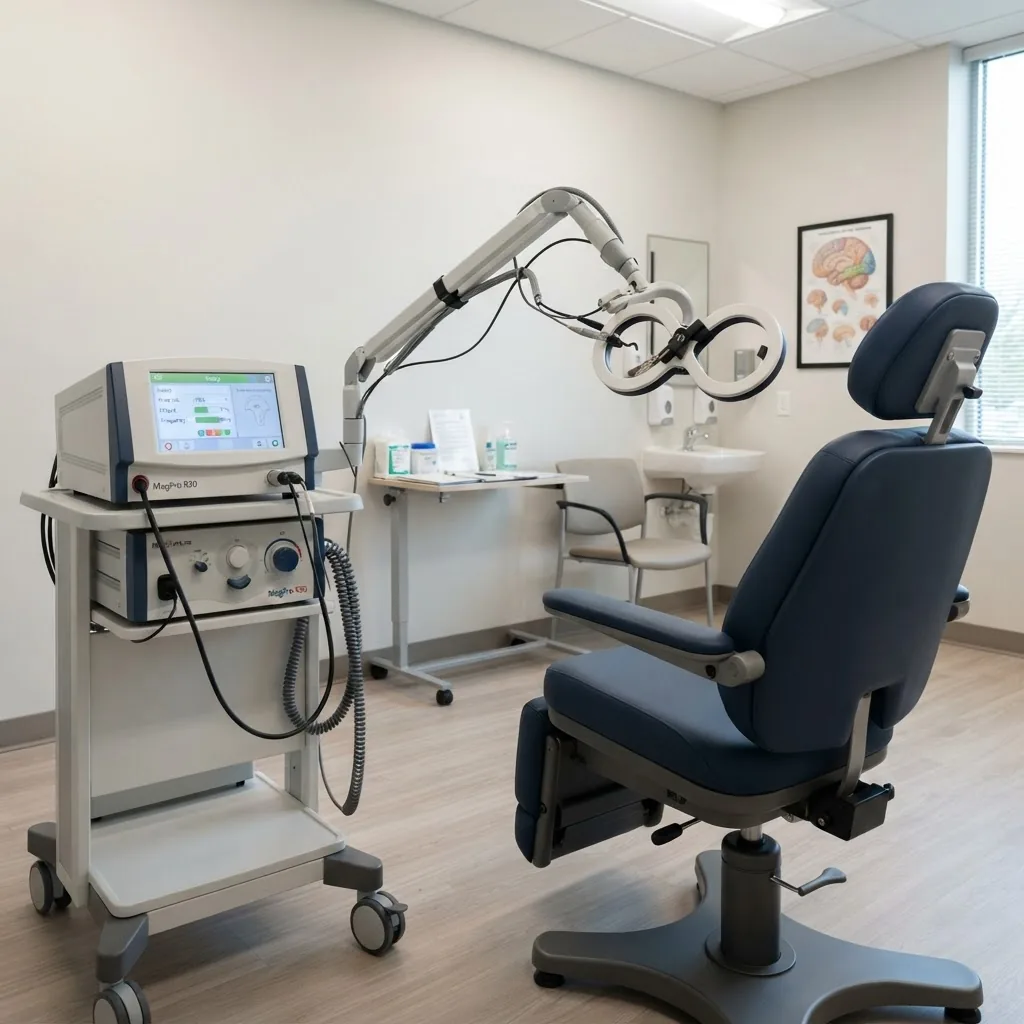
Below is a detailed, step-by-step clinic procedure and a practical clinician-style guide to the device and session workflow.
- Referral and assessment (pre-treatment): Psychiatrist or suitably trained clinician reviews history, medication, prior treatments, suicidality, and contraindications (e.g., implanted ferromagnetic devices). Baseline symptom scales (PHQ‑9, MADRS) and cognitive screening are recorded.
- Treatment planning and consent: Clinician explains goals, likely benefits, risks, and alternatives; informed consent is obtained and any questions answered.
- Motor threshold determination: The resting motor threshold (rMT) is measured by single‑pulse TMS over the primary motor cortex to find the minimum intensity that evokes a visible twitch or EMG response in the contralateral hand. rMT calibrates treatment intensity (e.g., 120% rMT).
- Coil positioning and targeting: Target often is left dorsolateral prefrontal cortex (DLPFC) for depression; clinicians use scalp measurements (e.g., 5‑6 cm anterior to motor hotspot) or neuronavigation guided by MRI for more precise targeting.
- Treatment protocol selection: Choose rTMS protocol: high-frequency left DLPFC (10 Hz), low-frequency right DLPFC (1 Hz), or theta-burst stimulation (TBS) variants (iTBS/cTBS). Protocol selection depends on diagnosis, tolerability, and evidence base.
- Session delivery: Patient seated comfortably; coil positioned and secured; ear protection offered. Stimulation runs in trains with inter-train intervals, total pulses per session vary by protocol (e.g., 3,000 pulses for standard 10 Hz sessions; iTBS sessions deliver ~600 pulses in ~3–10 minutes).
- Monitoring and completion: Clinician or operator monitors for discomfort or adverse effects; vital signs as needed. After session, patient typically resumes normal activities and returns for next daily session.
- Course review and maintenance: Symptom scales repeated weekly; treatment course (commonly 20–30 sessions) ends with evaluation; maintenance sessions may be offered depending on response.
Practical clinician insight — step‑by‑step use of a TMS stimulator device (simulated):
- Switch on stimulator; verify calibration and emergency stop function.
- Attach coil cable and ensure coil cooling (if applicable) is active.
- Measure rMT with single‑pulse mode: locate motor hotspot, increase intensity until consistent motor evoked potentials or visible twitches observed.
- Calculate treatment intensity (e.g., 120% rMT) and input protocol parameters (frequency, train length, inter-train interval, pulses per train, total pulses).
- Position coil over target using scalp landmarks or neuronavigation; fix coil holder; apply ear protection and start stimulation while watching patient comfort.
- Stop immediately if seizure, severe pain, or acute neurological signs occur; follow emergency protocol.
- Document parameters and patient tolerance in the session record.
Devices, coils and parameters
TMS stimulators comprise a pulse generator and coil; coils vary (figure-of-eight for focal stimulation, H-coils for deeper, broader stimulation). Devices deliver single-pulse, paired‑pulse, rTMS, and patterned protocols like iTBS/cTBS (intermittent/continuous theta-burst), each with specific pulse durations, intensities and inter-train timing.
| Protocol | Typical session length | Common indications |
|---|---|---|
| 10 Hz rTMS (left DLPFC) | 20–40 minutes | Treatment-resistant depression |
| 1 Hz rTMS (right DLPFC) | 20–30 minutes | Depression, anxiety modulation |
| iTBS (intermittent theta burst) | 3–10 minutes | Rapid treatment of depression; comparable efficacy in some trials |
Session structure summary:
- Check-in and brief assessment (5 minutes)
- rMT calibration initially (10–20 minutes, only first day or recalibration)
- Stimulation session (3–60 minutes depending on protocol)
- Post-session review and scheduling (5 minutes)
Uses of TMS Treatment: Conditions and Effectiveness
Answer: TMS is primarily used for major depressive disorder—especially treatment‑resistant depression—with robust evidence of symptom reduction; it’s also used for PTSD, OCD (with specific protocols), and is being investigated for chronic pain, bipolar depression, and other neuropsychiatric conditions.
TMS therapy for depression has the largest evidence base: randomised controlled trials and meta-analyses show response rates (≥50% symptom reduction) in roughly 30–60% of treatment‑resistant patients and remission rates around 20–40% depending on definitions and follow-up intervals. According to a 2023 Australian Department of Health report, TMS uptake has increased as clinicians integrate it for patients not responding to medications and psychotherapy.
Evidence snapshots and sources:
- Major depressive disorder: Several meta-analyses find significant pooled effects versus sham; see peer-reviewed summaries in major journals. Lancet Psychiatry articles review protocol efficacy and long‑term outcomes.
- PTSD: Emerging RCTs show symptom improvement using right DLPFC or medial prefrontal protocols; effect sizes are smaller and protocols vary.
- OCD: Deep TMS (H-coil) and high‑frequency protocols over supplementary motor area or DLPFC have regulatory approval in some jurisdictions; evidence supports symptom reduction in some patients.
- Chronic pain and other indications: Early-stage trials show promise; more high-quality RCTs needed. See dedicated review articles for chronic pain applications.
For specific indications and clinic-level recommendations, clinicians tailor protocol and target based on diagnosis, comorbidity, and prior treatment history. For more detailed, condition-specific resources:
TMS therapy for chronic pain options
TMS therapy for OCD effectiveness
Comparative effectiveness versus medication: TMS is typically used after inadequate response to antidepressants or intolerance to medications; head-to-head trials show TMS can achieve similar or superior outcomes for some patients with fewer systemic side effects, though response is variable. See FAQ for a concise comparison.
Side Effects and Safety Profile of TMS Therapy
Answer: TMS is generally well tolerated; common side effects are transient headache and scalp discomfort, less common effects include lightheadedness or transient hearing changes, and rare but serious risks include seizure and mania; contraindications include ferromagnetic implants in the head.
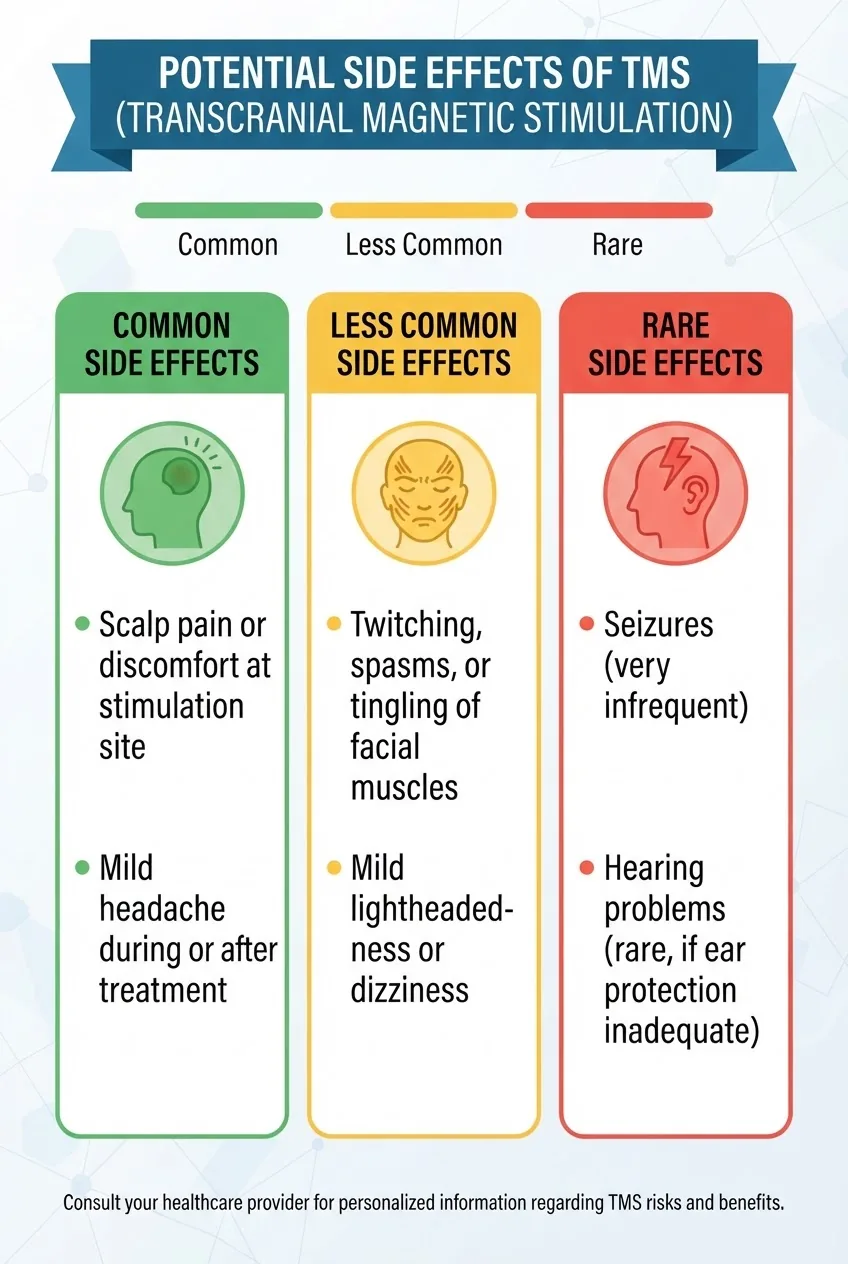
The following bullet points list side effects with clinical detail, incidence where available, and safety considerations. Where possible, incidence estimates reference peer-reviewed literature or Australian health guidance.
- Common (experienced by many patients):
- Headache — usually mild to moderate, often responds to simple analgesia; typically occurs during or shortly after sessions and diminishes over the first week. (According to multiple clinical trials compiled in peer-reviewed reviews.)
- Scalp discomfort — localised at the coil site; transient and manageable by changing coil orientation, lowering intensity, or using breaks.
- Less common:
- Lightheadedness, transient nausea or fatigue — brief and self-limited after sessions.
- Hearing effects — due to click noise; use of earplugs recommended to prevent transient tinnitus or threshold changes; significant hearing damage is uncommon with proper protection.
- Sleep disturbance — some patients report transient changes in sleep pattern (improved or worsened) during treatment weeks.
- Rare but serious:
- Seizure — estimated risk is very low (<0.1% in standard protocols), higher in patients with epilepsy or certain medications that lower seizure threshold; clinics follow safety criteria to minimise risk. (According to international safety guidelines and documented in clinical trial safety reports.)
- Manic switch in bipolar disorder — rare; screening for bipolar history and mood stabilisation mitigates this risk.
- Exacerbation of implanted device function — rare; contraindicated in some implanted ferromagnetic devices (deep brain stimulators, cochlear implants), or require specialist assessment.
- Contraindications and precautions:
- Absolute: presence of non‑compatible intracranial metallic or electronic implants (unless cleared by device manufacturer and specialist), known increased seizure risk without stabilisation.
- Relative: medications affecting seizure threshold, cardiac pacemakers (some modern pacemakers are compatible—device-specific clearance required), pregnancy (limited safety data; case-by-case assessment recommended).
- Patient factors: severe cognitive impairment or inability to tolerate sessions may preclude treatment.
Monitoring and mitigation: Clinics use standardised safety screening forms, baseline motor threshold to individualise intensity, ear protection, and trained staff to monitor for adverse events. Professional guidance from psychiatric colleges supports informed consent and emergency preparedness.
TMS therapy side effects and patient reviews
Cost of TMS Treatment in Australia: What to Expect
Answer: In Australia, private TMS treatment typically ranges from several hundred to over a thousand dollars per session depending on protocol and clinic; a full acute course (20–30 sessions) commonly totals AU$7,000–$18,000, though pricing varies and some public programs, clinical trials, or limited subsidies may reduce out-of-pocket costs.
Costs depend on:
- Protocol type (iTBS sessions are shorter and often less costly per session than longer standard rTMS protocols).
- Number of sessions required (most courses are 20–30 sessions; accelerated or taper schedules alter totals).
- Clinic overheads and whether neuronavigation or advanced coils are used.
Average ranges (indicative):
| Item | Typical Australian cost |
|---|---|
| Per session (standard rTMS) | AU$300–AU$600 |
| Per session (iTBS / accelerated protocols) | AU$250–AU$500 |
| Full acute course (20–30 sessions) | AU$7,000–AU$18,000 |
Insurance, Medicare and public options:
Public funding for TMS is limited in Australia but expanding in research settings and some public clinics. Private health insurance may partially cover sessions under extras or specialised mental health policies, but coverage varies. For government guidance, consult the Australian Department of Health resources on mental health service funding. Australian Department of Health
For readers seeking city-specific clinic rates and booking options, see local guides:
TMS Brisbane cost and clinic options
Melbourne TMS therapy costs and clinics
Sydney TMS clinics and cost overview
TMS treatment eligibility and Medicare guide
TMS Treatment Guide: Therapy, Costs, and Side Effects Info
Financial planning tips:
- Request a written cost estimate for an entire planned course, including initial assessment.
- Ask whether a trial/assessment session is offered at a reduced rate to determine tolerability.
- Check with private health funds about rebates and whether TMS is covered under mental health treatment packages.
Limitations and variability: Prices fluctuate with technology (deep coils, neuronavigation), staffing, and clinic location; the ranges above are indicative—always verify current fees with clinics and ask for itemised quotes.
Eligibility and What to Expect During Your TMS Therapy Journey
Answer: Eligibility typically requires a diagnosis of an appropriate psychiatric condition (commonly MDD) with inadequate response to prior treatments or medication intolerance, medical screening to exclude contraindications, and clinical consent; the journey spans assessment, treatment planning, daily sessions for several weeks, outcome review and possible maintenance.
Typical eligibility checklist:
- Confirmed diagnosis (e.g., major depressive disorder) and documentation of previous treatment attempts (antidepressants, psychotherapy).
- Age considerations — adults most commonly, adolescent or older adult use requires specialist assessment.
- No incompatible implanted metal or electronic devices in the head or neck region without specialist clearance.
- Seizure risk assessed and managed (history of epilepsy usually requires stabilisation or exclusion).
- Capacity for daily clinic visits over several weeks.
Patient journey: step-by-step outline
- Referral and initial consultation: Psychiatrist or clinic operator reviews history, medications, and expectations; baseline measures recorded.
- Pre‑treatment screening: Safety checklist (implants, seizure history), physical exam if indicated, and informed consent.
- Motor threshold and trial session: rMT measured; some clinics offer a single trial session to confirm tolerability and setup.
- Acute treatment course: Daily weekday sessions for 4–6 weeks (typical), with weekly clinician reviews and symptom scales to track response.
- End of acute course evaluation: Clinician assesses response; partial responders may extend sessions or switch protocol; remitters enter maintenance planning.
- Maintenance or booster sessions: Scheduled individually (e.g., weekly, fortnightly, or monthly) if needed to sustain gains.
- Follow-up and coordination of care: Ongoing psychiatric care, medication adjustments, and psychotherapy are integrated as required.
Case study (anonymised patient journey):
Patient A, a 42‑year‑old with recurrent MDD unresponsive to three antidepressant trials and CBT, underwent assessment and measured rMT. They received 30 sessions of 10 Hz left DLPFC rTMS at 120% rMT across six weeks. Mild headache responded to paracetamol; by week 4 PHQ‑9 fell from 22 to 10 and by week 8 to 6, returning to maintenance review at monthly intervals. This case demonstrates typical timeline and response variability based on published clinical experiences.
Preparing for sessions: wear comfortable clothing, remove metallic hair accessories, bring a companion if transport sedation or side effects are expected (rare). Continue prescribed psychiatric medications unless clinician advises otherwise.
Frequently Asked Questions About TMS Treatment
Answer: Below are concise answers to common queries drawn from clinical practice and patient enquiries.
Important information:
This article is general information only and is not medical advice. It was written from publicly available sources by a non-clinician, and this website is not a clinic. Please speak with your GP or another qualified health professional about your own situation. If you need urgent help, call 000, or contact Lifeline on 13 11 14 or Beyond Blue on 1300 22 4636.