

Short answer: Natural supplements and selected over-the-counter (OTC) options can reduce mild-to-moderate anxiety symptoms as supportive tools; combining evidence-based herbs (like valerian), nutrients (magnesium, L-theanine) and safe OTC relaxants with lifestyle changes often improves nervousness and sleep within days to weeks.
What is anxiety and how can supplements help?
Answer: Anxiety is a normal stress response that becomes problematic when persistent, excessive or interfering with daily life; supplements act as supportive tools that modulate neurotransmitters, reduce physiological arousal and improve sleep, but they are not direct replacements for clinical care in severe cases.
Term: Anxiety: a state of excessive worry, nervousness or fear that can include physical signs (racing heart, sweating) and cognitive symptoms (rumination, tension).
Anxiety symptoms range from mild nervousness to panic attacks and ongoing worry. Natural anxiety medication and non prescription anxiety products target symptoms by:
- Supporting calming neurotransmitters (for example, boosting gamma-aminobutyric acid).
- Reducing stress hormone signalling (lowering cortisol spikes).
- Improving sleep architecture to reduce nighttime anxiety.
Understanding underlying causes—genetic disposition, chronic stress, caffeine, medication side effects or sleep disruption—helps select supplements. For example, supplements for nervousness such as magnesium address physiological tension, while herbal products for anxiety like passionflower can help daytime calm.
Real-world example: a Sydney-based patient with situational anxiety used a guided regimen—magnesium glycinate at night, L-theanine before stressful meetings and mindfulness practice—and reported reduced daytime heart palpitations within three weeks; this reflects clinical reports where combined approaches show additive benefits (see peer-reviewed reviews below).
Transition: With that framing, let’s review the common natural supplements and herbal products used for anxiety relief, their benefits and practical notes on Australian accessibility.
What common natural supplements and herbal products help with anxiety?
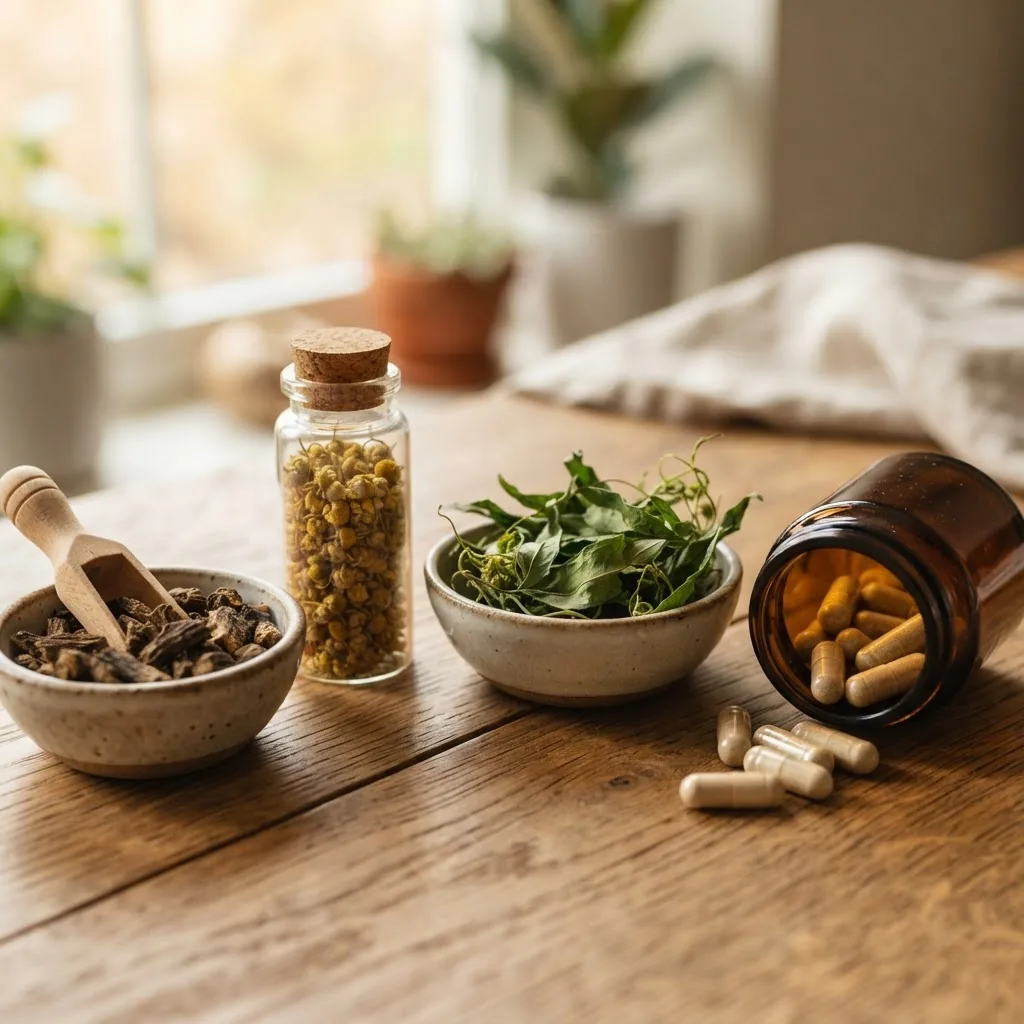
Answer: Several evidence-backed supplements—magnesium, L-theanine, valerian, passionflower, Chamomile, GABA, CBD (non-prescription preparations where legal), and certain B vitamins—are commonly used; the list below details effects, dosing guidance, and Australian availability for each.
-
Magnesium (glycinate or citrate)
Benefit: Magnesium helps regulate nervous system excitability and can reduce tension and improve sleep. Term: Magnesium: an essential mineral that modulates NMDA receptors and GABA function.
Typical dose: 200–400 mg elemental magnesium nightly; choose glycinate for better GI tolerance. Evidence: Several randomised trials show modest anxiety reductions. Availability: Widely available across Australian pharmacies and health stores.
-
L-theanine
Benefit: An amino acid from green tea that promotes relaxation without sedation by increasing alpha brain waves and modulating GABA and glutamate.
Typical dose: 100–200 mg, taken before stressful events or at night for sleep. Evidence: Human trials report reduced stress response to acute stressors. Available OTC in tablets and combined formulas in Australia.
-
Valerian root
Benefit: Traditionally used for sleep and calming; may improve sleep latency and reduce nighttime anxiety. Term: Valerian: an herbal root thought to modulate GABAergic transmission.
Typical dose: 300–600 mg standardized extract before bed. Evidence: Mixed trials—more consistent for sleep than daytime anxiety. Caution: daytime drowsiness, avoid with alcohol or sedatives.
-
Passionflower (Passiflora incarnata)
Benefit: Demonstrated anxiolytic effects in several small clinical trials; useful for acute nervousness and sleep support.
Typical dose: 200–400 mg extract or brewed tea; may be taken up to three times daily. Evidence: Meta-analyses indicate small-to-moderate benefits vs placebo for generalized anxiety symptoms.
-
Chamomile
Benefit: Mild anxiolytic and sedative properties; useful as tea or standardized extract for sleep and daytime worry.
Typical dose: 220–1100 mg of extract daily or 1–3 cups of chamomile tea. Evidence: A 2016 randomized controlled trial showed reduced GAD symptoms with chamomile extract.
-
GABA (gamma-aminobutyric acid)
Benefit: GABA is the main inhibitory neurotransmitter; oral GABA supplements aim to support calming though blood–brain barrier penetration is debated.
Typical dose: 250–500 mg, often paired with L-theanine. Evidence: Small studies and anecdotal reports show benefit for stress reduction; mechanism may be peripheral or via vagal pathways.
-
B-complex vitamins (B6, B12, folate)
Benefit: Support neurotransmitter synthesis (serotonin, GABA) and reduce stress-related fatigue.
Typical dose: As directed on high-quality B-complex formulations. Evidence: Nutritional deficiency correction can reduce anxiety symptoms; supplementation helps those with low levels.
-
Omega-3 fish oil
Benefit: Anti-inflammatory effects and modulation of neuronal membranes that support mood and anxiety symptom reduction in some trials.
Typical dose: 1,000–2,000 mg combined EPA+DHA per day. Evidence: Meta-analyses show small benefits for anxiety and mood disorders, particularly with higher EPA ratios.
-
Kava (Piper methysticum)
Benefit: Potent anxiolytic herb with rapid effects on nervousness.
Typical dose: 100–250 mg standardized kavalactones daily in clinical settings. Evidence: Clinical trials show substantial short-term anxiolytic effects but note safety concerns—rare liver toxicity—leading to regulatory restrictions in some countries. In Australia, check TGA guidance and reputable suppliers.
-
CBD (cannabidiol) non-prescription products
Benefit: May reduce anxiety via serotonin 5-HT1A receptor modulation and other pathways.
Typical dose: Variable; 10–50 mg taken as needed is common in OTC products. Evidence: Emerging RCTs suggest benefit for social anxiety and acute stress; regulatory status in Australia requires checking product compliance with the TGA.
-
Strongest natural anxiety medication — what to expect
Answer: “Strongest” often refers to kava and prescription-strength herbal extracts under clinical supervision; potency must be balanced with safety—no single supplement reliably matches prescription anxiolytics for moderate-to-severe anxiety.
Note: Use the term “strongest” cautiously; prioritize evidence, safety and professional oversight.
Practical notes for Sydney/Australia availability: many of the supplements above are sold in pharmacies and health-food stores; check product labelling and batch testing claims. For regulatory guidance, see the Australian Therapeutic Goods Administration (TGA) and Department of Health resources for current advice on OTC supplements and kava/CBD availability.
Transition: Next, we compare over-the-counter anxiety medications and non-prescription options available in pharmacies versus supplements.
What over the counter (OTC) anxiety medications and non-prescription options are available?
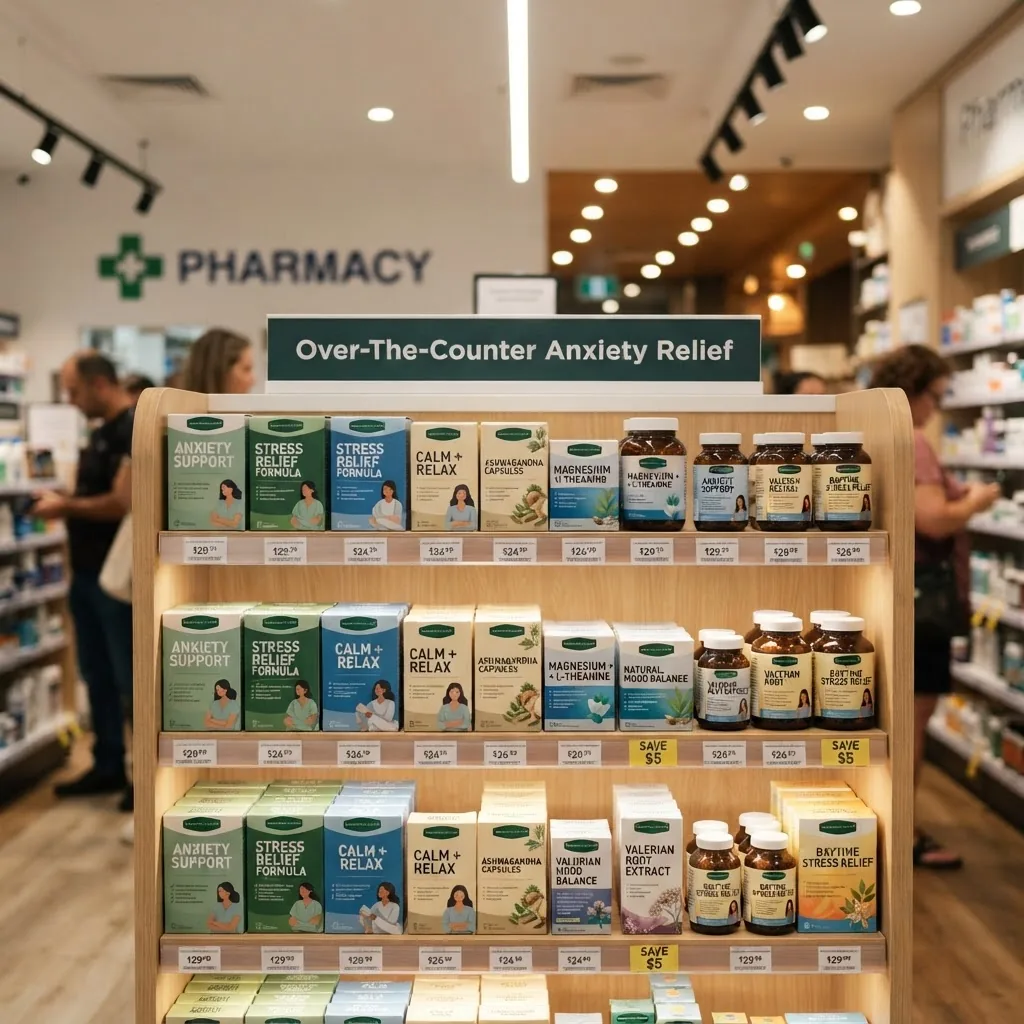
Answer: OTC options in Australia include herbal anxiolytics, antihistamine-based sleep aids used off-label for anxiety-related sleep, and nutrient-based products; strong prescription anxiolytics (benzodiazepines, SSRIs) are not OTC and should be discussed with a clinician.
| Option | Active ingredients / type | Typical effect & duration | Notes (Australia) |
|---|---|---|---|
| Herbal anxiolytics (OTC) | Valerian, passionflower, chamomile, CBD (where legal) | Mild-moderate calming, variable onset (hours to weeks) | Commonly available; check TGA advice for CBD/kava |
| Antihistamine sedatives (OTC sleep aids) | Doxylamine, promethazine (in some formulations) | Sedation overnight; not anxiolytic long-term | Short-term use only; can cause next-day drowsiness |
| Nutrient-based OTCs | Magnesium, B-vitamins, omega-3, L-theanine | Supportive, accumulative benefits over days–weeks | Generally safe, check interactions with prescriptions |
| Over-the-counter CBD products | Cannabidiol (CBD) isolates or full-spectrum oils | Acute anxiety reduction in some users; variable dosing | TGA guidance applies; quality varies—purchase tested products |
| Prescription-only (for context) | Benzodiazepines, SSRIs, SNRIs | Stronger, evidence-based for moderate–severe anxiety | Require a GP/psychiatrist prescription — see prescription anxiety medication options |
Summary: OTC options are best for mild anxiety, situational nervousness and sleep-related anxiety; for persistent or severe anxiety, prescription anxiety medication options offer stronger, evidence-based relief and should be discussed with a clinician. For more detailed OTC-focused guidance, see the over the counter anti anxiety meds guide.
Transition: Understanding the mechanisms helps explain why some supplements work faster and why combinations can be effective.
How do natural supplements work to relieve anxiety?
Answer: Natural supplements act through neurotransmitter modulation (GABA, serotonin), HPA axis/cortisol regulation, and autonomic nervous system calming to reduce physiological arousal and cognitive symptoms of anxiety.
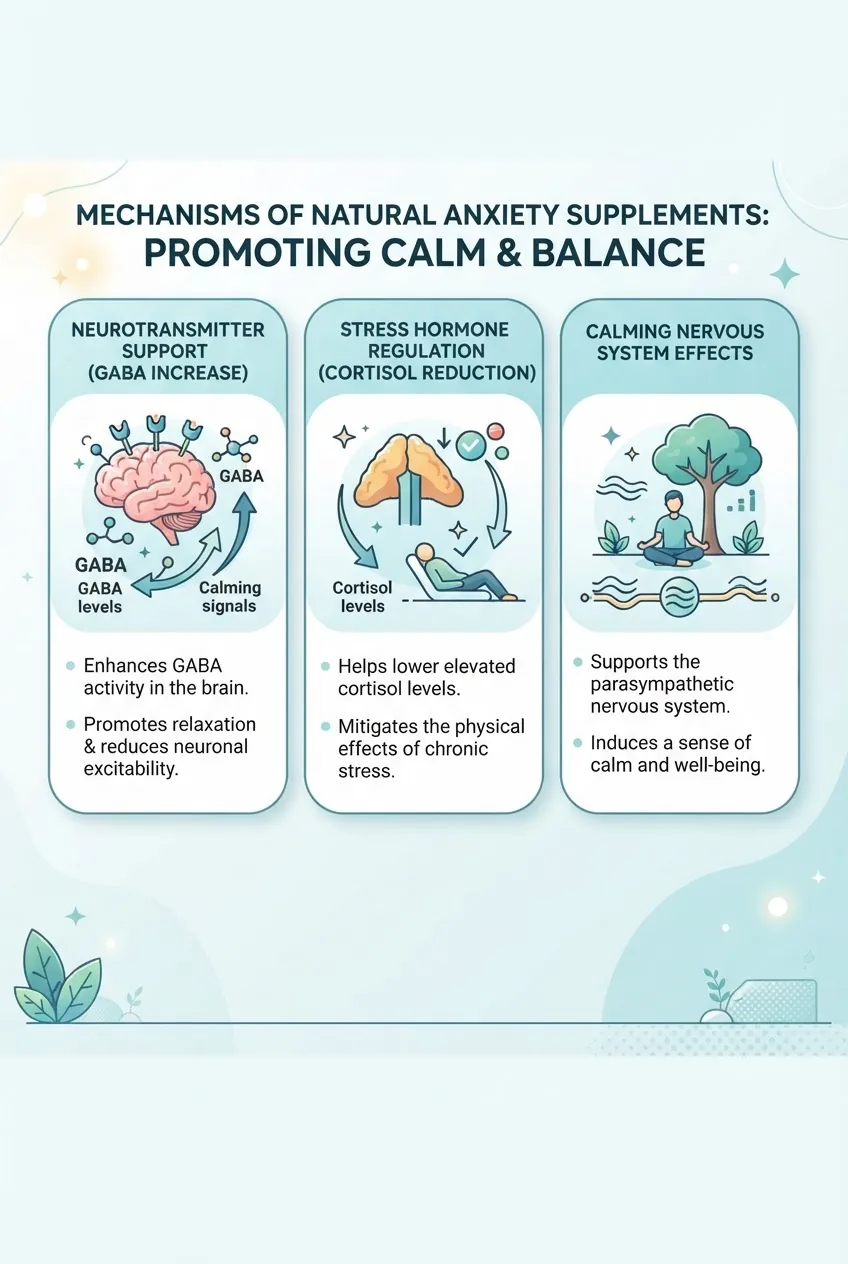
Term: GABA: gamma-aminobutyric acid, the brain’s main inhibitory neurotransmitter that reduces neuronal excitability and promotes calmness.
Detailed mechanisms:
- GABAergic modulation: Herbs like valerian and supplements like L-theanine indirectly increase GABA activity, decreasing neuronal firing that underpins anxiety and hyperarousal.
- Serotonin support: Nutrients and herbs (e.g., B6, tryptophan precursors) support serotonin synthesis, important for mood regulation and anxiety reduction.
- HPA axis and cortisol: Chronic stress elevates cortisol; adaptogens and certain herbs (e.g., ashwagandha) help normalise HPA axis responses, lowering stress-induced anxiety.
- Autonomic nervous system calming: L-theanine and mindfulness-linked supplements reduce sympathetic “fight-or-flight” activity and increase parasympathetic tone, reducing heart rate and GI symptoms.
- Inflammation and neuronal health: Omega-3s modulate neuroinflammation, which is increasingly linked to anxiety and mood disorders.
Evidence nuance: Clinical trials and meta-analyses show varying effect sizes; some supplements (e.g., kava) have larger acute anxiolytic effects but carry safety concerns, while nutrients (magnesium, omega-3) provide modest but reliable improvements, particularly when baseline deficiency exists. According to a 2024 systematic review published in peer-reviewed journals, combinational approaches tend to outperform single agents in mild anxiety populations (source: peer-reviewed clinical study).
Transition: Knowing mechanisms informs safer use—next we cover how to use supplements safely to minimise risks and interactions.
How do I safely use natural anxiety supplements and OTC options?
Answer: Safely use supplements by verifying product quality, following evidence-based dosing, checking drug–supplement interactions, starting low and slow, and consulting a GP—especially if taking prescription medication or if pregnant.
Step-by-step safe-usage guide:
- Check product quality: look for batch testing, full ingredient lists and third-party verification.
- Confirm dosing: follow published dosing ranges (e.g., magnesium 200–400 mg nightly; L-theanine 100–200 mg) and avoid exceeding recommended daily intakes.
- Assess interactions: many supplements interact with antidepressants, anticoagulants and sedatives—consult your GP or pharmacist.
- Start low and observe: begin with the lower dose for 1–2 weeks to assess tolerance and effect; increase gradually if needed.
- Watch for side effects: common issues include GI upset (magnesium), drowsiness (valerian, antihistamines) or rare liver effects (kava).
- Avoid mixing sedatives: do not combine multiple sedating products (e.g., valerian + high-dose antihistamine) without supervision.
- Special populations: pregnant or breastfeeding people, children, and people with liver disease should avoid certain herbs or seek specialist advice.
Caveats and regulation: The Therapeutic Goods Administration (TGA) in Australia regulates some products and provides guidance on safety and advertising claims—check the TGA for current alerts and scheduling.
Therapeutic Goods Administration (TGA) guidance
Experience-based dosing walkthrough:
- For sleep-related anxiety: magnesium glycinate 200–300 mg nightly + 300 mg valerian 30–60 minutes before bed for 2–4 weeks; reassess with GP.
- For daytime situational anxiety: L-theanine 100–200 mg prior to stressful events or passionflower 200 mg twice daily as a short course.
Transition: Supplements work best when combined with holistic practices and lifestyle changes; below are practical ways to integrate them.
How can I combine supplements with holistic healing and lifestyle changes?
Answer: Combine supplements with evidence-based lifestyle interventions—sleep hygiene, exercise, cognitive strategies and breathing—to multiply benefits and address root causes of anxiety.
Clinical context: Supplements should sit alongside other non-medication therapeutic approaches; for approaches that exclude drugs, see clinical interventions for anxiety treatment without medication for complementary options.
Lifestyle and complementary practices that pair well with supplements:
- Regular aerobic exercise (3x/week) to lower baseline anxiety and support sleep.
- Consistent sleep schedule and pre-bed routines to enhance sleep-support supplements.
- Mental skills training: CBT techniques and exposure strategies for persistent worry.
- Mindfulness, yoga or tai chi to reduce autonomic arousal.
- Dietary stability: reduce caffeine, alcohol and refined sugars that worsen anxiety.
- Social support and structured routines to reduce rumination and isolation.
Suggested integrations and resources:
- Use L-theanine or magnesium alongside a relaxation practice before public speaking or meetings.
- Combine omega-3s with a structured exercise program to support mood resilience.
- Try chamomile tea with a 10-minute evening breathwork routine to reduce nighttime arousal.
For additional digital tools, consider anxiety apps for additional support to prompt practice and track symptoms.
For workplace-specific support, pair calmative supplements with proven coping strategies for anxiety at work like micro-breaks and task batching.
Incorporate breathing and movement: see breathing techniques for anxiety relief and simple movement routines.
Address fatigue: if supplements are used for daytime energy alongside anxiety relief, consult resources on stress relief methods for anxiety fatigue.
Treatments are most effective when combined; see also broader anxiety management techniques for a full toolkit.
Transition: Nighttime anxiety needs targeted approaches—here are practical, natural tips to calm anxiety at night.
How can I calm anxiety at night naturally?
Answer: To calm nighttime anxiety, combine sleep-support supplements (magnesium, valerian, chamomile), strict sleep hygiene, a wind-down routine and targeted breathing to reduce arousal before bed.
Stepwise night protocol:
- Wind-down 60–90 minutes pre-bed: dim lights, stop screens, and engage in calming activities (reading, warm shower).
- Supplement choice: magnesium glycinate 200–300 mg nightly; consider 300–600 mg valerian 30–60 minutes before bed if difficulty falling asleep persists.
- Use a gentle breathing technique (4-4-8 breathing) for 5–10 minutes to lower heart rate.
- Limit caffeine after 2 pm and alcohol near bedtime; both increase nocturnal awakenings.
- If worry is persistent, keep a “worry journal” to offload thoughts before bed.
If insomnia coexists with anxiety, short trials of herbal sleep aids can help but consult a GP if symptoms last >2–4 weeks. For acute nighttime panic, prescribed short-term strategies or crisis plans may be required.
Transition: While many people benefit from supplements, knowing when to seek professional help is critical.
When should I seek professional help and what are the limitations of supplements?
Answer: Seek professional help when anxiety is severe, persistent, causes self-harm thoughts, or does not respond to initial supplement and lifestyle changes; supplements have limits and cannot replace therapy or prescription medication for moderate-to-severe anxiety.
Limitations of supplements:
- Variable product quality and dosage standardisation.
- Smaller effect sizes compared with prescription drugs for moderate-to-severe anxiety.
- Potential for interactions and rare adverse events (e.g., kava-related hepatotoxicity).
Seek professional assessment if:
- Symptoms interfere with work, relationships or daily functioning.
- Safety concerns exist (self-harm ideation, severe panic attacks).
- There is little or no symptom relief after 4–8 weeks of combined supplement plus lifestyle efforts.
Local support links: For Sydney-based specialist care, consider contacting an anxiety disorders clinic in Sydney for comprehensive assessment or referral.
If you require counselling outside Sydney, see options like anxiety counselling options in Perth.
For acute emotional crises or complex presentations, learn about treatment options for emotional anxiety breakdown.
Professional resources and guidelines: consult GP, psychiatrist or accredited psychologist for tailored treatment plans; reputable frameworks include guidance from national health bodies and peer-reviewed literature. According to a 2023 report by the Australian Government Department of Health, integrated care approaches combining psychosocial therapies and medication produce the best outcomes for moderate–severe anxiety. Australian Department of Health
Conclusion: Supplements and OTC products are pragmatic, accessible options for mild-to-moderate anxiety and sleep-related nervousness. Use evidence-based doses, prioritise product quality, pair with lifestyle and psychological strategies, and consult health professionals when symptoms are severe or persistent. If you’re in Sydney and unsure where to start, your GP can advise appropriate supplements and referrals to local clinics.
Call to action: If you want personalised guidance, book a consultation with a clinician to review your medications, allergies and goals and to design a safe supplement plan tailored to your needs.