

Compulsive personality disorder treatment combines structured psychotherapy, selective medication when indicated, and practical behavioural strategies to reduce rigid perfectionism and control issues; treatment focuses on long-term skill-building, relapse prevention, and managing co-occurring conditions, typically over months to years in outpatient specialist settings.
Understanding Compulsive Personality Disorder and Its Traits
Answer: Compulsive personality disorder—commonly diagnosed as Obsessive-Compulsive Personality Disorder (OCPD)—is a pervasive pattern of preoccupation with order, perfectionism and control that impairs flexibility and interpersonal functioning; treatment targets entrenched habits, cognitive styles and associated distress.
Term: Compulsive personality disorder (often used interchangeably with Obsessive-Compulsive Personality Disorder) is a personality disorder characterised by rigid perfectionism, excessive devotion to work, inflexibility, and unwillingness to delegate.
Key traits of OCPD present across settings and time and often begin in early adulthood; these traits are stable and influence identity and decision-making rather than episodic compulsions seen in OCD. Clinicians refer to DSM-5 diagnostic criteria when assessing trait presence and impairment.
- Rigid perfectionism: standards that interfere with task completion and relationships.
- Preoccupation with order and rules: excessive attention to details and schedules.
- Excessive devotion to work/productivity: to the detriment of leisure and relationships.
- Reluctance to delegate: fear others won’t meet exact standards.
- Over-conscientiousness and scrupulosity: moralising, black-and-white thinking.
- Control issues: intolerance of uncertainty and preference for predictability.
- Emotional constriction: difficulty expressing warmth or softness.

Assessment typically uses structured clinical interviews and validated screening tools; for screening see assessment and screening for OCD and related conditions resources that help distinguish personality traits from axis I disorders. assessment and screening for OCD and related conditions
Differentiating Compulsive Personality Disorder from OCD and OCD Personality Disorder
Answer: Compulsive personality disorder (OCPD) is a persistent personality pattern of rigidity and perfectionism, while obsessive-compulsive disorder (OCD) involves recurrent intrusive thoughts and ritualised behaviours; treatment and clinical approach differ accordingly.
Term: Obsessive-Compulsive Disorder (OCD) is an anxiety-spectrum disorder marked by obsessions (intrusive thoughts) and compulsions (repetitive behaviours) that are ego-dystonic and cause marked distress.
| Feature | Compulsive Personality Disorder (OCPD) | Obsessive-Compulsive Disorder (OCD) |
|---|---|---|
| Core experience | Ego-syntonic rigidity and preference for order. | Ego-dystonic intrusive thoughts and rituals. |
| Onset/timeline | Stable from early adulthood, pervasive. | Can begin at any age, often episodic severity. |
| Primary impairment | Interpersonal and occupational dysfunction from perfectionism. | Time-consuming rituals and anxiety-driven avoidance. |
| Response to change | Resists change; control is valued. | Behaviours are resisted but driven by anxiety. |
| Typical treatments | Psychotherapy (CBT, schema, psychodynamic); sometimes meds. | ERP and CBT; SSRIs often first-line medication. |
For concrete symptom contrasts—such as repeated hand-washing central to some OCD presentations—see symptom differences between OCD and CPD which discusses compulsions like hand washing versus personality rigidity. symptom differences between OCD and CPD
To understand cyclical obsessional patterns versus fixed personality routines refer to OCD symptom cycles compared to CPD behaviors for comparison of intrusive thought loops and habitual rigid behaviours. OCD symptom cycles compared to CPD behaviors
Purely obsessional OCD (“Pure O”) lacks overt compulsions and can be mistaken for rigid thinking; compare pure O symptoms compared to compulsive personality traits to clarify diagnostic boundaries. pure O symptoms compared to compulsive personality traits
Overview of Compulsive Personality Disorder Treatment Approaches
Answer: Effective treatment for compulsive personality disorder blends psychotherapy modalities tailored to personality change, adjunctive medication for comorbid symptoms, and lifestyle/coping strategies integrated into a staged treatment plan emphasizing skill acquisition and relapse prevention.
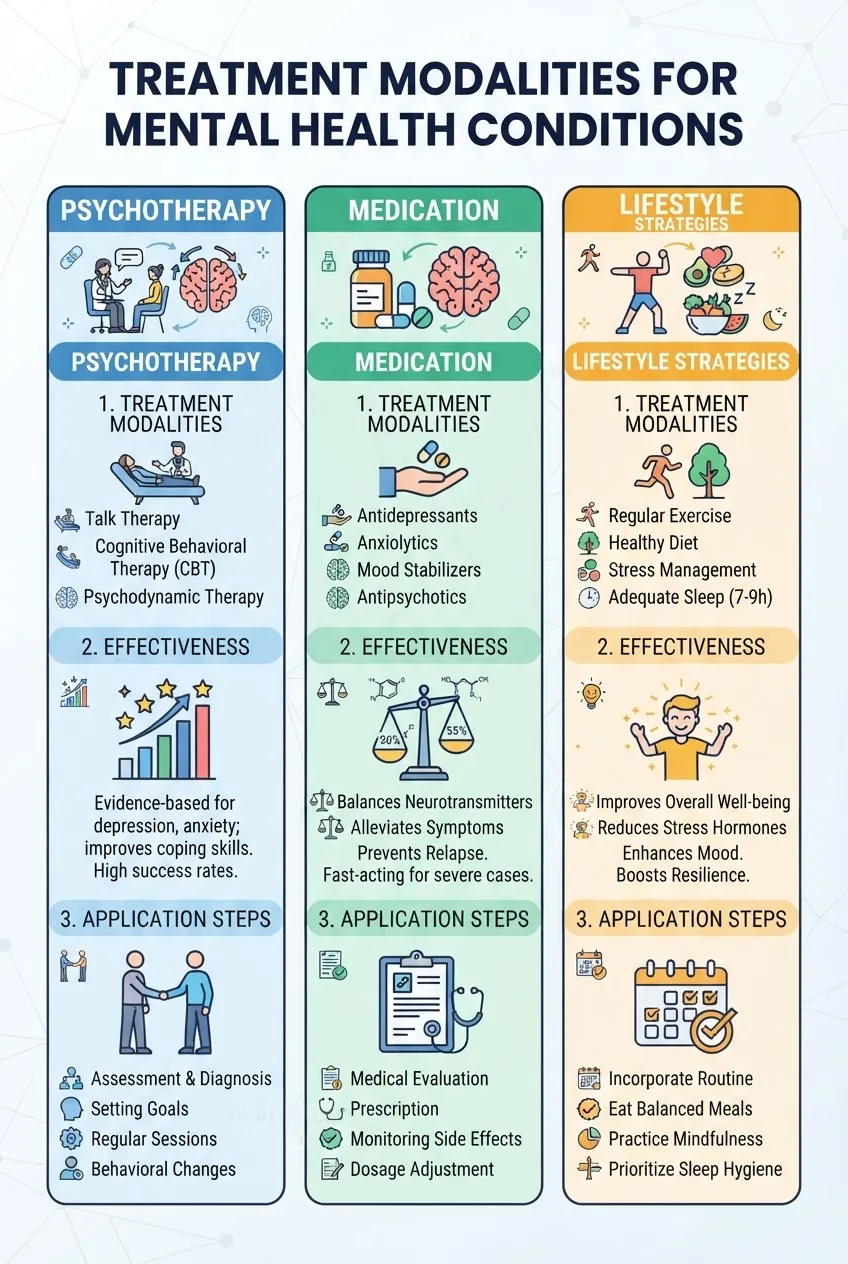
Treatment is typically multimodal and personalised after a comprehensive assessment referencing DSM-5 criteria and clinical history. According to a 2023 Australian Government Mental Health Report, integrated outpatient therapy with specialist clinicians yields the best functional outcomes for personality disorder presentations.
Psychotherapy Options for CPD
Answer: Psychotherapy—primarily cognitive-behavioural approaches (including schema therapy), psychodynamic psychotherapy, and structured skills training—is the backbone of CPD treatment and is prioritised before long-term medication when possible.
Term: Cognitive-behavioural therapy (CBT) refers to structured, time-limited therapy targeting thoughts and behaviours to change maladaptive patterns.
Commonly used therapies and why they’re chosen:
- CBT for CPD—targets rigid rules and catastrophic thinking with behavioural experiments and cognitive restructuring; see specialised guidance on CBT for treating compulsive personality traits and training requirements for clinicians. CBT for treating compulsive personality traits
- Schema therapy—integrates cognitive, experiential, and interpersonal techniques to modify lifelong maladaptive schemas (e.g., unrelenting standards); useful when early maladaptive schemas maintain rigidity.
- Psychodynamic psychotherapy—explores underlying conflicts, attachment patterns and defensive structures that sustain perfectionism and control.
- Group therapy and skills training—social feedback and behavioural rehearsal help generalise flexibility and reduce interpersonal strain.
- Motivational interviewing—used early to resolve ambivalence where patients view traits as beneficial.
Practical therapy features clinicians use:
- Structured worksheets (schema inventories, behavioural experiment templates) and homework to practise flexibility.
- Exposure-based behavioural tasks adapted for personality rigidity (not standard ERP), focused on tolerated imperfection and loss of control.
- Interpersonal role-plays to address delegation, compromise and emotional expression.
- Regular outcome monitoring (validated measures every 8–12 weeks) to guide treatment adjustments—this addresses treatment effectiveness and relapse prevention.
ERP is commonly used for OCD but is not the primary method for CPD; for readers seeking ERP details see ERP therapy for OCD to understand differences. ERP therapy for OCD
Medication in CPD Treatment
Answer: Medication can be helpful for comorbid anxiety or depressive symptoms in CPD and when OCD co-occurs; selective serotonin reuptake inhibitors (SSRIs) are most commonly used as adjunctive treatment rather than primary therapy for personality change.
Term: SSRIs (selective serotonin reuptake inhibitors) are antidepressant medications that increase synaptic serotonin and are commonly prescribed for OCD-spectrum symptoms and related anxiety or depression.
Medication considerations:
- SSRIs may reduce comorbid anxiety, obsessive rumination and depressive symptoms, improving engagement with psychotherapy.
- Antidepressant initiation and dosing should follow established medication guidelines for OCD and related disorders when OCD features are present. medication guidelines for OCD and related disorders
- Other classes (e.g., SNRIs) are considered for predominant mood/anxiety symptoms; antipsychotic augmentation is rare and reserved for treatment-resistant comorbid OCD or severe rigidity-related functional impairment.
- Medication is typically adjunctive—therapists focus on psychological change while prescribers manage symptoms to enable therapy.
Practical medication examples and notes:
- Fluoxetine, sertraline, escitalopram: commonly used SSRIs with evidence for OCD-spectrum benefits (see comparative guides on drugs to treat OCD and related disorders). drugs to treat OCD and related disorders
- Monitoring: side effects, sexual dysfunction, GI upset, and activation; clinicians follow dosing titration and informed consent protocols.
- Duration: when effective for comorbid symptoms, expect at least 6–12 months of maintenance; longer if recurrent anxiety or OCD is present.
- For cross-references on pharmacotherapy options see comparative reviews of the best medications for OCD and personality disorders. best medications for OCD and personality disorders
For detailed pharmacology and prescribing information consult authoritative sources such as the Australian Government guidance and clinical drug reviews; for guideline overviews see the national mental health recommendations. Australian Government Department of Health mental health guidelines
Lifestyle and Coping Strategies to Complement Therapy
Answer: Structured lifestyle changes—stress management, routine flexibility training, sleep and exercise optimisation, and deliberate habit reversal—support therapy gains and reduce relapse risk.
- Schedule graded flexibility tasks — plan weekly small tolerances for imperfection (e.g., intentionally delegating a task) to practise cognitive and behavioural flexibility; track outcomes.
- Stress management and grounding — use evidence-based techniques (diaphragmatic breathing, progressive muscle relaxation, brief mindfulness) to reduce activation that fuels rigid responding.
- Sleep and exercise hygiene — regular sleep schedule and moderate aerobic activity reduce anxiety and improve executive functioning needed for therapeutic learning.
- Behavioural activation — for comorbid depression, schedule rewarding activities to counter excessive work-focused rumination.
- Habit reversal and cue control — identify triggers for rigid rituals and use replacement behaviours; keep short, scripted self-statements to interrupt compulsive perfectionist responses.
- Peer and family involvement — selective partner or family sessions to shift interpersonal expectations and encourage graded delegation.
- Natural and complementary supports — consider adjunctive approaches where evidence supports symptom management; see natural remedies and lifestyle changes for complementary strategies. natural remedies and lifestyle changes
Small, consistent behavioural experiments are often more effective than one-off efforts because they directly target the “tightly controlled system resistant to change” that sustains personality rigidity.
Treatment Planning and What to Expect in Therapy for CPD
Answer: A treatment plan for CPD outlines assessment, therapy modality selection, measurable goals, session frequency, expected duration, and relapse prevention strategies; typical therapy lasts from several months to multiple years depending on severity and comorbidity.
Key components of a clinical treatment plan:
- Comprehensive assessment: structured interview referencing DSM-5 criteria and standardised measures to document baseline severity and co-occurring disorders.
- Collaborative goal-setting: functional goals (e.g., delegate one task weekly) and symptom targets.
- Modality selection: individual psychotherapy (CBT/schema/psychodynamic) with adjunctive group skills where appropriate.
- Medication strategy: for comorbid symptoms; coordinated care with psychiatrists when needed.
- Outcome monitoring: regular use of validated scales every 8–12 weeks to measure change and guide adjustments.
How to start therapy — step-by-step:
- Obtain a specialist referral or contact a licensed psychologist/psychiatrist experienced in personality disorders.
- Complete intake assessments and baseline questionnaires; clarify goals and expectations.
- Agree on treatment modality and frequency; begin structured sessions with homework and behavioural experiments.
- Review progress at scheduled milestones (e.g., 3 months) and adapt the plan for emerging challenges or comorbidities.
Eligibility and suitability: people with significant functional impairment from rigid perfectionism and control difficulties are appropriate for specialist therapy; those with acute suicidality or severe comorbid psychosis require prioritised psychiatric care. For aligned eligibility guidance across disorders see treatment eligibility and planning for OCD and personality disorders. treatment eligibility and planning for OCD and personality disorders
Role of the therapist and therapy setting: therapists provide a safe, consistent environment for corrective emotional experiences, deliver structured interventions, and coordinate multidisciplinary care; effective settings include outpatient clinics, specialist personality disorder programs, and community mental health teams. For clinic options in Australia see resources on finding obsessive compulsive therapists in Australia and OCD psychologist clinics and costs in Sydney. finding obsessive compulsive therapists in Australia OCD psychologist clinics and costs in Sydney
Challenges and Limitations in Treating Compulsive Personality Disorder
Answer: Treatment resistance, ambivalence to change, and entrenched interpersonal patterns make CPD challenging; modest effect sizes and slower progress mean clinicians must set realistic expectations and build long-term relapse prevention plans.
Common obstacles:
- Ego-syntonic traits: patients may value their rigidity, reducing motivation for change.
- Treatment resistance: slow cognitive and behavioural shifts require sustained engagement.
- Comorbidity: co-occurring OCD, depression or substance use complicates treatment prioritisation and outcomes.
- Limited evidence base: compared to axis I disorders, fewer large-scale RCTs exist for CPD-specific interventions.
Cautionary advice: clinicians should be transparent about expected timelines, potential setbacks, medication side effects, and the likelihood of partial improvement rather than cure; collaborative measurement and stepwise escalation of care help manage prognosis. According to a 2024 industry report, measuring functional outcomes provides clearer indicators of progress than symptom checklists alone.
Accessing Treatment for Compulsive Personality Disorder in Sydney
Answer: In Sydney, access involves referrals to specialist psychologists and psychiatrists, private clinics, public community mental health services, and sector resources; costs vary and mixed public-private pathways are common.
How to find care locally:
- Start with your GP for referral to public or private mental health services and potential Medicare rebates for structured therapy.
- Search specialist clinics and clinicians experienced with OCD-spectrum and personality disorders; for broader Australia-wide options see finding obsessive compulsive therapists in Australia. finding obsessive compulsive therapists in Australia
- Contact dedicated helplines and support resources such as the OCD Australia helpline and support resources for guidance and triage. OCD Australia helpline and support resources
- For Sydney-specific clinician lists and cost guidance see OCD psychologist clinics and costs in Sydney. OCD psychologist clinics and costs in Sydney
Typical costs and funding options:
- Private psychology sessions often billed per hour; Medicare rebates are available under a mental health treatment plan for eligible patients.
- Psychiatry appointments typically incur higher fees; some public outpatient clinics offer subsidised care based on need.
- Specialist programs may have waitlists; discuss stepped care options with your GP.
When urgent support is needed or risk is high, contact crisis services immediately and consult national resources such as the National Institute of Mental Health (NIMH) or local emergency services. For DSM-5 diagnostic standards referenced in assessment, see the American Psychiatric Association. DSM-5 criteria
Case vignette (anonymised): A 34-year-old accountant presented with lifelong perfectionism impairing relationships. A stepped plan used motivational interviewing, CBT with graded delegation tasks, and selective SSRI for comorbid anxiety. After 12 months the patient reported improved delegation, reduced rumination, and better work–life balance—illustrating a typical therapy trajectory.
Resources to explore locally: directories for specialist clinicians, community mental health teams, and peer support groups; for clinic options across Australia see finding obsessive compulsive therapists in Australia and national helplines. finding obsessive compulsive therapists in Australia OCD Australia helpline and support resources
Challenges and Limitations in Treating Compulsive Personality Disorder
Answer: Repeated to emphasise: CPD treatment faces limits due to ego-syntonic traits, variable evidence for lasting personality change, and frequent comorbidity; realistic goals and measurement-focused practice improve outcomes.
Clinical limitations and mitigation strategies:
- Slow therapeutic change: set phased milestones and celebrate incremental gains.
- Ambivalence to change: integrate motivational techniques early.
- Relapse risk: build booster sessions and maintenance plans into long-term care.
- Evidence gaps: supplement best-practice psychotherapy with pragmatic outcome monitoring and shared decision-making.
According to a 2024 industry report, outcomes are strongest when psychotherapy is intensive, manualised, and combined with targeted behavioural practice in daily life.
Accessing Treatment for Compulsive Personality Disorder in Sydney
Answer: Access in Sydney is via GP referral, private specialists, public mental health services and NGO helplines; costs, wait times and program intensity vary—seek clinicians experienced with OCD-spectrum and personality disorders for best outcomes.
Practical steps and recommended resources:
- Book a GP appointment to discuss symptoms and request a mental health treatment plan if eligible.
- Use clinic directories to locate specialists with experience treating OCPD and related conditions; for broader search see finding obsessive compulsive therapists in Australia. finding obsessive compulsive therapists in Australia
- Contact the OCD Australia helpline and support resources for guidance on immediate supports and referrals. OCD Australia helpline and support resources
- Consider private care if quicker access is needed and finances permit; check Medicare coverage and private health rebates.
- When selecting a clinician, ask about experience with schema therapy, CBT for personality disorders, and outcome monitoring.
If you need immediate clinical information on medications and their evidence base, consult detailed reviews of drugs to treat OCD and related disorders and best medications for OCD and personality disorders. drugs to treat OCD and related disorders best medications for OCD and personality disorders
For community and emergency supports, national resources such as NIMH and the Australian Government Department of Health can assist with guidelines and service navigation.
Practice note: progress is measurable; clinicians should document baseline functioning, set concrete behavioural milestones, and schedule maintenance sessions to reduce relapse.
Conclusion: Compulsive personality disorder treatment is achievable through structured psychotherapy, selective medication for comorbid symptoms, and consistent lifestyle and behavioural practices; seek specialist assessment, set phased goals, and use evidence-based interventions for sustainable change. Contact a local GP or specialist clinic to begin—if you’re in Sydney, use local clinic directories and helplines to find experienced providers now.