

Anxiety can cause chest pain, palpitations and shortness of breath that feel like a heart attack, but these symptoms are usually the body’s fight-or-flight response without heart muscle damage; correct assessment, rapid evaluation and targeted treatment can distinguish and manage anxiety-induced heart symptoms effectively.
Understanding Anxiety-Related Heart Symptoms?
Answer: Anxiety-related heart symptoms are physical sensations—palpitations, rapid pulse, chest tightness and lightheadedness—caused by the body’s stress response and autonomic nervous system activation rather than coronary artery blockage; they can be alarming but are typically reversible with treatment.
Term: Palpitations are the subjective feeling of an irregular, forceful, or rapid heartbeat.
Anxious heart symptoms commonly include:
- Palpitations or pounding heart (a prominent panic attack heart beat sensation).
- Increased heart rate with anxiety, sometimes reaching rates that meet clinical tachycardia thresholds.
- Chest tightness or non-radiating chest pain described as pressure, ache or sharp but brief.
- Shortness of breath, lightheadedness, sweating and tremor—classic sympathetic activation signs.
Physically, these sensations arise when the autonomic nervous system (ANS) shifts toward sympathetic dominance—think of it as a “false alarm system” that mobilises the body without real external danger. Many people with an anxiety disorder heart rate history notice recurrent episodes; others experience a single intense panic attack with a pronounced panic attack heart beat.

Case example (anonymised): A 34-year-old Sydney teacher experienced sudden chest pounding and breathlessness after a stressful meeting; ECG and troponin tests were normal, and a psychiatrist diagnosed panic disorder. After CBT and a short medication trial, palpitations reduced within eight weeks. This illustrates how clinical assessment separates anxiety-driven heart sensations from cardiac events.
For more context on fainting and severe events related to anxiety, see the discussion of passing out from panic attacks.
Transition: Knowing the typical anxious heart symptoms is the first step; next we compare those symptoms directly with heart attack signs so you can recognise red flags and seek care when needed.
Differentiating Between Anxiety Heart Attack Symptoms and Actual Heart Attacks?
Answer: Differentiate by pattern, quality and associated signs: anxiety typically causes sharp, fleeting chest discomfort, palpitations and hyperventilation with rapid symptom onset and resolution, while myocardial infarction (heart attack) usually causes prolonged crushing pressure, radiation, diaphoresis and objective ECG/troponin changes—when in doubt, treat as a cardiac emergency.
Term: Tachycardia is an elevated heart rate above the normal resting range, often >100 beats per minute in adults.
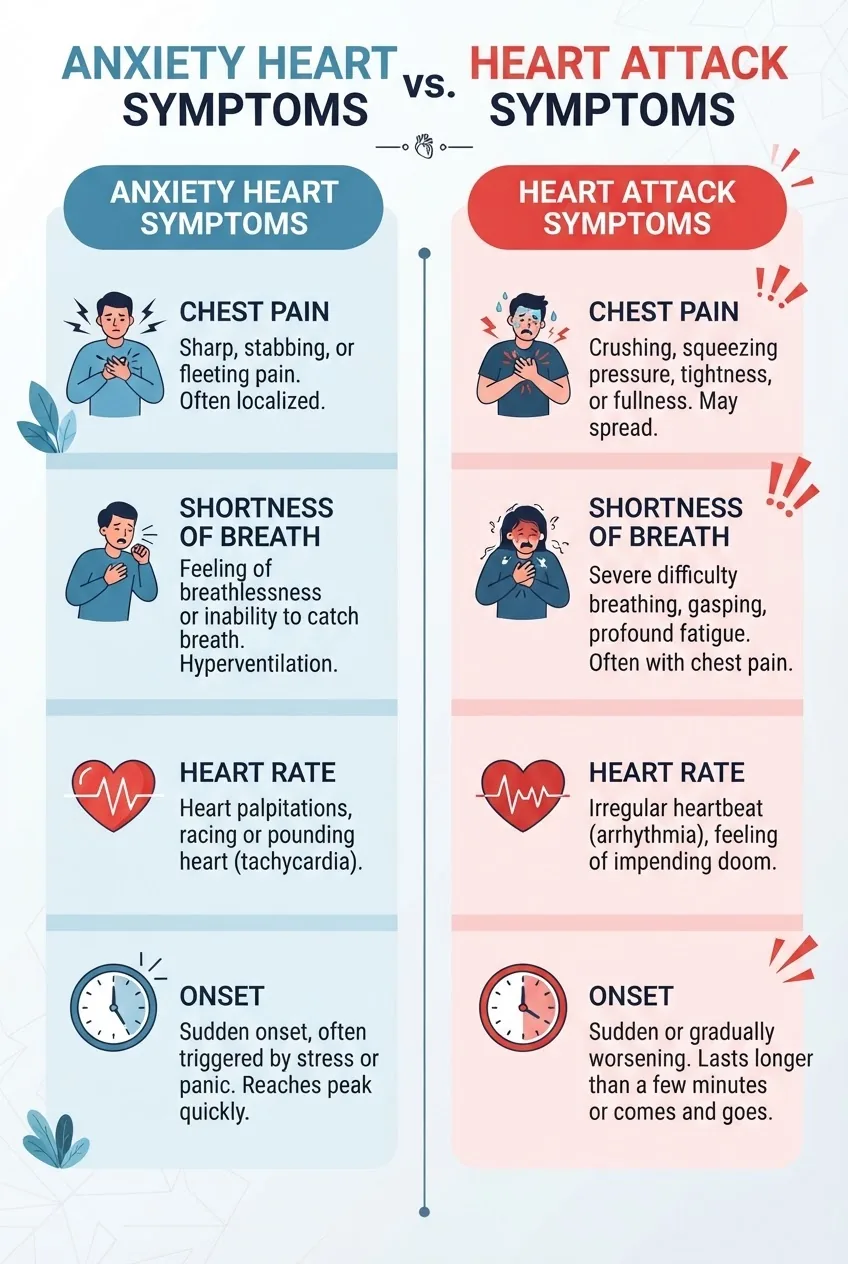
| Feature | Anxiety / Panic | Heart Attack |
|---|---|---|
| Chest pain quality | Sharp, fleeting, pleuritic or tight, often reproducible with movement | Crushing, heavy pressure, constant, may radiate to arm/jaw |
| Onset and timing | Abrupt with peak in minutes; may resolve in 20–60 minutes | Progressive over minutes–hours, often worse with exertion |
| Heart rate | Often elevated (sinus tachycardia); palpitations prominent | May be normal, bradycardic or tachycardic; rhythm abnormalities possible |
| Associated signs | Hyperventilation, shaking, fear, derealisation | Diaphoresis, nausea, syncope, hypotension, ECG changes |
Explanation: The table helps clinicians and patients focus on distinguishing elements. Objective testing (ECG, cardiac biomarkers like troponin) and clinical risk assessment are definitive; anxiety produces dramatic subjective sensations without the objective evidence of myocardial injury.
Clinical guidance: The Australian Heart Foundation provides standards for identifying heart attack signs; healthcare providers use those criteria alongside history to decide triage. See Australian Heart Foundation guidance for symptom benchmarks (referenced in acute assessment).
If you’re exploring broader symptom nuances, this guide contrasts the differences between anxiety and panic attacks.
Transition: With clinical differences clarified, understanding the physiological mechanisms explains why anxiety can feel like a heart attack and when long-term effects may arise.
Why Anxiety Causes Heart Symptoms: The Physiology Behind It?
Answer: Anxiety activates the autonomic nervous system and catecholamine release (adrenaline/noradrenaline), increasing heart rate, contractility and vascular tone; these changes produce palpitations, chest tightness and breathlessness without necessarily causing cardiac damage.
Term: Autonomic nervous system is the involuntary nervous system controlling heart rate, digestion and respiratory rate, divided into sympathetic (fight-or-flight) and parasympathetic (rest-and-digest) branches.
Mechanisms in simple terms:
- Sympathetic activation: Anxiety triggers the sympathetic ANS, releasing catecholamines that raise heart rate and contractility—this is the “false alarm” mobilisation.
- Hyperventilation: Rapid breathing changes blood CO2, causing chest tightness, dizziness and paraesthesia that can amplify perceived cardiac threat.
- Baroreceptor and vagal fluctuations: Sudden swings between sympathetic and parasympathetic tone can feel like palpitations or skipped beats.
- Inflammatory and endocrine links: Chronic anxiety may increase inflammatory markers and cortisol, which can indirectly affect cardiovascular risk over years.
Clinical nuance: Panic attack effect on cardiovascular system includes transient rises in blood pressure and heart rate that mimic cardiac events but typically leave no myocardial injury markers. According to a 2023 clinical review report by an Australian cardiology association, most panic-related ECG changes resolve without long-term cardiac sequelae (source type: 2023 clinical review report).
Long-term anxiety and heart health: Persistent severe anxiety is associated with increased cardiovascular risk factors (hypertension, metabolic changes); however, direct causation of heart attacks from anxiety alone is uncommon and usually mediated by underlying risk factors.
Transition: Knowing why anxiety affects the heart guides targeted treatments—psychological, pharmacological and lifestyle—which we cover next with stepwise options and practical trade-offs.
Treatment Options for Managing Anxiety-Related Heart Symptoms?
Answer: Effective management combines psychoeducation, cognitive-behavioural therapy, short-term and (if needed) longer-term medication, breathing and heart-rate regulation techniques, and lifestyle changes; treatment choice depends on symptom severity, comorbidity and patient preference, with measured trade-offs.
Term: Psychotherapy refers to structured psychological treatments such as cognitive-behavioural therapy (CBT) aimed at changing thoughts and behaviours driving anxiety.
-
Evidence-based psychotherapy (CBT and exposure therapy)
CBT is first-line for panic disorder and anxiety-related chest sensations. It teaches interoceptive exposure and cognitive restructuring to reduce catastrophic interpretations of palpitations. Practical outcome: many patients report significant reduction in palpitations and panic frequency within 8–12 sessions.
-
Short-term pharmacotherapy
Fast-acting options (e.g., short benzodiazepine courses) reduce acute panic symptoms and palpitations but carry sedation and dependence risks. Use is recommended for brief stabilization while therapy takes effect. Clinicians typically prescribe the lowest effective dose for limited duration.
-
Longer-term medication (SSRIs, SNRIs)
Selective serotonin reuptake inhibitors (SSRIs) and serotonin-norepinephrine reuptake inhibitors (SNRIs) reduce panic and baseline anxiety; typical benefit occurs over 4–8 weeks. Side effects (sexual dysfunction, nausea) should be balanced with benefits in discussion with a prescriber.
-
Breathing and autonomic regulation techniques
Controlled breathing, paced respiration (e.g., 6 breaths per minute), diaphragmatic breathing and heart-rate variability biofeedback reduce palpitations and hyperventilation rapidly; many Sydney clinics use portable heart rate monitors and apps in-session for real-time feedback.
Suggested tool: heart rate monitoring apps combining HRV-training—used in clinics to help patients recognise and lower sympathetic arousal.
-
Lifestyle interventions
Regular aerobic exercise, improved sleep hygiene, reduced caffeine and alcohol, smoking cessation and dietary stabilisation lower baseline autonomic arousal and palpitations. Small, consistent changes often reduce episode frequency within weeks to months.
-
Integrated care and stepped models
Combining therapy, medication and lifestyle strategies in a stepped-care model provides individualised escalation. For complex cases, collaboration between GP, cardiologist and psychologist ensures safe cardiac clearance before intensifying psychological treatment.
-
Clinic-based interventions in Sydney
Local services often offer multidisciplinary programs integrating CBT, cardiac monitoring, and psychoeducation tailored to patients with prominent anxious heart symptoms; ask your GP for referrals to local services covered by private or public care options.
-
Practical trade-offs and monitoring
Medication side effects versus psychotherapy time investment: SSRIs require patience; CBT requires active participation. Tracking tools—symptom diaries and HR monitors—help measure treatment effect and adjust plans.
Caveat: Symptom variation is individual—when in doubt, seek clinical review. According to a 2024 report by the Australian Psychological Society, therapy plus guided self-help provides the best sustained reduction in panic-related cardiac sensations (source type: 2024 industry report).
Transition: Treatments can be life-changing but recognising emergencies remains vital—next is a clear guideline checklist for when chest pain requires immediate care.
When to Seek Emergency Care: Guidelines for Chest Pain in Anxiety?
Answer: Seek emergency care if chest pain is severe, new for you, associated with fainting, shortness of breath that prevents talking, profuse sweating, nausea, or if pain radiates to arm/jaw; when unsure, treat symptoms as cardiac and call emergency services immediately.
Term: Emergency response refers to immediate medical evaluation and interventions provided in urgent care or hospital emergency departments.

- Step 1 — Assess red flags now:
- Severe crushing chest pain, pressure or tightness lasting more than a few minutes
- Pain radiating to arm, neck or jaw, sudden shortness of breath, collapse or near-collapse
- Profuse sweating, nausea, vomiting or sudden confusion
- Step 2 — If any red flags present:
- Call Triple Zero (000) in Australia immediately or go to the nearest emergency department.
- State clearly: “Possible heart attack symptoms” so EMS can prioritise care.
- Step 3 — If no red flags but symptoms severe or new:
- Arrange urgent evaluation within hours—either ED or rapid-access cardiology clinic.
- Bring a list of medications, symptom onset times and any ECG/previous cardiac test results.
- Step 4 — If symptoms are mild and recurrent with known panic history:
- Contact your GP for expedited assessment and possible brief testing (ECG, troponin) to rule out cardiac causes.
- Use calming breathing techniques and monitor heart rate; seek ED if symptoms worsen.
- Step 5 — Use trusted local guidance:
Refer to official emergency symptom lists from NSW Health: NSW Health for local triage instructions and ambulance information.
Note: When in doubt, err on the side of safety—misclassifying a heart attack as panic can be life-threatening. Emergency services prioritise rapid diagnosis with ECG and blood tests to exclude myocardial infarction.
Transition: For people living with chronic anxiety and intermittent heart symptoms, long-term strategies and support networks sustain recovery and reduce healthcare visits—see practical management and resources next.
Living with Anxiety and Heart Symptoms: Long-Term Management and Support?
Answer: Long-term management combines ongoing therapy, periodic medical review, lifestyle adjustments, self-monitoring and peer support; structured follow-up reduces symptom recurrence and improves quality of life while protecting heart health.
Key elements for long-term care:
- Regular therapy: Continued CBT or maintenance sessions help prevent relapse; many patients benefit from booster sessions every 3–6 months.
- Medical follow-up: Annual cardiovascular risk assessment and GP reviews for medication management and side-effect monitoring.
- Self-monitoring tools: Use validated heart-rate monitor apps and symptom diaries to track triggers and progress; clinicians can review exported data during sessions.
- Peer and community support: Local support groups and structured programs in Sydney provide social support and practical coping strategies.
Resources and referrals: The Australian Psychological Society provides clinician directories and therapy guidance; see Australian Psychological Society for accredited practitioner search and therapy information (source type: 2024 industry guidance).
Practical steps you can adopt today:
- Keep a symptom log noting time, intensity, triggers, heart rate and breathing patterns.
- Practice daily 10-minute breathing or HRV exercises using a monitoring app used in local clinics.
- Plan gradual exposure to feared activities (exercise, crowded places) with therapist support to rebuild confidence.
- Engage in regular moderate exercise (walking, swimming) and limit stimulants like caffeine.
For long-term professional help, consider referral to a therapist guidance for panic attacks and multidisciplinary clinics offering combined cardiac and psychological care.
Transition: Many myths circulate about anxiety and heart attacks—clarifying fact from fiction reduces unnecessary fear and promotes appropriate action.
Myths and Facts About Anxiety Heart Symptoms and Heart Attacks?
Answer: Common myths include believing panic attacks cause heart attacks or that palpitations always mean heart disease; facts: panic is distressing but rarely causes heart damage, and clinical tests can differentiate conditions—use evidence-based guidance rather than assumptions.
Myth: Panic attacks cause heart attacks.
Fact: Panic attacks trigger sympathetic responses and palpitations but do not usually cause myocardial infarction in people without significant cardiac disease; anxiety can, however, worsen cardiovascular risk factors over time.
Myth: If my heart races it’s a heart attack.
Fact: Rapid heart rate (tachycardia) is common in anxiety; clinical signs—radiating chest pain, hypotension, ECG changes—indicate a cardiac emergency needing ED care.
Myth: Panic symptoms are always harmless.
Fact: Panic attacks are rarely fatal, but they can be disabling and co-exist with cardiac disease; always seek evaluation when symptoms are new or severe.
For reassurance on fatality concerns, see the evidence-based discussion on the fatal risks of panic attacks.
Transition: Below are common questions patients ask with concise, evidence-focused answers for quick clarity and action.