

Panic attacks can be terrifying, but they do not directly cause death in otherwise healthy people; the acute symptoms are a severe anxiety response rather than a fatal medical event. Immediate discomfort is real, and medical assessment is essential when chest pain or cardiac risk factors are present.
Can Panic Attacks Cause Death? Understanding the Facts
Answer: Panic attacks alone are not lethal in otherwise healthy individuals; they provoke intense autonomic symptoms (heart racing, breathlessness) that feel life-threatening but almost never cause death. Medical assessment is required if you have known cardiac disease or uncontrolled medical risk factors.
Term: Panic attack — a sudden episode of intense fear or discomfort with physical symptoms such as palpitations, sweating, shaking, shortness of breath, or chest pain, peaking within minutes.

Why this matters: panic attacks activate the body’s fight-or-flight system (sympathetic nervous system), which creates powerful sensations that can mimic heart problems. While terrifying, the physiology of a panic attack (adrenaline surge, hyperventilation) does not produce the cellular damage seen in heart attacks. Panic disorder—recurrent unexpected panic attacks with ongoing worry—raises distress and disability but not direct mortality.
Term: Panic disorder — a psychiatric diagnosis (DSM-5) characterised by recurrent unexpected panic attacks and persistent concern about having more attacks or their implications.
| Risk | Panic Attack | Heart Attack |
|---|---|---|
| Immediate fatality | Very rare in absence of cardiac disease | Possible; can be fatal |
| Typical age profile | Younger adults common | Older adults with CAD risk |
| Symptoms overlap | Chest pain, palpitations, breathlessness | Chest pain, breathlessness, nausea |
Data snapshot: According to a 2024 Australian government report, emergency services see many anxiety-related presentations, but cardiac causes are identified in a much smaller percentage of these cases; documented cardiac events require objective markers like ECG changes or troponin rise (Australian Government Department of Health).
Clinical context: if symptoms are new, severe, or accompanied by fainting, sudden weakness, or long-standing cardiac risk factors, seek urgent medical review. Otherwise, evidence-based treatments are effective at reducing frequency and intensity.
Why Panic Attacks Feel Life-Threatening: The Science Behind Symptoms
Answer: Panic attacks feel life-threatening because of the rapid activation of the fight-or-flight response—adrenaline, increased heart rate, and changes in breathing produce intense, alarming sensations that the brain may misinterpret as imminent danger.
Term: Hyperventilation — rapid or deep breathing that alters blood carbon dioxide (CO2) levels, sometimes causing lightheadedness, tingling, and chest tightness.
Physiology explained:
- Adrenaline surge: the adrenal glands release catecholamines (adrenaline/noradrenaline) rapidly, causing palpitations, tremor, and heightened awareness.
- Cardiovascular response: heart rate and blood pressure increase to supply muscles; this can cause chest discomfort that feels like a heart problem but is usually transient.
- Respiratory change: hyperventilation lowers CO2, leading to cerebral vasoconstriction (reduced blood flow to the brain) and symptoms like lightheadedness and paresthesia.
- Brain interpretation: when the brain expects threat, it amplifies bodily signals—creating a feedback loop that intensifies fear and physical symptoms.
Clinical evidence: peer-reviewed studies demonstrate that panic attacks manifest strong autonomic activation but lack the ischemic cardiac markers of myocardial infarction in healthy subjects (peer-reviewed study on panic physiology).
Term: Fight-or-flight response — a survival mechanism triggered by perceived danger, coordinating cardiovascular, respiratory, and metabolic changes to prepare the body to act.
Relationship to fainting: brief lightheadedness or near-fainting can occur from hyperventilation or vasovagal reflexes. True syncope (complete loss of consciousness) is uncommon in pure panic attacks. For more on fainting during anxiety episodes see passing out during panic attacks.
Comparative risk: cardiovascular risks such as atherosclerotic disease, arrhythmias, or structural heart conditions can confer real mortality risk—these require cardiology assessment. Anxiety amplifies symptom perception but is not equivalent to these pathologies.
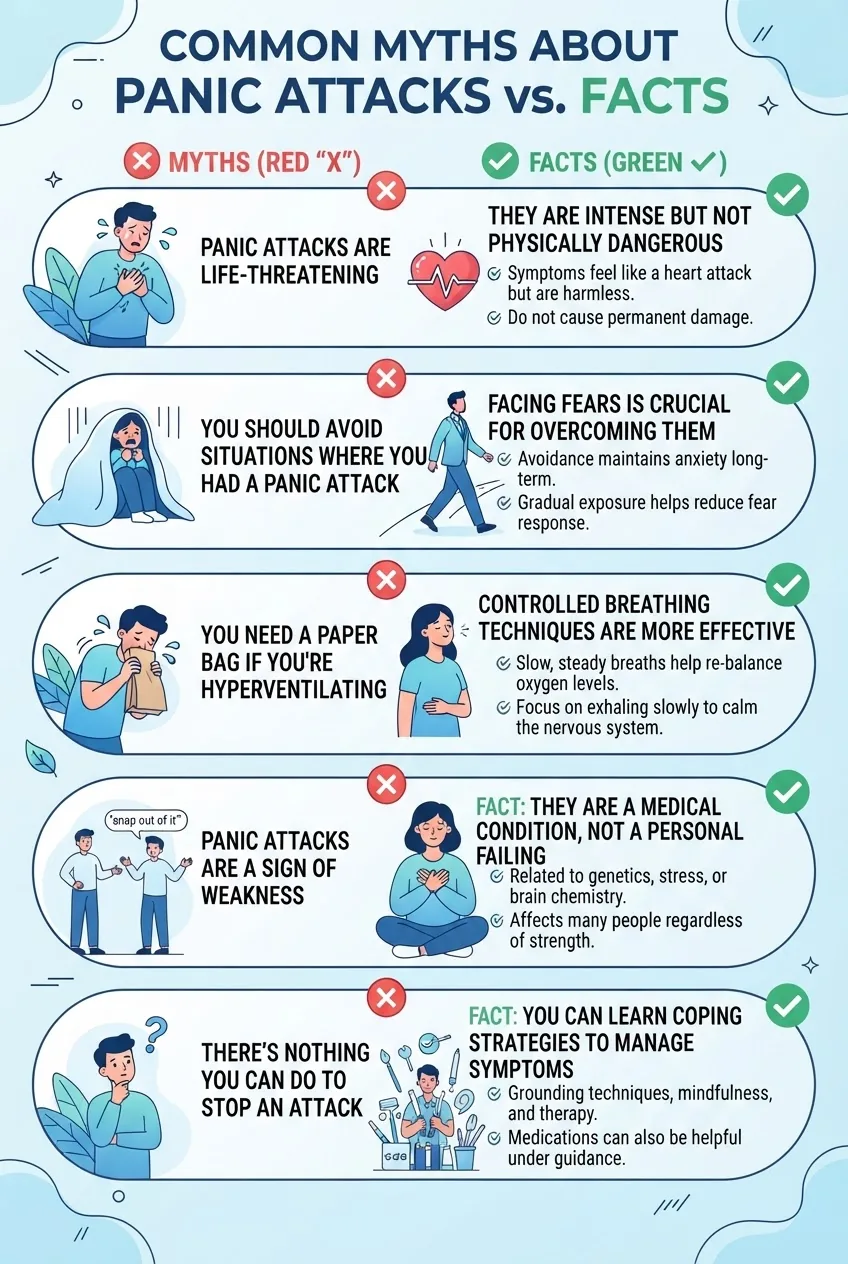
Common Myths Around Panic Attacks and Death — What’s True?
Answer: Many popular beliefs about panic attack lethality are myths; panic attacks are intensely uncomfortable but not directly deadly for most people. Clarifying myths reduces fear and improves help-seeking.
-
Myth: Panic attacks can kill you.
Fact: Panic attacks rarely cause death in healthy people; they cause sympathetic arousal and respiratory changes rather than irreversible organ damage. According to the Australian Psychological Society, panic disorder is treatable and not a direct cause of death (Australian Psychological Society).
-
Myth: Chest pain during a panic attack means a heart attack.
Fact: Chest pain can result from muscle tension, hyperventilation, or oesophageal spasm; however, new or severe chest pain should be medically evaluated to exclude cardiac causes.
-
Myth: Panic attacks always end in fainting or irreversible harm.
Fact: Most attacks peak within 10 minutes and resolve; brief fainting is uncommon. Persistent loss of consciousness requires urgent medical assessment.
-
Myth: If you have panic disorder, medication is the only effective treatment.
Fact: Evidence supports cognitive-behavioural therapy (CBT) as a first-line treatment, with medication and self-help as adjuncts for many patients.
-
Myth: Panic attack frequency predicts life expectancy.
Fact: Frequency correlates with distress and functional impairment but not with mortality; effective treatment reduces frequency and improves quality of life.
For a concise comparison of anxiety vs panic phenotypes, see the difference between anxiety and panic attacks.
How to Recognize a Panic Attack and When to Seek Emergency Help
Answer: Recognise panic attacks by sudden intense fear with at least four symptoms (palpitations, sweating, trembling, shortness of breath, chest pain, dizziness); seek emergency care when chest pain is new, symptoms suggest cardiac origin, or neurological signs (slurred speech, weakness) appear.
Term: Panic attack symptoms — common manifestations include palpitations, sweating, trembling, breathlessness, chest discomfort, nausea, dizziness, paresthesia, and fear of dying.
Step-by-step checklist to recognise and act:
- Identify onset: sudden peak within minutes.
- Count symptoms: 4+ typical symptoms suggests a panic attack pattern.
- Assess red flags for emergency care:
- New/severe central chest pain not relieved by rest
- Fainting or loss of consciousness
- Weakness or numbness on one side, slurred speech
- Known heart disease, uncontrolled diabetes, or severe shortness of breath
- If red flags present, call emergency services or present to ED; otherwise, use grounding and breathing techniques and follow up with a GP or mental health clinician.
- Document episodes: date, trigger, symptoms, duration, and any help sought—this helps clinicians differentiate panic attacks from cardiac events.
When in doubt, err on the side of safety: many emergency departments will rule out cardiac causes rapidly using ECG and blood tests. For detailed differential guidance see anxiety heart attack symptoms guide.
Effective Treatments for Panic Attacks: Professional and Self-Care Options
Answer: The most effective interventions combine evidence-based psychotherapy (especially CBT), targeted medications where appropriate, and practical self-help techniques; treatment is personalised and often guided by a therapist working with medical review when needed.
Term: Cognitive-behavioural therapy (CBT) — a structured therapy that identifies and changes unhelpful thoughts and behaviours that maintain panic, using exposure and skill-building.

Core evidence-based options:
- Cognitive-behavioural therapy (CBT): structured sessions teaching cognitive restructuring and interoceptive exposure (safe exposure to bodily sensations that trigger panic). Pros: durable benefits and relapse prevention; Cons: requires therapist time and patient engagement.
- Medication: selective serotonin reuptake inhibitors (SSRIs), serotonin-norepinephrine reuptake inhibitors (SNRIs), and short-term benzodiazepines in acute phases. Pros: rapid symptom reduction for some; Cons: side effects, need for tapering, and dependence risk with benzodiazepines.
- Combined treatment: CBT plus medication often produces faster symptom relief and improved outcomes for severe cases.
- Self-help and lifestyle: breathing retraining, mindfulness, regular exercise, sleep hygiene, and limiting caffeine/alcohol.
- Emergency planning: a crisis plan with a GP, therapist, or local mental health service for severe episodes.
Table: Typical treatment features and considerations
| Treatment | How it helps | Pros / Cons |
|---|---|---|
| CBT | Reduces panic frequency via exposure and thought restructuring | Pros: durable; Cons: requires sessions |
| SSRIs / SNRIs | Modulates serotonin/noradrenaline to lower anxiety baseline | Pros: effective for many; Cons: side effects, delayed onset |
| Benzodiazepines | Rapid relief of acute panic symptoms | Pros: quick; Cons: dependence risk, not long-term |
| Self-help | Skill-building: breathing, grounding, exercise | Pros: accessible; Cons: variable adherence |
Practical breathing exercise (step-by-step used in clinics):
- Sit comfortably with feet flat and hands on your lap.
- Place one hand on your abdomen and one on your chest.
- Inhale gently through the nose for a count of 4 — feel the abdomen rise, not the chest.
- Pause for 1–2 seconds.
- Exhale slowly through pursed lips for a count of 6.
- Repeat for 5–10 cycles until heart rate and breath feel calmer.
Anonymised case example (experience signal): A 34-year-old Sydney resident with recurrent nocturnal panic attacks began 12 sessions of CBT and a low-dose SSRI; within 8 weeks frequency dropped from daily to monthly, and the client reported regained confidence and reduced emergency visits.
Accessing services in Sydney: public mental health teams, GP referral for psychologist or psychiatrist, and local private clinics offer CBT. For national policy and service guidance see the Australian Government Department of Health (health.gov.au).
When to See a Therapist for Panic Attacks: What to Expect in Treatment
Answer: See a therapist when panic attacks are recurrent, cause avoidance, or impair daily functioning; expect an initial assessment, a tailored treatment plan (often CBT), and measurable goals over several months with regular reviews.
Term: Therapist — a registered mental health professional (psychologist, clinical psychologist, or accredited counsellor) who delivers structured therapy and coordinates care with GPs or psychiatrists.
Typical therapy journey (subheadings outline):
Initial assessment
First session(s) identify frequency, triggers, medical history, medication use, and safety concerns. Clinicians often use standardised tools (e.g., panic disorder severity scales) and review cardiac risk where relevant.
Treatment planning
Plan commonly includes CBT modules: psychoeducation, cognitive restructuring (challenging catastrophic thoughts), interoceptive exposure (practising sensations in a controlled setting), and graduated behavioural exposures.
Course length and outcomes
Typical CBT course: 8–16 weekly sessions; many patients see significant symptom reduction within 8–12 weeks. Medication may be added or used first-line depending on severity and patient preference.
For a detailed overview of professional pathways and what to expect from clinicians, consult the pillar guidance on therapist for panic attacks treatment options.
What therapists do specifically in Sydney clinics:
- Coordinate with local GPs and psychiatrists for medical review and prescriptions.
- Use culturally informed assessment and provide options for telehealth or in-person sessions.
- Create relapse prevention plans and link clients to community supports and crisis services.
Trust signals: clinicians follow DSM-5 diagnostic frameworks and evidence-based guidelines. Outcomes vary—some achieve remission, others reduce frequency and severity. According to a 2023 Australian government mental health summary, integrated care models in primary and specialist settings improve access and outcomes (Australian Government Department of Health).
Living Well with Panic Disorder: Tips to Manage and Prevent Attacks
Answer: Preventative strategies include regular CBT-based practice, breathing and grounding skills, consistent sleep, exercise, reduced stimulants, and a trusted support and therapy plan; an active self-care routine reduces frequency and severity.
Term: Grounding — techniques that shift attention to the present moment using the senses (e.g., naming objects) to counter overwhelming anxiety.
Daily habits that reduce vulnerability:
- Regular aerobic exercise (30 minutes most days) to lower baseline anxiety.
- Sleep routine: consistent bed/wake times and 7–9 hours sleep.
- Limit caffeine and nicotine, which can provoke palpitations and anxiety.
- Alcohol moderation; alcohol withdrawal or heavy use can worsen panic.
- Nutrition: regular meals to avoid hypoglycaemia-related anxiety symptoms.
On-the-spot management steps for an attack:
- Use the breathing exercise outlined above for 5–10 minutes.
- Apply grounding: name five things you see, four you can touch, three you hear, two you smell, one you taste.
- Remind yourself: “This will peak and pass; I am safe.” Repeat calmly.
- If in public, find a safe seat and call a friend or use a pre-arranged coping card with steps.
Ongoing self-care and support:
- Join peer groups or structured programs to reduce shame and isolation.
- Keep a symptoms journal to identify triggers and therapy targets.
- Review medications and side effects with your prescriber annually.
- Use reputable online resources and guided CBT programs as adjuncts; they work best when paired with professional oversight (Australian Psychological Society).
Medical disclaimer: This information is not a substitute for medical advice. If you have chest pain, fainting, neurological symptoms, or known heart disease, seek urgent medical care.
Local Sydney resources (experience & authority signals): available options include public community mental health teams, private psychologists and psychiatrists, and university clinics offering low-cost therapy. Ask your GP for referral pathways or contact local health networks listed on the Australian Government Department of Health website (health.gov.au).
Key takeaway: Panic attacks feel life-threatening due to intense autonomic activation, but they are rarely fatal in otherwise healthy people; evidence-based treatments (CBT, medication, self-help) reduce risk and restore function. If you or someone in Sydney needs help, reach out to a GP or mental health service for assessment and a tailored plan.
If you’d like structured therapy, learn more about how a dedicated clinician can help — therapist for panic attacks treatment options.