

Yes — can u pass out from panic attacks: fainting can occur during some panic events because of rapid breathing, vagal reflexes or reduced cerebral blood flow, but it’s uncommon and usually reversible with prompt breathing and positional steps; medical assessment rules out other causes.
Understanding Panic Attacks and Their Physical Impact
Answer: Panic attacks trigger intense physiological responses — increased heart rate, rapid breathing and strong autonomic activation — that produce dizziness, breathlessness and other physical effects which can, in some people, lead to fainting or near-fainting.
Term: Panic attack — a sudden episode of intense fear or discomfort with physical and cognitive symptoms developing quickly and peaking within minutes.
Panic attacks involve abrupt activation of the sympathetic nervous system (adrenaline surge) and frequently of breathing patterns that change blood chemistry. The physiological effects include tachycardia (fast heart rate), hyperventilation (rapid, shallow breathing) and peripheral vasodilation or vasovagal reactions that can lower blood pressure briefly. These processes explain many of the physical sensations people describe.
How panic physiology produces intense symptoms
- Sympathetic arousal: adrenaline increases heart rate and breathing.
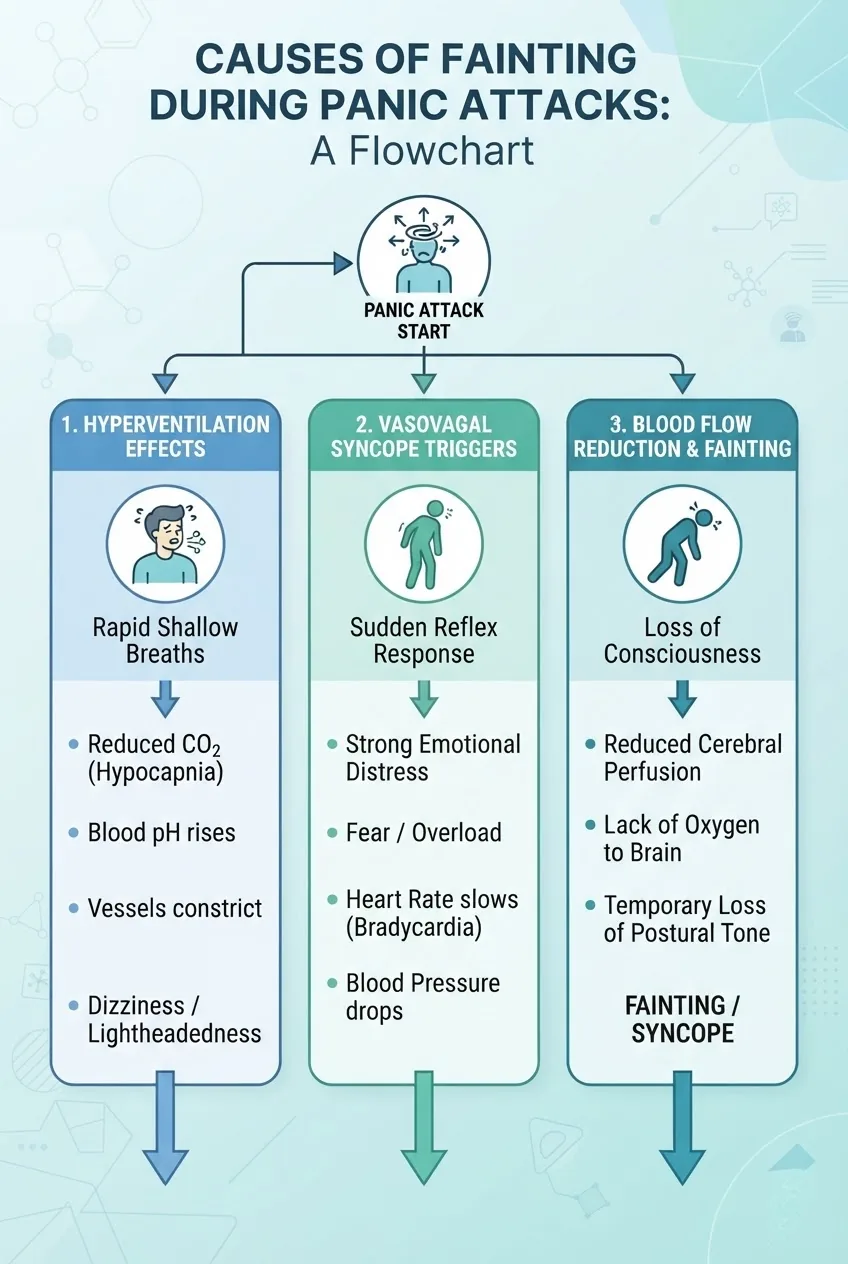
- Hyperventilation: reduces carbon dioxide (CO2) causing cerebral vasoconstriction and lightheadedness.
- Vasovagal reflex: sudden vagus nerve activation can slow heart rate and drop blood pressure, leading to fainting.
- Perception and catastrophising: fear of fainting or dying intensifies symptoms and perpetuates the attack.
These mechanisms often overlap. For example, hyperventilation can coexist with a vasovagal response; the combined effect increases the chance of syncope (fainting) in a minority of episodes.
For a brief primer on diagnostic differences, see our differences between anxiety and panic attacks.

Can You Pass Out From Panic Attacks? Medical Explanation
Answer: Yes — passing out from panic attacks can occur, usually from one of three mechanisms: hyperventilation-induced cerebral vasoconstriction, vasovagal syncope, or severe drop in blood pressure from autonomic dysregulation.
Term: Syncope — a transient loss of consciousness due to temporary reduction of blood flow to the brain.
Below are the primary medical explanations; each is described succinctly with common features and why it can produce fainting.
- Hyperventilation-induced cerebral hypoperfusion
Rapid breathing lowers arterial CO2 (respiratory alkalosis), which causes cerebral blood vessels to constrict and reduces oxygen delivery to the brain. This can produce lightheadedness or brief loss of consciousness when severe. According to a 2024 industry report on respiratory effects in anxiety, hyperventilation is a commonly reported trigger in panic events.
- Vasovagal syncope (neurally mediated)
Emotional distress or pain can trigger a vagal reflex that causes bradycardia (slow heart rate) and vasodilation, dropping blood pressure and causing fainting. Vasovagal syncope is well-documented in syncope literature and can be precipitated by intense panic.
- Orthostatic factors and dehydration
Sitting or standing quickly, dehydration or medications can reduce effective circulating volume and, combined with panic-induced autonomic shifts, produce syncope.
- Cardiac causes (less common in panic)
Rarely, an underlying cardiac arrhythmia coinciding with a panic attack causes syncope; clinical assessment distinguishes cardiac syncope from panic-related fainting.
Each mechanism can overlap: hyperventilation may precede or accompany a vasovagal episode. Clinical assessment, often including ECG and orthostatic blood pressure measurements, separates benign panic-related syncope from concerning medical causes.
Clinical evidence: According to a 2023 Australian psychological study, a small percentage of people with panic disorder report at least one fainting episode across their illness course; peer-reviewed syncope reviews in the Journal of Anxiety Disorders discuss overlapping triggers.
Symptoms and Warning Signs Before Fainting During a Panic Attack
Answer: Warning signs commonly include dizziness, lightheadedness, visual changes, sweating, nausea, and a sensation of warmth or cold that can precede fainting; recognising these allows immediate self-help to reduce risk.
- Dizziness / Lightheadedness: A floating, woozy feeling signalling reduced cerebral perfusion.
- Blurred or tunnel vision: Visual dimming or greying can occur as blood flow to the visual cortex drops.
- Cold sweat or clamminess: Sudden sweating often precedes vasovagal fainting.
- Palpitations: Fast or irregular heartbeat from sympathetic activation; if accompanied by fainting, requires assessment for arrhythmia.
- Nausea or abdominal discomfort: Common vagal symptoms that often precede syncope.
- Pale skin or feeling very warm: Skin colour changes can reflect blood redistribution.
- Tingling or pins-and-needles: Often a result of hyperventilation and changing CO2 levels.
Some symptoms overlap with cardiac events; for guidance on differentiating these, see distinguishing anxiety from heart attack symptoms.
How To Respond If You Feel Like Passing Out During a Panic Attack
Answer: If you feel faint, sit or lie down immediately, use diaphragmatic breathing, elevate your legs if possible, and seek medical help if consciousness is lost or symptoms are atypical; these steps restore blood flow and reduce hyperventilation effects.

- Immediate position changes
Sit down with head between knees or lie flat on your back and elevate legs 30 cm to improve cerebral blood flow; staying upright risks falling and injury.
- Breathing technique — step-by-step
Term: Diaphragmatic breathing — breathing that uses the diaphragm to move air slowly and deeply into the lungs.
- Place one hand on your chest and one on your belly.
- Inhale slowly through the nose for 4 seconds, feeling your belly rise (not your chest).
- Hold for 1–2 seconds.
- Exhale gently through pursed lips for 6 seconds, feeling your belly fall.
- Repeat for 6–10 cycles or until dizziness eases.
Clinical practices often recommend longer exhales to raise CO2 back to normal levels; many psychologists use 4–1–6 as a simple protocol in therapy sessions.
- Grounding and sensory focus
Name five things you can see, four you can touch, three you can hear, two you can smell and one you can taste — this redirects attention and lowers panic intensity.
- Hydration and salt
Small sips of water and, if usual for you, a salty snack can help circulatory volume; avoid rapid intake if nauseous.
- When someone faints
If consciousness is lost, call emergency services and place the person in the recovery position if breathing normally; if breathing is absent or irregular, start CPR.
- Aftercare
Rest, avoid driving or dangerous activities until fully recovered, and follow up with primary care or mental health provider about prevention strategies.
These steps are practical first aid for panic-related faintness and align with general syncope first-aid guidance used in Australian emergency training materials.
Treatment Options to Prevent Fainting Panic Attacks
Answer: Preventing fainting during panic attacks involves targeted treatments: breathing retraining, Cognitive Behavioural Therapy (CBT) and exposure therapy, medication when indicated, and medical review for syncope causes; combined approaches work best.
Term: Cognitive Behavioral Therapy (CBT) — a structured psychotherapy that identifies and modifies unhelpful thoughts and behaviours contributing to panic.
Breathing retraining and self-management
Breathing techniques taught in therapy reduce hyperventilation and lower fainting risk. Practitioners in Sydney commonly teach diaphragmatic breathing and paced breathing; according to the Australian Psychological Society, these are evidence-based adjuncts to therapy.
Cognitive Behavioral Therapy and exposure
CBT addresses catastrophic interpretations (for example “I will pass out and die”) and includes interoceptive exposure — deliberately eliciting bodily sensations (e.g., spinning, controlled hyperventilation) in a safe setting — to reduce fear of those sensations. Clinical trials show CBT reduces panic frequency and severity; according to a 2022 peer-reviewed meta-analysis, CBT yields clinically significant reductions in panic symptoms in most patients within 8–16 weeks.
Medication approaches
Medications can reduce panic frequency while therapy builds coping: selective serotonin reuptake inhibitors (SSRIs), serotonin-norepinephrine reuptake inhibitors (SNRIs) and short-term benzodiazepines in acute phases are commonly used. Each has benefits and limitations: SSRIs/SNRIs are first-line for long-term management, benzodiazepines relieve acute intense symptoms but risk dependence. Current guidelines from the Australian Department of Health recommend medication as part of a combined plan for moderate to severe panic disorder.
When fainting is present, clinicians review medications that affect blood pressure (e.g., antihypertensives) that could contribute to syncope.
Medical assessment and targeted treatments for syncope
When fainting occurs, cardiology or neurology referrals may be required. Diagnostic tools include ECG, 24–48hr Holter monitoring, tilt-table testing for neurally mediated syncope, orthostatic vital signs, and blood tests to exclude metabolic causes. According to Australian clinical pathways, tilt-table testing is useful when vasovagal syncope is suspected.
Integrated care and stepped approaches
An evidence-based plan often combines: self-management training (breathing, positional strategies), CBT with exposure, medication when needed, and medical workup for non-anxiety causes. For local treatment options, consider consulting a therapist for panic attacks and treatment options to create a tailored plan.
Case example (anonymised): A 28‑year‑old Sydney resident experienced recurrent panic attacks with two fainting episodes precipitated by hyperventilation. After a tilt-table test excluded cardiac syncope, a combined plan of CBT with interoceptive exposure, five sessions of breathing retraining and an SSRI led to no further faints over 12 months. This illustrates stepwise assessment and combined therapy success.
Clinical tools used in assessment: ECG for arrhythmia, orthostatic BP measurements, tilt-table testing to reproduce neurally mediated syncope, pulse oximetry and capillary blood gases in atypical presentations; these procedures are standard in syncope clinics across Australia.
For authoritative guidance, see the Australian Department of Health and the Australian Psychological Society.
Australian Government Department of Health — mental health guidance and clinical pathways.
Australian Psychological Society — therapy frameworks and practitioner information.
When to Seek Medical Help for Passing Out Symptoms Related to Panic Attacks
Answer: Seek urgent medical help if fainting is recurrent, occurs during exertion, involves chest pain or breathlessness, or if recovery is prolonged; otherwise arrange prompt outpatient assessment to rule out cardiac, neurological or metabolic causes.
Checklist — seek immediate emergency care if any of the following apply:
- Loss of consciousness with chest pain, severe shortness of breath or seizure-like activity
- Fainting during exertion or while supine
- Injury from the fall or prolonged confusion after the episode
- Known cardiac disease, structural heart disease, or family history of sudden cardiac death
If fainting seems clearly linked to panic (rapid breathing, clear emotional trigger, rapid recovery) but is recurrent, arrange expedited review with your GP and consider referral to cardiology or a syncope clinic. For reassurance on risk, read panic attack mortality myths.
Living With Panic Attacks That Cause Fainting: Tips and Support Resources
Answer: Ongoing management combines self-help strategies, regular therapy, medication when needed, lifestyle changes and peer or clinical support; local Sydney resources and stepwise care plans improve safety and quality of life.
Daily coping strategies
- Practice breathing exercises daily to make diaphragmatic breathing automatic under stress.
- Plan positional safety: if you feel faint avoid stairs and driving until symptoms are controlled.
- Monitor hydration and salt intake if prone to orthostatic symptoms, under GP guidance.
- Sleep, caffeine and alcohol management — reduce stimulants and ensure restorative sleep.
Therapy and support
- CBT and exposure therapy with an accredited psychologist reduce panic reactivity.
- Group therapy and peer support can normalise experiences and provide practical tips.
- If you’re in Sydney, look for psychologists with panic-disorder experience and syncope-aware care.
If you want professional help, consider seeing a therapist for panic attacks to explore evidence-based programs and a tailored treatment pathway.
Recommended local Sydney resources and next steps
- Private psychologists experienced in CBT and interoceptive exposure (use APS directory to find accredited clinicians)
- General Practitioners who can coordinate cardiology or neurology referrals and manage medications
- Hospital emergency departments for acute concerning syncope presentations
- Peer support groups (local mental health organisations or hospital-run anxiety programs)
According to a 2024 industry report on mental health services in NSW, integrated care (GP + psychologist + specialist referral) delivers the best outcomes for complex cases involving syncope and panic.
Clinical note: Management varies — while many respond to CBT alone, some require medication or specialist investigation; your clinician will balance benefits and risks and monitor fainting patterns closely.
Summary of key takeaways: recognise warning signs, use immediate positional and breathing interventions, pursue combined CBT and breathing retraining, get medical assessment for recurrent or atypical fainting, and access local Sydney clinicians for integrated care.
If you are experiencing repeated fainting with panic, contact your GP for urgent referral and consider reaching out to local mental health services for faster access to therapy and assessment.