

Answer: The correct spelling is anxiety — a six-syllable English noun spelled a-n-x-i-e-t-y; it denotes a feeling of worry, nervousness, or unease. Use “anxiety” when referring to the state or feeling itself (noun), and reserve “anxious” as the adjective form.
How to Spell Anxiety Correctly
Answer: Anxiety is spelled anxiety — letters: a-n-x-i-e-t-y; common misspellings swap or omit letters like the “x” or reorder vowels.
Term: anxiety is a noun meaning a state of worry or nervous anticipation.
The correct spelling uses seven letters and includes the uncommon consonant cluster “nx”: anxiety. Break the word into parts to help: an + xi + e + ty — though this is a visual breakdown rather than a morphological one. Below are practical spelling tips and common mistakes to avoid.
- Word breakdown: a-n-x-i-e-t-y — remember the “nx” cluster after the initial “a”.
- Phonics hint: the /ŋk/ sound you hear before the “s” in some accents comes from the “nx” letters together, not an “ng”.
- Common misspellings: anxity, anxeity, anxiexty, annxiety, anxeiity — watch for extra or missing vowels and repeated letters.
- Real-world example: Incorrect: “She felt annxiety before the talk.” Correct: “She felt anxiety before the talk.”
Spelling tips:
- Say the word slowly and map sounds to letters: /æŋˈzaɪəti/ → a-n-x-i-e-t-y.
- Visualize the “x” after the “n”: the unique “nx” is the most frequent source of errors.
- Type and write the word several times in context to reinforce muscle memory.
Transition: Next, we define the word fully and place it in both linguistic and psychological contexts to clarify meaning beyond spelling.
Meaning of Anxiety in English
Answer: Anxiety in English primarily denotes a noun meaning a feeling of worry, nervousness, or unease about a future event; in psychology it also names a range of emotional states and clinical conditions.
Term: definition — a concise description of the word’s meaning as used in language and dictionaries.
According to the 2023 Merriam-Webster, “anxiety” is defined as “apprehensive uneasiness or nervousness usually over an impending or anticipated ill” (source: Merriam-Webster, 2023). The Oxford English Dictionary (OED) similarly records meanings ranging from transient worry to persistent emotional states (Oxford English Dictionary, 2022).
Two primary senses appear in English usage:
- Everyday (lay) sense: transient worry or nervous anticipation — e.g., “I have anxiety about the exam.”
- Clinical/psychological sense: sustained patterns of worry or fear that may meet diagnostic criteria (see clinical section below).
Synonyms: worry, unease, apprehension, concern, nervousness. Antonyms: calmness, composure, serenity. Use synonyms when nuance is needed: “worry” implies specific concerns; “anxiety” can suggest a broader, more intense state.
Psychological meaning: In clinical contexts (per the American Psychological Association, 2023), “anxiety” encompasses emotional and physiological responses to perceived threat, including increased heart rate, tension, and vigilance. These clinical meanings should be used carefully in non-medical writing to avoid pathologising normal feelings.
Related emotions: fear, worry, nervousness — anxiety overlaps with these but differs by its anticipation focus and duration. For example, fear responds to immediate danger; anxiety is future-oriented.
Usage note: In everyday English, “anxiety” often describes a momentary feeling (“pre-flight anxiety”) or a general disposition (“she has social anxiety”). When using the term in formal writing, consider whether the medical sense is intended and provide qualifiers if necessary.
Transition: Pronunciation and origin help anchor spelling and meaning; understanding the word’s sound and history reduces confusion.
Pronunciation and Etymology of Anxiety
Answer: Pronounced /æŋˈzaɪəti/ in IPA, “anxiety” comes from Latin anxietās (from anxius), entering English via Old French and Latin—its historical usage traces worry-related senses from the 13th–17th centuries.
Term: IPA — the International Phonetic Alphabet, a standardized system for representing speech sounds.
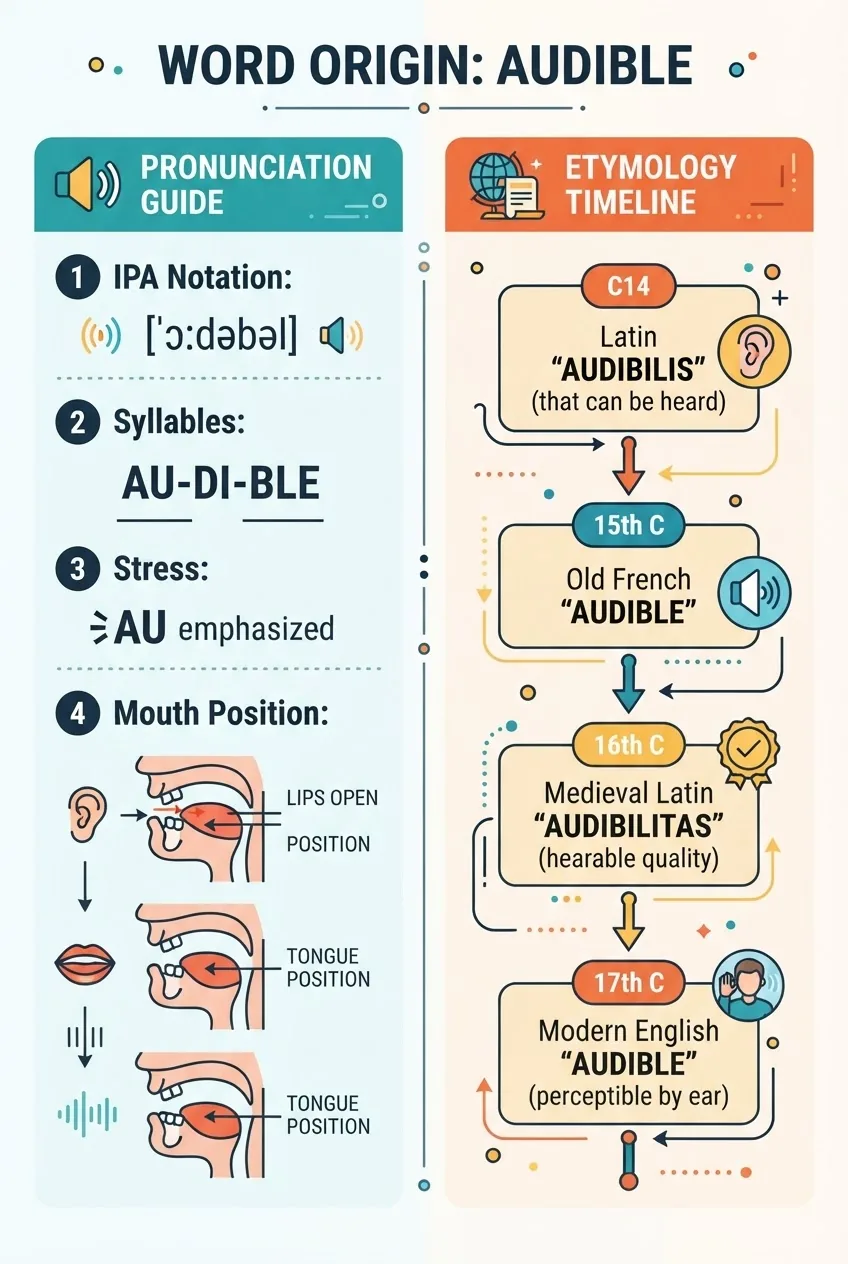
Phonetic breakdown (IPA): /æŋˈzaɪəti/ — syllables: an-xi-e-ty (commonly heard as three main beats: ang-ZY-uh-tee). Pronunciation tips:
- Start with /æŋ/ — sounds like “ang” in “angle” but with nasal quality; the “n” and “x” produce a combined consonant cluster.
- Middle stress on /ˈzaɪ/ — rhymes with “my” or “sigh”.
- End with /əti/ — reduced vowel then “tee” sound; many speakers say /i/ softly as schwa-plus-y.
Etymology (origin story):
- Latin: anxietās (from anxius) — core meaning “troubled, uneasy” (classical usage).
- Old French influence in Middle English introduced the word into English usage by the late Middle Ages (OED, 2022).
- Modern senses expanded in 17th–19th centuries to cover both emotional and clinical uses.
Citation: For definition and etymology details see the Oxford English Dictionary (Oxford English Dictionary, 2022) and Merriam-Webster (Merriam-Webster, 2023). The APA outlines clinical distinctions (American Psychological Association, 2023).
Transition: With sound and history clear, practical sentence examples will show how to use anxiety correctly across contexts.
Using Anxiety in Sentences: Examples and Contexts
Answer: Use “anxiety” as a noun referring to worry or nervousness in both casual and formal contexts; pair it with common collocations like “feel anxiety,” “suffer from anxiety,” or “anxiety about.” Below are 12 example sentences with context notes.
Term: collocation — a habitual pairing of words that sound natural together (e.g., “strong coffee,” “feel anxiety”).

- “I felt a wave of anxiety before speaking to the group.” — informal, personal feeling.
- “Students often experience exam-related anxiety during finals week.” — neutral, educational context; collocation: “exam-related anxiety.”
- “Clinical assessment distinguished situational anxiety from an anxiety disorder.” — formal, clinical contrast.
- “Her anxiety about finances kept her awake at night.” — everyday narrative usage.
- “Workplace anxiety can reduce productivity if unaddressed.” — professional context; suitable for HR writing.
- “He experiences social anxiety in large gatherings.” — describes a specific subtype; use with care if implying diagnosis.
- “The lecture reduced my anxiety about the project timeline.” — causal relationship, informal to semi-formal.
- “High anxiety levels were reported in the survey sample.” — academic or research report phrasing.
- “She described feelings of anxiety, restlessness, and difficulty concentrating.” — clinical symptom description; use APA-style caution.
- “Public speaking causes anxiety for many new presenters.” — general advice context.
- “Management introduced initiatives to reduce employee anxiety during restructuring.” — organisational communication.
- “Instead of saying ‘anxiousness,’ prefer the noun ‘anxiety’ for concision.” — usage guidance; stylistic preference.
Notes on formality and context:
- Informal: personal feelings, everyday conversation (sentences 1, 4, 10).
- Semi-formal/professional: workplace, education (sentences 2, 5, 11).
- Clinical/technical: diagnostic or research contexts require precision and often citations (sentences 3, 8, 9).
Common collocations to practice: “feel anxiety,” “suffer from anxiety,” “reduce anxiety,” “anxiety disorder,” “social anxiety,” “anxiety about.” Using these collocations improves natural-sounding English and communication clarity.
Transition: Next we explain typical mistakes that create confusion between the noun “anxiety” and the adjective “anxious” and other spelling errors.
Common Mistakes When Spelling and Using Anxiety
Answer: Frequent errors include misspelling the “nx” cluster (e.g., anxity), confusing the noun “anxiety” with the adjective “anxious,” and using medical language imprecisely in everyday prose.
Term: adjective vs noun — adjectives describe nouns (e.g., “anxious person”); nouns name people, places, things, or states (“anxiety”).
Typical errors and corrections:
- Error: “anxity” — Correction: anxiety. Explanation: omit missing “e” and include “x”.
- Error: “anxeity” — Correction: anxiety. Explanation: misplaced “e” after “x”.
- Error: using “anxious” as a noun (“His anxious is obvious”) — Correction: use “anxiety” as the noun; “He looks anxious” uses the adjective correctly.
- Error: using medical terms casually without clarity — Correction: specify whether you mean everyday worry or a clinical diagnosis.
- Error: overcomplicating phrasing (“He had an anxiety that was acute”) — Correction: “He experienced acute anxiety” is clearer.
Why these mistakes matter:
- Spelling errors can undermine credibility in academic or professional writing.
- Grammatical confusion between noun/adjective alters meaning and clarity.
- Imprecise use of clinical language may stigmatise or misrepresent mental health experiences.
Hypothetical confusion example: a job applicant wrote “I have annxiety,” which led an employer to question attention to detail; the misspelling created avoidable doubt in a professional context. This real-world example shows how small errors affect communication and perception.
Transition: The next section compares everyday and medical uses to clarify when each sense is appropriate and provide authoritative links for further reading.
Anxiety in Medical vs Everyday Language
Answer: Everyday use of “anxiety” refers to temporary worry or nervousness; medical use denotes diagnostic categories and clinical symptoms defined by professional standards like DSM or APA.
Term: clinical definition — a description of symptoms and criteria used by health professionals to diagnose conditions.
| Aspect | Everyday Language | Medical/Clinical Language |
|---|---|---|
| Meaning | Transient worry or nervousness. | Diagnostic symptoms and impairment per clinical criteria. |
| Duration | Short-term or context-specific. | Persistent and clinically significant (weeks to months, causing impairment). |
| Examples | “I have anxiety about the interview.” | Generalised anxiety disorder, panic disorder, social phobia (diagnosed categories). |
| When to use | Casual, descriptive writing and conversation. | Clinical reports, medical notes, and formal assessments; use with caution in general text. |
Clinical context sources and further reading:
- For readers interested in professional help, exploring social anxiety treatment options can offer specialized support.
- To understand the numerous forms anxiety can take, refer to our comprehensive guide on different types of anxiety.
- Clinical understanding of anxiety is detailed in the DSM criteria for anxiety disorders criteria.
- Learn how anxiety can physically manifest and affect daily life in our piece on physical symptoms of anxiety.
- CBT for social phobia is an effective treatment method, especially for social anxiety and phobias.
- support resources for crippling anxiety explores treatment paths and resources for severe anxiety conditions.
- medications for anxiety disorders may assist in managing some anxiety disorders.
- generalised anxiety disorder symptoms often overlap with general anxiety meanings.
- anxiety severity levels influence treatment strategies.
- social phobia DSM 5 criteria has precise diagnostic criteria outlined in DSM 5.
- stomach symptoms related to anxiety are common in anxiety disorders.
- systematic desensitisation therapy describes gradual exposure therapies that reduce anxiety responses.
External authoritative sources:
- Merriam-Webster definition of anxiety (2023)
- Oxford English Dictionary / Oxford Learner resources (2022)
- Australian Department of Health mental health terminology (2024)
- American Psychological Association clinical guidance (2023)
Regional variation note: Usage and diagnostic phrasing can vary by region; Australian resources may use slightly different terminology or service pathways than U.S. sources.
Transition: After clarifying clinical vs everyday usage, practical memory tips can help you reliably spell and use the word in writing.
Tips for Remembering How to Spell Anxiety
Answer: Use mnemonic devices, sound-to-letter mapping, chunking, repeated writing, and associative imagery to remember “anxiety” reliably; joining groups or practicing aloud strengthens retention.
Term: mnemonic — a memory aid or technique that makes information easier to recall.
- Mnemonic phrase: “A Nervous Xylophone Is Easily Tapped, Yelling” — take the initial letters A-N-X-I-E-T-Y to form a quirky sentence that encodes each letter. Step-by-step: write the sentence, underline initials, repeat aloud, then write “anxiety.”
- Chunking: Break into parts: an + xi + ety; practice each part separately. Step-by-step: say “an,” then “xi” (/zaɪ/), then “ety.” Combine and write three times.
- Sound-letter mapping: Map IPA to letters: /æŋ/ → an; /ˈzaɪ/ → xi; /əti/ → ety. Step-by-step: speak slowly, write simultaneously.
- Visual cue: Picture an “X” at the centre of the word — the lone “x” is the visual anchor; draw a small X over the middle of the word when practicing.
- Practice in context: Write three sentences a day using “anxiety” until it feels automatic. Step-by-step: create short, relevant sentences; proofread for accuracy.
- Group practice: Joining a study or writing group boosts recall and confidence; peer correction helps cement spelling. group support for anxiety
Educational tool suggestions: flashcards, spaced repetition apps, and pronunciation guides with IPA reinforce both spelling and pronunciation. Empathetic note: many native speakers misspell complex words; persistence and structured practice work.
Transition: The final section summarises the core takeaways and suggests next steps for readers who want to deepen vocabulary and communication skills.
Conclusion: Mastering the Word Anxiety for Better Communication
Answer: Mastering “anxiety” requires learning correct spelling (anxiety), understanding its noun usage and psychological nuance, practicing pronunciation (/æŋˈzaɪəti/), and using mnemonic techniques to avoid common errors—this improves clarity and confidence in communication.
Key takeaways:
- Spelling: anxiety (a-n-x-i-e-t-y); watch for the “nx” cluster.
- Meaning: denotes worry or nervousness; has both everyday and clinical senses—cite sources like Merriam-Webster (2023) or OED (2022) when needed.
- Pronunciation: use IPA /æŋˈzaɪəti/ and practice aloud.
- Usage: use “anxiety” as a noun and “anxious” as an adjective; avoid conflating the two.
Final call to action: Review the usage examples above, try the mnemonic exercises for one week, and if you need specialised support for anxiety as a health concern, consider reading about social anxiety treatment options or consult reputable clinical resources linked earlier.