

Drugs for agoraphobia include antidepressants (primarily SSRIs and SNRIs), short‑term benzodiazepines and adjunct agents such as beta‑blockers or antipsychotics; choice depends on symptom profile, comorbidities and Australian availability. This guide explains mechanisms, expected timelines, side‑effect trade‑offs and practical prescription pathways in Sydney and Australia.
Understanding Agoraphobia and Its Medication Needs
Answer: Medication is used to reduce panic attacks and persistent avoidance that define agoraphobia, often combined with psychological therapies; drug choice targets the neurochemical drivers of panic and anxiety while considering safety, comorbidity and patient preference.
Term: Agoraphobia — an anxiety disorder characterised by intense fear or avoidance of situations where escape or help might be difficult, often linked to panic attacks and situational anxiety.
Agoraphobia commonly develops after recurrent panic attacks and is diagnosed when avoidance behaviours significantly restrict daily functioning and cause marked fear in places such as public transport, shops, or open spaces. Symptom severity ranges from transient situational anxiety to near‑complete homebound behaviour.
Medication addresses core panic physiology (rapid heart rate, hyperventilation, dizziness) and the longer‑term fear consolidation that maintains avoidance. Clinicians choose drugs by weighing symptom severity, comorbid conditions (depression, substance use), pregnancy status, and previous treatment response. For many Australians, the pathway begins with a GP assessment, then referral to a psychiatrist if symptoms are severe or complex.
For context on related conditions, see different types of anxiety disorders.
To review formal diagnostic framing, consult DSM criteria for anxiety disorders.
When symptoms overlap with generalized presentations, clinicians cross‑reference generalized anxiety disorder treatment approaches.
For clarity on terminology around “anxiety”, read meaning and correct use of anxiety.
Overview of Drug Classes Used for Agoraphobia Treatment
Answer: The main drug classes are SSRIs and SNRIs (first‑line antidepressants), benzodiazepines for short‑term symptom control, and adjunctive medications (beta‑blockers, buspirone, off‑label antipsychotics) used for targeted symptoms or augmentation.
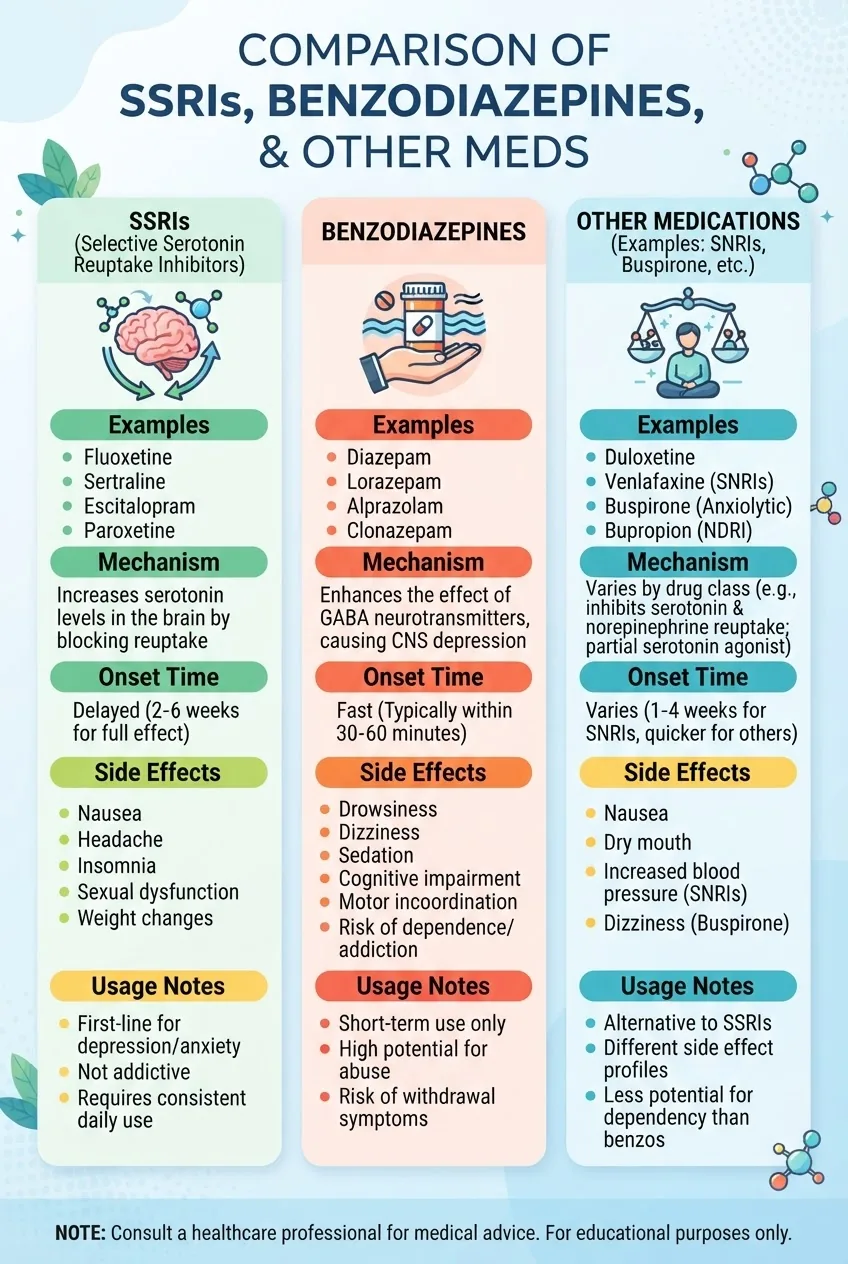
Below is a compact comparison table designed to orient prescribing decisions used in clinical practice in Australia; rows are zebra‑striped for readability.
| Drug class | Common examples | Primary mechanism | Indication in agoraphobia |
|---|---|---|---|
| SSRIs | Sertraline, paroxetine, fluoxetine, escitalopram | Increase synaptic serotonin by blocking reuptake | First‑line for panic‑linked agoraphobia and comorbid depression |
| SNRIs | Venlafaxine, duloxetine | Block serotonin and norepinephrine reuptake (dual action) | Alternative/second‑line, effective for panic and somatic symptoms |
| Benzodiazepines | Lorazepam, diazepam, alprazolam | Potentiate GABAergic inhibition → fast anxiolysis | Short‑term relief of acute panic; not recommended long term |
| Beta‑blockers | Propranolol (off‑label) | Block peripheral adrenergic symptoms (heart rate, tremor) | Target somatic symptoms during exposure or feared situations |
| Buspirone | Buspirone | Partial agonist at serotonin 5‑HT1A receptors; anxiolytic | Adjunct for chronic anxiety; no sedation or dependence |
| Antipsychotics (adjunct) | Quetiapine (off‑label), risperidone (adjunct) | Dopamine/serotonin modulation; variable anxiolytic properties | Used selectively for treatment‑resistant anxiety or augmentation |
Choice of class is guided by evidence for panic disorder/agoraphobia, side‑effect profile, drug interactions and PBS/TGA coverage in Australia. For drug safety and approval updates consult the Therapeutic Goods Administration (TGA).
Selective Serotonin Reuptake Inhibitors (SSRIs)
Answer: SSRIs are the most commonly recommended first‑line medications for agoraphobia because they reduce panic frequency and long‑term avoidance with an established safety profile and strong clinical trial support.
Term: SSRIs — selective serotonin reuptake inhibitors that increase serotonin availability in the brain by blocking its reuptake into neurons.
Large randomized controlled trials and meta‑analyses (including pooled data on panic disorder) show SSRIs reduce panic attack frequency and severity and help reduce avoidance behaviours that sustain agoraphobia. Typical SSRI choices include sertraline, paroxetine and escitalopram; fluoxetine is used less often for acute panic due to activating effects in some patients.
- Sertraline — commonly used first choice; balanced efficacy and tolerability, evidence for panic reduction within 4–8 weeks.
- Paroxetine — effective but with higher anticholinergic and discontinuation risks; useful when insomnia or comorbid severe anxiety present.
- Escitalopram — favourable side‑effect profile, often preferred for older adults and those sensitive to drug interactions.
- Fluoxetine — longer half‑life may reduce withdrawal but can be activating; used when comorbid major depressive disorder requires stronger antidepressant effect.
Clinical considerations for SSRIs in agoraphobia:
- Start at a low dose and titrate slowly to minimise activation and gastrointestinal effects (nausea, diarrhoea).
- Expect a therapeutic signal at 4–6 weeks and optimal benefit often by 8–12 weeks; continue at effective dose for at least 6–12 months after remission to reduce relapse.
- Monitor for sexual dysfunction, weight change and serotonin syndrome if combined with other serotonergic agents.
- For women of childbearing age, discuss pregnancy planning and potential teratogenic risks with prescriber.
Anonymized clinic scenario (Sydney): a 32‑year‑old with repeated public transport panic was started on sertraline 25 mg daily and guided to increase to 50 mg after two weeks; with CBT exposure tasks, she reported fewer panic attacks at week 6 and resumed commuting by week 10—typical of SSRI‑plus‑therapy response.
Serotonin-Norepinephrine Reuptake Inhibitors (SNRIs)
Answer: SNRIs like venlafaxine and duloxetine are effective alternatives to SSRIs, particularly when somatic symptoms or comorbid chronic pain exist, but they carry dose‑dependent blood pressure and discontinuation considerations.
Term: SNRIs — medications that inhibit reuptake of both serotonin and norepinephrine, affecting mood and arousal systems.
SNRIs show comparable efficacy to SSRIs in panic disorder trials and can reduce the somatic arousal that worsens panic‑related avoidance. Venlafaxine has good evidence specifically for panic disorder, but clinicians monitor blood pressure as norepinephrine reuptake blockade at higher doses can raise systolic pressure.
- Venlafaxine — effective for panic‑predominant presentations; start low and increase carefully while monitoring blood pressure.
- Duloxetine — helpful when comorbid pain or fibromyalgia exists; evidence for panic is smaller but clinically useful for mixed presentations.
Practical note: SNRIs can cause withdrawal symptoms if stopped abruptly; plan tapering and consider switching strategies when moving between antidepressant classes.
Benzodiazepines and Their Role
Answer: Benzodiazepines provide rapid relief of acute panic and situational anxiety but carry dependence, tolerance and cognitive side‑effect risks; they are recommended only for short‑term use or as a bridge while antidepressants take effect.
Term: Benzodiazepines — fast‑acting sedative‑anxiolytics that amplify GABAergic (inhibitory) neurotransmission to produce calming effects.
Benzodiazepines (e.g., lorazepam, diazepam, alprazolam) reduce panic symptoms within minutes to hours and can be life‑changing during acute agitation; however, evidence shows increased long‑term relapse and reduced CBT effectiveness when used chronically. Dependence risk rises with daily use beyond 2–4 weeks and in patients with substance use histories.
Clinical guidance and practical cautions:
- Use lorazepam or diazepam at the lowest effective dose for short periods (generally <2–4 weeks) while initiating an SSRI/SNRI.
- Avoid long‑term benzodiazepine monotherapy for agoraphobia due to tolerance and cognitive impairment risks (memory, attention).
- Consider prescribing as “as‑needed” (PRN) for discrete exposure tasks (e.g., public transport) rather than scheduled daily dosing.
- When discontinuing after prolonged use, taper slowly (often over weeks‑to‑months) to reduce withdrawal, ideally with specialist oversight.
- Be aware of interactions with alcohol and opioids—combined use increases risk of respiratory depression and overdose.
Pharmacist tip (anonymized): in a suburban Sydney pharmacy, pharmacists counsel patients starting benzodiazepines about limited duration, provide written taper plans and liaise with prescribers when signs of misuse or cognitive decline appear.
Other Medications: Beta-blockers, Buspirone, Antipsychotics
Answer: Beta‑blockers, buspirone and certain antipsychotics are adjunctive tools used for targeted symptoms (somatic anxiety, chronic worry, augmentation in resistant cases) rather than primary long‑term treatments for agoraphobia.
Term: Buspirone — a non‑sedating anxiolytic acting on serotonin 5‑HT1A receptors without benzodiazepine‑like dependence risk.
Beta‑blockers such as propranolol are used off‑label to blunt peripheral adrenergic symptoms (tachycardia, tremor) during exposure tasks or panic onset; they do not treat core fear circuits but can improve confidence during CBT sessions.
Buspirone can be helpful for chronic anxious rumination and has no sedative or dependence profile; onset is slower than benzodiazepines and benefits often take several weeks.
Low‑dose antipsychotics (e.g., quetiapine) are sometimes used off‑label to augment antidepressants in treatment‑resistant anxiety; they carry metabolic and sedation risks and require careful monitoring, so psychiatrists reserve them for specialist cases.
Use cases in Australian practice:
- Propranolol for situational palpitations during exposure sessions (prescriber advises cardiovascular checks).
- Buspirone as an alternative for patients who cannot tolerate benzodiazepines or are at dependence risk.
- Antipsychotic augmentation under psychiatric oversight for severe, refractory cases after guideline‑based trials of SSRIs/SNRIs.
Efficacy, Onset, and Duration of Medication Treatment
Answer: Antidepressants (SSRIs/SNRIs) typically begin reducing panic and anxiety within 2–6 weeks with full benefit by 8–12 weeks; benzodiazepines act within hours but are short‑term; recommended treatment duration after remission is commonly 6–12 months to reduce relapse.
Therapeutic timelines and expected outcomes (stat block):
| Drug/class | Typical onset | Expected response window | Typical maintenance duration |
|---|---|---|---|
| SSRIs | 2–6 weeks (initial) | 6–12 weeks for full effect | 6–12+ months after remission |
| SNRIs | 2–6 weeks | 6–12 weeks | 6–12+ months |
| Benzodiazepines | Minutes–hours | Immediate but not disease‑modifying | Short term (days–weeks); avoid >2–4 weeks regularly |
| Adjuncts (beta‑blockers, buspirone) | Minutes (beta‑blockers) to weeks (buspirone) | Situational relief to moderate chronic benefit | Variable; clinical judgement |
Clinical evidence: meta‑analyses of panic disorder treatments show SSRIs and SNRIs reduce panic attack frequency and improve avoidance outcomes versus placebo (source: peer‑reviewed meta‑analyses; see NIMH guidance for trial summaries). For Australian incidence and service use estimates, see national data: According to a 2023 Australian mental health data report, anxiety disorders remain highly prevalent and guideline‑consistent pharmacotherapy is underutilised in some regions.
To interpret symptom severity and how it guides treatment duration, consult levels of anxiety symptoms.
Common Side Effects and Managing Medication Risks
Answer: Side effects vary by class—SSRIs/SNRIs commonly cause nausea, sleep disturbance and sexual dysfunction; benzodiazepines cause sedation and dependence; antipsychotics carry metabolic risks—management involves dose adjustment, monitoring and clinician‑led tapering strategies.

Below are common side effects grouped by drug class with practical management tips clinicians and pharmacists use in Sydney clinics.
- SSRIs — Nausea, headache, insomnia or somnolence, sexual dysfunction, weight change, and risk of activation early in treatment.
- Management: take with food for nausea, dose‑shift to morning or evening for sleep changes, consider switching within class if sexual dysfunction is intolerable; monitor and document symptoms at 2–4 week reviews.
- SNRIs — Similar to SSRIs plus possible increased blood pressure (venlafaxine at higher doses).
- Management: baseline and periodic blood pressure checks; dose reduction if systolic rise occurs; counsel on withdrawal symptoms and plan tapering.
- Benzodiazepines — Sedation, cognitive slowing, falls (older adults), tolerance and dependence; dangerous with alcohol or opioids.
- Management: restrict duration, use as PRN when possible, provide tapering schedule and consider CBT to reduce need; warn against alcohol combination.
- Beta‑blockers — Fatigue, cold extremities, bradycardia, contraindicated in some asthma/COPD patients.
- Management: check cardiorespiratory history before prescribing; start low and monitor heart rate; use short term for exposure sessions.
- Buspirone — Dizziness, headache, nausea; minimal sedation and no dependence.
- Management: advise slow onset (2–4 weeks) and scheduling to maintain steady blood levels.
- Antipsychotics (adjunct) — Sedation, weight gain, metabolic syndrome, extrapyramidal symptoms (less at low doses with some agents).
- Management: baseline metabolic panel, weight and lipid monitoring every 3–6 months; use lowest effective dose and regular review by psychiatrist.
When side effects overlap with somatic anxiety, compare with anxiety’s physical symptoms and coordinate symptom management.
If gastrointestinal side effects dominate, consult resources on stomach symptoms related to anxiety.
Clinician tip: schedule medication reviews at 2, 6 and 12 weeks after initiation, then quarterly while stabilised. Pharmacists can provide adherence packaging and explain interactions; in Australia, PBS listings may affect out‑of‑pocket costs for specific agents—check the TGA and PBS resources.
Medication Adherence and Discontinuation Issues
Answer: Adherence is challenged by delayed onset of benefit, side effects and stigma; structured follow‑up, clear taper plans and collaboration between GP, psychiatrist and pharmacist improve continuation and safe discontinuation.
Adherence barriers include early adverse effects, lack of perceived benefit in first 2–4 weeks, cost, and concerns about dependence (especially with benzodiazepines). Effective strategies include:
- Clear expectation setting at prescription: discuss typical timeline and common side effects.
- Short check‑ins (phone or clinic) at 1–2 weeks to manage side effects early.
- Use of blister packs or dosing apps for dose adherence; pharmacists in Australia often provide dose administration aids.
- For discontinuation, follow slow taper schedules tailored to half‑life and duration of therapy—longer tapers for long‑term benzodiazepines and SNRIs to reduce withdrawal.
Case summary (anonymized): a 48‑year‑old male on long‑term diazepam presented with concentration problems; coordinated care included gradual taper, substitution with sertraline and CBT exposure, and community pharmacist monitoring—resulting in improved cognition and fewer panic episodes over three months.
Integration of Medication with Cognitive Behavioral Therapy (CBT) and Other Treatments
Answer: Combining medication—especially SSRIs/SNRIs—with CBT, particularly exposure‑based techniques, yields better and faster functional recovery for agoraphobia than either treatment alone in many patients.
CBT trains the brain to tolerate feared situations (“training the brain”), while medication provides neurochemical stabilisation (“chemical balancing”) that allows patients to engage in exposure without overwhelming panic. Coordinated care steps:
- Start antidepressant therapy, then begin CBT once acute panic is controlled (often within 2–4 weeks) to maximise engagement.
- Use benzodiazepines sparingly during early exposure sessions; consider limiting PRN use so CBT learning is preserved.
- Agree on a shared plan between prescriber and therapist for tapering medication if CBT leads to sustained remission.
- Consider adjunct supports: graded exposure, systematic desensitisation, and group therapy for social reintegration.
For psychotherapy options that complement pharmacology, review social anxiety treatment options.
For therapy specifics relevant to anxiety, see cognitive behavioural therapy for anxiety, which outlines exposure schedules and homework techniques.
Non‑clinical supports such as anxiety support groups can reduce isolation and reinforce graded exposure practice.
When social anxiety coexists, referral to experienced social anxiety therapists aids functional recovery.
Clinicians may pair medication with systematic desensitisation therapy when exposure tolerance needs gradual escalation.
Evidence note: a 2019 systematic review (peer‑reviewed) indicates combined CBT and SSRI therapy offers earlier symptom reduction; ongoing coordination between prescriber and therapist is key to avoid medication undermining exposure learning.
Prescription, Monitoring, and Access in Sydney/Australia
Answer: In Australia, GPs commonly initiate treatment, with psychiatrists managing complex or treatment‑resistant cases; many key medications are on the PBS, and prescribers should follow TGA guidance and local clinic monitoring protocols.
Typical Australian care pathway (walkthrough):
- Initial GP assessment with history, physical exam and baseline blood tests if indicated; discuss safety, pregnancy, substance use and driving risks.
- Start first‑line SSRI at low dose and schedule follow‑ups at 2 and 6 weeks; involve a pharmacist for medication counselling.
- If poor response after adequate trial (8–12 weeks) or complex presentation, refer to a psychiatrist for dose optimisation or augmentation strategies.
- Use PBS listings to subsidise eligible medications—ask GP about PBS status for specific drugs and concession entitlements.
Access tips for Sydney residents:
- Ask your GP for a care plan and referral to a psychologist under Medicare’s Better Access scheme for subsidised therapy sessions.
- Public mental health services in metropolitan Sydney can assist severe cases; private psychiatry offers faster access but incurs higher cost.
- Pharmacies in Sydney often provide medication management services and dose administration aids; community mental health teams provide local supports.
Regulatory resources: consult the TGA for approvals and safety alerts, and specialist guidance from the Royal Australian College of General Practitioners (RACGP) for primary care prescribing pathways.
Emerging and Experimental Pharmacological Treatments
Answer: Research into novel agents (glutamate modulators, rapid‑acting agents) and targeted neuromodulators is ongoing, but none have yet displaced SSRIs/SNRIs as first‑line treatments for agoraphobia; participation in clinical trials is an option for refractory cases.
Current research trends include:
- Glutamate modulators and NMDA receptor agents that aim to accelerate extinction learning during exposure therapy (early‑phase trials).
- Investigation of psychedelic‑assisted psychotherapy (carefully controlled trials) focusing on fear memory reconsolidation—experimental and not standard care.
- Biomarker research to personalise pharmacotherapy selection based on genetic and neuroimaging signals.
For patients interested in trials, specialist clinics and university research groups in Australia list current studies; consult trial registries and discuss eligibility with a treating psychiatrist.
When to Seek Medical Advice and Medication Review Guidelines
Answer: Seek urgent medical advice for severe worsening, suicidal ideation, signs of serotonin syndrome, or dangerous benzodiazepine/alcohol interactions; schedule medication reviews at 2, 6 and 12 weeks after starting or changing drugs and at least annually when stable.
Checklist — when to contact your clinician:
- New or worsening suicidal thoughts, severe mood change, or inability to function.
- Signs of serotonin syndrome: high fever, agitation, rapid heart rate, tremor—seek emergency care.
- Severe side effects: chest pain, severe allergic reaction, marked sedation or respiratory difficulty (especially if combining sedatives).
- Concerns about dependence, misuse, or withdrawal symptoms when reducing benzodiazepines or SNRIs.
- Pregnancy or breastfeeding planning—review medication risks and alternatives with prescriber.
For broader help beyond medications, consider support resources for anxiety.
Monitoring requirements typically include blood pressure for SNRIs, metabolic screening for antipsychotics, and periodic review of cognition and function with benzodiazepine usage. Collaborative care between GP, psychiatrist and pharmacist improves safety and outcomes.
Conclusion
Answer: Effective pharmacological options for drugs for agoraphobia focus on SSRIs and SNRIs as first‑line agents, short‑term benzodiazepines for acute control, and adjunctive medications for specific symptoms; combined with CBT and structured monitoring, many patients regain function.
Key takeaways: choose medication based on symptom pattern and comorbidity; set realistic timelines (antidepressants take weeks), manage side effects proactively, and coordinate care with psychotherapy. For personalised advice, speak to your GP or psychiatrist in Sydney who can align treatment with PBS availability and TGA guidance—if symptoms persist or worsen, seek specialist review.
If you want help finding a clinician experienced in both medication and exposure‑based therapy, contact your GP for referral or explore local mental health directories to arrange a consultation.
Important information:
This article is general information only and is not medical advice. It was written from publicly available sources by a non-clinician, and this website is not a clinic. Please speak with your GP or another qualified health professional about your own situation. If you need urgent help, call 000, or contact Lifeline on 13 11 14 or Beyond Blue on 1300 22 4636.