

Stomach and anxiety disorder are tightly linked: anxiety commonly causes gastrointestinal distress (nausea, pain, bloating, altered bowel habits) via the gut‑brain axis, and treating both together—through lifestyle changes, psychological therapy, medication and targeted stomach care—usually gives the best outcomes within weeks to months.
Understanding the Connection Between Stomach Issues and Anxiety Disorder?
Answer: Anxiety affects the stomach through the gut‑brain axis, producing psychosomatic gastrointestinal symptoms that overlap with primary digestive disorders and are triggered or worsened by stress and autonomic nervous system activation.
Term: Gut‑brain axis is the two‑way communication network of neural, hormonal and immune signals linking the central nervous system and the gastrointestinal (GI) tract.
The gut‑brain axis explains how emotions change digestion: when a person feels anxious, the autonomic nervous system shifts toward a fight‑or‑flight state, releasing stress hormones (cortisol, adrenaline) that alter gut motility, secretions and blood flow. This can create nausea, cramping, diarrhoea or constipation even when no primary GI disease exists.
Example: a student presenting with “butterflies” before exams may experience transient nausea and loose stools; with repeated episodes this can evolve into persistent functional symptoms like those seen in Irritable Bowel Syndrome (IBS).
According to a 2021 review in Gut (peer‑reviewed journal), people with anxiety disorders have higher rates of functional GI disorders, suggesting a bidirectional relationship that requires coordinated care from mental health and gastroenterology services.

Psychosomatic symptoms occur when physical sensations are driven or amplified by psychological factors; for stomach anxiety this typically includes sensitivity to normal gut sensations and heightened vigilance to digestive changes. Australian guidelines recommend screening for anxiety when patients present with new or unexplained GI symptoms, particularly if symptoms vary with stress or emotional state.
Transition: With this mechanism in mind, next we list the typical stomach‑focused symptoms people report so you can recognise patterns that suggest anxiety‑related causes.
Common Symptoms of Stomach and Anxiety Disorder?
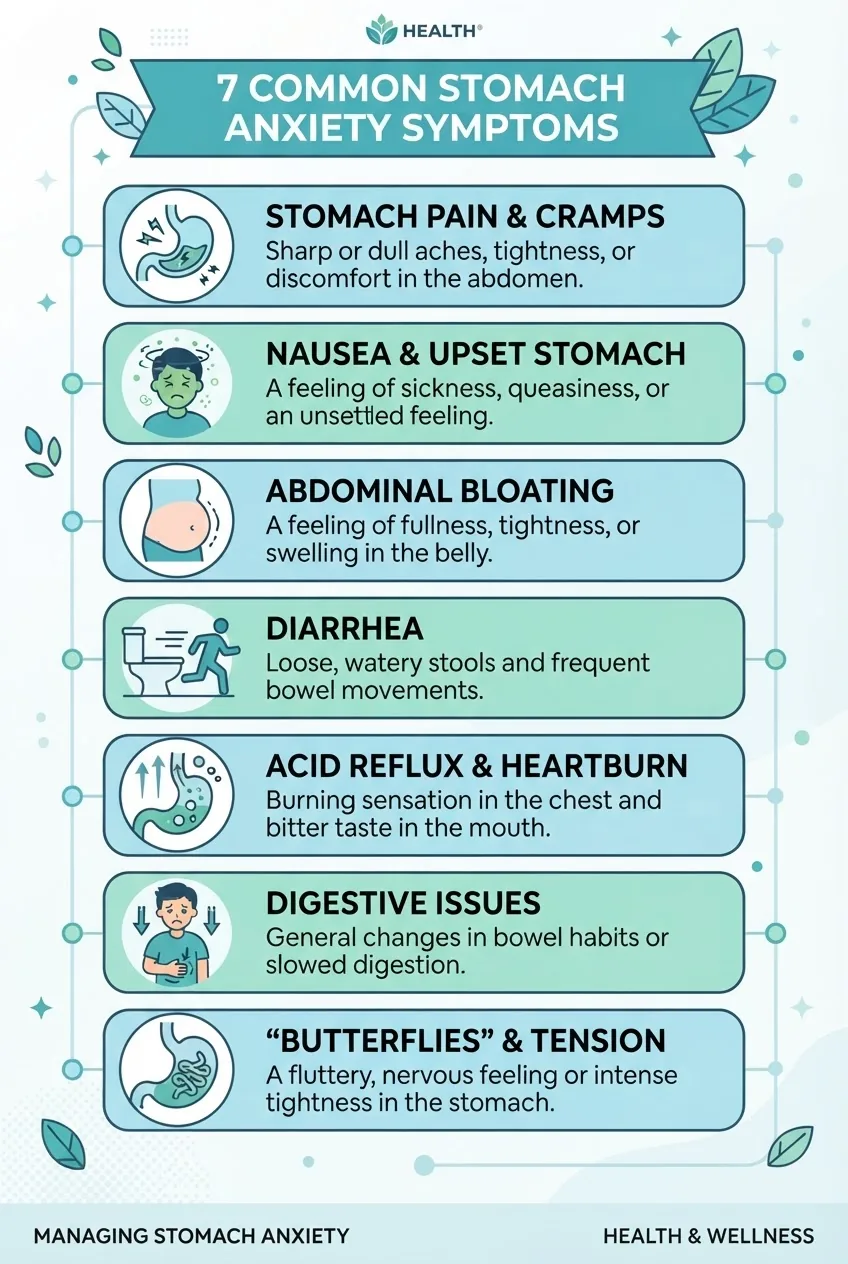
Answer: The most frequent stomach symptoms linked to anxiety are nausea, abdominal pain/cramping, bloating, altered bowel habits, acid reflux sensations, “butterflies” and loss of appetite; each symptom often fluctuates with stress levels and anxiety episodes.
Term: Stomach anxiety symptoms refers to gastrointestinal signs directly caused or amplified by anxious arousal rather than structural GI disease.
- Nausea — sudden queasy sensation or urge to vomit that often appears with panic or heightened anxiety. It can occur alone or with lightheadedness and typically improves as anxiety reduces.
- Abdominal pain or cramping — diffuse cramps or sharp twinges related to gut spasm; pain intensity may not match objective findings but is real and distressing.
- Bloating and gas — a feeling of fullness or visible distension resulting from altered gut motility and intestinal sensitivity during stress.
- Diarrhoea or urgency — increased stool frequency, often sudden, linked to sympathetic/parasympathetic shifts; common in performance‑related anxiety.
- Constipation — slower transit can occur in some people during chronic anxiety due to altered enteric nervous system signaling.
- “Butterflies” — mild upper‑abdominal fluttering or nervous stomach experienced before stressful events; an acute expression of the gut‑brain response.
- Acid reflux or heartburn sensations — stress can increase reflux symptoms through changes in swallow patterns and gastric emptying.
- Loss of appetite or early satiety — reduced desire to eat during anxiety peaks because digestive activity is suppressed.
Each symptom should be evaluated in context: frequency, relation to stress, associated systemic signs (fever, weight loss), and response to prior treatments. For wider coverage of anxiety’s physical impact see physical manifestations of anxiety.
Transition: Understanding symptoms helps direct diagnostic steps to separate anxiety‑driven stomach symptoms from other gastrointestinal diseases.
Causes and Mechanisms Behind Stomach Anxiety?
Answer: Stomach anxiety arises from interactions of the autonomic nervous system, stress hormones (cortisol, adrenaline), neurotransmitters (serotonin), and immune or microbiome changes that affect gut motility, sensation and inflammation through the gut‑brain axis.
Term: Autonomic nervous system controls involuntary functions (heart rate, digestion) via sympathetic (fight‑or‑flight) and parasympathetic (rest‑digest) branches.
Simplified mechanism:
- Perception of threat (psychological stress) activates the sympathetic system and the HPA axis (hypothalamic‑pituitary‑adrenal), releasing adrenaline and cortisol.
- Gut response to these hormones includes faster or slower transit, increased sensitivity of gut nerves (visceral hypersensitivity), and changes in secretions—producing pain, diarrhoea, nausea or bloating.
- Neurotransmitter changes (notably serotonin, which is abundant in the gut) can alter motility and sensitivity; anxiety is associated with altered serotonergic signalling.
- Microbiome and immune modulation—stress can shift gut bacteria and increase low‑grade inflammation that sensitises the gut lining.
According to a 2023 study in the Journal of Anxiety Disorders (peer‑reviewed journal), chronic stress correlates with increased intestinal permeability and symptom reporting, reinforcing the need to treat psychological stress to reduce GI complaints.
Visual reference: a simple diagram can show the HPA axis → autonomic output → intestinal effects chain; clinics often use such flowcharts during patient education to normalise symptoms and reduce catastrophising.
Transition: Knowing how these mechanisms work guides diagnostic steps clinicians use to distinguish anxiety‑related stomach symptoms from structural GI disease.
Diagnosing Stomach-Related Anxiety Symptoms?
Answer: Diagnosis is a stepwise process combining clinical history, targeted physical and basic laboratory tests, screening for anxiety disorders using DSM frameworks, and selective gastrointestinal investigations to rule out organic disease.
Term: Differential diagnosis is the process of listing and excluding possible medical causes before concluding symptoms are anxiety‑related.
- Step 1 — Focused clinical history: document symptom timing, relation to stressors, alarm features (weight loss, blood in stool, nocturnal symptoms), medication/substance use, diet and family GI history.
- Step 2 — Screening for anxiety: use brief validated tools (GAD‑7, PHQ‑4) and a targeted anxiety history; see DSM criteria for anxiety disorders for diagnostic frameworks.
- Step 3 — Basic investigations: CBC, CRP, coeliac serology, thyroid tests and, where indicated, stool studies to exclude infection or inflammatory disease.
- Step 4 — Targeted GI tests: if red flags exist, refer for endoscopy, colonoscopy or imaging; otherwise consider functional diagnosis like IBS based on Rome criteria after excluding alarm features.
- Step 5 — Integrated assessment: combine findings; if anxiety symptoms temporally match GI complaints and tests are unremarkable, a diagnosis of anxiety‑related GI symptoms or functional GI disorder with comorbid anxiety is likely.
- Step 6 — Shared care plan: create joint management with primary care, gastroenterology and mental health services for best outcomes.
Clinicians in Sydney often apply a brief intake screening — symptom diary for two weeks, GAD‑7 scoring, and a one‑page red‑flag checklist — to triage patients to psychotherapy, dietetic support or further GI workup. For more on how symptom severity is classified, see levels and severity of anxiety symptoms.
Transition: After diagnosis, treatment should be multimodal—below are practical, evidence‑based care strategies tailored to stomach‑focused anxiety and to Sydney patients seeking integrated care.
Comprehensive Care Strategies for Managing Stomach and Anxiety Disorder?
Answer: Effective care combines education, lifestyle and dietary changes, psychological therapies (notably CBT), relaxation practices, selective medications, and coordinated specialist referrals; care is tailored to symptom severity and patient preference.
Term: Relaxation and breathing techniques are behavioural exercises that reduce sympathetic activation and improve digestive symptoms by restoring parasympathetic tone.
Education and symptom self‑monitoring
Start with patient education about the gut‑brain axis and normalise symptoms to reduce fear. Keep a structured symptom diary for 2–4 weeks recording:
- Date/time of symptom
- Severity (0–10), triggers (stress, food), and associated mood
- Food intake and bowel pattern
- Medication and coping strategies used
Example anonymised case: “Patient A”, a 28‑year‑old with situational panic and weekly diarrhoea, used a diary and identified high‑caffeine drinks before events; diary‑guided changes led to measurable symptom reduction in 6 weeks.
Lifestyle and dietary modifications
Modify factors that exacerbate gut sensitivity:
- Reduce caffeine and alcohol, which increase GI motility and anxiety.
- Regular meals and avoid large high‑fat meals that slow gastric emptying.
- Trial low‑FODMAP diet under dietitian supervision for IBS‑like symptoms; this is not a long‑term restriction without guidance.
- Hydration and fibre adjustments depending on predominant bowel habit.
According to Australian clinical guidelines (Australian Department of Health source), dietetic referral is recommended when dietary factors are suspected contributors.

Psychological therapies
Psychological therapy targets the anxiety driving symptoms; evidence supports the following:
- Cognitive behavioural therapy (CBT) — addresses catastrophic thoughts about symptoms and behavioural avoidance; see cognitive behavioural therapy techniques for transferable strategies.
- Acceptance and Commitment Therapy (ACT) — focuses on values‑based action while accepting uncomfortable sensations.
- Exposure‑based approaches — graded exposure to feared sensations (interoceptive exposure) can reduce symptom fear and avoidance.
- Systematic desensitisation therapy may help for conditioned anxiety responses; see systematic desensitisation therapy.
Case example (anonymised): “Patient B” used CBT with interoceptive exposure and reported a 60% reduction in visceral anxiety and improved bowel regularity over 12 weeks.
Relaxation, mindfulness and breathing techniques
Short daily practices improve parasympathetic tone and reduce stomach symptoms:
- Diaphragmatic breathing: 5–10 minutes twice daily reduces visceral hypersensitivity.
- Progressive muscle relaxation and body scans to lower overall arousal.
- Mindfulness meditation for attention training and symptom tolerance.
According to a 2022 clinical review (peer‑reviewed journal), mindfulness practices reduce symptom severity in functional GI disorders when combined with other therapies.
Medication for anxiety-related stomach symptoms
Answer: Medication choices balance benefit for anxiety and GI symptom relief with side effects; options include short‑term benzodiazepines for severe panic (with caution), antidepressants (SSRI/SNRI) for anxiety comorbidity, and low‑dose tricyclics or SNRIs for visceral pain.
Term: Medication options for anxiety treatment include SSRIs, SNRIs, tricyclic antidepressants and occasionally short‑term benzodiazepines; antispasmodics or low‑dose neuromodulators may target GI symptoms.
| Medication class | Target | Typical benefits | Common concerns |
|---|---|---|---|
| SSRIs (e.g., sertraline) | Anxiety, mood | Reduce anxiety, may help IBS over weeks | GI upset initially; sexual side effects |
| SNRIs (e.g., venlafaxine) | Anxiety, pain modulation | Helps generalized anxiety; can modulate visceral pain | Elevated BP in some; GI side effects |
| Tricyclics (low‑dose) | Visceral pain, motility | Can reduce pain and diarrhoea in IBS | Anticholinergic effects, sedation |
| Benzodiazepines (short term) | Acute panic and severe physiological arousal | Rapid anxiety relief | Dependence risk; not for long‑term use |
For a broader medication overview applicable to anxiety care see medication options for anxiety treatment. Australian guidelines recommend shared decision making and consideration of non‑pharmacological firstline treatments where appropriate.
Specialist and allied health input
- Gastroenterologist referral when alarm features or poor response to initial care.
- Dietitian for structured dietary trials (low‑FODMAP, fibre planning).
- Psychologist or psychiatrist for severe or persistent anxiety; combined care typically improves GI outcomes.
Trade‑offs and sequencing
Medication can produce faster symptom relief but carries side effects; therapy (CBT, ACT) has durable benefits but takes weeks. Lifestyle changes have low risk but slower, variable benefit. A practical plan often starts with education, symptom diary, diet/lifestyle adjustments and concurrently begins psychological therapy; medication is added when warranted.
Transition: If symptoms are severe, persistent, or accompanied by red flags, seek professional help—next we list Sydney resources and how to access urgent care.
When to Seek Professional Help and Resources in Sydney?
Answer: Seek immediate care for red‑flag GI symptoms (fever, bleeding, significant weight loss); seek prompt mental health support for severe anxiety, suicidal thoughts or functional impairment; use listed Sydney resources for ongoing integrated care.
- Primary care (GP) — first contact for assessment, basic tests and referrals; find a GP who coordinates mental health care and GI referrals.
- Public mental health services (NSW Health) — for urgent or severe presentations. External resource: NSW Health mental health services.
- Private psychologists and psychiatrists in Sydney — look for clinicians experienced in CBT and GI‑focused therapies; ask for experience with functional GI disorders.
- Gastroenterology clinics — for red flags or non‑responsive GI symptoms; many Sydney clinics offer combined clinics with dietitians and psychologists.
- Anxiety support and community groups — peer support helps coping skills and reduces isolation; see anxiety support groups in Sydney.
- Crisis and emergency contacts — call local emergency services for severe abdominal pain with collapse, or emergency mental health lines for suicidal crisis.
- Specialised referral for severe cases — see support resources for severe anxiety.
Contact example (Sydney): Ask your GP for an integrated referral to a combined GI‑psychology clinic; many private clinics provide telehealth follow‑up if travel is difficult.
Transition: Finally, integrate all elements into ongoing treatment plans—here are practical models for combined care.
Integrating Stomach Care with Overall Anxiety Disorder Treatment?
Answer: Integrate stomach care by combining GI symptom management (diet, antispasmodics, neuromodulators) with anxiety treatments (CBT, mindfulness, medication) under a coordinated plan that monitors symptoms and adjusts interventions over time.
Term: Holistic treatment here means coordinated management of both physical GI symptoms and psychological drivers in a single care plan.
Example care plans:
Mild symptoms — stepped approach
- Education and 2‑week symptom diary.
- Lifestyle/dietary adjustments (reduce caffeine, regular meals).
- Begin breathing exercises and mindfulness; GP follow up at 4 weeks.
Moderate symptoms — integrated therapy
- Simultaneous referral to psychologist for CBT + dietitian for trialled dietary changes.
- Consider SSRI or SNRI if anxiety meets diagnostic threshold or functional impairment is significant.
- Periodic symptom review (4–8 weekly) with shared notes between providers.
Severe or refractory symptoms — specialist care
- Gastroenterologist to exclude organic disease and consider neuromodulators (e.g., low‑dose tricyclic for visceral pain).
- Psychiatry referral for complex pharmacotherapy or combined therapy planning.
- Multi‑disciplinary team meetings and measurable outcome tracking (symptom scales, quality‑of‑life measures).
Internal referral option: for specialised social anxiety overlap, clinicians may link patients to a social phobia therapist and social anxiety treatment options pathway to address social triggers that exacerbate stomach symptoms.
For readers wanting context on anxiety subtypes that may present with GI symptoms, see different types of anxiety disorders and their symptoms.
Integration checklist clinicians use in Sydney intake:
- Two‑week symptom diary
- GAD‑7 and PHQ‑9 scores
- Basic blood tests and red‑flag screen
- Diet and sleep review
- Initial brief plan with measurable goals and timelines
According to Australian clinical guidance (Australian Department of Health), combined psychological and medical management is preferred for functional GI symptoms with comorbid anxiety, and patients should receive clear follow‑up plans and access to community resources.
Transition: The following FAQ distils practical answers for common patient questions.
Important information:This article is general information only and is not medical advice. It was written from publicly available sources by a non-clinician, and this website is not a clinic. Please speak with your GP or another qualified health professional about your own situation. If you need urgent help, call 000, or contact Lifeline on 13 11 14 or Beyond Blue on 1300 22 4636.