

An anxiety breakdown is an acute episode of overwhelming anxiety or emotional collapse requiring immediate support; treatment combines crisis stabilisation, psychotherapy, and non-pharmacological clinical strategies tailored to the episode and the person’s context. Early, integrated care—often delivered by psychologists or multidisciplinary Sydney clinics—improves safety and speeds recovery.
Understanding Anxiety and Emotional Breakdowns
Answer: An anxiety or emotional breakdown is an intense, time-limited episode of psychological distress marked by loss of functioning and high physiological arousal; treatment focuses first on stabilising symptoms and safety, then on targeted therapy and relapse prevention.
Anxiety breakdown: an acute episode of severe anxiety, panic, dissociation or overwhelm causing impairment in daily functioning.
An anxiety breakdown (sometimes called a mental or nervous breakdown) typically involves a convergence of intense fear, exhaustion, and inability to cope with routine demands. Psychophysiological symptoms of breakdown include rapid heartbeat, breathlessness, dizziness, gastrointestinal distress, tremor, and temporary cognitive fog—signs that the autonomic nervous system is in overdrive.
Clinically, a breakdown differs from chronic generalized anxiety in its severity and acute loss of function: a person may be unable to work, leave the house, or make decisions. Triggers often precipitate a breakdown—acute stressors, trauma reenactment, sleep deprivation, or medication/substance effects—on a background of vulnerability.
Key symptom clusters to recognise:
- Marked emotional overwhelm with crying, panic, or numbness.
- High autonomic arousal: palpitations, sweating, chest tightness.
- Cognitive symptoms: intrusive catastrophic thoughts, dissociation, concentration loss.
- Behavioural decline: withdrawal, reduced self-care, inability to perform routine tasks.
When assessing an episode, clinicians use safety-first triage: rule out medical causes (cardiac, endocrine), assess suicide risk, and determine whether immediate crisis care or outpatient psychotherapy is indicated. According to a 2024 industry report from Australian mental health services, rapid-access pathways reduce symptom severity at three months for people presenting with acute breakdown episodes.
Transition: With this clinical picture clarified, the next section explains common causes and who is at higher risk.
Common Causes and Risk Factors of an Anxiety Breakdown
Answer: Anxiety breakdowns most often arise from prolonged or acute stress plus underlying vulnerability—chronic stress, prior trauma, comorbid mental health disorders, and environmental or biological predispositions increase risk.
Risk factor: any characteristic or exposure that raises the likelihood of an anxiety breakdown.
Common causes reflect interactions between life stressors and predisposition. Chronic stress—ongoing workplace pressure, caregiving demands, financial strain—creates cumulative load. An acute trigger (relationship crisis, traumatic reminder, bereavement) can tip a person into an episode when coping resources are depleted.
- Chronic stress (long-term workplace pressure, caregiving, chronic illness).
- Trauma history including PTSD or unresolved childhood adversity.
- Mental health disorders such as major depressive disorder, panic disorder, bipolar disorder.
- Environmental stressors like social isolation, sudden life change, housing instability.
- Biological predisposition including family history of anxiety or temperament (high sensitivity).
- Sleep deprivation and substance use which lower resilience and trigger physiological dysregulation.
- Acute medical issues (thyroid dysfunction, cardiac arrhythmia) that can mimic or provoke breakdown symptoms.
Specific population risks: men may present later or with irritability and somatic complaints (chronic stress impact on anxiety breakdowns), while adolescents may show behavioural withdrawal and academic decline.
Clinical assessment should screen for suicidal ideation, self-harm, and substance use. According to a 2023 report from an Australian Department of Health source, integrated screening in primary care increases early detection of severe anxiety episodes by up to 25%.
Transition: Knowing causes and risks guides selection of the most appropriate clinical approaches described next.
Clinical Approaches to Treating Anxiety Breakdowns
Answer: Clinical treatment combines immediate crisis management with targeted psychotherapies—CBT, DBT, EMDR, exposure-based approaches—and structured clinical interventions without medication when appropriate, delivered in short-term intensive or longer outpatient formats.

Psychotherapy: structured talking therapies that change thoughts, behaviours, and emotional responses.
- Cognitive Behavioral Therapy (CBT) — CBT directly targets unhelpful thought patterns and behaviours that maintain acute anxiety. A typical acute breakdown plan uses CBT modules for panic management, cognitive restructuring, and graded behavioural activation across 8–16 sessions. Evidence shows CBT reduces relapse risk when combined with structured relapse prevention planning. cognitive behavioral therapy for anxiety
- Dialectical Behaviour Therapy (DBT) — DBT is skills-focused, teaching distress tolerance, emotion regulation and interpersonal effectiveness; short-course DBT skills groups are used during and after breakdown episodes to stabilise intense affect and impulsive responses.
- Eye Movement Desensitisation and Reprocessing (EMDR) — EMDR targets traumatic memories that can trigger breakdowns; delivered in phases (stabilisation, processing, installation) and often combined with grounding techniques to reduce symptom intensity during sessions.
- Exposure Therapy — For breakdowns driven by panic or avoidance, graded exposure reduces fear response and restores functioning; exposure is carefully titrated in clinic-based plans to avoid retraumatisation. exposure therapy in anxiety treatment
- Brief Crisis-Focused Interventions — Short-term, intensive programs (1–6 sessions) emphasise safety planning, stabilisation, functional assessment and rapid skills training. These often include family liaison and immediate referrals for ongoing care.
- Psychiatric Review and Care Coordination — Psychiatric assessment clarifies diagnosis, medication needs, and medical differential diagnoses; liaison with GPs and emergency services ensures safety for high-risk presentations.
- Multidisciplinary Rehabilitation — For severe functional decline, integrated programs include occupational therapy, social work, and vocational support to restore routine and reduce re-exposure to triggering environments.
- Clinical interventions without medication — For many people, clinician-led non-pharmacological strategies (intensive psychotherapy, neuromodulation in specialised cases, biofeedback) are effective. For more comprehensive clinical interventions, see clinical interventions for anxiety treatment without medication.
- Cognitive Approaches to Thought Patterns — Techniques to ‘reprogram’ worry schemas, metacognitive therapy, and repeated behavioural experiments reduce catastrophic thinking that fuels breakdowns. cognitive approaches to anxiety thought patterns
Each modality includes a clinical plan that balances intensity and safety: initial sessions focus on stabilisation, mid-phase therapy targets core mechanisms (avoidance, rumination, trauma memory), and later phases build resilience and relapse prevention. Integrating family or carers is standard where appropriate to support adherence and monitor relapse signs.
Case example (anonymised): A 34-year-old Sydney woman with a panic-triggered breakdown received a 4-week crisis-focused CBT package, DBT skills group attendance, and coordinated GP review; at three months she returned to part-time work with a structured relapse-prevention plan. This example illustrates how stepped, multidisciplinary care restores function.
Clinical outcome data: According to a 2022 Australian psychological services audit, structured psychotherapies plus coordinated care achieved clinically significant improvement in 60–75% of patients with acute anxiety episodes at 3–6 months, emphasising the effectiveness of evidence-based therapy.
Transition: Many of these clinical approaches avoid or postpone medication and rely on non-pharmaceutical strategies examined next.
Non-Medication Based Emotional Breakdown Treatments
Answer: Non-medication treatments combine immediate stabilisation (grounding, breathing), psychotherapeutic skills (mindfulness, counselling), and lifestyle interventions (sleep, exercise) integrated into a stepwise clinical plan to reduce breakdown intensity and restore functioning.
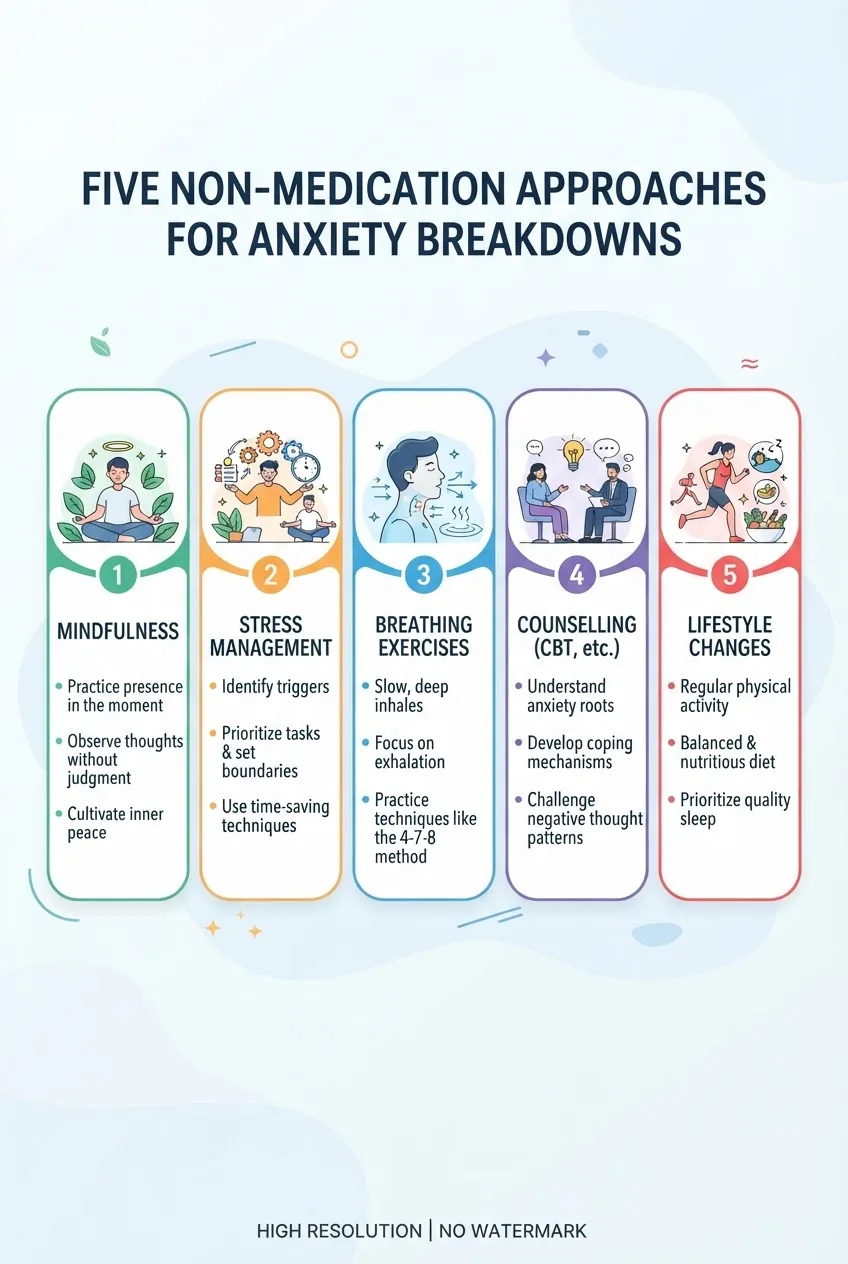
Mindfulness: present-moment awareness practices that reduce rumination and regulatory overactivity.
How-to steps and best practices for integrating non-medication treatments during an active breakdown episode:
-
Immediate stabilisation (0–72 hours):
- Use grounding: name five sensory details to anchor awareness.
- Employ paced breathing for two minutes to lower heart rate—see clinical pacing below.
- Establish a short safety plan with a trusted person and emergency contacts.
Best practice: Clinicians instruct patients in one or two quick grounding and breathing techniques to avoid overload; these are rehearsal-based skills, not a stand-alone treatment.
-
Mindfulness and acceptance-based work (1–4 weeks):
- Daily short mindfulness practices (5–15 minutes) to increase tolerance of emotional states.
- Acceptance techniques to reduce struggle with internal sensations during the breakdown.
Implementation: Use guided audio from trusted clinical programs under therapist supervision as part of the recovery plan.
-
Counselling and short-term psychotherapy (2–12 weeks):
- Problem-focused counselling to address immediate stressors (work conflict, relationship crisis).
- Skills modules from CBT/DBT to manage panic, emotion regulation and problem solving.
Best practice: Start with brief targeted sessions and expand to weekly therapy as symptoms stabilise.
-
Stress management and lifestyle changes (ongoing):
- Sleep hygiene: fixed wake time, sleep window adjustments.
- Graded physical activity: short daily walks progressing to aerobic exercise for mood regulation. physical exercises supporting anxiety treatment
- Nutrition and reduction of caffeine/alcohol which can worsen autonomic symptoms.
-
Breathing and body-based regulation:
Clinical note: For breakdown contexts, breathing strategies are adapted to avoid hyperventilation or breath-holding—clinicians teach paced, diaphragmatic breathing with interoceptive awareness.
Reference exercises: see breathing techniques and panic relief exercises for clinician-guided variants adapted to breakdown episodes.
-
Group-based supports and peer counselling:
Joining clinician-led skills groups or peer support can normalise experience, reduce isolation, and rehearse coping strategies within a safe setting.
-
Biofeedback and neurofeedback (specialist services):
These modalities provide real-time physiological readouts to train down sympathetic arousal; used as adjuncts in specialised clinics.
Clinical integration tips (best practices):
- Sequence interventions: stabilise first, then skills training, then consolidation and relapse prevention.
- Provide written, simple plans for patients during acute episodes (one-page coping plan).
- Engage supports: family or close contacts briefed on simple steps to help during an episode.
- Monitor progress weekly and escalate to psychiatric review if symptoms do not reduce or suicidality emerges.
Adjunct options: Some patients opt to use evidence-supported natural supplements for anxiety relief under clinician supervision, but supplements should complement—not replace—psychotherapy.
Transition: For some breakdown episodes, medication is considered; the next section compares medication options and explains when to use them.
When and How to Use Medication for Anxiety Breakdown Relief
Answer: Medication is indicated for severe, persistent, or high-risk anxiety breakdowns when rapid symptom control or treatment of comorbid conditions is necessary; medication decisions require psychiatric assessment and ongoing monitoring.
Prescription medications: drugs prescribed by medical practitioners to manage anxiety symptoms or comorbid conditions.
Medication should be considered when:
- There is imminent risk to safety (severe agitation, suicidality) and short-term pharmacologic stabilisation is required.
- Symptoms remain severe after a reasonable trial of non-medication interventions or when comorbid depression or bipolar disorder is present.
- Psychotherapy alone is inaccessible and medication can reduce symptoms enough to engage in therapy.
Medications used in breakdown contexts are typically short-term anxiolytics for crisis relief and longer-term agents for underlying disorders. All medications must be prescribed and managed by qualified professionals.
| Medication class | Use case in breakdown | Risks/Considerations |
|---|---|---|
| Benzodiazepines (short-term) | Rapid reduction of severe anxiety/panic for hours–days while arranging longer care. | Sedation, dependence risk; not recommended for long-term use; monitor closely. |
| SSRI/SNRI antidepressants | Treat underlying anxiety disorders and prevent relapse; onset weeks; may be started during stabilisation phase. | Initial activation possible; require monitoring; benefit in long-term maintenance. |
| Atypical antidepressants (e.g., mirtazapine) | Useful when sedation and appetite stimulation are helpful; used for comorbid insomnia/weight loss. | Side effects include sedation and weight gain; see mirtazapine in anxiety treatment. |
| Antipsychotics (adjunct) | Occasionally used for severe agitation or treatment-resistant cases under psychiatric supervision. | Metabolic risks, sedation; considered third-line and monitored closely. |
| Over-the-counter options | Limited, mild symptom relief; best as short-term adjuncts. | Variable evidence; check interactions and safety with clinician. See OTC options for anxiety relief. |
Comparative notes: Benzodiazepines act quickly but carry dependence risk; SSRIs/SNRIs are slower but more effective for long-term prevention. Decision-making must balance immediate safety, functional goals, and patient preference.
Referral criteria to psychiatry: complex diagnostic uncertainty, treatment resistance, medication side-effects, comorbid severe mental illness, or suicidality require urgent psychiatric review. For drug mechanisms, see how anxiety medications work and the detailed prescription medications for anxiety treatment.
Safety and monitoring: Australian clinical guidelines recommend documented informed consent, a written review plan, and follow-up at 1–4 weeks after initiation. According to the Australian Psychological Society guidelines (2023), combined medication and psychotherapy yields better functional recovery than either alone for severe episodes.
Transition: While medication is sometimes necessary, many immediate coping strategies are patient-directed and practical—outlined next.
Practical Self-Help and Support Strategies During a Breakdown
Answer: During a breakdown, use a structured step-by-step plan: ensure safety, use immediate relief techniques, enlist support contacts, and apply short-term coping skills to reduce intensity and restore function.
Follow this numbered, action-focused guide during an episode:
-
Immediate safety and medical check (0–1 hour):
- Stop any driving, heavy machinery or risky tasks.
- If chest pain or medical alarm signs present, seek emergency care.
- Tell a trusted contact your location and a simple plan.
For chest-related anxiety: refer to relief for chest tightness in anxiety.
-
Short-term symptom reduction (first 15–60 minutes):
- Grounding: 5–4–3–2–1 sensory exercise.
- Paced breathing: slow 4–6 breaths per minute for several minutes—clinically guided versions reduce hyperventilation risk.
- Use a pre-prepared coping card with 3–5 actions (e.g., call, sit, breathe, hydrate).
Fast anxiety relief resources: see fast anxiety relief techniques.
-
Contact support network (within 1–3 hours):
- Call a designated support person or crisis line.
- Consider brief video check-in if in-person contact is unavailable.
For family and friends who want practical steps, see ways to support those with anxiety breakdowns.
-
Short-term environmental adjustments (same day):
- Reduce sensory stimulation (dim lights, quieter room).
- Remove immediate stressors if possible (delegate tasks, take sick leave).
-
Engage professional help (within 24–72 hours):
- Book an urgent appointment with a GP or mental health clinic for triage.
- If suicidal, contact emergency services or crisis lines immediately.
-
Use digital adjuncts for immediate guidance:
Recommended supportive apps provide breathing timers, grounding scripts, and crisis plans—see best anxiety apps for support.
-
Address specific physical symptoms:
Nausea, dizziness and other somatic effects can be managed with targeted steps and clinician advice; for symptom-specific guidance see addressing anxiety-related nausea.
-
Support for adolescents and families:
Adolescents often need structured supervision, school liaison and family therapy; see supporting adolescents with anxiety.
Additional practical tips:
- Carry a one-page crisis plan and emergency contact list.
- Use grounding objects (ice cube, textured stone) to anchor sensation.
- Limit caffeine and nicotine during the acute period.
- If workplace stress is a trigger, consult workplace mental health resources; see coping with anxiety in high-pressure environments.
Transition: After immediate symptom control, recovery and relapse prevention become the focus; the following section outlines long-term strategies.
Recovery and Long-Term Management Post-Breakdown
Answer: Recovery focuses on consolidating therapy gains, building resilience through ongoing treatment plans, relapse prevention strategies, lifestyle adaptation, and monitoring symptoms with a clear step-up plan for future risk periods.
Relapse prevention: structured plans and warning-signal monitoring that reduce the chance of future breakdowns.
Core recovery components:
- Ongoing therapy (CBT, DBT or EMDR) tailored to underlying issues.
- Relapse-prevention plan with early warning signs, coping steps and contacts.
- Routine building: consistent sleep, graded activity, social re-engagement.
- Periodic reviews with GP or mental health clinician to adjust treatment.
- Peer and community resources for social support and vocational rehabilitation.
Actionable long-term tips:
- Keep a symptom diary to detect early relapse markers and seasonality.
- Schedule booster therapy sessions (monthly to quarterly) after initial recovery.
- Maintain a small toolbox of rapid-relief strategies for early signs.
- Address physical health: exercise, nutrition and sleep routines that support autonomic regulation; see managing anxiety-related fatigue and stress.
- Engage community supports: volunteer, peer groups, or skills programs to rebuild identity and purpose.
Expectations for recovery timeline vary: many people show substantial improvement within 3–6 months with structured care, while others need longer-term therapy. See understanding anxiety duration and recovery for typical timelines.
Transition: Sydney residents need practical information on accessing appropriate local care, outlined next.
Accessing Treatment and Support in Sydney — Local Resources and Clinics
Answer: Sydney offers rapid-access mental health clinics, private psychologists, community mental health teams, and GP-referred psychiatrist services; use urgent lines for crises and clinic referral pathways for ongoing care.
Sydney health clinic resources: local clinics, community mental health teams and private practitioners providing assessment, therapy and crisis care.
How to access care in Sydney:
- Contact your GP for triage, referrals and Medicare Mental Health Care Plans for subsidised psychology sessions.
- Use specialist clinics for acute episodes; many Sydney clinics offer urgent appointments and short-term crisis packages—see local directories for availability.
- If immediate danger or severe risk, call emergency services or a crisis line.
- Check insurance coverage: many private health funds cover some allied mental health services—confirm limits and referral requirements with your insurer.
Recommended local resources and pathways:
- Specialist anxiety disorders clinics in Sydney provide diagnosis and structured programs: anxiety disorders clinics in Sydney.
- For comparative regional options, see anxiety counselling options for local support and therapy and counselling options near Melbourne.
- Finding specialist therapists: finding therapists for health anxiety.
Practical appointment steps:
- Call a clinic and request an urgent mental health appointment for an anxiety breakdown.
- Ask about crisis packages, wait times and whether they provide short-term intensive intervention.
- Bring a concise history and current medication list to appointments to speed triage.
External authoritative sources for Sydney readers:
- Australian Department of Health for national mental health resources and policy guidance.
- Australian Psychological Society for clinician directories and therapy evidence summaries.
- World Health Organization for global mental health guidelines.
Transition to final summary: below are closing takeaways and a clear call to act.
Disclaimer: This article provides general information and does not replace personalised clinical advice. Medication must be prescribed and monitored by qualified professionals and immediate risk should be managed via emergency services.
Summing up: Anxiety breakdowns require urgent stabilisation and a tailored blend of psychotherapy, non-medication clinical interventions, and, where necessary, medication. Early access to integrated care in Sydney clinics improves outcomes; create a written crisis and relapse-prevention plan with your clinician to support recovery.
Call-to-action: If you or someone you know is experiencing an anxiety breakdown, contact your GP or a local Sydney clinic for urgent triage, or use emergency services for immediate risk.