

how i cured my health anxiety — by the end you will have a step-by-step, evidence-informed plan to reduce persistent health worry, practised across 12–16 weeks with daily exercises; this guide assumes basic familiarity with anxiety self-care and a willingness to practice exposures and CBT homework.
This hands-on guide blends a first-person recovery story with practical clinical options so you can replicate the exact actions that worked for me while understanding the broader treatment choices available.
Before you start
- A notebook or digital journal for daily thought records and symptom logs (30–60 seconds per entry).
- A timer or phone app to schedule short exposures (5–20 minutes) and mindfulness sessions (10–20 minutes).
- Access to a GP or mental health clinician for assessment and medication discussion if needed.
- Comfortable, quiet place for practice and a support contact you can call during hard exposures.
- Printable CBT thought record templates or an app that supports behavioural experiments.
Understanding Health Anxiety and Its Symptoms
Health anxiety shows up as persistent worry focused on the possibility of serious illness despite little or no medical evidence. Clinically it can be diagnosed as illness anxiety disorder (the DSM-5 label) when the worry is excessive, hard to control, and causes impairment.
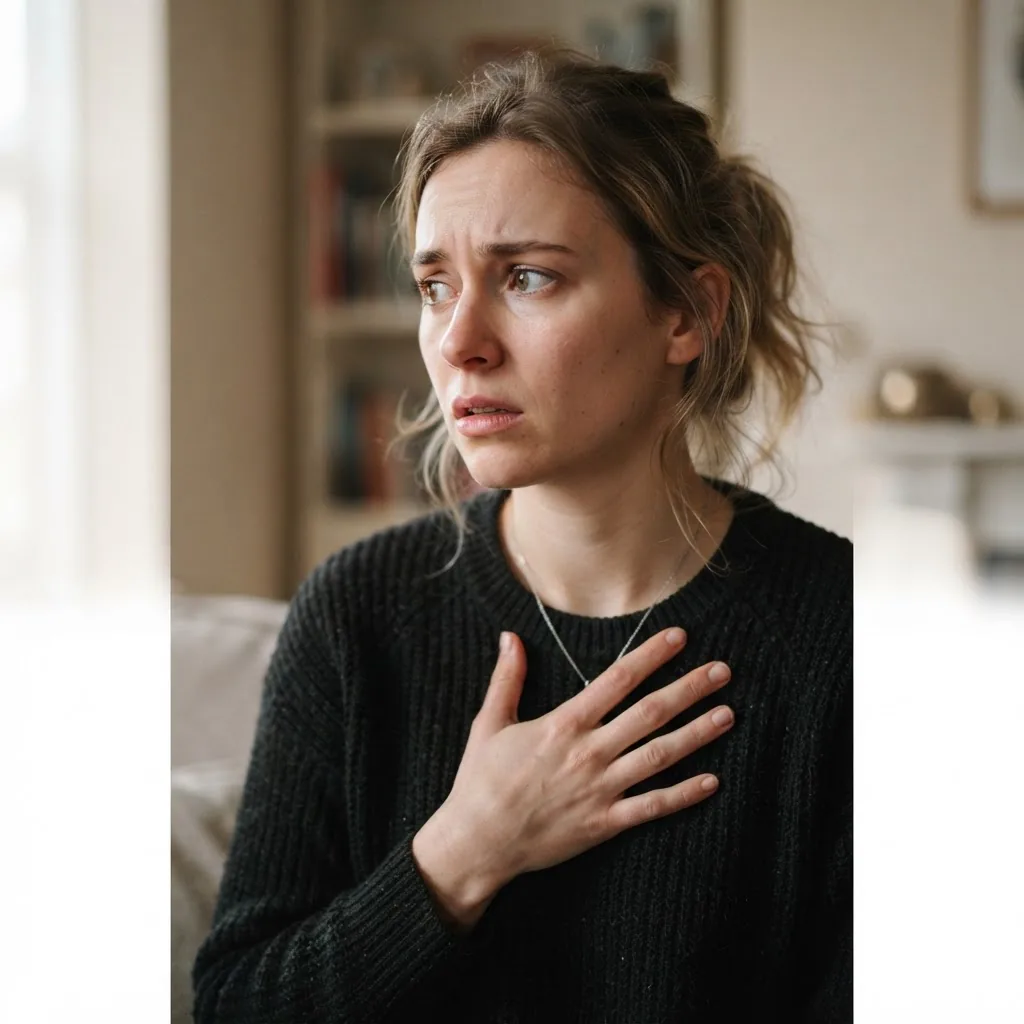
Common health anxiety symptoms include frequent checking of bodily sensations (palpitations, tightness, minor pains), obsessive internet searches (“cyberchondria”), repeated reassurance seeking from health professionals or loved ones, avoidance of medical settings, and intense rumination about health—what therapists call a “worry loop” or “thinking health” pattern.
Examples: a person notices a transient twinge in their abdomen and, instead of noting it as benign, immediately imagines the worst-case diagnosis and searches symptoms online for an hour; another keeps rechecking pulse and breathing every hour, each time gaining more anxiety.
How this differs from general worry: over anxious about health is the subjective experience; when it becomes a disorder it disrupts work, relationships or sleep. The term hypochondriasis or hypochondria is often used interchangeably in everyday language; medically, DSM-5 separates persistent somatic symptom disorder and illness anxiety disorder—definitions that matter for treatment planning. For formal diagnostic criteria see the American Psychiatric Association (DSM-5).
What causes it? A mix of genetic vulnerability, prior health-related experiences, attentional biases to bodily signals, and reinforcing behaviours (checking, reassurance) that maintain the worry. For a neuroscience summary of brain mechanisms linked to anxiety, see brain causes of anxiety and external reviews such as the World Health Organization resources for anxiety disorders (WHO fact sheet).
Prevalence and impact: According to a 2023 Australian mental health report, a significant proportion of adults report clinically relevant health worry at some point in their lives, affecting daily functioning and health service use (source type: national mental health report).
Key symptom clusters to track (use a daily log):
- Physical monitoring frequency (times per day).
- Hours spent researching symptoms online.
- Reassurance requests made (doctor calls, family messages).
- Avoidance behaviours (medical appointments or activities avoided).
- Intensity of worry at peak episodes (0–10 scale).
Tracking these numbers for 2 weeks gives a baseline you can use to measure progress with the steps below.
My Personal Journey: How I Cured My Health Anxiety
I was stuck in a cycle of intrusive health worries for nearly three years. I’ll describe the exact sequence that moved me from near-daily panic and checking to consistent 8/10 functioning—this is a practical, reproducible blueprint, not just a memoir.
- Admitted the problem and measured it. I logged symptoms for two weeks—check frequency, online research time, and reassurance calls. Concrete numbers: I averaged 14 checks/day and 45 minutes/day online. A clear baseline (two weeks) became a target for reduction: -50% checks in 6 weeks.
- Sought a diagnostic conversation. I booked a GP visit to rule out urgent medical causes and obtain a recorded assessment that later helped focus therapy. The GP provided basic psychoeducation and agreed to collaborate with a mental health provider if needed. If you need local referrals, search finding therapists specialized in health anxiety.
- Started structured CBT with homework. I worked weekly with a CBT-trained therapist and did daily thought records (5–10 minutes). Behavioural experiments replaced reassurance-seeking: instead of calling my GP after a symptom, I timed myself for 48 hours and recorded outcomes. Over four weeks my reassurance calls fell to 5/week.
- Built a brief exposure hierarchy. Small, graded exposures—first resisting checking for 15 minutes, then 30, then an hour—repeated three times per week. I scheduled exposures at times I typically checked, using a timer and pre-agreed coping strategies (grounding, 4-4-8 breathing). This retrained my threat prediction system over 6–12 weeks.
- Learned focused mindfulness techniques. Daily 10-minute mindfulness sessions (body scan twice weekly, 10 minutes sitting breath awareness daily). This reduced reactivity to bodily sensations by decoupling notice from catastrophe. I combined this with a weekly 20-minute acceptance exercise.
- Changed thinking patterns deliberately. I practiced “reprogramming anxious thought patterns” by labelling thoughts as predictions rather than facts and running short belief-testing experiments (e.g., “If I stop checking, what happens?”). I used the method from cognitive restructuring: record, test evidence, create balanced thought.
- Added lifestyle stabilisers. Consistent sleep (7–8 hours), daily 30 minutes moderate exercise, and cutting caffeine after midday reduced baseline arousal and panic spikes.
- Used medication briefly while therapy built skills. My GP prescribed an SSRI for three months as a bridge during high-intensity weeks while exposures were repeated. Medication reduced physiological intensity enough for learning new behaviours, then tapered when we saw clear gains. (Medication decisions must be individualised.)
- Built a relapse-prevention plan. I created a one-page plan with trigger lists, a 3-step coping routine, and emergency contacts. I scheduled monthly 20-minute check-ins with a peer (accountability) for six months.
Actionable insights interspersed during the journey:
- If you check more than 5 times/day, treat this as a measurable target: reduce by 30% in two weeks using scheduled delays (start with 15 minutes).
- If online searching exceeds 20 minutes/day, install a site/time blocker to enforce limits and replace the time with a 10-minute mindfulness practice.
- Use a 48-hour rule for reassurance: when tempted to call a clinician or loved one for immediate reassurance, delay for 48 hours and record what happens during the delay—most feared outcomes do not materialise.
Clinical context and limits from experience: CBT exposure is the engine of change, but for some, medication is a necessary stabiliser. Results vary—my improvement took actively practising exposures and cognitive work for three months. If panic or suicidal thoughts occur, seek urgent care.
For deeper guidance on cognitive retraining methods see reprogramming anxious thought patterns.
Overview of Health Anxiety Treatment Options
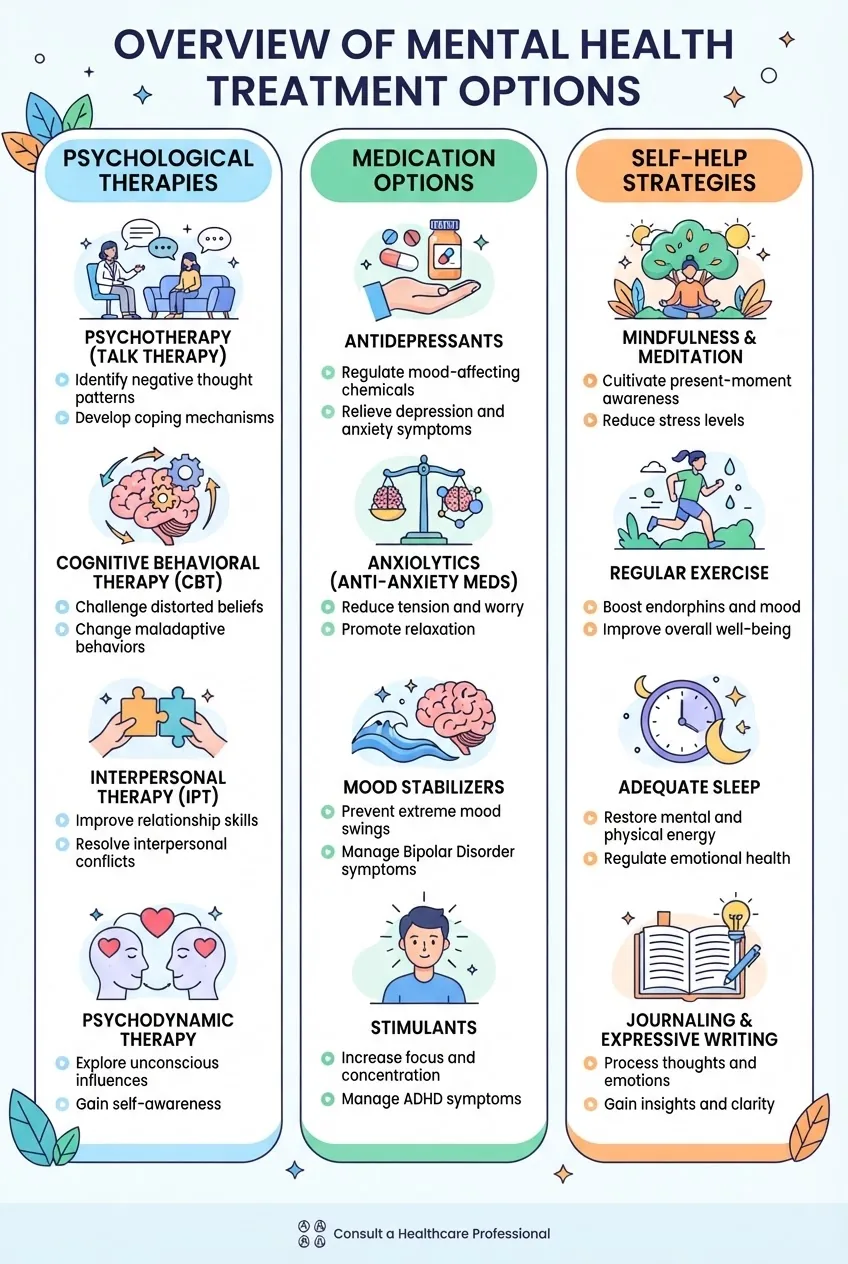
This section lists evidence-based health anxiety treatment choices and practical pros/cons so you can pick a path or combine approaches. For an in-depth exploration of non-medication clinical treatments see clinical interventions for anxiety treatment without medication.
Treatment categories:
- Psychological therapies (CBT, exposure-based therapies, acceptance techniques).
- Medication and medical interventions for symptom stabilisation.
- Self-help strategies: mindfulness, lifestyle, apps, supplements, breathing.
- Combined approaches—therapy plus short-term medication when needed.
Evidence highlights: Meta-analyses in peer-reviewed journals show cognitive behavioural therapy (CBT) produces consistent, clinically meaningful reductions in health anxiety (source type: peer-reviewed meta-analysis). Australian government mental health guidelines recommend stepped care, starting with low-intensity interventions and escalating when needed (source type: national guideline).
For intense episodes or breakdowns that require trauma-informed or crisis interventions, see treatment options for emotional anxiety breakdowns.
Psychological Therapies (CBT, Exposure Therapy, etc.)
CBT for health anxiety addresses unhelpful beliefs and teaches behavioural experiments and exposure. Evidence shows CBT is first-line for illness anxiety disorder (source type: systematic review, Journal of Anxiety Disorders).
- Cognitive Behavioural Therapy (CBT)
- What it does: modifies catastrophic interpretations, builds alternative explanations, and uses thought records and behavioural experiments.
- Typical course: 8–20 weekly sessions with graded homework (10–30 minutes/day).
- Pros: strong evidence base, skills for long-term relapse prevention.
- Cons: requires homework adherence and can increase anxiety temporarily during exposures.
- Further reading: CBT therapy for anxiety.
- Exposure Therapy
- What it does: reduces avoidance by safely confronting feared sensations or situations (e.g., refusing to check pulse).
- Typical course: short, repeated sessions—start 15 minutes, progress to 90 minutes for some exercises.
- Pros: fast reduction in avoidance and catastrophic belief strength.
- Cons: initially uncomfortable; must be guided for complex cases.
- Guide: exposure therapy for anxiety.
- Acceptance and Commitment Therapy (ACT)
- Focuses on accepting sensations without fighting them, then committing to values-based actions.
- Best for people who struggle with ongoing intrusive sensations and avoidance.
- Mindfulness-based approaches
- Teach non-reactive awareness of bodily sensations. Use 10–20 minute daily practices.
- Often combined with CBT for better results.
Clinical note: therapists often combine CBT with exposure and mindfulness; guided, therapist-led treatment tends to produce larger and longer-lasting gains than unsupported self-help (source type: meta-analysis).
Medication and Medical Interventions
Medication can reduce physiological symptoms and allow learning in therapy. Common options include SSRIs (selective serotonin reuptake inhibitors) and short-term benzodiazepines for acute panic (used cautiously). For medication discussions see prescription anxiety medications and consult your GP.
Key points about medication:
- SSRIs (e.g., sertraline, escitalopram): commonly used long-term; start low and titrate; 6–12 weeks to full effect.
- Mirtazapine for anxiety can help where insomnia and low appetite co-occur; see Mirtazapine for anxiety.
- Benzodiazepines are effective short-term for panic but risk dependence; use under close clinical supervision.
- Over the counter anxiety medications such as some herbal options are commonly tried; discuss safety and interactions: over the counter anxiety medications.
Pros of medication: can speed symptom reduction, enabling engagement with therapy. Cons: side effects, delayed onset for SSRIs, and potential dependence with benzodiazepines. For a lay explanation of how meds work see effects of anxiety medications and external clinical resources such as the Australian Government health pages (Australian Government Health).
Self-Help Strategies and Coping Mechanisms
Self-help supports both therapy and medication approaches. Use this section to assemble daily tools you can do independently.
- Daily mindfulness practice (10–15 minutes). Guided body scan or breath awareness reduces reactivity to sensations. Try 10 minutes twice daily for 6 weeks and track changes.
- Scheduled exposures and behavioural experiments. Create a 6-week hierarchy from 15–90 minutes; repeat each exposure 3–5 times over two weeks before increasing intensity.
- Thought record and cognitive testing. Spend 5–10 minutes writing down the worry, evidence for/against, and a balanced statement. Do this daily during the first 8 weeks.
- Breathing and grounding exercises for acute spikes. Practice 4-4-8 breathing for 3 cycles and a 5-minute grounding exercise; these stop escalation within 5–10 minutes. See breathing techniques for anxiety relief.
- Apps and digital supports. Use evidence-based apps for scheduling exposures, mindfulness timers and CBT worksheets. For curated apps see anxiety apps for support.
- Supplements as complementary supports. Some people benefit from magnesium, omega-3, or specific herbal supports; review safety with a clinician and see natural anxiety relief supplements.
- Exercise and sleep hygiene. 30–45 minutes moderate exercise 4–5 times/week and fixed sleep/wake times (±30 minutes) reduce baseline anxiety; see physical exercise for anxiety relief.
For quick relief during panic, keep a short toolbox: 4-4-8 breathing, 5-grounding senses, 10 minute mindfulness, and a distraction plan. If you need immediate methods, see immediate anxiety relief techniques.
For more on broader therapeutic options including crisis and stepped care, see treatment options for emotional anxiety breakdowns.
Distinguishing Healthy Anxiety from Health Anxiety Disorder
Healthy anxiety (adaptive anxiety) alerts you to real danger and motivates protective action—short-lived, proportional and flexible. In contrast, health anxiety disorder (or hypochondriasis in older literature) produces excessive, persistent worry that is out of proportion to actual medical risk.
| Feature | Healthy Anxiety | Health Anxiety Disorder |
|---|---|---|
| Duration | Short-term, resolves after action | Persistent, weeks to years |
| Impact | Motivates safe decisions | Impaired work, relationships, sleep |
| Flexibility | Flexible, can be set aside | Rigid, persists despite reassurance |
Practical rule of thumb: if worries cost you more than 2 hours/day or cause repeated missed appointments or excessive healthcare use, consider this clinical rather than adaptive.
Understanding labels: “hypochondriasis” is an older diagnostic label; modern classifications use illness anxiety disorder or somatic symptom formulations. For the clinical definitions, consult the DSM criteria on the American Psychiatric Association site (APA DSM resources).
When to Seek Professional Help and Finding Support in Sydney
If daily functioning is impaired, panic attacks are frequent, or suicidal thoughts occur, seek professional help. Early intervention improves outcomes: for severe cases, combined therapy and medication usually work best (source type: clinical guideline).
Where to look in Sydney:
- anxiety disorders clinics in Sydney — specialised clinics offering clinician-led CBT and exposure programs.
- anxiety counselling options — while this is a Perth guide, it lists referral processes relevant in Australia.
- therapy and counselling options — compare services if you relocate or seek telehealth across states.
- finding therapists specialized in health anxiety — how to check for CBT/behavioural exposure training in clinician profiles.
- support strategies for people with anxiety — guidance for carers and family.
- supporting teens with anxiety — family-focused resources if the person is a teen.
Practical steps to find help:
- Start with your GP for assessment, baseline tests if indicated, and referral to psychology or psychiatry.
- Ask about therapists trained in CBT and exposure—check their profile and session structure (weekly, homework requirements).
- Consider clinic programs for group CBT or intensive exposure if weekly session progress is slow.
Comparative resources: for local, state-specific options and alternative clinics see anxiety counselling options and anxiety disorders clinics in Sydney. For a national perspective use Beyond Blue resources (Beyond Blue) and Headspace for younger adults (Headspace).
Maintaining Progress and Preventing Relapse
Recovery from health anxiety often follows a non-linear path. Maintenance is an active process: continue practice, monitor triggers, and use a relapse prevention plan.
Checklist for long-term maintenance (use monthly reviews):
- Continue 10–15 minutes mindfulness 4–5 times/week.
- Practice at least one exposure monthly to keep avoidance low.
- Use a brief thought record once weekly for residual worries.
- Keep sleep and exercise routines stable (sleep 7–8 hours, exercise 30–45 minutes 4 times/week).
- Maintain a support contact and schedule 20-minute check-ins for three months post-recovery.
For workplace-specific strategies see coping with anxiety at work. For fatigue-related strategies and managing chronic stress see stress relief methods for anxiety fatigue.
Setbacks common within the first 6–12 months are usually temporary if you apply a planned response: note triggers, resume exposures for 2–4 weeks, consult a clinician if symptoms return above baseline for more than 2 weeks.
Hands-On Step-by-Step Program (12–16 Weeks)
The following numbered steps form a practical program you can follow. Each step begins with a bold action-first instruction followed by concrete timings, thresholds and measurements.
-
Step 1 — Measure your baseline (2 weeks)
Action: record checks per day, minutes spent researching, reassurance calls, and peak worry intensity (0–10). Tool: daily log, 2-minute entries morning and night. Thresholds: if checks >5/day or research >20 minutes/day, label this a moderate/high baseline.
-
Step 2 — Get medical clearance (1 appointment)
Action: see your GP for a targeted medical review to rule out treatable conditions—request written notes or tests as agreed. Timing: one 20–30 minute appointment. Benefits: reduces unknowns and allows a clear focus on psychological work.
-
Step 3 — Start structured CBT with homework (weeks 1–12)
Action: weekly 50-minute sessions with CBT-trained therapist; daily 10–15 minute thought records and three 15–30 minute behavioural experiments per week. Measure: reduction targets—30% fewer checks by week 4, 60% by week 12.
Find a clinician: CBT therapy for anxiety.
-
Step 4 — Build and practice an exposure hierarchy (weeks 1–12)
Action: list 8–12 avoided or checking behaviours, rank 1–10 by anxiety (SUDS score). Start at items rated 3–4, practice 15–30 minutes, 3–5 repeats, and progress when peak SUDS reduces by 50% within a session. Timing: exposures 3×/week.
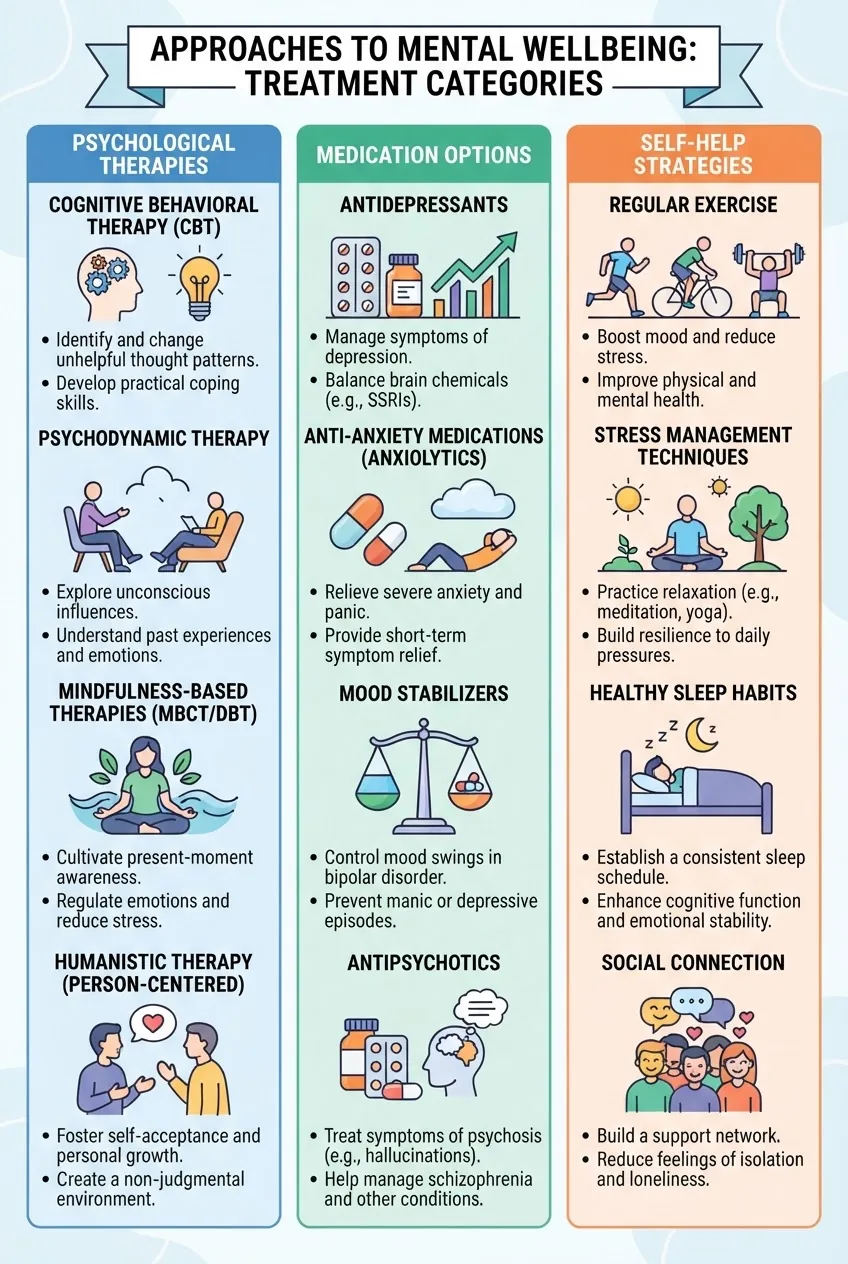
Guidance: see exposure therapy for anxiety for common hierarchies and safety checks.
-
Step 5 — Practice mindfulness and acceptance daily (weeks 1–16)
Action: 10 minutes morning breath awareness, 10 minutes evening body scan (total 20 minutes daily). Target: maintain 80% adherence per week. Effect: reduces reactivity and supports exposure learning.
-
Step 6 — Apply cognitive restructuring (daily)
Action: use a 5-column thought record once daily for the first 8 weeks: Situation — Automatic Thought — Evidence For — Evidence Against — Balanced Alternative. Time: 5–10 minutes. Goal: reduce black-and-white health predictions by testing them with behavioural experiments.
See reprogramming anxious thought patterns for specific cognitive retraining steps.
-
Step 7 — Stabilise lifestyle (ongoing)
Action: 30–45 minutes moderate exercise 4×/week, fixed sleep schedule (7–8 hours), reduce caffeine after 2pm. Track adherence weekly; low adherence correlates with relapse risk.
-
Step 8 — Consider medication as a bridge (as clinically indicated)
Action: consult GP or psychiatrist if baseline prevents therapy engagement. Typical plan: SSRI start, review at 6 weeks, reassess at 12 weeks. Use benzodiazepines only short-term (≤2 weeks) if panic is disabling. See prescription options: prescription anxiety medications.
Consider Mirtazapine where insomnia or appetite issues dominate: Mirtazapine for anxiety.
-
Step 9 — Build a 3-month relapse prevention plan (end of week 12)
Action: write triggers, 3-step coping routine (delay-check-reframe), exposure booster schedule, and emergency contacts. Review monthly for 6 months. Threshold: re-initiate therapy if symptoms exceed baseline for 2 consecutive weeks.
Expect recovery timelines outlined in duration and remission of anxiety symptoms.
Common mistakes and how to avoid them
From my experience working through this program and observing others, these are frequent failures I saw and how I fixed them.
- I expected instant relief and stopped exposures early—solution: set measurable interim targets (e.g., 30% fewer checks by week 4) and stick to the schedule even when anxiety dips.
- I used reassurance calls as a “safety valve” which reinforced worry—solution: implement the 48-hour rule and replace calls with a thought record and one behavioural experiment.
- I tried to “will” away sensations without training—solution: learn structured mindfulness and practice 10 minutes daily; this reduces reactivity over 4–6 weeks.
- I avoided discussing medication options—solution: consult GP early to understand possible short-term stabilisers and their timelines.
Checklist: Have I done this right?
- Baseline logged for 2 weeks and recorded numerically.
- Medical clearance obtained from GP.
- Weekly CBT sessions or structured self-guided CBT for 12 weeks.
- Exposure hierarchy created and practised 3×/week with repetition.
- Daily mindfulness and weekly lifestyle targets met ≥75% of the time.
- Relapse plan completed at week 12 and reviewed monthly for 6 months.
When to call in a professional
Call a GP, mental health clinician or crisis service if any of the following apply:
- Worry consumes >2 hours/day or causes work/non-recovery absences.
- Frequent panic attacks (≥2 per week) or panic that impairs leaving the house.
- Thoughts of self-harm or suicide.
- Exposure practice increases risk (e.g., interferes with essential medical care) or you feel unable to do exposures safely without support.
For help finding local clinicians and clinics in Sydney see anxiety disorders clinics in Sydney and compare options with anxiety counselling options.
Final practical note: results vary by individual, but consistent exposure practice, cognitive work, and lifestyle stabilisation yield the largest, longest-lasting gains—this is how I cured my health anxiety and how many clinicians recommend doing it in clinic settings (source type: peer-reviewed and clinical guideline synthesis).