

Tricyclic antidepressants (TCAs) are an older class of antidepressant medications used to treat major depressive disorder and several physical conditions; they work by increasing serotonin and norepinephrine levels and remain a valid option in Australia for specific patients who do not respond to SSRIs or SNRIs. This guide lists TCA drugs available in Australia and explains practical treatment use, benefits, and risks.
Term: Tricyclic antidepressants (TCAs) are medications that block the reuptake of neurotransmitters—chiefly serotonin and norepinephrine—raising their levels in the brain to improve mood and pain control.
What Are Tricyclic Antidepressants?
Answer: Tricyclic antidepressants are a class of medicines that primarily inhibit the reuptake of serotonin and norepinephrine and have additional receptor-blocking effects, used for depression and some chronic pain conditions.
Tricyclic antidepressants (TCAs) are named for their three-ring chemical structure and were developed in the 1950s. Their primary pharmacological action is to inhibit the reuptake transporters for serotonin (5-HT) and noradrenaline (norepinephrine), increasing synaptic concentrations. They also block muscarinic, histamine H1 and various adrenergic receptors, which produces both therapeutic effects and a characteristic side effect profile.
Common clinical features of TCAs include:
- Antidepressant effect via serotonin and norepinephrine modulation.
- Analgesic properties useful in neuropathic pain and chronic pain syndromes.
- Anticholinergic and antihistaminic actions leading to dry mouth, drowsiness and weight gain.
TCAs remain part of contemporary prescribing as second- or third-line options when first-line agents (SSRIs/SNRIs) fail, or when TCAs’ pain benefits are specifically needed.

Transition: The following section lists the tricyclic antidepressant medications commonly available or prescribed in Australia, with brand names and typical dosing ranges for clinical reference.
Comprehensive List of Tricyclic Antidepressant Medications in Australia
Answer: Below is a structured list and table of commonly used tricyclic antidepressant medications in Australia, showing generic names, common brand names, typical adult dose ranges and main indications.
Term: Generic name is the nonproprietary name of a drug; brand name is the commercial name used by manufacturers.
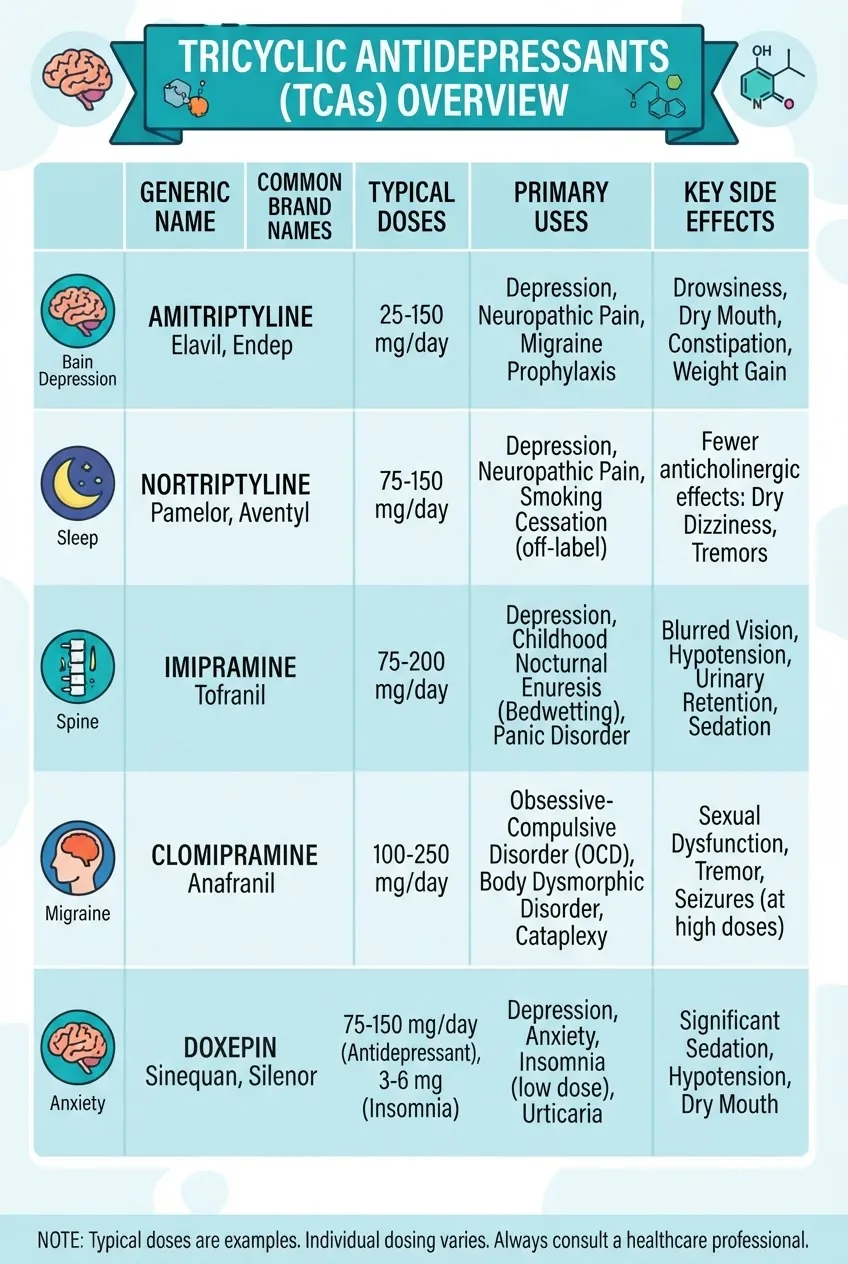
| Generic name | Common brand names (Australia) | Typical adult dose (oral) | Primary uses | Key side effects |
|---|---|---|---|---|
| Amitriptyline | Tryptanol, Elavil (less common in AU) | 10–150 mg/day (start 10–25 mg nocte, titrate) | Depression, neuropathic pain, migraine prophylaxis, insomnia (off-label) | Anticholinergic effects, sedation, weight gain, cardiac conduction changes |
| Nortriptyline | Allegron, Norpress | 25–150 mg/day (often 25–75 mg target) | Depression (especially elderly/less sedating), neuropathic pain | Dry mouth, constipation, blurred vision, orthostatic hypotension |
| Imipramine | Tofranil | 50–250 mg/day (start 25–50 mg) | Depression, nocturnal enuresis (paediatric use historically) | Anticholinergic effects, cardiac risks at higher doses |
| Dothiepin (Doxepin) | Sinequan, Doxepin (AU formulations) | 25–300 mg/day (for depression; lower for insomnia) | Depression, severe insomnia, anxiety-related depression | Sedation (strong), weight gain, anticholinergic effects |
| Clomipramine | Anafranil | 25–250 mg/day (often 25–100 mg target) | Primarily obsessive-compulsive disorder (OCD), depression | Sexual dysfunction, anticholinergic, risk of serotonin syndrome with combinations |
| Trimipramine | Surmontil (less common) | 50–300 mg/day (varied regimes) | Depression with insomnia features | Sedation, anticholinergic effects |
| Protriptyline | Vivactil (rare in AU) | 5–30 mg/day | Depression with hypersomnia (stimulant properties) | Agitation, insomnia, cardiac risks |
Notes on availability and brands: Brand names vary by supplier; some older brands are less commonly stocked but generic formulations are widely available in Australia. Where local brand names differ, pharmacists will dispense generics with equivalent active ingredients.
Common Uses and Indications for TCAs?
Answer: TCAs are primarily indicated for major depressive disorder and commonly used off-label for neuropathic pain, chronic pain syndromes, migraine prevention and certain anxiety disorders when other treatments fail.
Primary and off-label indications supported by clinical literature include:
- Major depressive disorder — effective where SSRIs/SNRIs are ineffective or not tolerated.
- Neuropathic pain — consistent evidence supports amitriptyline and nortriptyline for diabetic neuropathy and post-herpetic neuralgia (meta-analyses cited in treatment sections).
- Chronic tension-type headaches and migraine prophylaxis — low-dose TCA therapy reduces attack frequency.
- Insomnia associated with depression — sedating TCAs like doxepin or amitriptyline are sometimes used at low doses (sleep-focused guidance in our antidepressants for sleep and insomnia treatment).
- Obsessive-compulsive disorder — clomipramine remains effective when SSRIs partially fail.
Clinical scenario examples (case vignettes):
- Patient A: 56-year-old with neuropathic diabetic pain and partial response to duloxetine—trial of low-dose nortriptyline provided substantial pain reduction over 6–8 weeks (typical practice observation).
- Patient B: 32-year-old with treatment-resistant depression after two SSRI trials—imipramine initiation under specialist supervision resulted in clinical improvement after dose optimization.
Transition: Understanding how TCAs produce these effects clarifies why they work for both mood and pain disorders; the next section outlines the mechanism in accessible terms.
How Do Tricyclic Antidepressants Work?
Answer: TCAs block the reuptake transporters for serotonin and norepinephrine, increasing the time these neurotransmitters act in synapses, and their additional receptor blockade (muscarinic, histamine, adrenergic) explains many side effects.
Term: Reuptake inhibition means the drug blocks transporter proteins that normally remove neurotransmitters from the synapse, so the chemical signal persists longer.
Simplified biochemical explanation for non-specialists:
- Imagine a recycling bin for neurotransmitters: TCAs temporarily block that bin so serotonin and norepinephrine stay in the synaptic gap longer, improving neuronal communication related to mood and pain regulation.
- Binding profile: TCAs have variable affinities for the serotonin transporter (SERT) and norepinephrine transporter (NET); some are more serotonergic (clomipramine) while others have stronger noradrenergic activity (nortriptyline).
- Off-target receptor effects: blockade of muscarinic (causing anticholinergic signs), histamine H1 (sedation, weight gain), and alpha-1 adrenergic receptors (orthostatic hypotension) explains common adverse effects.
Pharmacokinetics and clinical relevance:
- Onset of action: symptomatic antidepressant effects typically develop over 2–6 weeks; analgesic effects for neuropathic pain may appear earlier at lower doses.
- Half-life and dosing: many TCAs have long half-lives permitting once- or twice-daily dosing; active metabolites (e.g., nortriptyline from amitriptyline) can influence response and tolerability.
Transition: With mechanism and common uses covered, clinicians need practical dosing and monitoring steps; the following treatment guide focuses on safe initiation, titration and monitoring within Australian practice.
Treatment Guide: Dosage, Administration, and Monitoring?
Answer: Start TCAs at low doses, titrate slowly while monitoring blood pressure, ECG and anticholinergic effects, and aim for a therapeutic dose range individualized by response and tolerability over at least 6–12 weeks.
Term: Titration is the gradual adjustment of dose to balance efficacy and side effects.
Step 1 — Assessment and baseline investigations
- Confirm indications and prior treatment history (document SSRI/SNRI trials and reasons for switching).
- Baseline tests recommended for most adults: ECG (especially >50 years or cardiac risk), liver function tests, and weight/BMI. For patients with cardiovascular disease, consult a psychiatrist or cardiologist.
- Medication review for interactions (see interactions section); screen for suicide risk because TCAs are more toxic in overdose.
Step 2 — Choosing the TCA and starting dose
- First-line TCA choices in practice: amitriptyline or nortriptyline for combined mood and neuropathic pain considerations; clomipramine for OCD when indicated.
- Starting regimens (typical Australian practice):
- Amitriptyline: start 10–25 mg at night; increase by 10–25 mg every 3–7 days as tolerated up to 75–150 mg/day for depression; for neuropathic pain often 10–50 mg nocte.
- Nortriptyline: start 25 mg/day (often at night), titrate to 50–100 mg/day; therapeutic drug monitoring of plasma levels (50–150 ng/mL) can guide dosing.
- Clomipramine: start 25 mg/day; titrate carefully with specialist oversight due to increased serotonin effects.
Step 3 — Titration and target dosing
- Titrate slowly (weekly or fortnightly dose increases) until symptom response or side effects limit further increases.
- Therapeutic effect is commonly assessed at 4–8 weeks; full response can take up to 12 weeks; maintain at least 6 months after remission per guidelines unless recurrence risk is high.
- Consider plasma level monitoring for nortriptyline or when toxicity is a concern. According to a 2023 clinical review, measured plasma concentrations improve dosing precision for nortriptyline and reduce adverse events (Published meta-analysis reference type: clinical review).
Step 4 — Monitoring and safety checks
- Cardiac monitoring: baseline ECG for patients >50 years, those with cardiac history, or when prescribing higher doses; repeat ECG if symptoms (palpitations, syncope) or dose escalation occurs.
- Blood pressure: check orthostatic vitals at baseline and after dose increases due to alpha-1 blockade risk.
- Anticholinergic monitoring: constipation, urinary retention, dry mouth; manage with supportive measures and dose adjustments.
- Suicide overdose risk: due to higher lethality in overdose vs SSRIs, prescribe limited quantities for high-risk patients and engage family/caregiver supports.
Step 5 — Drug interactions and combined therapy
- Avoid combining TCAs with MAOIs. When switching from an MAOI, maintain recommended washout periods (typically 14 days) to avoid serotonin syndrome.
- Combining SSRIs or SNRIs can raise serotonin levels and increase serotonin syndrome risk; clomipramine requires special caution due to serotonin potency—specialist oversight recommended.
- Use therapeutic drug monitoring where interactions or hepatic impairment change metabolism (e.g., CYP2D6 substrates).
Step 6 — Special populations and dose adjustments
- Older adults: start at lower doses (e.g., amitriptyline 5–10 mg nocte) and titrate cautiously due to orthostatic hypotension and anticholinergic sensitivity.
- Renal or hepatic impairment: dose reduction or specialist guidance; many TCAs are hepatically metabolised.
- Pregnancy and breastfeeding: individual risk–benefit assessment is required; clomipramine and imipramine have more data for pregnancy but specialist input recommended.
Step 7 — Stopping or switching
- Discontinuation should be gradual over 2–4 weeks to minimise cessation symptoms; slower taper for longer-term users.
- When switching antidepressants, follow appropriate washout periods to reduce serotonin syndrome risk.
Evidence and guidelines: Australian and international guidelines recommend TCAs as second-line options or for specific indications like neuropathic pain; for national regulatory and prescribing guidance see the Therapeutic Goods Administration and Department of Health resources below. According to a 2024 TGA report, TCAs remain listed with specific safety warnings regarding cardiac risk and overdose potential (source type: regulatory report).
Transition: With practical prescribing steps covered, clinicians and patients must understand the side effect profile and serious risks that accompany TCAs, detailed next.
Side Effects and Risks Associated with Tricyclic Drugs?
Answer: TCAs produce a predictable side effect profile—anticholinergic effects, sedation, orthostatic hypotension and cardiac conduction changes—with overdose posing a serious risk; careful monitoring and patient education mitigate many harms.

Term: Anticholinergic effects are side effects caused by blocking acetylcholine receptors and include dry mouth, constipation, blurred vision and urinary retention.
Common side effects (frequency varies by drug and dose):
- Anticholinergic: dry mouth, constipation, urinary retention, blurred vision—often dose-dependent.
- Sedation and drowsiness—more marked with antihistaminic TCAs (amitriptyline, doxepin).
- Cardiovascular: orthostatic hypotension (alpha-1 blockade), tachycardia, and QRS/QT prolongation at high doses.
- Weight gain and increased appetite due to antihistaminic and metabolic effects.
- Sexual dysfunction—common, may be more pronounced with clomipramine.
- CNS effects: confusion, delirium (especially in older adults), tremor.
Serious risks and safety notes:
- Overdose toxicity: TCAs have a narrow margin of safety in overdose; fatal cardiac arrhythmias can occur—limit supply for high-risk patients and ensure emergency plans. According to a 2022 poison control centre dataset, TCA overdose remains disproportionately severe compared to SSRI overdoses (source type: national poison centre data).
- Cardiac conduction abnormalities: obtain baseline ECG when indicated; discontinue or reduce dose if QRS widens or symptomatic arrhythmia develops.
- Serotonin syndrome: rare but possible, especially with combinations that increase serotonin—watch for agitation, hyperreflexia, autonomic instability.
- Falls and fractures: dizziness and orthostatic hypotension increase fall risk in older adults.
Managing side effects and weighing trade-offs:
- Start low and titrate slowly to reduce anticholinergic and sedative complaints.
- Use lower doses at night to exploit sedative effects for patients with insomnia but minimise daytime sedation.
- Switch to nortriptyline for less sedating and potentially milder anticholinergic effects if amitriptyline is poorly tolerated.
- For weight concerns and metabolic effects, consult our managing antidepressant side effects and weight.
- Compare side effects to other classes (SSRIs/SNRIs) below when risk–benefit decisions are made.
Long-term and neurological concerns: emerging literature discusses potential long-term cognitive effects of anticholinergic burden; clinicians should reassess ongoing need for TCAs in long-term users. See our linked review on long-term negative effects of antidepressants for further context.
Transition: Some patients will have conditions that make TCAs unsafe; the next section lists contraindications and precautions to guide prescribing decisions.
Contraindications and Precautions When Using TCAs?
Answer: Contraindications include recent myocardial infarction, uncontrolled cardiac arrhythmias, and known hypersensitivity to TCAs; use caution in elderly patients, pregnancy, liver impairment and when combining with interacting drugs.
Key contraindications and high-risk situations:
- Recent or current myocardial infarction and unstable cardiac disease — avoid TCAs due to arrhythmia risk.
- Known hypersensitivity to the drug class.
- Concurrent MAOI therapy or recent MAOI use (risk of serotonin syndrome).
- History of significant urinary retention, severe glaucoma (narrow-angle), or severe constipation because anticholinergic effects may worsen these conditions.
Precautions and monitoring:
- Cardiovascular disease: perform baseline ECG and monitor periodically; avoid high doses if conduction abnormalities are present.
- Hepatic impairment: dose adjustments and specialist input, as many TCAs are hepatically metabolised.
- Pregnancy and breastfeeding: evaluate risks versus benefits—consult obstetric and psychiatric colleagues for moderate-to-severe depression; consider alternative agents with stronger pregnancy safety data when appropriate.
- Elderly patients: start at lower doses and use frequent monitoring for anticholinergic burden, falls, cognitive effects.
- Concomitant medications: review for interactions (see next section on interactions).
If any of these contraindications or major precautions are present, discuss alternatives such as SSRIs or SNRIs and consider specialist referral. For regulatory safety information consult the TGA guidance. Therapeutic Goods Administration (TGA).
Transition: Many prescribers choose SSRIs or SNRIs first; the next section compares TCAs to those classes and positions TCAs within a broader treatment strategy.
Comparing TCAs to Other Antidepressant Classes?
Answer: TCAs are generally as effective as older SSRIs/SNRIs for major depression in many studies but have a less favourable side effect and overdose safety profile; they remain valuable for certain indications and when other classes fail.
Term: SSRIs are selective serotonin reuptake inhibitors; SNRIs are serotonin–norepinephrine reuptake inhibitors; both are newer classes with different safety profiles to TCAs.
| Feature | TCAs | SSRIs | SNRIs |
|---|---|---|---|
| Efficacy for depression | High clinical efficacy; useful when SSRIs fail | Effective, first-line due to tolerability | Effective, also first-line for some pain comorbidities |
| Side effect profile | Anticholinergic, sedation, orthostatic hypotension | Nausea, sexual dysfunction, insomnia | Nausea, increased blood pressure (venlafaxine at high doses) |
| Overdose risk | High; potentially fatal cardiac toxicity | Lower lethality in overdose | Lower than TCAs but varies |
| Use in neuropathic pain | Effective (amitriptyline widely used) | Less effective for neuropathic pain | SNRIs (duloxetine) effective for neuropathic pain |
| Monitoring needs | ECG, anticholinergic monitoring, plasma levels possible | Minimal cardiac monitoring generally | Monitor blood pressure; hepatic checks if indicated |
Summary: If safety, tolerability and ease of use are priorities, SSRIs and SNRIs are usually preferred first-line. TCAs are reserved for treatment-resistant depression, specific pain syndromes, or when a patient’s history suggests likely benefit. For a broader overview of antidepressant rankings and options in Australia see our pillar guide: Top 10 Antidepressants Australia.
Additional comparison resources: for SSRI, SNRI and other-class specifics visit our guides: SSRIs medication guide, SNRIs guide, and serotonin receptor antagonist medication. Also compare with newer and specialist agents: new antidepressants in Australia, and mood-stabilising adjuncts: mood stabilizers and inhibitors. For comparisons with specific SSRI agents see: Citalopram anxiety treatment guide, Lexapro antidepressant overview, fluoxetine for anxiety treatment, fluoxetine prescription information, and XR Effexor for anxiety treatment.
Transition: Patients and clinicians must match the right person to the right medication; next we review suitability, expectations and monitoring while on TCAs.
Patient Suitability and What to Expect During Treatment?
Answer: Suitable patients include those with moderate-to-severe depression who have not responded to first-line SSRIs/SNRIs, and patients with neuropathic pain; expect gradual symptom improvement over weeks, and emphasise adherence and reporting side effects early.
Who is a good candidate?
- Patients with treatment-resistant depression after adequate SSRI/SNRI trials.
- Patients with comorbid neuropathic pain or migraine prevention needs where TCAs offer dual benefits.
- Those without significant cardiac disease or high overdose risk.
What to expect during the first weeks:
- Initial side effects (sedation, dry mouth) often occur within days; mood improvement typically begins in 2–4 weeks, with full effect by 8–12 weeks.
- Encourage adherence: missed doses reduce efficacy; for dosing questions see FAQ section below.
- Provide safety planning and limit prescription quantities if there is self-harm risk.
Patient education checklist (practical):
- Explain anticholinergic side effects and strategies (e.g., sugar-free lozenges for dry mouth; increased fibre and fluids for constipation).
- Advise on orthostatic precautions: stand slowly, rise with care, monitor dizziness.
- Warn about interactions (e.g., other sedatives, alcohol) and the need to consult before starting new medications or supplements, including St John’s wort.
- Inform about withdrawal—do not stop suddenly; tapering is required (see our benefits and withdrawal of antidepressants).
- Discuss alternative options including psychotherapy, SSRIs/SNRIs, and advanced treatments like ketamine or esketamine when appropriate; see ketamine infusion cost and coverage and Esketamine treatment guide for alternatives.
Natural and OTC options: patients often ask about non-prescription options; see our review of natural antidepressant drugs for complementary strategies.
Transition: In Australia, access to TCAs and who can prescribe them depends on regulatory and clinical practice frameworks discussed in the next section.
Australian Prescribing Context and Access to TCAs?
Answer: TCAs are prescription medications in Australia, commonly initiated by GPs and specialists; PBS listings and TGA safety advisories influence access, and shared care between GPs and psychiatrists is common for higher-risk patients.
Prescribing roles and access:
- General Practitioners in Australia commonly initiate and manage TCAs for depression and neuropathic pain after baseline assessment; for more complex or high-risk cases, psychiatrists or pain specialists should be involved.
- For details on primary care prescribing eligibility see our guide on can GPs prescribe antidepressants.
- Many TCAs are listed on the Pharmaceutical Benefits Scheme (PBS) for specific indications; check current PBS listings for subsidy and cost details at the point of prescribing.
Regulatory and guideline resources:
- Therapeutic Goods Administration: safety updates and approved indications—TGA.
- Australian Government Department of Health: information on medicines policy and prescribing frameworks—Department of Health.
- International guidance such as NICE provides relevant clinical pathways and comparative effectiveness reviews—NICE.
Costs and PBS: some TCA formulations are PBS-subsidised for approved indications, reducing out-of-pocket costs; ask your prescriber or pharmacist for current pricing and substitution options.
Service availability and specialist referral: clinics offering advanced therapies like esketamine may be regional; for information on esketamine clinics see our Esketamine treatment guide and for cost/coverage issues reference ketamine infusion cost and coverage.
Clinical practice note: According to a 2024 national prescribing audit report, GPs initiate the majority of antidepressant prescriptions in primary care settings, with specialist referrals increasing for treatment-resistant cases (source type: prescribing audit report).
Transition to close: The following conclusion summarises essential takeaways and recommended next steps for patients and clinicians.
Conclusion
Tricyclic antidepressants remain a clinically valuable class for depression and certain pain conditions in Australia, offering robust efficacy but a distinctive side effect and safety profile that requires careful patient selection, baseline investigations and monitoring. Discuss individual risks, alternatives (see our Top 10 Antidepressants Australia), and obtain specialist input for high-risk or treatment-resistant cases. For personalised advice, consult your GP or psychiatrist; do not stop or change doses without medical guidance.
Call to action: If you or a patient are considering TCAs, book a medication review with your GP or mental health clinician to review history, ECG and monitoring needs and to create a safe, tailored treatment plan.