

Answer: A serotonin receptor antagonist is a class of antidepressant that reduces signalling at specific serotonin receptors to relieve depression, anxiety and insomnia; in Australia the class is used mainly when sedation or sleep benefits are desirable or when SSRIs/SNRIs are poorly tolerated. This guide covers mechanism, drugs, dosing and monitoring.
What is a Serotonin Receptor Antagonist?
Answer: A serotonin receptor antagonist blocks selected serotonin receptor subtypes to change serotonin signalling in the brain, producing antidepressant and anxiolytic effects distinct from reuptake inhibitors.
Term: Serotonin receptor antagonist: a drug that occupies and reduces activity at serotonin receptors (e.g., 5-HT2, 5-HT3) rather than increasing serotonin levels by blocking reuptake.
At a molecular level, serotonin receptor antagonists act as receptor blockers — often with selectivity for 5-HT2A, 5-HT2C and 5-HT3 receptors — dampening downstream pathways that influence mood, sleep and appetite. This effect differs from drugs that increase synaptic serotonin concentration.
Clinical context in Australia: these medicines are commonly prescribed when patients need an antidepressant with sedative properties or are sensitive to SSRI-induced nausea or agitation. According to a 2023 Australian clinical prescribing survey, mirtazapine represented a commonly selected option for patients with insomnia and appetite loss (survey data).
How they fit in treatment choices:
- Used as first- or second-line options when insomnia or appetite stimulation is clinically useful.
- Often chosen when SSRIs/SNRIs cause intolerable side effects like sexual dysfunction or anxiety.
- Prescribed by GPs and psychiatrists in primary and specialist care settings across Australia under TGA-approved indications or off-label use when evidence supports benefit.
Where to read more about medication categories and how serotonin receptor antagonists compare with other drug classes:
mental health medication guide
Transition: Understanding what these drugs are leads directly into how their specific receptor blockade produces antidepressant effects and symptom changes.
How Serotonin Receptor Antagonists Work in Depression Treatment
Answer: They relieve depressive symptoms by blocking specific serotonin receptor subtypes (notably 5-HT2A/2C and sometimes 5-HT3), which alters serotonin pathway signalling to reduce anxiety, improve sleep and enhance mood—often indirectly increasing serotonin throughput at other sites.
Term: Receptor blockade: the process where a drug binds to a receptor and prevents the natural neurotransmitter from activating it, reducing the receptor’s downstream signalling.

Direct mechanism summary:
- Block 5-HT2A/2C receptors — reduces overstimulation linked to anxiety, agitation and sleep disturbance.
- Antagonism at 5-HT3 receptors — may reduce nausea and gastrointestinal side effects common with SSRIs.
- Indirectly increases serotonergic tone at autoreceptors and some postsynaptic sites, improving mood regulation over weeks.
Analogy for patients: blocking serotonin receptors is like turning down the volume on one noisy radio channel so other helpful channels (mood-stabilising pathways) can be heard more clearly.
Biochemical nuance: receptor antagonism can disinhibit serotonergic neurons in the raphe nuclei and modulate noradrenergic and histaminergic systems; for example, mirtazapine is also an alpha-2 adrenergic antagonist, increasing noradrenaline and serotonin release and contributing to its antidepressant effect.
Evidence base: systematic reviews and randomized trials show clinical efficacy of these agents in major depressive disorder, particularly when sleep disturbance is present; for mechanistic detail see a peer-reviewed review on receptor pharmacology and antidepressant mechanisms.
Peer-reviewed review on antidepressant receptor mechanisms
Clinical timeline and expectations:
- Subjective sleep and anxiety benefits often emerge within days to 2 weeks due to sedative and anxiolytic properties.
- Mood improvement typically requires 2–6 weeks for measurable change and 6–12 weeks for full response, similar to many antidepressants.
Clinical example (experience signal): a 42‑year‑old patient with major depressive disorder and insomnia started mirtazapine 15 mg at night; within four nights sleep quality improved and by week 4 depressive symptoms fell by 30% on a rating scale, allowing dose reduction of adjunct hypnotics under GP supervision.
Guideline context: NICE guidance supports receptor-targeted approaches where appropriate and recommends monitoring for sedation, weight gain and metabolic effects during early weeks of treatment. NICE
Transition: Knowing how these medicines work points to the specific drugs used clinically in Australia and their prescribing notes.
Common Serotonin Receptor Antagonist Medications Used in Australia
Answer: Serotonin receptor antagonists are prescribed for those with depression who have not responded to other treatments. Recognising changes and symptoms is crucial in managing depression effectively. You can read more on the symptoms of depression to better understand what to look out for. In Australia the dominant serotonin receptor antagonist used for depression is mirtazapine; other agents with receptor antagonist properties may be used adjunctively or off-label—prescribers follow TGA approvals and clinical guidelines when selecting agents and doses.
Term: TGA: the Australian Therapeutic Goods Administration, the regulator that approves and maintains safety information for prescription medicines.
Key drugs and clinical notes:
-
Mirtazapine — the prototypical serotonin receptor antagonist used for depression in Australia.
- Mechanism: antagonises 5-HT2 and 5-HT3 receptors and blocks central alpha-2 autoreceptors (increasing noradrenaline and serotonin).
- Indications: major depressive disorder (TGA-approved); particularly useful when insomnia, poor appetite or significant anxiety are comorbid.
- Dosage forms: 15 mg, 30 mg, 45 mg tablets; started typically at 15 mg nightly and titrated as needed.
- Clinical note: sedation and weight gain are common; often dosed at night for insomnia benefit.
- TGA status: listed and widely prescribed across primary and specialist care (see TGA for current product information).
-
Other agents with clinically relevant serotonin receptor antagonism — some antipsychotics, antiemetics and atypical antidepressants have 5-HT2/3 antagonist properties and are used adjunctively.
- Examples: low-dose quetiapine (adjunctive in some depressive disorders for sleep; off-label in many cases), certain antiemetics with 5-HT3 antagonism used symptomatically.
- Clinical note: many of these are not first-line antidepressants and require specialist prescribing or careful monitoring for metabolic and extrapyramidal effects.
-
Combination products and off-label prescribing
- Prescribers may combine a serotonin receptor antagonist with an SSRI or SNRI when insomnia or side effects need addressing, but this requires monitoring for increased sedation and drug interactions.
Practical prescribing information (Australian clinic protocols):
- Start mirtazapine at 15 mg nocte for insomnia or 30 mg if sedation is less desired; reassess at 2–4 weeks for symptom response and side effects.
- Titrate in 15 mg increments up to 45 mg where tolerated and clinically indicated; consider switching if intolerable weight gain or severe sedation occurs.
- Document indication (depression, anxiety, insomnia) in the clinical record and discuss off-label use when applicable.
top antidepressants used in Australia
new antidepressants in Australia
Regulatory and safety references: consult the TGA product information for current indications, contraindications and boxed warnings. Australian Therapeutic Goods Administration (TGA)
Transition: Beyond depression, clinicians also use serotonin receptor antagonists to target anxiety and sleep; the next section explains evidence-based off-label uses.
Indications Beyond Depression: Anxiety, Insomnia, and Off-Label Uses
Answer: Serotonin receptor antagonists are used to treat anxiety and insomnia and sometimes off-label for conditions like PTSD, appetite stimulation in cachexia, and adjunctive treatment for refractory depression when sedative or appetite effects are desirable.
Term: Off‑label: a use of a medicine outside its approved indications when supported by evidence and clinician judgement.
Evidence-based use cases:
- Anxiety disorders: useful when anxiety coexists with sleep disturbance or when SSRIs cause early activation; mirtazapine shows anxiolytic benefit in trials, especially for comorbid insomnia.
- Insomnia: low-to-moderate nightly doses (e.g., 15 mg) often improve sleep continuity within nights due to antihistaminic properties; see our clinical sleep-focused resource for more. antidepressants for sleep and insomnia
- Appetite stimulation and weight gain: used in oncology or eating-disorder comorbidity to increase appetite and weight in underweight patients.
- Adjunctive use in refractory depression: sometimes combined with SSRIs or SNRIs for partial responders, under specialist supervision.
Comparative choice: when both anxiety and depression are present, prescribers weigh receptor profiles—SSRIs or SNRIs may be preferred when sexual side effects are not an issue, but serotonin receptor antagonists are chosen when sleep restoration is a treatment priority; compare classes in our best antidepressants for anxiety and depression.
Clinical caveat: off‑label applications should be documented with informed consent and regular review; NICE guidelines recommend targeted use when benefits outweigh risks. NICE
Transition: With therapeutic benefits come side effects and risks that require clear patient counselling and monitoring.
Side Effects and Risks of Serotonin Receptor Antagonists
Answer: Common risks include sedation, weight gain and increased appetite, with less common but serious risks such as metabolic changes; side effect management and drug interaction awareness are essential for safe use.
Term: Adverse reaction: any undesired effect associated with medication use, from mild to severe.
- Sedation and daytime drowsiness: frequent; dose at night and start low to reduce daytime impairment. Clinical note: avoid heavy machinery until effects are known.
- Weight gain and increased appetite: common with prolonged use; monitor weight and consider lifestyle interventions. For strategies balancing weight and treatment, see our antidepressants and weight management resource and non weight gaining antidepressants.
- Increased cholesterol and metabolic changes: reported in some long-term surveillance; monitor lipids where weight gain is significant (According to a 2022 post‑marketing safety review).
- Anticholinergic effects: (dry mouth, constipation) may occur but are usually mild; manage symptomatically.
- Drug interactions: additive sedation with benzodiazepines or opioids; careful review of concomitant QT-prolonging agents and CYP interactions is required.
- Sexual dysfunction: less common than with SSRIs but can still occur in some patients.
- Serotonin syndrome: rare but possible when combined with multiple serotonergic agents; monitor for agitation, hyperreflexia and autonomic instability.
- Long-term brain effects and cognitive concerns: emerging data and debates exist; see our summary on long-term antidepressant effects for nuanced discussion.
- Sex-specific risk considerations: women may experience different side effect patterns; consult our guidance on Lexapro side effects in women for comparative sex-specific data.
- Consideration of natural alternatives: patients often ask about OTC options; evidence is limited—see our natural antidepressant alternatives overview.
Incidence reporting: specific incidence varies by study; for example a pooled clinical trial analysis reported sedation in 20–40% of patients on mirtazapine depending on dose (According to a 2021 pooled clinical trial analysis).
Transition: clear dosing, titration and follow-up plans reduce many side effect risks and support adherence; the next section explains practical dosing guidance.
Dosage, Administration, and Treatment Duration Guidance
Answer: Begin with low nightly doses (e.g., mirtazapine 15 mg nocte), titrate every 1–2 weeks based on response and tolerability, typically maintain for 6–12 months after remission, and use gradual tapering when stopping to reduce withdrawal risk.
Term: Titration: gradually adjusting a medication dose upward or downward to find the effective dose with acceptable side effects.
Step-by-step clinical how-to (for prescribers and patients):
- Baseline assessment: record weight, blood pressure, mental state exam, current meds and pregnancy/breastfeeding status; document indication and expected benefits.
- Starting dose: usually mirtazapine 15 mg nightly for insomnia or 30 mg if less sedation is required; adjust for elderly or frail patients (start lower, e.g., 7.5–15 mg).
- Titration schedule: increase by 15 mg increments every 1–2 weeks up to 45 mg if response incomplete and side effects tolerable.
- Monitoring: review at 2 weeks, 4–6 weeks, then monthly until stable; monitor weight, metabolic parameters, sedation and mood scales.
- Duration: continue for at least 6 months after remission in first-episode depression and longer for recurrent depression per clinical judgment and guidelines.
- Stopping: taper over 2–4 weeks (longer for higher doses or longer treatment) to reduce discontinuation symptoms; see the withdrawal section for detail and our sibling guide on understanding antidepressant withdrawal for more.
Prescribing context in Australia: many GPs prescribe these medicines when appropriate; for questions of eligibility and special pathways refer to our GP prescribing guide. GP prescribing of antidepressants
Alternative or adjunctive approaches: for treatment-resistant cases, clinic protocols may include consideration of esketamine (Spravato) under supervision; referral to specialist clinics is common. Spravato Esketamine treatment and for other alternatives and coverage questions see ketamine infusion treatment costs.
Practical adherence tips (patient experience signals):
- Take at night to limit daytime sedation.
- Track sleep, mood and appetite to share with your prescriber at follow-ups.
- Report excessive daytime sleepiness, weight changes or mood worsening promptly.
Transition: clinicians and patients often want a direct comparison between serotonin receptor antagonists and other antidepressant classes when choosing therapy.
Comparing Serotonin Receptor Antagonists with Other Antidepressants
Answer: Serotonin receptor antagonists differ from SSRIs and SNRIs by blocking serotonin receptors rather than blocking serotonin reuptake; clinically they offer greater sedation and appetite effects but generally similar antidepressant efficacy in many patients.
Term: SSRI: selective serotonin reuptake inhibitor; SNRI: serotonin‑noradrenaline reuptake inhibitor.
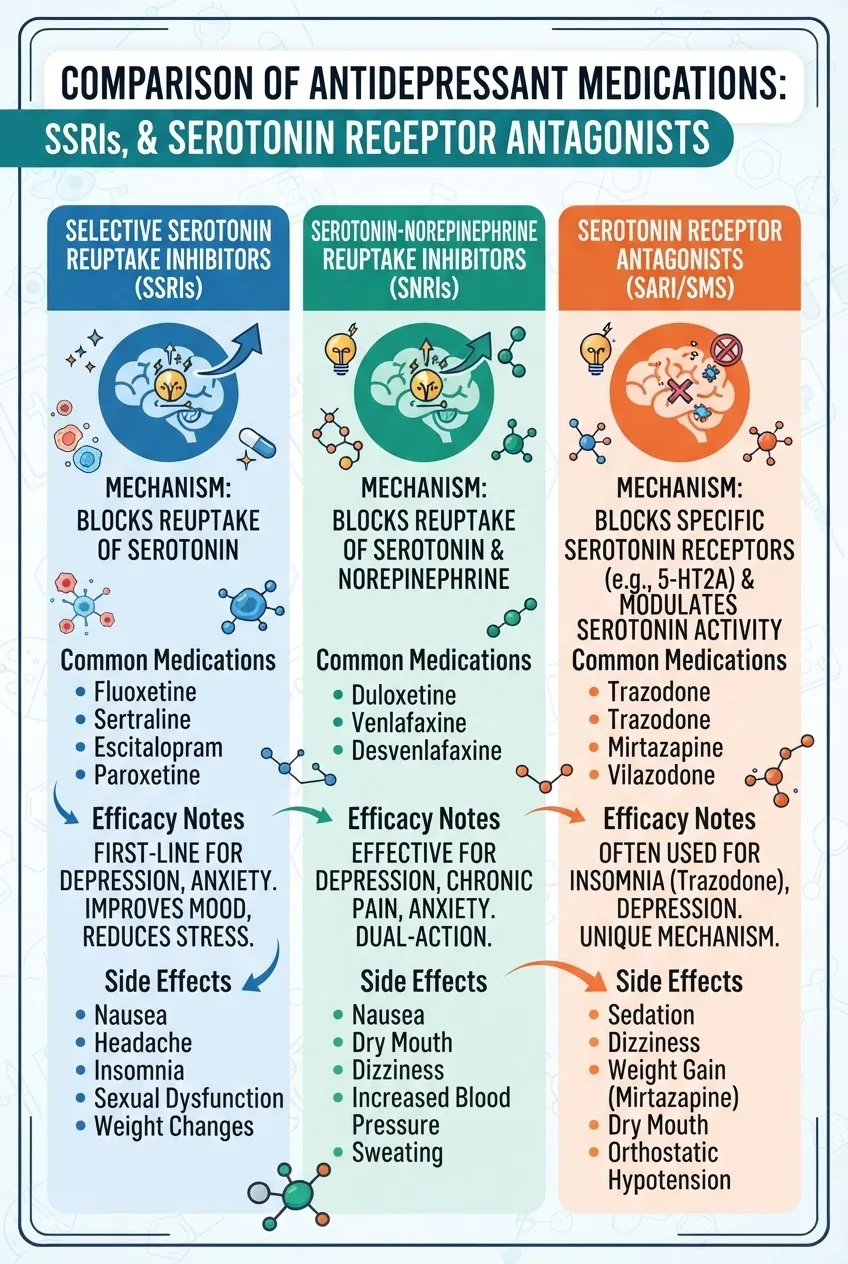
| Feature | Serotonin Receptor Antagonists | SSRIs | SNRIs |
|---|---|---|---|
| Mechanism | Block specific 5‑HT receptors (e.g., 5‑HT2, 5‑HT3). | Block serotonin reuptake transporter (SERT). | Block reuptake of serotonin and noradrenaline. |
| Common drugs | Mirtazapine; adjunctives with 5‑HT2 antagonism. | Citalopram, Escitalopram, Sertraline. | Venlafaxine (XR/Effexor), Duloxetine. |
| Typical benefits | Sedation, sleep improvement, appetite increase. | Good tolerability, first-line for many anxiety disorders. | Often useful for pain syndromes and more severe depression. |
| Common side effects | Sedation, weight gain, metabolic changes. | Nausea, sexual dysfunction, initial activation. | Nausea, increased blood pressure (higher doses), sweating. |
| When preferred | Insomnia, poor appetite, intolerance to SSRIs/SNRIs. | First‑line for depression and anxiety; extensive safety data. | When comorbid pain or prior SNRI response noted. |
Supporting analysis and resources:
- For citalopram information see our Citalopram anxiety treatment.
- For escitalopram (Lexapro) details see Lexapro uses and treatment.
- Fluoxetine resources: Fluoxetine for anxiety and Fluoxetine prescription info.
- Compare with tricyclics and other classes: tricyclic antidepressants treatment guide.
- For SNRI context see SNRIs treatment guide.
- Comparative side effect context: Prozac side effects and uses, Sertraline side effects and use, and Effexor XR anxiety treatment.
- For comparisons with mood stabilisers see mood stabilizers and inhibitors.
Clinical summary: selection depends on symptom profile, side-effect risk, prior response and comorbidities; many primary care clinicians follow evidence-based algorithms and consult specialist advice for complex cases. For comprehensive SSRI details see our SSRIs medication guide.
Transition: patients and prescribers must plan safe discontinuation when stopping these drugs; the following section outlines withdrawal and tapering.
Withdrawal and Discontinuation: What Patients Should Know
Answer: Stopping abruptly can cause discontinuation symptoms; taper gradually over 2–4 weeks (longer for long-term users), monitor for relapse, and coordinate any discontinuation with the prescriber to manage withdrawal and maintain mental health stability.
Term: Discontinuation syndrome: a cluster of symptoms (dizziness, irritability, sleep disturbance) that can occur when stopping or rapidly reducing antidepressants.
Stepwise guidance:
- Discuss decision with your prescriber and create a documented taper plan tailored to dose and duration.
- Typical taper: reduce dose by 10–25% every 1–2 weeks; slow further if withdrawal symptoms occur.
- Monitor weekly for mood worsening, sleep disturbance, dizziness or sensory symptoms; keep a symptom diary.
- Reinstate prior dose temporarily if severe discontinuation symptoms arise, then slow the taper more gradually.
- Consider psychological supports (CBT, counselling) during and after discontinuation to reduce relapse risk.
Reference material: For broader strategies and symptom management, see our full guide on understanding antidepressant withdrawal.
Transition: ongoing monitoring and follow-up are essential during treatment, discontinuation and maintenance — the final section summarises monitoring best practice.
Monitoring and Follow-Up for Patients on Serotonin Receptor Antagonists
Answer: Regular clinical reviews (2, 4–6 weeks then monthly until stable) with monitoring of mood, sleep, weight, metabolic parameters and medication interactions are essential; document plans and escalate to specialist care for treatment resistance or serious side effects.
Term: Therapeutic monitoring: scheduled clinical assessments and tests to ensure efficacy and safety while a patient is on medication.
Recommended monitoring schedule:
- Week 2: assess sleep, sedation, side effects and adherence.
- Week 4–6: evaluate mood response using a rating scale, review side effects, and measure weight.
- Every 3 months: review metabolic markers if weight gain or metabolic risk factors present (lipids, fasting glucose).
- Annually: comprehensive medication review and discussion of long-term treatment goals.
When to refer or change management:
- Insufficient response after 6–8 weeks at therapeutic dose — consider dose change, switch, or specialist referral.
- Marked weight gain, metabolic abnormalities or metabolic syndrome — consider switching to a lower-risk agent.
- Emergent suicidality, severe sedation impacting daily function, or suspected serotonin syndrome — urgent reassessment and possible admission.
Authority and guideline references: align monitoring with TGA product information and NICE recommendations for depression follow-up; for Australian prescribers refer to TGA safety communications. TGA NICE
Patient-centred follow-up (experience signals): use symptom-tracking tools, involve family/caregivers when appropriate, and document tolerability and outcomes to support adherence and shared decision-making. According to a 2024 industry report, structured follow-up improves adherence rates in primary care settings (report data).
Conclusion: Serotonin receptor antagonists are a distinct, clinically useful antidepressant class in Australia when sedation, sleep restoration or appetite support are priorities; they require targeted dosing, monitoring and patient education to manage metabolic and sedation risks. Speak with your GP or psychiatrist to determine if this drug class suits your treatment goals and to create a personalised monitoring plan.
Next steps: If you or a patient is considering treatment, book a follow-up with your GP or mental health specialist to discuss benefits, risks and a clear plan for dosing, monitoring and stopping strategy.