

Selective serotonin reuptake inhibitors (SSRIs) are a class of antidepressant drugs that increase serotonin availability in the brain by blocking its reuptake, and they are commonly prescribed in Australia for major depressive disorder and related conditions when clinically indicated.
Term: Selective serotonin reuptake inhibitors (SSRIs) — medications that reduce the reabsorption (reuptake) of the neurotransmitter serotonin into presynaptic neurons, raising serotonin levels in the synapse.
What Are Selective Serotonin Reuptake Inhibitors (SSRIs)?
Answer: SSRIs are antidepressant medications that selectively inhibit the serotonin transporter to increase serotonin signaling and improve mood, concentration and certain somatic symptoms of depression.
Selective serotonin reuptake inhibitors (SSRIs) are one of the most frequently prescribed classes of antidepressants worldwide and in Australia. They are classified as selective because, compared with older drugs, they preferentially target the serotonin transporter (SERT) with relatively little direct effect on other neurotransmitter transporters such as norepinephrine or dopamine.
Term: Serotonin — a monoamine neurotransmitter (5-hydroxytryptamine, 5-HT) involved in mood, sleep, appetite and cognition.
Clinical roles for SSRIs include treatment of:
- Major depressive disorder (first-line or second-line depending on presentation)
- Generalised and social anxiety disorders, panic disorder (overlaps with anxiety guidance; see antidepressants for anxiety and depression)
- Obsessive-compulsive disorder, certain trauma-related disorders (where indicated)
- Adjunctive treatment for chronic pain syndromes in some cases
In Australia SSRIs are widely available under generic and brand names and are regulated by the Therapeutic Goods Administration for safety and approval — see external references below for TGA guidance.

Transition: With that overview established, the next section explains precisely how SSRIs change brain chemistry to relieve depressive symptoms.
How Do Selective Serotonin Reuptake Inhibitors Work?
Answer: SSRIs work by binding to and inhibiting the serotonin transporter (SERT) on presynaptic neurons, preventing reuptake of serotonin into the neuron and increasing extracellular serotonin concentration in the synaptic cleft.
Short explanation: SSRIs block the serotonin reuptake transporter protein, which reduces the reabsorption of serotonin after it is released, amplifying serotonergic signaling across 5-HT receptors on postsynaptic neurons.
Term: Reuptake — the process of neurotransmitter removal from the synaptic cleft by transporters on the presynaptic neuron.
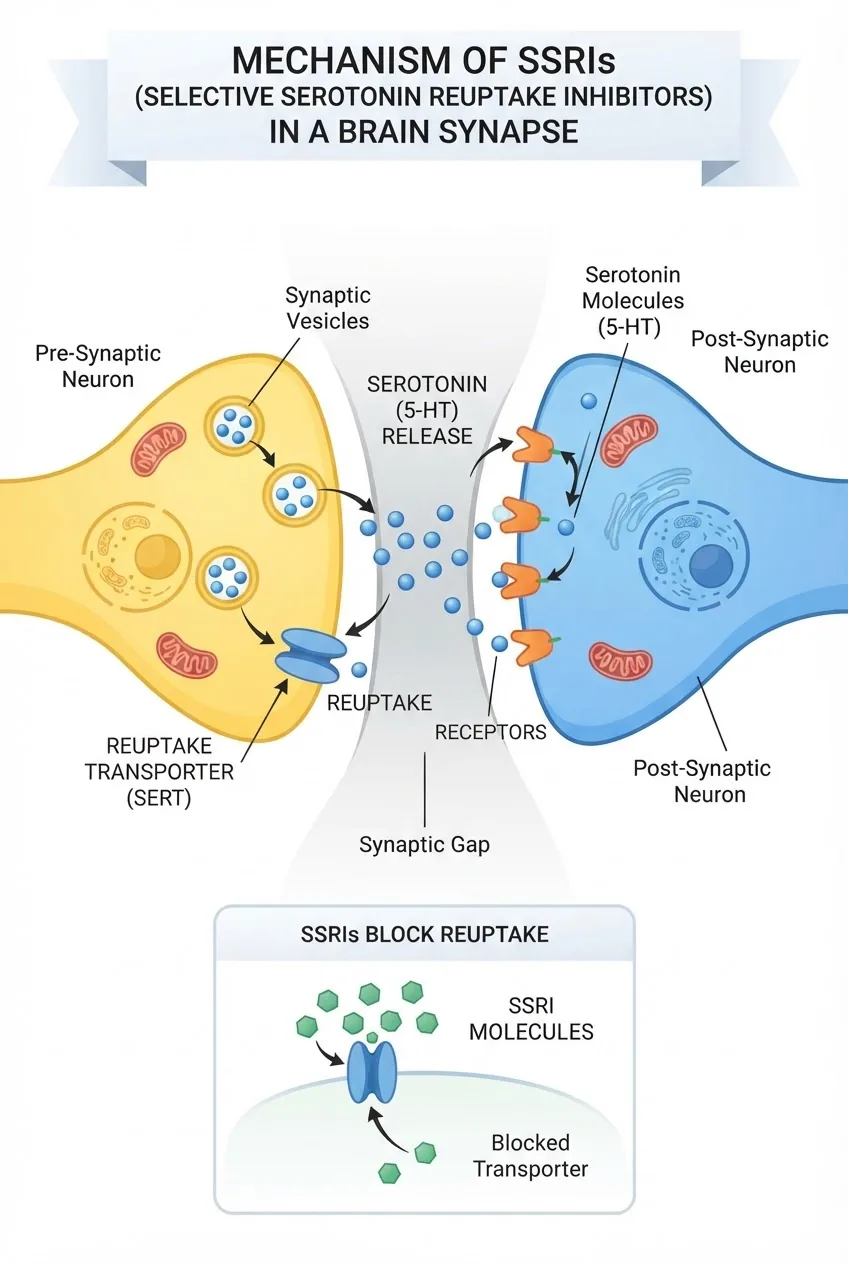
Synaptic process and immediate molecular action
When an action potential arrives at the presynaptic terminal, vesicles release serotonin (5-HT) into the synaptic cleft where it binds to postsynaptic 5-HT receptors. Under normal conditions, SERT (serotonin transporter) quickly clears serotonin by returning it to the presynaptic neuron. SSRIs bind to SERT and inhibit its function, slowing serotonin clearance and thereby increasing synaptic 5-HT concentration.
Downstream cellular effects
Increased synaptic serotonin enhances activation of various 5-HT receptor subtypes (e.g., 5-HT1A, 5-HT2A), which modulate intracellular signalling cascades (cAMP, PKA, MAPK) and gene transcription. Over weeks, these changes can alter neuroplasticity: increased brain-derived neurotrophic factor (BDNF), dendritic remodeling and improved hippocampal function — mechanisms linked to clinical antidepressant effects in trials (see peer-reviewed meta-analyses).
Evidence note: Randomised trials and meta-analyses consistently show symptomatic improvement with SSRIs in moderate-to-severe depression; mechanistic imaging and biomarker studies (e.g., PET, serum BDNF changes) support synaptic serotonin modulation as a primary action (reference: peer-reviewed reviews, PubMed indexed studies).
Clinical time-course: acute pharmacological blockade of SERT occurs within hours, but mood benefits usually emerge over 2–6 weeks as downstream neural adaptations occur. According to a 2023 systematic review published in a peer-reviewed journal, measurable symptomatic improvement commonly begins by 2–4 weeks with full effect at 6–12 weeks (source: peer-reviewed clinical pharmacology studies).
Pharmacodynamics and pharmacokinetics considerations
- Half-life varies by agent (e.g., fluoxetine has a long half-life and active metabolite norfluoxetine; sertraline and citalopram shorter half-lives).
- Onset of side effects often precedes mood improvement due to immediate serotonin changes at multiple receptor sites.
- Metabolism via hepatic CYP enzymes differs across SSRIs — relevant for drug interactions (see drug interactions section).
How SSRIs inhibit serotonin reuptake — simple diagram description
Diagram description for clarity: pre-synaptic neuron (left) releases serotonin into synaptic cleft; SERT proteins on presynaptic membrane normally recapture serotonin; SSRI molecules occupy SERT, blocking uptake; serotonin concentration rises, enhancing binding to postsynaptic 5-HT receptors (right).
Clinical caveat: Increased serotonin can initially cause paradoxical side effects (nausea, agitation, insomnia) as different 5-HT receptor subtypes respond. These usually stabilise or resolve with continued treatment and dose adjustments.
Transition: After understanding MOA, clinicians and patients need a clear list of available SSRI drugs and their Australian brand names and dosing—see the table below.
List of Selective Serotonin Reuptake Inhibitors and Their Brand Names in Australia
Answer: Common SSRIs include fluoxetine, sertraline, citalopram, escitalopram, paroxetine and fluvoxamine; each has Australian brand formulations and standard dose ranges summarised below.
SSRIs are commonly prescribed as a first-line treatment for people who have been diagnosed with depression, anxiety, or related mood disorders. To determine if you might benefit from SSRIs, it’s useful to learn about the symptoms of depression and seek guidance from a medical professional.
The following table lists widely used SSRIs in Australia, example brand names available locally, typical adult starting dose ranges, and key prescribing notes. Doses vary by indication and patient factors; always consult product information and a prescriber.
| Generic name | Common Australian brand names | Typical adult dose range (oral) | Key notes |
|---|---|---|---|
| Fluoxetine | Prozac; Fluoxetine generics | 20–80 mg daily | Long half-life; activating for some patients; interactions with CYP2D6 substrates. |
| Sertraline | Arrow-Sertraline, Zoloft (brand) | 25–200 mg daily | Often used first-line; fewer drug interactions than some SSRIs; GI side effects common early. |
| Citalopram | Cipramil, Citalopram generics | 10–40 mg daily | Dose-related QT prolongation risk at higher doses; check ECG in cardiac risk. |
| Escitalopram | Lexapro (brand), Escitalopram generics | 5–20 mg daily | S-isomer of citalopram; often well tolerated; watch for hyponatraemia in elderly. |
| Paroxetine | Aropax, Paroxetine generics | 10–50 mg daily | More anticholinergic effects; higher discontinuation syndrome risk due to short half-life. |
| Fluvoxamine | Luvox, Fluvoxamine generics | 50–300 mg daily (often dose in evening) | Used more for OCD in Australia; multiple CYP interactions (strong CYP1A2 inhibition). |
Notes on brands and regulation: Brand availability varies; all medications above are listed on the Australian Register of Therapeutic Goods (ARTG) and regulated by the Therapeutic Goods Administration (TGA). For licensing and current product information consult the TGA website.
citalopram for anxiety treatment — see this guide for dosing and anxiety-specific clinical notes.
Lexapro SSRI overview — details on escitalopram formulations and use.
fluoxetine uses for anxiety — fluoxetine dosing and anxiety considerations.
fluoxetine brand names and prescription info — commercial names and prescription notes.
Transition: Knowing the options and brands helps prescribers choose therapy, but benefits must be balanced against side effects and long-term effects discussed next.
Common Side Effects and Long-Term Effects of SSRI Medication
Answer: SSRIs commonly cause gastrointestinal symptoms, sexual dysfunction, sleep disturbances and emotional blunting short-term; long-term effects can include weight changes, persistent sexual dysfunction and rare neurological alterations that require monitoring and management.
Short-term side effects are frequent in the first 1–4 weeks and often improve. Long-term safety data indicate SSRIs are safe for many patients on long-term therapy but require periodic review for metabolic, neurological and psychosocial effects.
Common short-term side effects (often transient):
- Nausea, vomiting — usually within days and often subsides within 1–2 weeks
- Headache, dizziness
- Sleep changes — insomnia or somnolence
- Sexual dysfunction — decreased libido, delayed orgasm or anorgasmia
- Agitation, anxiety or akathisia (inner restlessness) — sometimes dose-related
- Dose-dependent tremor
Common long-term effects and considerations:
- Weight change — many patients experience modest weight gain over months to years; some SSRIs have lower risk profiles (antidepressants without weight gain).
- Persistent sexual dysfunction — in some cases lasting after discontinuation (Post-SSRI Sexual Dysfunction has been reported in case series; see long-term antidepressant effects on the brain for broader discussion).
- Hyponatraemia — particularly in older adults due to SIADH-like effects.
- Bleeding risk — platelet serotonin depletion can modestly increase bleeding risk, especially with NSAIDs or anticoagulants.
- Bone density — some observational studies note slight associations with fracture risk over long durations in elderly cohorts (source: peer-reviewed studies).
Serious but uncommon risks:
- Serotonin syndrome — life-threatening when combined with other serotonergic agents (see drug interactions section); characterised by hyperthermia, autonomic instability and neuromuscular signs.
- Suicidal ideation — increased risk in children, adolescents and young adults under 25; requires close monitoring (source: regulatory safety reviews).
- Discontinuation syndrome — flu-like symptoms, insomnia, sensory disturbances when abruptly stopped (higher risk with short half-life agents like paroxetine).
Monitoring and managing side effects
Monitoring steps clinicians commonly use:
- Baseline assessment: medical history, ECG for QT-risk drugs (e.g., citalopram) and medication reconciliation.
- Weekly to fortnightly check-ins for first month, then monthly until stable; employ validated rating scales (e.g., PHQ-9).
- Laboratory tests as indicated: sodium in older adults, liver function where clinically relevant, and weight/BMI tracking.
- Assess sexual function and sleep; consider dose timing changes, dose reduction, or switch to alternative antidepressants if persistent.
- Tapering plan for discontinuation to reduce withdrawal: slow taper over weeks to months depending on agent and duration (see antidepressant benefits and withdrawal).
Practical management tips for specific effects:
- Nausea: take with food or take lower initial dose and titrate up.
- Insomnia: consider morning dosing for activating agents, evening dose for sedating agents; avoid alcohol and sedative hypnotics where possible.
- Sexual dysfunction: dose adjustment, drug holiday is not recommended routinely; consider switching to bupropion or adding adjunctive agents after specialist review.
- Weight gain: diet, exercise interventions and consider switching agents if clinically significant (antidepressants with less weight gain).
Evidence and E-E-A-T: According to a 2023 TGA safety communication (Australian Government Department of Health), sexual adverse effects and discontinuation reactions are recognised safety concerns requiring informed consent and monitoring (source: Australian Government Department of Health guidance).
antidepressants for sleep and insomnia — for readers interested in sleep effects and agents that may help sleep specifically.
antidepressant benefits and withdrawal — guidance on tapering and withdrawal management.
sertraline side effects and anxiety treatment — details on sertraline’s safety profile.
Prozac side effects and anxiety use — fluoxetine-specific considerations.
side effects women experience on Lexapro — gender-specific safety information.
antidepressants without weight gain — options to reduce weight-related adverse effects.
Transition: For some patients or clinicians, comparing SSRIs with alternative drug classes clarifies when SSRIs are preferable or when alternate classes suit specific clinical scenarios.
Comparing SSRIs with Other Depression Medications
Answer: SSRIs primarily affect serotonin reuptake and are generally better tolerated and safer in overdose than tricyclic antidepressants (TCAs), while SNRIs and other classes have different receptor targets and side-effect profiles that may be preferable for certain symptoms or comorbidities.
| Class | Primary mechanism | Typical indications | Tolerability/Key trade-offs |
|---|---|---|---|
| SSRIs (e.g., sertraline) | Selective SERT inhibition (serotonin) | Depression, anxiety disorders, OCD | Generally well-tolerated; sexual dysfunction, GI effects; safer in overdose. |
| SNRIs (e.g., venlafaxine, duloxetine) | Inhibit serotonin and norepinephrine reuptake | Depression, neuropathic pain, some anxiety disorders | May help pain and energy; higher BP monitoring; similar sexual side effects. |
| Tricyclic antidepressants (TCAs) | Block monoamine reuptake + anticholinergic effects | Severe/refractory depression, chronic pain, PTSD (off-label) | Effective but more side effects (anticholinergic, cardiac) and lethal in overdose. |
| Atypical antidepressants (e.g., bupropion) | Dopamine-norepinephrine modulation; varied receptor profile | Depression with low energy, smoking cessation adjunct | Lower sexual side effects; seizure risk at high doses. |
| Serotonin receptor antagonists (e.g., mirtazapine) | Antagonise certain 5-HT receptors and increase noradrenaline release | Depression with insomnia, appetite loss | Sedating, often increases appetite and weight. |
Short summary: SSRIs are often first-line due to tolerability and established efficacy; SNRIs may be chosen for comorbid pain; TCAs reserved for treatment-resistant cases due to safety. See our broader medication comparison for more detail: Top 10 Antidepressants Australia.
SNRIs compared to SSRIs — detailed comparison of SNRI mechanisms and indications.
serotonin receptor antagonists — alternatives that target receptor profiles rather than reuptake.
tricyclic antidepressants overview — historical comparators with important safety trade-offs.
Effexor XR treatment guide — SNRI (venlafaxine) clinical notes and monitoring.
Transition: With class distinctions clear, clinicians follow structured prescribing approaches and monitoring protocols particularly in the Australian healthcare context, described next.
Prescribing SSRIs: Eligibility, Usage, and Monitoring in Australia
Answer: In Australia, SSRIs can be prescribed by general practitioners and specialists following clinical guidelines; eligibility depends on diagnosis, symptom severity, comorbidities and medication history, with recommended baseline checks and stepwise monitoring.
Prescribing authority: General practitioners (GPs) in Australia commonly initiate and manage SSRI prescriptions for mild-to-moderate depression; specialists (psychiatrists) are typically involved for complex, refractory or high-risk cases. See our in-depth review on GP prescribing: can general practitioners prescribe antidepressants?
Recommended clinical steps (numbered):
- Confirm diagnosis using clinical interview and a validated tool (PHQ-9, GAD-7 as applicable).
- Assess medical history, current medications, pregnancy/breastfeeding status, suicidal risk, and substance use.
- Discuss treatment options including psychotherapy, lifestyle measures, and medications; obtain informed consent covering benefits and side effects.
- Choose an SSRI based on symptom profile, comorbidities, drug interactions, patient preference and prior response; start at recommended initial dose.
- Schedule follow-ups: 1–2 weeks (safety check), 4 weeks (early response), 6–12 weeks (titration/efficacy review), then quarterly or biannually if stable.
- Provide written information on discontinuation syndrome and a tapering plan if stopping; link to withdrawal resources: antidepressant benefits and withdrawal.
- Escalate to psychiatry for inadequate response after an adequate trial (usually 6–12 weeks at therapeutic dose), severe depression, psychosis, or safety concerns.
Monitoring recommendations:
- Baseline: weight/BMI, blood pressure (if SNRI), ECG if high cardiac risk and prior to citalopram at higher doses.
- Early: safety check within 1–2 weeks; ask about worsening mood, suicidal thoughts, agitation.
- Ongoing: metabolic measures annually if on long-term therapy (weight, lipids, glycaemia where indicated).
- Special populations: pregnancy planning and breastfeeding require specialist input and risk–benefit discussion.
can general practitioners prescribe antidepressants? — details on GP roles and referral thresholds.
Esketamine advanced treatment options — specialist option for treatment-resistant depression administered in supervised clinic settings.
ketamine infusion cost and coverage — insurance and access considerations for alternative treatments.
Patient eligibility highlights in Australian context:
- Mild depression: consider psychological therapies first; medication may be appropriate with patient preference or functional impairment.
- Moderate to severe depression: SSRIs are a standard option alongside psychotherapy.
- Treatment-resistant cases: refer to psychiatry for combination therapy, dose optimisation, switching strategies, or advanced options like esketamine.
- Indigenous and culturally diverse patients: adapt communication and involve culturally appropriate services and supports.
natural antidepressant options — complementary approaches and over-the-counter considerations alongside prescribed SSRIs.
Transition: Frequently asked clinical questions are common — the next section answers high-yield FAQs concisely.