

top 10 antidepressants australia — This guide lists the most commonly prescribed antidepressants in Australia, explains how each works, outlines typical side effects and timelines, and gives practical, Australia-specific treatment and prescription guidance for patients and prescribers.
Introduction to Antidepressants in Australia — What are antidepressants and who needs them?
Answer: Antidepressants are prescription medicines used to treat depressive disorders, often alongside psychological therapies; they are provided under Australian prescribing rules and recommended when symptoms impair daily functioning or when other treatments haven’t worked.
Term: Antidepressant — a medication that modifies brain chemistry to reduce symptoms of depressive disorders and some anxiety conditions.
This article provides an Australia-focused overview of anti depression medication names and the clinical context for use. For a broader list of medication types and when they’re used, see our mental health medication options. The images below illustrate a typical clinic consultation and common prescription packs used in Australia.

Transition: The next section explains how these medicines act in the brain so you can understand why different drugs are chosen for different patients.
What Are Antidepressants and How Do They Work?
Answer: Antidepressants act by changing levels or signalling of brain neurotransmitters (chemical messengers) — primarily serotonin and norepinephrine — to improve mood, motivation and anxiety control over weeks to months.
Term: Neurotransmitter — a chemical released by neurons (brain cells) that transmits signals across synapses to influence mood, anxiety and cognition.
Mechanisms vary by class. A simple analogy: antidepressants help “tune” neural circuits the way a sound engineer adjusts levels so voices are clearer; they don’t instantly fix mood but make the brain’s communication patterns more stable to allow recovery and therapy to work.
Core pharmacological actions by class:
- SSRIs (Selective Serotonin Reuptake Inhibitors): block reuptake of serotonin, increasing its availability in synapses.
- SNRIs (Serotonin and Norepinephrine Reuptake Inhibitors): increase both serotonin and norepinephrine signalling.
- TCAs (Tricyclic Antidepressants): older drugs that block reuptake of multiple neurotransmitters and have broader side effects.
- MAOIs (Monoamine Oxidase Inhibitors): block the enzyme that breaks down monoamine neurotransmitters — used rarely due to dietary interactions and side effects.
- Other agents include serotonin receptor modulators and newer options such as ketamine/esketamine for treatment-resistant cases.
Evidence basis: Randomised trials and meta-analyses show many antidepressants are more effective than placebo for moderate to severe depression; response rates and side-effect profiles differ by drug class (see a systematic review for comparative effectiveness: comparative systematic review).
Clinical context in Australia: Australian prescribing follows national frameworks and clinical guidelines that prioritise stepped care — start with psychological therapies and lifestyle measures, progressing to medication when indicated or in severe cases (see Australian Government guidance: Australian Government Department of Health).
Transition: With that mechanism in mind, the next section lists the top 10 antidepressants used in Australia with drug class, generic names and typical uses.
The Top 10 Antidepressants Used in Australia — Names and Overview
Answer: The top 10 antidepressants commonly prescribed in Australia include SSRIs, SNRIs, one NaSSA, TCAs and newer agents — each entry below lists the generic name, drug class, brief description and typical indications.
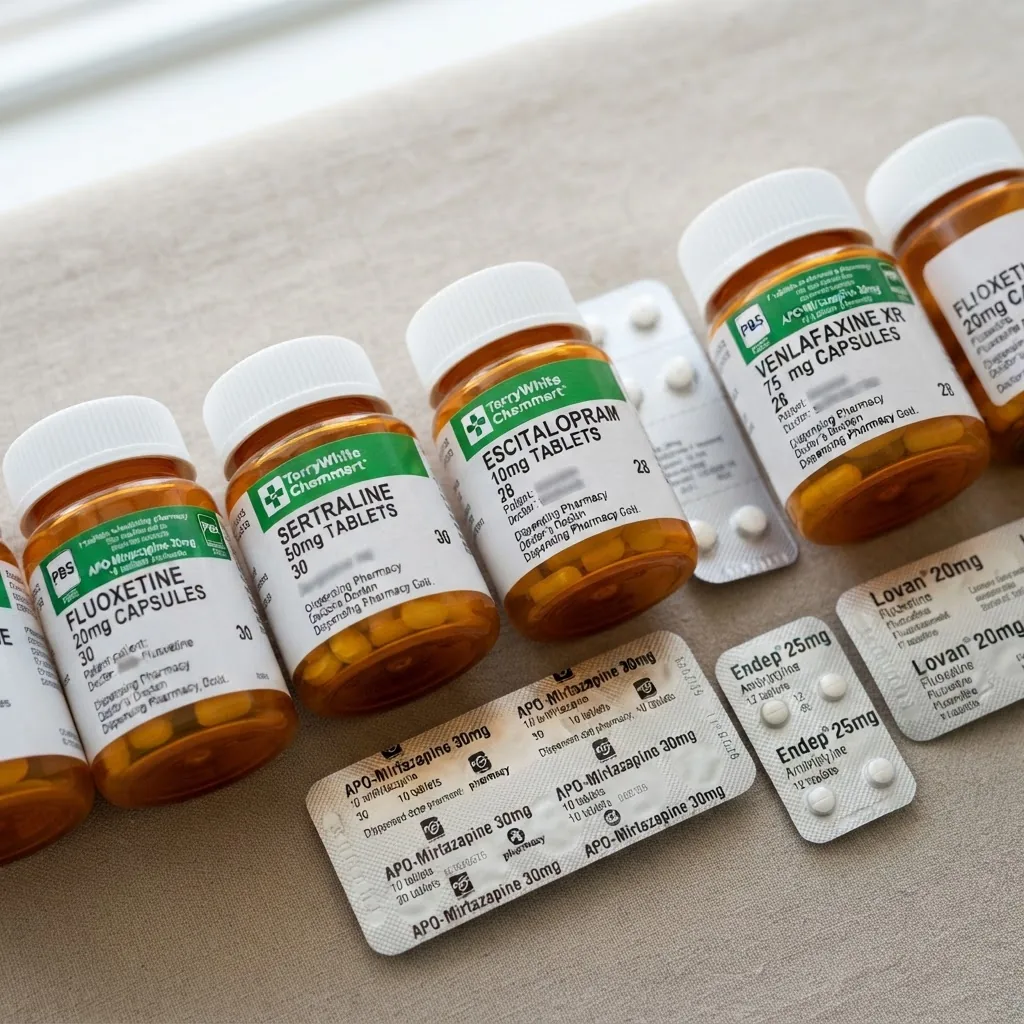
top 10 antidepressants Australia
-
Sertraline (Generic; brand examples: Zoloft)
Class: SSRI. Typical use: first-line for major depressive disorder (MDD), panic disorder, PTSD and social anxiety. Start low and titrate; commonly prescribed by GPs and psychiatrists.
Learn more about side effects: Sertraline side effects.
-
Fluoxetine (Generic; brand: Prozac)
Class: SSRI. Typical use: MDD, obsessive-compulsive disorder (OCD), bulimia nervosa; longer half-life can ease missed doses. Common in primary care and specialists.
Deep dives: Fluoxetine for Anxiety — and Fluoxetine Other Names.
-
Citalopram (Generic; brand example: Cipramil)
Class: SSRI. Typical use: depression and anxiety disorders; often chosen for a favourable side-effect and drug-interaction profile at standard doses.
Citalopram — specific prescription notes and dosing guidance.
-
Escitalopram (Generic; brand: Lexapro)
Class: SSRI. Typical use: MDD and generalized anxiety disorder (GAD); often better tolerated than older SSRIs for some patients.
Lexapro — see gender-specific side-effect notes: side effects women experience with Lexapro.
-
Sertraline vs Escitalopram quick comparison
Drug Strengths Common side effects Sertraline Broad approvals; good for comorbid anxiety Nausea, insomnia, sexual dysfunction Escitalopram Tolerability; effective for GAD Fatigue, nausea, sexual side effects -
Venlafaxine (Effexor XR)
Class: SNRI. Typical use: moderate to severe depression and anxiety disorders; the extended-release form (Effexor XR) provides steadier plasma levels.
See Effexor XR details and dose-tapering advice.
-
Duloxetine (Cymbalta)
Class: SNRI. Typical use: MDD with prominent pain symptoms (e.g., neuropathic pain) and GAD; chosen when both mood and bodily pain need treatment.
-
Mirtazapine (Remeron)
Class: NaSSA (noradrenergic and specific serotonergic antidepressant). Typical use: MDD with insomnia or poor appetite because it can increase sleep and appetite.
-
Amitriptyline (Generic; TCA)
Class: TCA. Typical use: severe or treatment-resistant depression, and at low doses for neuropathic pain or chronic migraine; careful monitoring required due to anticholinergic effects.
-
Selegiline (transdermal) and MAOIs
Class: MAOI. Typical use: rarely used; reserved for treatment-resistant cases because of dietary and drug interactions. Oral MAOIs are uncommon in primary care.
-
Esketamine (Spravato) & Ketamine infusions
Class: NMDA receptor modulators. Typical use: treatment-resistant depression under specialist supervision; requires clinic administration and monitoring.
Esketamine treatment in Australia — and for costs/coverage see ketamine infusions.
Notes on brand vs generic: Australian prescribers frequently use generic names; brands exist for some drugs and formulations (e.g., Effexor XR for venlafaxine XR). For updates on recently marketed drugs, consult our new antidepressants in Australia guide.
Transition: Choosing the right drug requires weighing symptoms, severity, side effects, interactions and patient preferences — the next section guides that decision.
How to Choose the Best Antidepressant for You: What factors should influence the choice?
Answer: The best antidepressant is selected based on depression severity, symptom profile (e.g., anxiety, insomnia, pain), past treatment response, medical history, drug interactions, side-effect priorities and patient preference.
Factors to consider:
- Severity of depression: severe or psychotic depression often requires combined treatments and urgent specialist involvement.
- Comorbid anxiety or panic: SSRIs like sertraline, escitalopram or SNRIs may be preferred; see our guide on the best antidepressant for anxiety and depression.
- Side-effect priorities: if weight gain is a concern, consult our best antidepressant to lose weight and manage side effects guide.
- Drug interactions and medical comorbidities: liver disease, cardiac conduction issues, pregnancy considerations and polypharmacy influence choice.
- Onset speed and safety: some agents (e.g., ketamine/esketamine) act faster but are specialist-only and require clinic administration.
- Previous response: a patient’s prior positive response to a specific antidepressant is a strong predictor of future benefit.
- Patient preference and adherence: dosing frequency, side-effect profiles and cost all affect adherence.
Practical decision steps for prescribers and patients:
- Assess severity and rule out medical causes (thyroid disease, vitamin deficiencies).
- Discuss therapy options and preferences; set realistic expectations about onset and side effects.
- Start at recommended doses, adjust slowly, and schedule follow-up within 2–4 weeks for early tolerability checks.
- If partial response at 6 weeks, consider dose increase, switching, or augmentation strategies in line with local guidelines.
Experience example: An anonymised Australian patient in their 30s with severe MDD and anxiety was started on sertraline by a GP, closely monitored, and referred to a psychiatrist for dose optimisation and consideration of adjunctive psychotherapy — illustrating collaborative care in the Australian system.
Transition: Side effects are a key part of decision-making; the next section explains common effects and how to manage them.
Side Effects of Antidepressants: What should I expect and how are they managed?
Answer: Antidepressant side effects vary by drug class — common effects include nausea, sleep changes, sexual dysfunction and tiredness; many side effects improve over weeks and can be managed by dose adjustments, timing, or switching drugs.
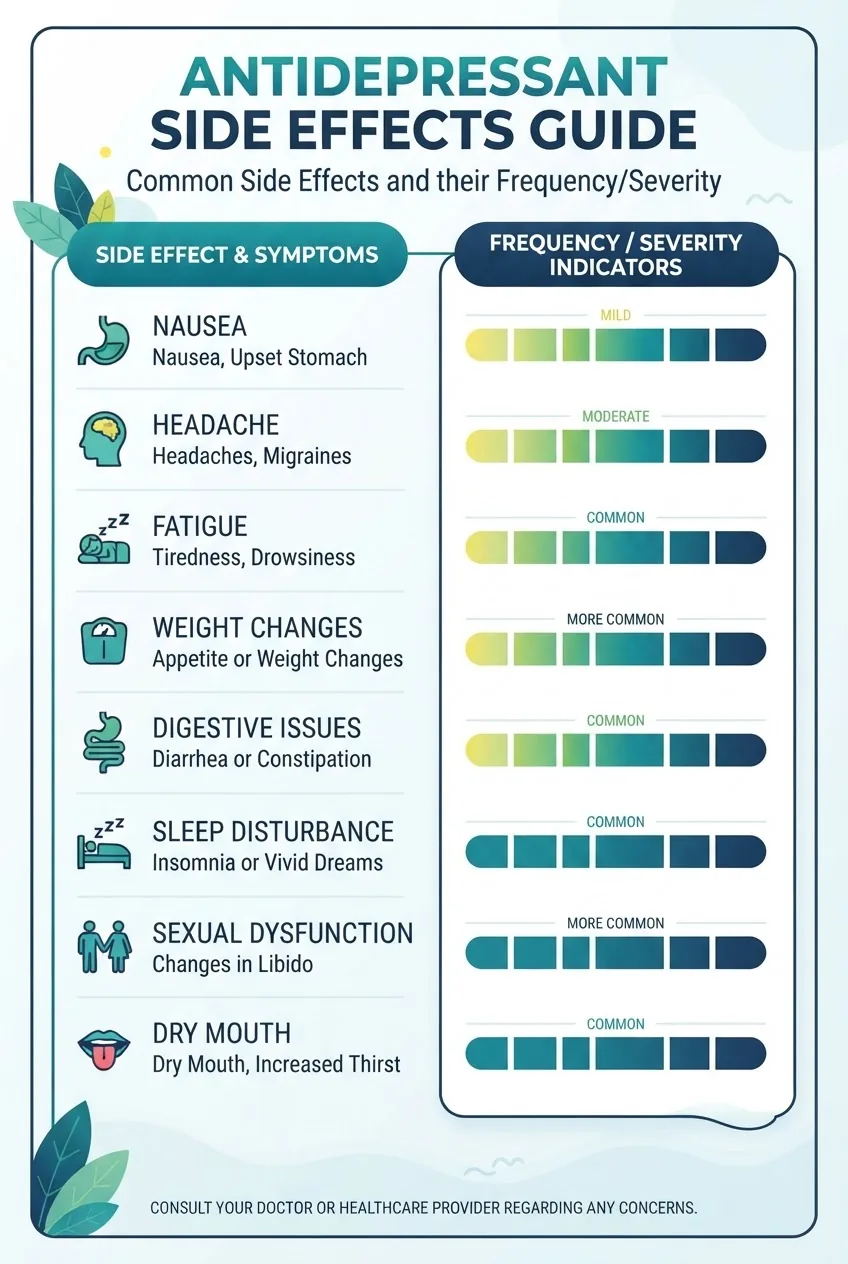
Common side effects by class:
- SSRIs: nausea, diarrhoea, insomnia or somnolence, sexual dysfunction, mild agitation early in treatment.
- SNRIs: similar to SSRIs plus potential increases in blood pressure (especially at higher doses of venlafaxine).
- TCAs: dry mouth, constipation, blurred vision, urinary retention, weight gain, sedation, and cardiac conduction concerns.
- MAOIs: orthostatic hypotension, weight gain, hypertensive crises with certain foods/drugs (rare but serious).
- Mirtazapine: sedation and increased appetite (useful when insomnia and poor appetite present).
Specific management strategies:
- Start low and go slow: reduces early nausea and activation.
- Timing of dose: morning dosing for activating drugs, night dosing for sedating drugs.
- Symptomatic treatments: antiemetics for nausea short-term, sleep hygiene and CBT for insomnia.
- Switch or augment: if sexual dysfunction or intolerable side effects persist, discuss alternatives or add-on strategies with your prescriber.
- Monitoring: blood pressure for SNRIs, ECG for TCAs in older patients, and routine review for weight and metabolic effects.
Links for further reading and management resources: For sleep-specific concerns consult our guide on antidepressants for sleep and insomnia. For withdrawal and stopping strategies see benefits and withdrawal of antidepressants. To explore options with less weight effect, see managing antidepressant side effects.
Long-term considerations: Regular review is needed for persistence of benefits versus cumulative side-effect burden; review clinical guidance on long-term use and potential cognitive concerns: long-term antidepressant effects.
Transition: Many patients ask how quickly they can expect benefit — the next section gives a clear timeline.
How Long Do Antidepressants Take to Work?
Answer: Initial side effects can appear within days; mood improvements typically begin after 2–4 weeks, with maximal benefit often by 6–12 weeks; full recovery can take months, and maintenance treatment may be recommended to prevent relapse.
Typical timeline:
- Days 1–7: early side effects (nausea, sleep changes, agitation) may appear; therapeutic mood change is uncommon.
- Weeks 2–4: some patients report sleep, appetite or anxiety improvements.
- Weeks 4–8+: measurable mood improvement and functional gains for many patients.
- 6–12 weeks: evaluate full response; non-response may prompt dose change or switch.
- Maintenance: for recurrent or severe depression, 6–12 months or longer of continuation is often advised to reduce relapse risk.
Evidence note: According to a 2023 Australian clinical practice summary, many patients require at least 6–8 weeks to assess response adequately (source: Australian clinical guidance 2023).
Transition: Knowing timelines helps when discussing prescriptions — next we explain how to obtain antidepressants legally and safely in Australia.
How to Get Antidepressants in Australia: Who can prescribe and what is the process?
Answer: In Australia, antidepressants are prescription-only; General Practitioners (GPs) and psychiatrists can prescribe them, with psychiatrists or specialist clinics often involved for complex or treatment-resistant cases.
Term: Prescriber — a qualified medical practitioner legally authorised to issue prescriptions for controlled and non-controlled medicines.
Step-by-step to obtain antidepressants:
- Book an appointment with your GP or a psychiatrist — many GPs can initiate first-line SSRIs for moderate depression.
- Assessment: the prescriber conducts a clinical assessment, screens for suicidality, medical conditions, and medication interactions.
- Prescription decision: if indicated, the prescriber chooses a medication, explains risks/benefits, provides a prescription and arranges follow-up.
- Follow-up: within 2–4 weeks for tolerability, then 4–12 weeks for effectiveness assessment; refer to psychiatry if insufficient response.
- Repeat prescriptions and monitoring: GPs can continue prescriptions after initial assessment, but complex cases may be co-managed with psychiatrists.
Eligibility and who prescribes: can GPs prescribe antidepressants. For specialist-only therapies (Spravato/esketamine or ketamine infusions) patients need a psychiatrist referral and clinic-based administration.
Regulatory context: Prescribing follows Australian Government regulations and the Pharmaceutical Benefits Scheme (PBS) for subsidised access where listed; consult Australian Government Department of Health for PBS listings and subsidy rules.
Practical tips:
- Prepare a medication list and bring it to your appointment.
- Ask about likely side effects, emergency signs (worsening suicidal thoughts), and what to do if you miss a dose.
- Discuss non-pharmacological options and a plan for review or referral to psychiatry if needed.
Transition: Medication is only one avenue — complementary treatments and specialist options exist and are covered next.
Alternative and Complementary Treatments to Antidepressants — What else can help?
Answer: Alternatives and complements include psychological therapies (CBT, IPT), lifestyle interventions (exercise, sleep, alcohol reduction), transcranial magnetic stimulation, ketamine/esketamine and, for some, natural supplements under supervision.
Evidence-based non-drug options:
- Psychological therapies: cognitive behavioural therapy (CBT) and interpersonal therapy (IPT) have robust evidence for mild-to-moderate depression.
- Exercise and lifestyle: structured exercise programs, sleep optimisation and dietary improvements have measurable benefits.
- Brain stimulation: rTMS and ECT are specialist options for treatment-resistant depression.
- Ketamine/esketamine: clinic-administered for treatment-resistant cases; see coverage implications in our ketamine infusions guide and specialist clinics: Esketamine treatment in Australia.
- Natural supplements: some people use St John’s wort or omega-3; discuss with your prescriber because of interactions — see our natural antidepressants guide.
Mood regulation drugs: For bipolar depression or mood instability, mood stabilizers or antipsychotics may be needed — see our mood stabilizers overview.
Transition: Finally, practical next steps for managing treatment safely and effectively are summarised below.
Summary and Next Steps: How should I manage my depression treatment now?
Answer: Work with your GP or psychiatrist to choose a medication based on symptoms and history, expect gradual improvement over weeks, report side effects early, and continue treatment and follow-up as recommended to prevent relapse.
Key takeaways:
- Common antidepressants in Australia include SSRIs (sertraline, fluoxetine, citalopram, escitalopram), SNRIs (venlafaxine, duloxetine), mirtazapine, TCAs and specialist agents (esketamine).
- Allow 4–12 weeks to judge efficacy and keep regular follow-ups within the Australian primary care or psychiatry pathways.
- Never self-medicate or stop abruptly; discuss withdrawal planning with your prescriber and read our detailed guide on benefits and withdrawal of antidepressants.
If you or someone you know is in crisis or having suicidal thoughts, contact emergency services or Lifeline (13 11 14). For a consultation about medication options, book an appointment with your GP or a psychiatrist to create a tailored plan.