

Fatigue or depression can both cause profound tiredness; the key difference is pattern and associated features — depression usually includes persistent low mood, reduced interest, and cognitive slowing, while primary fatigue often centres on physical exhaustion with preserved mood. This guide explains diagnostic clues, sleep patterns, and targeted treatments.
Understanding Fatigue and Depression: Definitions and Overview
Answer: Fatigue is a broad symptom of low energy or exhaustion, while depression is a mental health disorder whose features include persistent low mood, anhedonia, and often fatigue; distinguishing them requires assessing mood, sleep, cognitive symptoms, and functional decline.
Term: fatigue: a subjective feeling of persistent physical or mental exhaustion that reduces capacity for activity and concentration.
Term: depression: a clinical mood disorder marked by persistent sadness, loss of interest or pleasure (anhedonia), and other cognitive, sleep, appetite or motor symptoms lasting at least two weeks (per DSM-5 criteria).
Fatigue is common across medical and psychiatric conditions and can be transient (post-exertional), chronic, or secondary to sleep disruption, medical illness, medications, or mood disorders. Depression-related tiredness is one of several core symptoms that often co-occurs with cognitive slowing, feelings of worthlessness, or suicidal thoughts.
Clinical guidance from Australian health services and psychiatric bodies emphasises combined assessment of sleep, mood, daytime function and medical contributors when fatigued. According to a 2023 Australian Government mental health report, fatigue is a frequently reported complaint in primary care settings and often co-occurs with depressive symptoms (source: government mental health report, 2023).
Clinical example (anonymised): a 45-year-old nurse reports months of energy decline after night-shift work; mood is stable but sleep is fragmented — assessment prioritised sleep hygiene, circadian realignment and medical screening. A second patient reported low mood, reduced pleasure, and pervasive tiredness despite regular sleep; treatment focused on antidepressant therapy and psychotherapy.

Key clinical takeaways:
- Fatigue is a symptom; depression is a diagnosis that may include fatigue.
- Assess sleep quality, daytime sleepiness, mood, cognition and functional impairment.
- Early guideline-based screening (e.g., RANZCP, DSM-5-informed) reduces missed diagnoses.
- Local context: Sydney clinics often use stepped-care models integrating GP, psychology and psychiatry referrals.
For local prevalence context, see depression prevalence in Australia.
Transition: The next section compares specific symptoms to show where depression and fatigue overlap and diverge.
Symptoms Overlap: How Fatigue and Depression Intersect
Answer: Fatigue and depression overlap across energy loss, concentration problems and sleep disruption; distinguishing features include mood quality, reward/interest loss, psychomotor change, and the temporal pattern of tiredness.
Below are numbered comparison points highlighting where symptoms converge and where they diverge. Use these as clinical prompts when assessing whether tiredness is primary fatigue or depression-related exhaustion.
-
Energy quality — Depression and extreme fatigue both cause low energy, but:
- Primary fatigue: energy deficit often fluctuates with exertion and improves with rest.
- Depression: energy is persistently low, with mental exhaustion and reduced motivation even after rest.
-
Mood and affect — Depression usually includes sustained low mood, guilt, or hopelessness; simple fatigue rarely includes pervasive negative mood.
- If a person reports persistent sadness or loss of interest, suspect depressive illness.
- Cognitive symptoms — Both can cause concentration problems, but depression often produces negative rumination, slowed thinking and poor decision-making beyond sleepiness alone.
-
Sleep pattern differences — Sleep disturbance is common to both:
- Depression and sleeplessness often present with early-morning wakening, difficulty falling asleep from anxiety or fragmented sleep due to rumination.
- Primary sleepiness or circadian misalignment may cause daytime sleep episodes with otherwise preserved mood.
- Physical symptoms — Fatigue due to medical illness often has physical signs (anaemia, hypothyroidism, chronic pain) while depression-related exhaustion may have psychomotor retardation or agitation without an obvious primary medical cause.
- Motivation and pleasure — Loss of drive (avolition) and inability to feel pleasure (anhedonia) strongly point to depression rather than isolated fatigue.
- Response to rest and activity — In many fatigue syndromes, pacing and rest bring consistent improvement; depression-related tiredness often persists despite rest and may worsen with social withdrawal.
- Temporal pattern — Depression-related extreme tiredness is frequently chronic, linked to mood symptom timeline (weeks to months); transient fatigue is linked to identifiable triggers (infection, exertion, medication).
- Functional impact — Both reduce function, but in depression the impact is global (work, relationships, self-care) and accompanied by low mood and cognitive distortions.
- Comorbid conditions — Consider sleep apnoea, endocrine disorders, medication side effects, substance use, and neurological disease when fatigue is predominant without clear mood symptoms.
Clinical note: screening tools (PHQ‑9 for depression, Epworth Sleepiness Scale for daytime sleepiness) can quantify symptoms and guide next steps; combined screening reduces missed comorbidity.
If you suspect a subtype influence on fatigue patterns, read more on atypical depression symptoms.
Transition: Next, practical diagnostic clues and a comparison table help clinicians and patients differentiate fatigue from depression.
Distinguishing Fatigue from Depression: Key Diagnostic Clues
Answer: Use a combined approach—clinical interview for mood and motivation, sleep history, screening instruments, focused medical testing (CBC, thyroid, B12), and when indicated, DSM-5 criteria—to separate primary fatigue from depression-related tiredness.
Term: insomnia: difficulty initiating or maintaining sleep, or non-restorative sleep, despite adequate opportunity, causing daytime impairment.
A structured differential approach clarifies causes. Below is a concise comparison table clinicians and informed readers can use to map symptoms to likely causes.
| Feature | Predominant Fatigue (medical/sleep) | Depression-Related Tiredness |
|---|---|---|
| Mood | Generally preserved; frustration or irritability | Persistently low, feelings of guilt or worthlessness |
| Sleep pattern | Non-restorative sleep or circadian misalignment; excessive daytime sleepiness | Insomnia common (difficulty falling asleep/early wakening) or hypersomnia in some subtypes |
| Motivation | Motivation may be intact when rested | Avolition and anhedonia prominent |
| Cognitive effects | Attention lapses, slowed reaction when sleepy | Negative bias, slowed processing, impaired memory |
| Response to rest | Often improves with sleep/pacing | Often persists despite rest |
| Associated symptoms | Pain, medical signs, or sleep apnoea features | Mood symptoms, suicidal ideation, psychomotor changes |
Use objective tests selectively: CBC (rule out anaemia), thyroid function tests, B12, CRP when inflammatory disease suspected, and sleep studies for suspected obstructive sleep apnoea. When psychiatric diagnostic criteria are required, refer to DSM-5 categories for depressive disorders; for more clinical context see depressive disorders DSM-5.
If bipolar disorder is a concern (e.g., episodic high energy or hypomania), differential diagnosis affects treatment; see bipolar depression diagnostic criteria.
Practical checklist for clinicians and patients:
- Timeline: map when tiredness began relative to mood changes.
- Sleep diary: record bedtime, wake time, naps, sleep quality for 2–4 weeks.
- Screening scales: PHQ-9, Epworth Sleepiness Scale, Insomnia Severity Index.
- Basic labs: FBC, TFTs, B12, glucose, CRP as clinically indicated.
- Medication review: consider antihistamines, beta-blockers, opioids, antipsychotics as contributors.
Transition: Sleep and circadian rhythms are central discriminators between fatigue and depression — the next section explains mechanisms and management implications.
The Role of Sleep and Circadian Rhythms in Fatigue and Depression
Answer: Disrupted sleep and circadian misalignment can cause fatigue and also trigger or worsen depression; assessing sleep timing, quality and daytime sleepiness helps discriminate primary sleep disorders from depression-related sleeplessness.
Term: circadian rhythm: the internal biological clock regulating sleep-wake cycles, hormone release and daily physiological patterns over ~24 hours.
Sleep disturbances are both a symptom and a driver of depression. Depression and sleepiness interact bidirectionally: poor sleep increases the risk of depressive episodes, and depression alters sleep architecture (reduced slow-wave sleep, shortened REM latency). Peer-reviewed studies demonstrate that sleep disruption precedes mood relapse in many patients (see RANZCP and international literature).
Common sleep presentations and how they relate to fatigue or depression:
Insomnia-pattern sleep disturbance
Direct answer: If you have trouble falling asleep, wake early, or sleep is non-restorative with rumination, depression is more likely; insomnia often coexists with depressive disorders and predicts worse outcomes if untreated.
Clinical clue: early morning wakening with diurnal mood variation (worse in morning) is a classic depressive sleep pattern.
Hypersomnia-pattern sleep disturbance
Direct answer: Excessive sleepiness or long sleep durations can be seen in atypical depression or circadian disorders; differentiate by assessing sleep quality, daytime naps and associated mood symptoms.
Circadian misalignment (shift work, delayed sleep phase)
Direct answer: When sleep timing is shifted (night work, late-bed late-rise), daytime fatigue is prominent but mood may be preserved; realigning sleep timing often improves energy without psychiatric treatment.
Assessment tips:
- Use a sleep diary or actigraphy for 1–2 weeks to map patterns.
- Score daytime sleepiness with the Epworth Sleepiness Scale to quantify sleep propensity.
- Consider polysomnography for suspected obstructive sleep apnoea — untreated OSA commonly causes fatigue and cognitive fog independent of mood.
Treatment intersections:
- Cognitive behavioural therapy for insomnia (CBT‑I) targets maladaptive sleep behaviours and is effective for insomnia comorbid with depression; studies show improved sleep and mood when combined with antidepressants.
- Light therapy and chronotherapy can correct circadian rhythm disruptions; bright light in the morning can shift delayed sleep phase and improve energy and depressive symptoms in some patients.
- Sleep hygiene alone is rarely sufficient for chronic insomnia; structured interventions are preferred.
Clinical resources: follow RANZCP and Australian Government health guidance for integrating sleep assessment in psychiatric care — see RANZCP guidance at https://www.ranzcp.org/ and the Australian Department of Health at https://www.health.gov.au/.
Transition: Persistent fatigue despite guideline-based treatments may signal treatment-resistant depression — the next section outlines warning signs.
When Fatigue Signals Treatment-Resistant Depression: Signs and Considerations
Answer: Fatigue becomes a red flag for treatment-resistant depression (TRD) when significant depressive symptoms and tiredness persist despite adequate trials of antidepressant therapy and psychotherapy; evaluate adherence, comorbidity, and alternative diagnoses.
Term: treatment-resistant depression: typically defined as failure to respond to two or more adequate antidepressant trials from different classes, combined with ongoing functional impairment.
Clinical indicators that fatigue may represent TRD:
- Ongoing low mood, anhedonia, and cognitive impairment after two adequate treatment trials (dose and duration appropriate).
- Severe fatigue that does not improve with sleep optimisation, medical correction, or lifestyle interventions.
- High functional impairment: inability to work or maintain relationships despite treatment.
- Co-occurring features like psychotic symptoms, marked psychomotor retardation, or suicidal ideation.
Case scenario (anonymised): a 38-year-old with persistent exhaustion and low mood after two SSRI trials and 12 sessions of CBT remained unable to work; multidisciplinary review led to augmentation with atypical antipsychotic and referral for neuromodulation evaluation at a Sydney specialist clinic.
Clinical workflow used in some Sydney clinics:
- Confirm adequacy of prior treatments (doses, duration, engagement in therapy).
- Exclude medical contributors (sleep apnoea, endocrine disease, inflammatory conditions).
- Consider augmentation strategies and referral pathways (psychiatry, specialist clinics offering ECT or TMS).
- Discuss realistic expectations, safety planning and stepwise adjustments to optimise functioning.
For subtle presentations where daytime fatigue predominates but function remains relatively preserved, consider high functioning depression as a possible diagnosis.
Transition: When treatment-resistant pathways are considered, evidence-based treatment options expand beyond standard antidepressant monotherapy — the next section lists these options and compares pros/cons.
Treatment Options for Fatigue and Depression in a Treatment-Resistant Context
Answer: For fatigue within treatment-resistant depression, combine medication adjustments, psychotherapy augmentation, lifestyle and sleep interventions, and, when indicated, neuromodulation or specialist pharmacologic strategies tailored to the individual’s profile.
Below are recommended options with brief descriptions, evidence notes, and pros/cons. For more detailed strategies on advanced medication and therapy, see treatment for treatment resistant depression.
-
Medication optimisation
- Description: Switching antidepressant class, increasing dose, or augmentation (e.g., adding atypical antipsychotic, lithium, or stimulant in selected cases).
- Evidence: RANZCP and international guidelines recommend structured switches/augmentation after failed trials.
- Pros: May rapidly reduce depressive symptoms and secondary fatigue.
- Cons: Side effects, need for monitoring (lithium levels, metabolic effects for atypical antipsychotics).
-
Cognitive behavioural therapy for insomnia (CBT‑I)
- Description: Structured therapy targeting thoughts and behaviours that perpetuate insomnia; effective adjunct for depression with sleep disturbance.
- Evidence: Randomised trials show CBT‑I improves sleep and mood symptoms when combined with antidepressants.
- Pros: No pharmacologic side effects; durable benefits for sleep.
- Cons: Requires trained therapist and patient adherence.
-
Psychotherapy augmentation (CBT, ACT, interpersonal therapy)
- Description: Adding or intensifying evidence-based psychotherapies to target mood, activity levels and cognition.
- Pros: Addresses behavioural activation and negative thoughts that maintain fatigue and depression.
- Cons: Time-limited response and access barriers in some regions.
-
Light therapy and chronotherapy
- Description: Morning bright light exposure, timed light boxes, or controlled sleep phase shifts to realign circadian rhythm.
- Evidence: Effective particularly for seasonal and circadian-related depression; improves energy and sleep timing.
- Pros: Non-invasive, relatively safe.
- Cons: Requires daily routine; contraindicated with certain eye conditions and some psychotropic medications without supervision.
-
Physical activity and graded exercise
- Description: Supervised, gradual activity increase with pacing to prevent post-exertional malaise.
- Evidence: Exercise improves energy and mood; effect sizes moderate for depression.
- Pros: Broad health benefits.
- Cons: May be hard to initiate for severely fatigued patients; requires tailored pacing.
-
Sleep apnoea treatment (CPAP) or management of other primary sleep disorders
- Description: Treating obstructive sleep apnoea or restless legs where present.
- Pros: Resolves a reversible cause of daytime fatigue and cognitive impairment.
- Cons: Requires sleep study and adherence to therapy.
-
Neuromodulation (ECT, rTMS)
- Description: Electroconvulsive therapy (ECT) or repetitive transcranial magnetic stimulation (rTMS) for severe or refractory depression.
- Evidence: ECT is highly effective for severe TRD; rTMS effective for selected TRD patients.
- Pros: Can produce substantial mood and energy improvement when medications fail.
- Cons: Access may be limited; ECT has cognitive side effects risk; rTMS requires multiple sessions.
-
Novel pharmacotherapies (e.g., ketamine/esketamine)
- Description: Rapid-acting agents approved for TRD in specialist settings.
- Evidence: Trials show rapid antidepressant effects and improvements in energy for some patients.
- Pros: Fast onset of action.
- Cons: Requires specialist supervision, costs and potential dissociative effects.
-
Behavioural activation and pacing strategies
- Description: Structured increase in rewarding activities and pacing to stabilise energy.
- Pros: Simple behavioural approach with evidence for depressive symptoms and functioning.
- Cons: May require coaching for adherence.
-
Addressing medical comorbidity
- Description: Treat anaemia, hypothyroidism, vitamin deficiencies, chronic pain, inflammatory disease.
- Pros: Can resolve fatigue when depression is secondary or comorbid.
- Cons: Requires coordinated medical care and investigations.
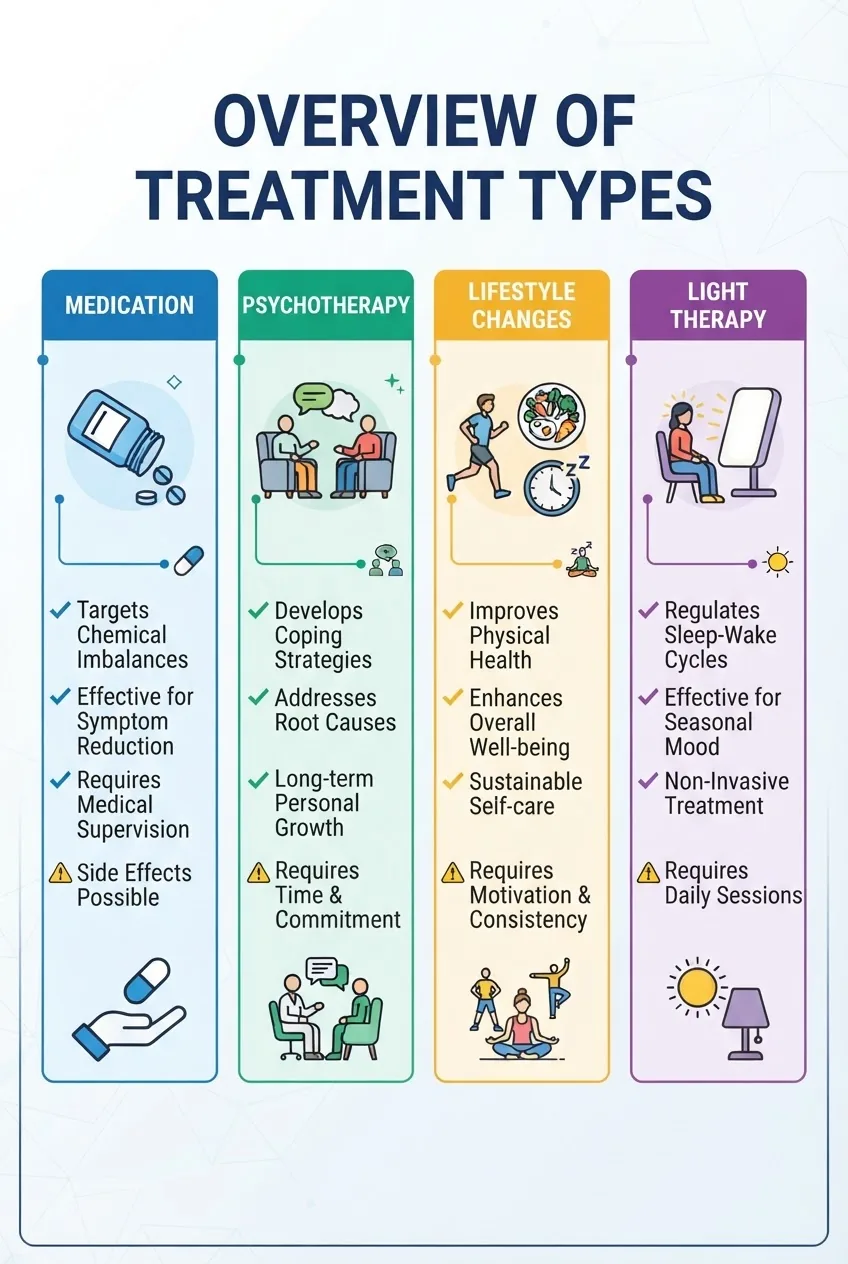
Clinical evidence and guidance: RANZCP and international guideline panels recommend stepped care, combining psychotherapy, pharmacotherapy and somatic treatments for TRD (see RANZCP guidance at https://www.ranzcp.org/).
Additional reading on broad recovery expectations and long-term management is available at can depression be cured.
For further detail on pharmacologic strategies specifically for major depressive disorder, consult major depressive disorder treatments.
Transition: Practical coping strategies patients can use at home support clinical treatments and improve day-to-day functioning — the next section provides stepwise actions.
Practical Coping Strategies to Manage Fatigue and Depression Symptoms at Home
Answer: Combine sleep routines, graded activity, behavioural activation, structured naps, dietary adjustments and stress reduction to improve energy and mood; small, consistent changes yield measurable benefits.
Below are step-by-step how-to strategies patients can implement immediately, with emphasis on pacing and integration with clinical care.
- Start a sleep and activity diary — Track bedtimes, wake times, naps, energy levels and mood for 2 weeks; this data guides targeted changes and clinician decisions.
- Implement sleep hygiene and timing — Fixed wake time, limit caffeine after midday, remove screens 60 minutes before bed, and use bright morning light; avoid long evening naps.
- Graded activity and pacing — Break tasks into 10–20 minute blocks with planned rest; increase activity by 10% each week to build tolerance without triggering post-exertional fatigue.
- Behavioural activation — Schedule small pleasurable or mastery tasks daily (e.g., 10-minute walk, phone call) to counteract withdrawal and increase reward signalling.
- Nutrition and hydration — Regular balanced meals, adequate iron and B12 intake, reduce excessive alcohol which worsens sleep quality.
- Mindfulness and stress reduction — Short mindfulness sessions, paced breathing and problem-solving reduce rumination and improve sleep onset.
- Social connection and structure — Regular social contact and routine support motivation and circadian stability.
- Medication adherence and side-effect management — Review medications with prescriber if sedative side effects or daytime drowsiness contribute to fatigue.
- Plan small experiments — Try single changes (e.g., morning light therapy) for 2–4 weeks and track outcomes to identify what helps your energy specifically.
For guidance on disrupting patterns that reinforce low energy and depressive symptoms, see breaking the depression cycle.
Transition: Knowing when to escalate to professional assessment is critical — next section provides assessment and referral guidance including Sydney-specific options.
When to Seek Professional Help: Assessment and Referral Guidelines
Answer: Seek professional help when fatigue is persistent, impacts functioning, coexists with low mood or suicidal thoughts, or after initial treatments fail; primary care can coordinate baseline tests and refer to psychiatry or sleep specialists in Sydney when needed.
Assessment checklist for patients and clinicians:
- Duration: fatigue or low mood lasting >2 weeks with functional impact.
- Severity: inability to perform daily tasks, work impairment, or safety concerns (suicidal ideation).
- Red flags: weight loss, fever, cognitive decline, focal neurological signs, severe insomnia or hypersomnia.
- Initial investigations: FBC, TSH, B12, glucose, urine drug screen, CRP as indicated.
- Sleep evaluation: Epworth Sleepiness Scale, sleep diary, consider referral for polysomnography.
Referral pathways commonly used in Sydney clinics:
- GP undertakes initial screening and basic labs, initiates treatment and safety planning.
- Refer to public or private psychologists for CBT, CBT‑I or behavioural activation.
- If inadequate response or severe features, GP refers to psychiatry for medication optimisation, augmentation or consideration of neuromodulation.
- Sleep medicine referral for suspected OSA or circadian disorders; cardiology/endocrinology as indicated for comorbid disease.
Practical contact points in Sydney: many multidisciplinary clinics (including private specialist services) provide integrated assessment for TRD, offering combined psychiatry, psychology and sleep medicine pathways — clinics follow protocols to expedite investigations and consider neuromodulation referrals when indicated.
When to seek urgent help: contact emergency services or crisis teams if there is active suicidal intent, severe psychomotor retardation with inability to care for self, or acute medical deterioration.
For guidance on preventing relapse when fatigue persists, consider reading severe depression relapse prevention.
Transition to close: the conclusion summarises key diagnostic cues and next steps.
Clinical summary: Map mood, sleep and functional impact; use screening tools and basic labs; implement behavioural sleep and activity strategies; escalate to specialist care when persistent depressive symptoms or failed adequate treatments suggest treatment-resistant depression.
Conclusion: Distinguishing fatigue or depression rests on carefully assessing mood, sleep, and daily function. Start with sleep diaries, targeted labs and brief psychometric screens, apply evidence-based sleep and activity interventions, and seek stepped-care psychiatric input for persistent or severe cases. If you need specialist assessment for persistent tiredness and suspected treatment-resistant depression, contact your GP for a coordinated referral to local Sydney multidisciplinary services.