

High functioning depression is a form of persistent, often mild-to-moderate depressive illness where someone can maintain daily roles while experiencing chronic low mood, fatigue and reduced pleasure; this guide identifies subtle signs and gives practical self-management and evidence-based treatment steps tailored to Sydney residents.
What is high functioning depression and how is it understood?
Answer: High functioning depression describes persistent depressive symptoms that do not fully prevent someone from work, family or social roles but cause sustained distress, reduced enjoyment and impaired quality of life.
High functioning depression: a colloquial term for chronic, subthreshold depressive symptoms that allow outward functioning while internal distress persists.
This form of depression is also called functional depression or hidden depression and sits on the depression spectrum between normal low mood and Major Depressive Disorder (MDD). Emotional numbness, low-grade anhedonia (loss of enjoyment) and “putting on a brave face” are common descriptors. According to a 2023 Australian mental health survey report, many adults with persistent depressive symptoms continue working while reporting functional impairment (source type: national survey data).
Early authoritative overviews on depression terminology are available from Australian health authorities; for clinical guidance see the Australian Government Department of Health and mental health organisations such as beyondblue and Black Dog Institute (source type: national health organisations).
Transition: The next section lists the specific signs and symptoms so you can recognise high functioning depression in yourself or others.
What are the signs and symptoms of high functioning depression?
Answer: High functioning depression presents with subtle emotional, cognitive and behavioural signs — persistent low mood, reduced motivation, cognitive fog, social withdrawal, overcompensation at work and chronic fatigue that others may not notice.
Symptoms of high functioning depression: observable and internal experiences like sadness, low energy, difficulty concentrating, and masked coping behaviours.
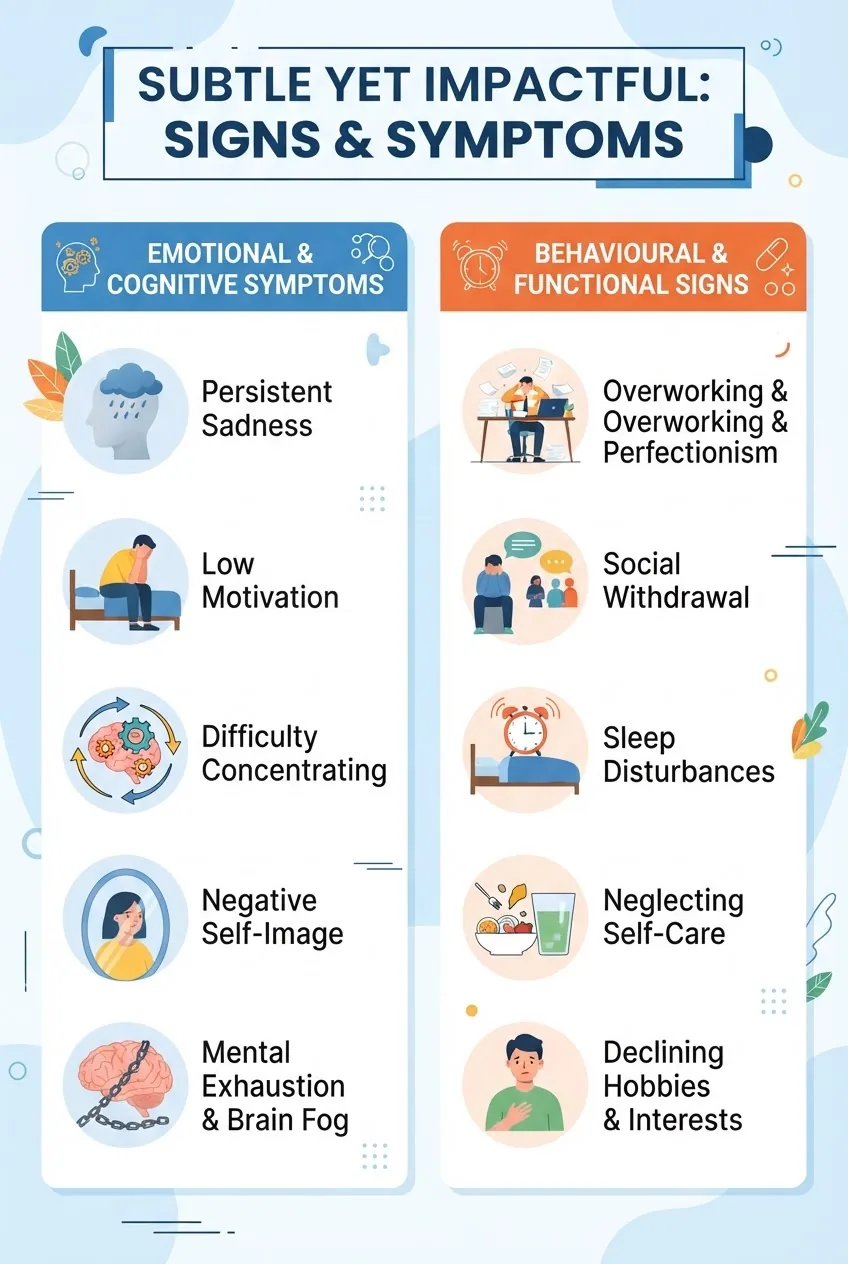
- Persistent low-grade sadness — not always dramatic crying but a constant underlying sadness or emptiness lasting months; example: feeling “off” most days for six months without clear triggers.
- Reduced pleasure and motivation (anhedonia) — small or waning interest in hobbies; continuing activities out of habit rather than enjoyment.
- Emotional numbness or blunted affect — reduced emotional reactivity; family members describe the person as “distant” despite meeting obligations.
- Chronic fatigue and low energy — ongoing tiredness not fully relieved by rest; see also fatigue or depression differences.
- Cognitive symptoms — difficulty concentrating, slowed thinking, forgetfulness and “brain fog.”
- Behavioural overcompensation — overworking, perfectionism or being excessively busy to mask internal distress; example: a professional who meets targets but feels exhausted and empty outside work.
- Social withdrawal or reduced intimacy — cancelling plans, preferring solitude, or reduced emotional closeness with partners and friends.
- Sleep changes — insomnia or waking unrefreshed; sometimes hypersomnia but often disturbed rest that worsens daytime functioning.
- Appetite and weight changes — small but persistent shifts in appetite or weight without intentional dieting.
- Increased irritability and anxiety — low mood often co-exists with increased worry, short temper or rumination.
Term: Cognitive symptoms refer to problems with attention, memory, processing speed and decision-making.
Below are specific, subtle signs to watch for in everyday settings:
- At work: consistently late or early departure from social interactions, overcommitment to tasks, or routinely using work to avoid emotional situations.
- At home: doing household tasks robotically, withdrawing from family conversations, or a partner noticing reduced emotional sharing.
- Interpersonal: making excuses to avoid friends, declining invitations with plausible reasons while secretly lacking the energy or desire to attend.
- Self-care: neglecting previously meaningful routines (exercise, hobbies) while maintaining surface-level grooming to “look fine”.
Transition: Recognising these signs helps identify at-risk people; now we examine causes and typical risk factors linked to high functioning depression.

What causes high functioning depression and who is at risk?
Answer: High functioning depression arises from an interplay of genetic predisposition, chronic stressors, personality traits (e.g., perfectionism), unresolved trauma and environmental pressures that cumulatively produce persistent low mood.
Risk factors: inherited vulnerability, adverse life events, chronic work or caregiving stress, and personality styles that favour over-control or avoidance.
Biological contributors include family history and possible neurotransmitter vulnerabilities; psychological contributors include rumination, avoidance coping and perfectionism; social contributors include occupational stress and social isolation. See broader mechanisms in depression causes and pathogenesis for in-depth mechanisms.
Case reference (anonymised composite): “M,” a 38-year-old project manager in Sydney, with a family history of depression, chronic workplace deadlines and a history of childhood emotional neglect, developed low-level sadness and exhaustion over two years while maintaining performance. After structured therapy and workplace adjustments, M reported improved energy and reconnection with hobbies.
According to a 2023 industry report on mental health in Australia, chronic occupational stress and caregiving responsibilities are significant correlates of persistent depressive symptoms (source type: industry report).
Transition: Because these causes overlap with other depressive disorders, accurate diagnosis can be challenging — the next section explains differential diagnosis and diagnostic hurdles.
What are the challenges in diagnosis and how does high functioning depression differ from other depressive disorders?
Answer: Diagnosis is difficult because high functioning depression shares symptoms with Major Depressive Disorder (MDD), Persistent Depressive Disorder (dysthymia), atypical depression and bipolar depression, but differs by symptom severity, duration and level of functional masking.
Diagnosis difficulties: symptom overlap, underreporting, variable thresholds and clinician reliance on patient-reported impairment.
Clinicians compare symptom counts, functional impairment and duration to distinguish disorders; tools like structured interviews and rating scales help, but underreporting of emotional distress and compensation strategies can obscure true severity. For DSM standards see the DSM-5 depression criteria and the broader DSM-5 depressive disorders overview.
| Feature | High functioning depression | Major Depressive Disorder (MDD) |
|---|---|---|
| Symptom severity | Mild–moderate, chronic | Often moderate–severe, disabling |
| Functional impact | Maintains roles, reduced quality | Marked impairment in daily functioning |
| Duration | Months to years, persistent | 2+ weeks per major episode; episodes may recur |
| Typical presentation | Masked coping, overwork, subtle withdrawal | Observable slowing, withdrawal, functional loss |
Differential considerations include:
- Checking for bipolar spectrum features or hypomania history; see bipolar depression diagnostic criteria.
- Ruling out atypical presentations by screening for mood reactivity and reversed vegetative symptoms; see atypical depression symptoms and treatments.
- Considering psychotic features (rare in functional cases) that indicate a different pathway; see psychotic depression symptoms and treatment.
Diagnostic nuance: clinicians must ask about duration, subthreshold anhedonia, workplace masking and previous treatment response. Structured tools and collateral history from family or employers often reveal the functional cost masked by performance. For wider diagnostic frameworks consult the DSM-5 depressive disorders overview.
Transition: With diagnosis clarified, actionable strategies for self-management and professional treatment are the next priority.
How can high functioning depression be managed — what strategies work?
Answer: Management combines self-help (sleep, activity, social connection, structured routine), evidence-based psychotherapy (CBT, ACT, interpersonal therapy), and medication when indicated; combined approaches produce the best outcomes and reduce relapse risk.
Self-management strategies: behavioural activation, sleep optimisation, structured worry time, and graded return to valued activities.

Step-by-step practical management plan (walkthrough)
- Assessment and baseline: track mood, sleep, energy, appetite and activities for two weeks; record patterns and triggers.
- Set small, measurable goals: choose 2–3 weekly behaviour targets (e.g., 15-minute walks, call a friend twice a week).
- Behavioural activation: schedule pleasurable or mastery activities first thing; use a calendar to prompt action even without motivation.
- Improve sleep hygiene: fixed wake time, wind-down routine, reduce screens before bed, and treat sleep disorders with your GP if persistent.
- Mindfulness and stress reduction: brief daily practices (5–15 minutes), breathing exercises and progressive muscle relaxation to lower rumination.
- Social reconnection: schedule brief social contact and set low-effort social tasks to counter withdrawal.
- Work adjustments: negotiate reasonable workload, breaks, or flexible hours; workplace EAPs can assist with return-to-work plans.
- Professional therapy: commence evidence-based psychotherapy (CBT or IPT) with measurable therapy goals and homework.
- Medication when indicated: discuss antidepressants with a GP or psychiatrist if symptoms are moderate, persistent or impairing; monitor side effects and response.
- Review and adjust: reassess every 4–12 weeks, adjust behavioural targets and treatment as needed; consider specialist referral for treatment resistance.
Self-care techniques and lifestyle modifications
- Regular aerobic exercise (3× weekly) with progressive targets.
- Structured daily routine and goal-setting to reduce rumination.
- Alcohol moderation — reducing use can improve mood stability.
- Balanced nutrition and regular meal timings to stabilise energy.
- Sleep stabilisation and treatment of comorbid sleep disorders.
Evidence-based psychotherapies
Cognitive Behavioural Therapy (CBT), Acceptance and Commitment Therapy (ACT) and Interpersonal Therapy (IPT) show efficacy in persistent depressive symptoms; CBT targets behavioural activation and maladaptive thinking, ACT emphasises values-based action, and IPT targets relational stressors.
Randomised controlled trials and meta-analyses support psychotherapy as first-line for mild-to-moderate depression and adjunctive for persistent cases (source type: peer-reviewed meta-analyses).
Medication considerations and classes
Selective serotonin reuptake inhibitors (SSRIs), serotonin-norepinephrine reuptake inhibitors (SNRIs), and other antidepressants can reduce symptoms; consideration of side-effect profiles, comorbid anxiety, and previous medication response is essential. If partial response occurs, augmentation strategies and specialist review are recommended.
When medication is considered, monitoring for efficacy over 6–12 weeks and liaising with a psychiatrist for complex or resistant cases improves outcomes (source type: clinical treatment guidelines).
Managing treatment-resistant or partial-response cases
If standard approaches produce incomplete relief, options include medication switching, augmentation (e.g., atypical antipsychotic add-on), psychotherapy intensification, and neuromodulation referrals. See major depressive disorder treatments for parallels in escalation and evidence.
Practical trade-offs and monitoring
- Weigh medication benefits against side effects and lifestyle goals.
- Use measurable scales (PHQ-9, K10) to track progress objectively.
- Engage supports (family, occupational health) to sustain changes.
Transition: In Sydney, several local clinical pathways and clinics provide structured assessment and care — the next section offers guidance on when and where to seek professional help locally.
When should I seek professional help and what treatment options are available in Sydney?
Answer: Seek professional help if symptoms persist for more than two weeks, worsen, interfere with relationships or safety, or if self-management steps bring limited relief; Sydney options include GPs, psychologists, psychiatrists and specialised clinics offering combined medication and therapy approaches.
Clinical assessment: involves diagnostic interview, medical screening, risk assessment and baseline scales (PHQ‑9, GAD‑7).
First step: book with your GP for initial assessment and physical screens (thyroid, B12, sleep issues). Referral pathways in Sydney typically progress to a psychologist or psychiatrist depending on severity. For specialised cases and medication-resistant symptoms, local clinics such as Human Health Clinics offer multidisciplinary programs for complex depression and can coordinate pharmacological and psychotherapeutic care; explore options for treatment for treatment resistant depression.
If symptoms escalate or suicidal thoughts develop, contact emergency services or crisis lines immediately; for non-urgent specialist referrals, a psychiatrist can advise medication changes, augmentation or referral for neuromodulation where appropriate. Watch for red flags and relapse indicators described in severe depression relapse risks.
Local considerations for Sydney residents:
- Be aware of Medicare-subsidised mental health care plans (referral from GP) for psychology sessions.
- Access employee assistance programs (EAPs) for workplace support and return-to-work planning.
- For specialist psychiatric care, look for clinics offering stepped care and integrated medication-psychotherapy pathways.
Transition: Beyond formal treatment, daily coping strategies and social supports sustain recovery — the next section lists practical living tips and support resources.
How can I live well with high functioning depression — practical tips and support?
Answer: Living well requires consistent daily strategies: structure, small behavioural goals, social supports, workplace adjustments, and stigma-aware disclosure; combine peer support with professional care to build resilience and reduce relapse.
Practical, evidence-informed tips:
- Daily structure: create a predictable wake/sleep schedule and pre-plan meals and brief activities to anchor the day.
- Micro-goals: set 10–20 minute tasks to build momentum and counter inertia.
- Peer support: link with community groups or online forums; consider moderated groups run by Australian organisations such as beyondblue (source type: national support organisation).
- Workplace disclosure tips: disclose selectively, focus on functional adjustments, and use EAPs to facilitate conversations.
- Reduce stigma: practice self-compassion, reframe help-seeking as resilience, and seek trusted allies to talk to.
- Relapse planning: list early warning signs, emergency contacts and steps to escalate care.
- Maintain therapy gains: continue booster therapy sessions when stable and use relapse prevention techniques.
Recommended resources and links:
- Australian Government Department of Health — mental health guidance and services (source type: government health site).
- Black Dog Institute — clinical resources and self-help programs (source type: research and clinical institute).
- beyondblue — peer support and information (source type: national mental health organisation).
Supportive practices to “break” depressive patterns are explored further in the sibling guide on breaking the depression cycle, which offers stepwise behavioural interventions.
Patient vignette (composite): “A,” a 45-year-old teacher in inner Sydney, combined CBT with graded exercise and workplace adjustments; within three months A reported restored energy, resumed social activities and reduced rumination — illustrating how combined steps produce measurable change.
Transition: Below are frequently asked questions to clarify common concerns and next steps.
What are the limits of self-assessment and when should I seek a professional opinion?
Answer: Self-assessment can flag persistent symptoms, but diagnosis requires professional clinical assessment; seek a GP, psychologist or psychiatrist if symptoms are persistent, worsening, or there are safety concerns.
When to seek help: persistent symptoms >2 weeks, functional decline, suicidal ideation, substance misuse, or no improvement despite self-care.
For Sydney residents, pathways include GP mental health plans, referrals to psychologists, and specialist clinics for complex cases; for questions about medication safety and clinic quality, consult accredited providers and check credentials before starting treatment.
Final summary: High functioning depression is common, often hidden, and treatable with a combined approach of self-management, psychotherapy and medication when needed; early recognition and structured care improve quality of life. If symptoms persist or worsen, contact a GP or mental health professional in Sydney for assessment and access to specialised treatment pathways including treatment for treatment resistant depression.
Call to action: If you recognise these signs in yourself or someone you care for, book a GP mental health assessment or contact a trusted local clinic to discuss a stepped-care plan tailored to your needs.