
Understanding the depression cycle is crucial for anyone experiencing recurrent low mood or emotional distress. The depression cycle is a repeating pattern of negative thoughts, emotional worsening such as sadness or anxiety, behavioural withdrawal, and neurobiological feedback that sustains depressive symptoms and functional decline. Recognising and interrupting this cycle early can empower individuals to regain stability and improve quality of life.
What Is the Depression Cycle?
Answer: The depression cycle is a recurring sequence involving mood decline, negative automatic thoughts, reduced physical and social activity, and biological changes that reinforce one another. This interaction produces repeated depressive episodes or symptom recurrence until a targeted intervention breaks the feedback loop.
Term: Depressive episodes are periods marked by sustained low mood and impaired function; symptom recurrence means repeated returns of these symptoms over time.
People typically experience the depression cycle in phases rather than as a singular event. It often starts with an initial trigger or stressor, followed by rising negative thoughts, increasing emotional distress—such as persistent feelings of sadness, anxiety, or hopelessness—and behavioural withdrawal from previously enjoyed activities and social contact. Neurobiological changes accompany these phases, including sleep disruption, appetite changes, and altered secretion of stress hormones like cortisol, collectively making recovery more difficult and increasing the risk of relapse.
For clinical clarity on diagnostic boundaries, see the DSM 5 criteria for depressive disorders.
Example (composite case): A patient loses confidence following a job setback (trigger), begins to expect failure and feel worthless (negative thinking), withdraws socially (behavioural withdrawal), then experiences disturbed sleep and persistent fatigue (biochemical contributors). These interconnected factors validate negative expectations and result in prolonged depressive symptoms.
Since depression cycles can resemble other mental health patterns, distinguishing recurrent unipolar depression from bipolar depression is important; consult resources on bipolar depression diagnostic criteria for differentiation. For an Australian clinical context, see data regarding depression prevalence in Australia.

Terminology note: If you prefer alternative terms, please consult alternative terms for depression to explore synonyms and lay usage.
How the Vicious Cycle of Depression Perpetuates
Answer: The vicious cycle of depression is sustained through bidirectional reinforcement among negative thoughts, reduced activities, and biological processes. Stress hormones, especially cortisol, and dysregulation of the hypothalamic-pituitary-adrenal (HPA) axis—our central stress response system—play a key role in maintaining this loop by altering mood regulation and brain function.
Term: Stress hormones like cortisol are chemical messengers released during stress which, in excess, disrupt brain circuits; HPA axis dysregulation refers to an imbalance in this stress-feedback system contributing to prolonged stress and depressive symptoms.
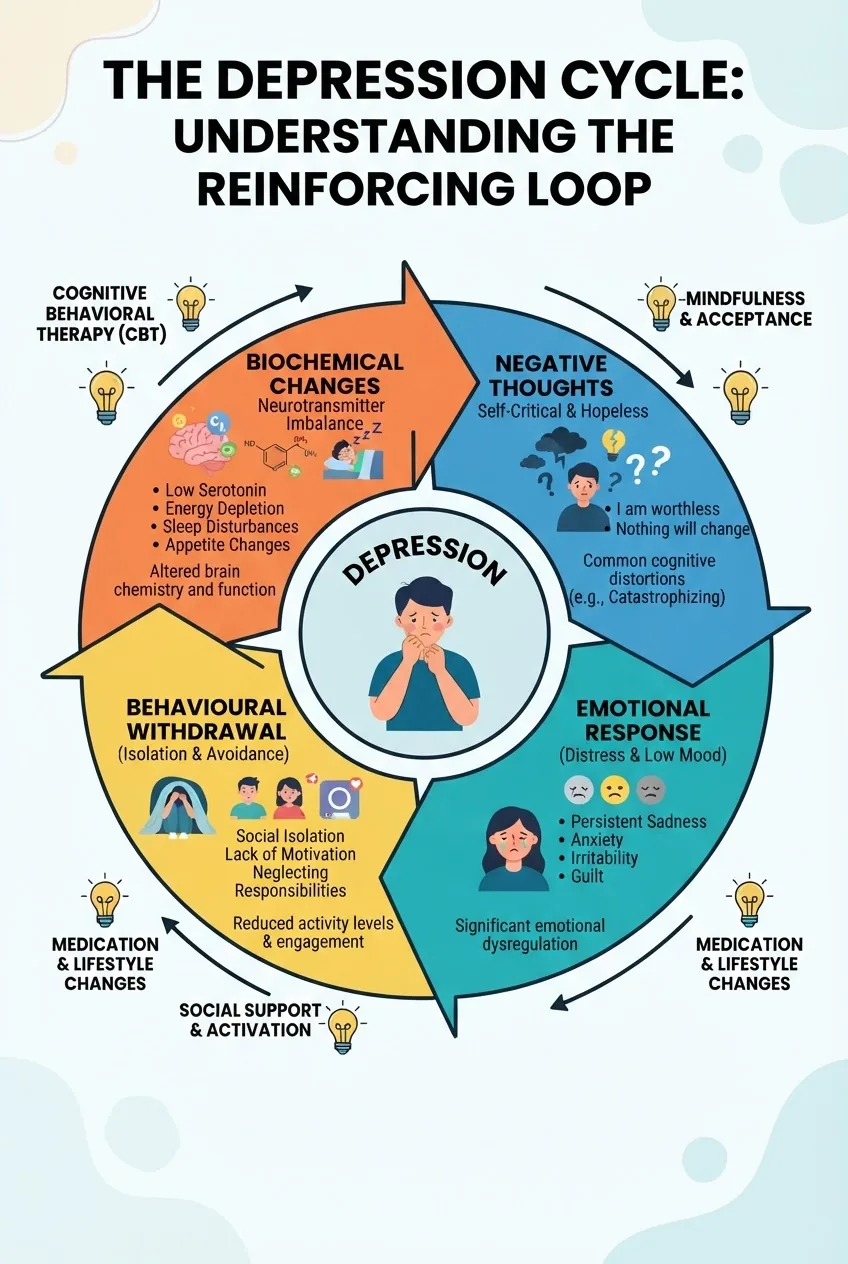
This cycle functions across multiple interlinked layers:
- Cognitive layer: Negative thinking—such as catastrophising or overgeneralising—biases attention toward perceived threats and failure, lowering motivation and fostering hopelessness. These cognitive distortions become automatic, further validating negative beliefs.
- Emotional layer: Persistent emotional distress manifests as sadness, irritability, or anhedonia (loss of pleasure), impairing the ability to regulate emotions and increasing vulnerability to stress.
- Behavioural layer: Behavioural withdrawal reduces exposure to rewarding experiences and social support, further decreasing mood and limiting opportunities to build coping skills.
- Biological layer: Sleep disturbances, appetite fluctuations, abnormal cortisol rhythms due to HPA axis dysregulation, and neuroinflammation alter brain circuits managing reward and stress responses, making it harder to escape negative thinking patterns.
These components interact in a reinforcing loop: a stressor triggers a negative interpretation (A), which leads to avoidance behaviours (B). Avoidance limits corrective experiences, strengthening the negative interpretation (C), closing the cycle and maintaining depressive symptoms beyond the initial trigger.
At the neurobiological level, maladaptive plasticity in cortico-limbic brain circuits, reduced reward sensitivity in areas such as the ventral striatum, and prolonged stress response via HPA axis contribute to perpetuating depressive states. For detailed mechanisms, see the pathogenesis of depression.
In treatment-resistant depression, failed responses to standard therapies intensify feelings of hopelessness and avoidance behaviours, worsening the neurobiological dysregulation and increasing the relapse risk.
Key Components of the Depression Cycle
Answer: The depression cycle is sustained by multiple interacting components: cognitive distortions, emotional dysregulation, social isolation via behavioural withdrawal, and biochemical contributors. These factors worsen depressive symptoms unless addressed through tailored interventions.
Term: Emotional dysregulation is difficulty managing or returning to emotional baseline after intense feelings; biochemical contributors include neurochemical and hormonal imbalances impacting mood and energy.
- Cognitive distortions: These are automatic, biased thought patterns such as catastrophising, all-or-nothing thinking, or discounting positives. For example, exaggerating the likelihood of failure or interpreting ambiguous events as negative. Targeted in CBT, these distortions undermine adaptive coping. See atypical depression symptoms and treatment options for subtype distinctions.
- Emotional dysregulation: Individuals may experience intense emotions that are difficult to control, such as difficulty calming down after anger outbursts, prolonged sadness, or sudden mood shifts. This affects motivation and increases susceptibility to stress-related negative cognition.
- Behavioural withdrawal / social isolation: Reduced engagement in activities and social contacts leads to loss of positive reinforcement and corrective feedback, worsening mood and self-beliefs. For distinctions from fatigue symptoms, see distinguishing fatigue from depression.
- Biochemical contributors: Disruptions in sleep and circadian rhythms, hyperactivity of the HPA axis, neurotransmitter imbalances (serotonin, dopamine, norepinephrine), and chronic inflammation impair the individual’s capacity to shift negative mood states without treatment.
- Contextual stressors: Life events including interpersonal conflicts, economic pressures or ongoing stress contribute repeatedly by triggering downward mood shifts and maintaining the cycle.
- Treatment history and expectations: Previous unsuccessful treatments can increase hopelessness and influence help-seeking behaviour, particularly significant for treatment-resistant depression. For severe variants with psychotic symptoms, see psychotic depression characteristics and treatments.
- Protective and resilience factors: Positive social supports, effective problem-solving skills, and consistent adaptive routines serve as buffers, shortening episodes and reducing recurrence risk.
Clinical assessment prioritises which components predominate for each individual to guide personalised interventions—such as focusing on sleep normalization when circadian disruption is key or increasing activity when behavioural withdrawal dominates.
Identifying Your Personal Depression Cycle
Answer: Understanding and interrupting your depression cycle starts with detailed self-monitoring of moods, thoughts, behaviours, and triggers over several weeks. Identifying early warning signs, common cognitive distortions, and activity patterns enables creation of a personalised cycle diagram to guide timely, targeted intervention.
Term: Self-monitoring involves regularly recording symptoms, moods, and behaviours; mood tracking logs emotional states over time to detect patterns and fluctuations.
- Start a structured mood log: For 4–6 weeks, record daily mood ratings (0–10 scale), sleep quality, activity levels, social interactions, and notable thoughts using simple tools such as paper journals, spreadsheets, or apps. Include columns for stress triggers and coping responses to capture context.
- Identify recurring patterns: After 2–3 weeks, review entries to highlight repeated antecedents (e.g., withdrawal following conflicts) and consequences (e.g., increased negative self-talk or sleep latency changes).
- Map cognitive distortions: Annotate automatic thoughts linked to low mood periods and classify distortions such as catastrophising, discounting positives, or mind-reading to increase awareness.
- Spot early warning signs: Notice subtle changes such as reduced interest, restless or insufficient sleep, minor social withdrawal or heightened self-criticism. These personal red flags indicate the need for early action.
- Create a one-page cycle diagram: Visually link triggers → thoughts → feelings → behaviours → physiological responses, and alongside each link, note two small achievable actions like “call one friend” or “go for a 10-minute walk” to interrupt the cycle effectively.
- Use validated tools: Instruments such as the PHQ-9 and GAD-7 can quantify symptom severity and monitor changes over time. Discuss rising scores with a clinician to inform treatment adjustments.
If you are functioning well in work or study but suspect mood difficulties, monitor for subtle signs like decreased focus, missed deadlines, or low-level avoidance behaviours. See high functioning depression symptoms for detailed examples.
Practical tip: Maintain a weekly behavioural activation checklist. Choose three small achievable activities daily, then compare activity levels with mood scores weekly. Often, increased activity precedes mood improvement.
Strategies to Break the Vicious Cycle of Depression
Answer: Effective interruption of the depression cycle involves a stepped-care approach—a systematic, graduated treatment model starting with simpler interventions and escalating as needed. This combined approach encompasses behavioural activation, cognitive restructuring (CBT), mindfulness practices, sleep and lifestyle normalization, medication adherence, and clinical escalation for complex cases.
Term: Stepped-care refers to providing the least intrusive, most effective treatment first, progressing to more intensive interventions if necessary.
Behavioural activation is a structured therapy technique aimed at increasing engagement in rewarding activities; CBT targets maladaptive thoughts and behaviours through evidence-based psychotherapy.

Immediate, practical home-based steps (first 72 hours)
- Stabilise sleep-wake timing: Keep consistent bedtimes and wake times daily. Avoid long daytime naps, and expose yourself to natural light in the morning to reset circadian rhythms.
- Small graded activity plan: Schedule brief 10–20 minute activities such as a short walk, phone call, or meal preparation. Track completion visually with a checklist to foster accomplishment.
- Limit rumination windows: Allocate a fixed 20-minute period for worry or problem-solving, postponing unproductive thoughts outside this window to reduce excessive negative thinking.
- Social contact goal: Aim for one brief daily social connection, such as messaging or a 10-minute phone call, to counter isolation and promote reinforcement.
Evidence-based psychological methods
- Cognitive Behavioural Therapy (CBT): Focuses on identifying and challenging cognitive distortions. Practical tools include thought records where you note the situation, automatic thoughts, evidence for and against these thoughts, alternative balanced thoughts, and planned actions.
For example, a thought record entry might be: “Situation: missed work deadline → automatic thought: ‘I’m a failure’ → evidence for: ‘I did miss the deadline’ → evidence against: ‘I completed other tasks on time’ → alternative thought: ‘One missed deadline doesn’t define my worth’ → action: discuss workload with supervisor.” - Behavioural Activation: Targets re-engagement in meaningful and pleasurable activities to increase positive reinforcement, particularly valuable when withdrawal predominates.
- Mindfulness and Mindfulness-Based Cognitive Therapy (MBCT): Cultivate present-moment awareness and reduce rumination. Regular mindfulness practice helps regulate emotions and prevent relapse in recurrent depression.
- Problem-solving therapy: Assists in breaking the cycle by resolving specific stressors through structured steps, enhancing a sense of mastery and control.
Biological and lifestyle interventions
- Prioritise sleep hygiene: Maintain consistent sleep schedules, limit screen time before bed, seek morning light exposure, and address insomnia promptly with behavioural measures or Cognitive Behavioural Therapy for Insomnia (CBT-I) if necessary.
- Exercise: Engage in gradual, regular aerobic or resistance exercises 3–4 times per week. Exercise modulates neurochemistry, enhances reward processing, and improves mood.
- Nutrition and alcohol moderation: Stabilise blood sugar via regular meals and limit alcohol intake, which may worsen mood and disrupt sleep patterns.
Medication and adherence
When indicated, standard antidepressants help reduce symptom severity and interrupt biological perpetuation of depression. Adherence to prescribed doses and regular medical review improve outcomes. See the resource Treatment for Treatment Resistant Depression: Medication and Therapy for detailed medication strategies. Medication alone rarely breaks entrenched cognitive and behavioural patterns without concurrent psychotherapy.
Clinical steps for more entrenched cycles
- Stepped care: This systematic escalation starts from guided self-help and progresses to combined psychotherapy and pharmacotherapy or specialist interventions if minimal response occurs after 6–8 weeks.
- Targeted psychosocial interventions: Options include interpersonal therapy, schema therapy, or adjunctive neurostimulation, chosen based on personal history and treatment response.
- Relapse prevention plan: Develop concrete action steps linked to your personal early-warning signs including emergency contacts, medication management, and immediate therapy access.
Practical therapy exercises to disrupt patterns
- CBT thought record: A structured exercise to note situations, automatic thoughts, evaluate evidence, and develop balanced alternatives, promoting cognitive flexibility.
- Graded exposure/activity scheduling: Begin with very small achievable activity steps (5–10 minutes) and gradually increase to rebuild confidence and reinforcement.
- Mindfulness practice: Dedicate 10 minutes daily to focused attention exercises that help reduce rumination and improve emotional regulation.
Clinical evidence and prognosis
Randomised controlled trials and meta-analyses published in respected journals such as the Journal of Affective Disorders show CBT, behavioural activation, and combined treatments significantly reduce relapse rates. A 2024 industry report highlighted that combining psychotherapy with medication decreases recurrence risk more effectively than either treatment alone.
For a thorough discussion on long-term recovery timelines and prognostic factors, see can depression be cured?. For detailed treatment options, the major depressive disorder treatments guide offers current clinical pathways.
Practical clinical insight: If standard behavioural or psychological interventions show minimal progress after 4–8 weeks, escalating care is warranted as distinct mechanisms may maintain the depression cycle, especially in treatment-resistant depression cases.
Patient experience note: One individual shared, “Using a thought record helped me catch my negative assumptions in real time. At first, it felt tedious, but over weeks, I noticed a shift in how often and how strongly negative thoughts stuck with me.” Such tools support gradual, measurable improvements.
Role of Medication and Therapy in Interrupting the Cycle
Answer: Medication and psychotherapy have complementary roles in interrupting the depression cycle. Antidepressants target biological contributors such as neurotransmitter imbalances and sleep disturbances, while psychotherapy—particularly cognitive behavioural therapy and behavioural activation—addresses cognitive distortions and behavioural withdrawal. Combining these therapies achieves superior outcomes, notably in treatment-resistant depression.
Term: Antidepressants are pharmacological agents modulating neurotransmitters linked to mood regulation; psychotherapy refers to structured psychological treatments including CBT, interpersonal therapy, and behavioural activation techniques.
Australian clinical guidance recommends initial assessment with ongoing monitoring and pharmacotherapy when clinically indicated, alongside evidence-based psychotherapy for moderate to severe depression. For service-level recommendations, refer to the NSW Health mental health guidelines for assessment and treatment.
| Intervention | Primary target | Role in breaking cycle |
|---|---|---|
| Antidepressant medication | Biological contributors | Improves sleep and mood reactivity; reduces biological barriers to psychotherapy engagement |
| Cognitive Behavioural Therapy (CBT) | Cognitive distortions, behaviour | Teaches thought restructuring and behavioural activation to interrupt reinforcement loops and improve coping |
| Behavioural Activation | Behavioural withdrawal | Directly increases positive reinforcement and counters avoidance behaviours |
| Adjuncts (ECT, neurostimulation) | Severe treatment-resistant biology | Rapid symptom reduction in selected cases, facilitating effective psychosocial interventions |
Clinical decision-making aligns with Australian clinical practice references and DSM-5 diagnostic frameworks, guiding stepped-care pathways and pharmacotherapy algorithms. For detailed protocols, visit the Treatment for Treatment Resistant Depression: Medication and Therapy resource.
Clinical insight: Medication often reduces biological inertia—improving sleep, concentration, and appetite—allowing more effective participation in CBT and behavioural activation. Complex cases benefit from multi-modal approaches and specialist psychiatric review.
When to Seek Professional Help: Avoiding Cycle Entrapment
Answer: Early professional intervention prevents cycle entrapment. Seek help when early warning signs worsen, daily functioning diminishes, or self-help efforts over several weeks fail. Crisis indicators such as suicidal ideation require immediate assistance to ensure safety and access to effective therapies.
- Immediate crisis: Any thoughts of self-harm or harming others necessitate urgent contact with emergency services or crisis support lines.
- Escalating symptoms: Worsening mood disturbances, persistent sleep or appetite changes, marked social withdrawal, or growing hopelessness warrant professional consultation with a GP or psychologist.
- Poor response to self-help: If minimal improvement occurs after consistent behavioural or psychological strategies for 4–8 weeks, clinical reassessment is essential.
- History of severe episodes: For individuals with past hospitalisations, psychotic features, or suicidal attempts, specialist psychiatric input and relapse prevention planning are critical.
- Relapse prevention: Create and regularly update a personalised plan with your healthcare provider to activate support at first signs of symptom return.
For mental health service navigation within New South Wales, see the NSW Health mental health guidelines and resource directory. Always prioritise safety: if uncertain, contact local urgent care or crisis lines immediately.
Maintaining Progress and Preventing Relapse
Answer: Sustained recovery depends on consolidating coping skills, ongoing mood monitoring, maintaining regular social and activity routines, adherence to treatment plans, and implementing a personalised relapse prevention strategy with clear action steps at early warning signs.
Long-term success involves behavioural routines and vigilance in detecting subtle symptom changes.
- Structured maintenance plan: Schedule weekly activity, monthly symptom monitoring, and quarterly clinical review appointments to sustain gains.
- Skills consolidation: Continue CBT exercises, maintain thought records, and practice mindfulness regularly—even during periods of wellness—to reinforce resilience.
- Support networks: Engage frequently with trusted family, friends, and peer-support groups to mitigate isolation and foster coping.
- Medication review: Follow professional guidance regarding continuation or cautious tapering of antidepressants, as abrupt changes may trigger relapse.
- Monitoring and early action: Use a personally tailored checklist to identify early warning signs and implement predetermined response steps such as contacting a clinician or increasing therapy frequency.
Checklist for weekly maintenance:
- Complete three planned meaningful activities
- Engage in two brief social contacts
- Practice 10 minutes of mindfulness or exercise daily
- Record weekly mood ratings and complete PHQ-9 assessments monthly
- Contact your clinician immediately if warning signs appear
For advanced relapse prevention strategies in severe cases, refer to specialist guidance at Severe Depression Relapse Prevention.
Patient experience note: Many people report progress as non-linear, with temporary setbacks common in the recovery journey. Normalising these fluctuations while using a relapse prevention plan enhances long-term maintenance and prevents full episodes.
Final takeaways: The depression cycle is an interconnected system of thoughts, feelings, behaviours, and biological factors. Effective management integrates self-monitoring, behavioural activation, evidence-based psychotherapy, and appropriate medication. Early identification of warning signs, coupled with a personalised relapse-prevention plan, substantially improves outcomes. To begin, consider initiating mood tracking and discuss these findings with your GP or mental health clinician to develop a stepped-care treatment plan tailored to your needs.
If you need assistance mapping your personal depression cycle or formulating a relapse prevention strategy, contact a local healthcare provider for comprehensive assessment and personalised stepped-care management.
Frequently Asked Questions
- What exactly is the depression cycle and how does it work?
- The depression cycle is a recurrent feedback loop where negative thinking leads to withdrawal, which reduces positive reinforcement and alters sleep and neurochemistry, all reinforcing low mood. Interrupting any link—be it thought, behaviour, or biological—can weaken the loop and enable recovery.
- How does the vicious cycle of depression differ from regular depressive episodes?
- The vicious cycle emphasises self-reinforcing interactions between thoughts, behaviours, and biological factors that sustain symptoms beyond a discrete episode. In contrast, a single depressive episode may resolve without such entrenched feedback. Cycles increase relapse risk and often require targeted interruption strategies.
- What are the main causes that contribute to the depression cycle continuing?
- Persistent cognitive distortions, behavioural withdrawal, sleep and circadian disruption, chronic stress, and neurobiological changes such as HPA-axis dysregulation interact to perpetuate the cycle. Past treatment failures and social isolation further entrench these patterns.
- How can I identify if I am stuck in a depression cycle?
- Tracking daily mood, sleep, activity levels, and automatic thoughts over several weeks can reveal repeated patterns—like withdrawal after stress, persistent negative self-talk, and decreasing activity—indicative of a self-sustaining depression cycle that needs active intervention.
- What practical steps can I take to break the depression cycle at home?
- Begin by stabilising sleep patterns, implementing graded behavioural activation with small daily tasks, limiting rumination time, ensuring brief daily social contact, and engaging in mindfulness exercises. Complement these with CBT thought records to challenge negative thoughts, and seek professional care if progress stalls.
- How long does it typically take to see improvement after starting treatment to break the cycle?
- Behavioural changes and CBT techniques generally lead to measurable improvement within 4 to 8 weeks. Medication effects vary but typically begin to show benefit after 4 to 6 weeks. Combined psychological and pharmacological treatments often accelerate recovery and reduce relapse risk when used consistently.
- What should I do if my usual strategies to break the depression cycle are not working?
- If structured self-help and therapy produce little change after 4 to 8 weeks, it is important to consult a healthcare professional for treatment review. They may recommend combined psychotherapy and pharmacotherapy or assess for treatment-resistant depression, which might require specialist interventions.
- How can I be sure the treatment recommended is safe and suited for my type of depression?
- Discussing your diagnosis, prior treatment responses, and medical history thoroughly with a clinician ensures appropriate care. Adhering to evidence-based guidelines, seeking second opinions for complex cases, and consulting authoritative resources like DSM-5 frameworks and Australian health guidelines help secure safe, tailored treatment.