

Pathogenesis depression describes the biological, psychological and social processes that produce and sustain depressive disorder, implicating neurotransmitter changes, HPA axis dysregulation, neuroinflammation, neuroplasticity loss and gene–environment interactions; understanding these mechanisms clarifies why some patients develop treatment-resistant depression and guides targeted clinical strategies.
Introduction to Pathogenesis of Depression
Answer: Pathogenesis of depression is the mechanistic development of depressive illness—how molecular, physiological and psychosocial factors interact over time to cause persistent mood, cognitive and functional impairment.
Term: Pathogenesis — the biological and mechanistic processes by which a disease develops and progresses.
This section summarises core concepts clinicians and informed patients need to interpret downstream sections. Pathogenesis integrates multiple domains:
- Biological systems: neurotransmitters, hypothalamic-pituitary-adrenal (HPA) axis, immune signalling and neuroplasticity.
- Genetic and epigenetic susceptibility: inherited risk alleles and experience-driven gene regulation.
- Environmental/psychosocial triggers: trauma, chronic stress, socioeconomic adversity and social isolation.
The multifactorial model explains heterogeneity in onset, course and treatment response; for local epidemiology context, see depression prevalence in Australia, and for clinical diagnostic framing see depression DSM-5 criteria, depression synonyms and DSM-5 depressive disorders overview.
Transition: The next section examines biological mechanisms—molecular to circuit-level processes—driving depressive pathophysiology and linking to treatment resistance.
Biological Mechanisms Underlying Depression
Answer: Depression arises from interacting biological mechanisms—neurotransmitter imbalance, HPA axis dysfunction, neuroinflammation, and impaired neuroplasticity (notably reduced BDNF)—which together alter neural circuits in hippocampus and prefrontal cortex and increase risk of chronic, treatment-resistant illness.
Term: Neuroplasticity — the brain’s ability to reorganise synapses and networks in response to experience, learning or injury.
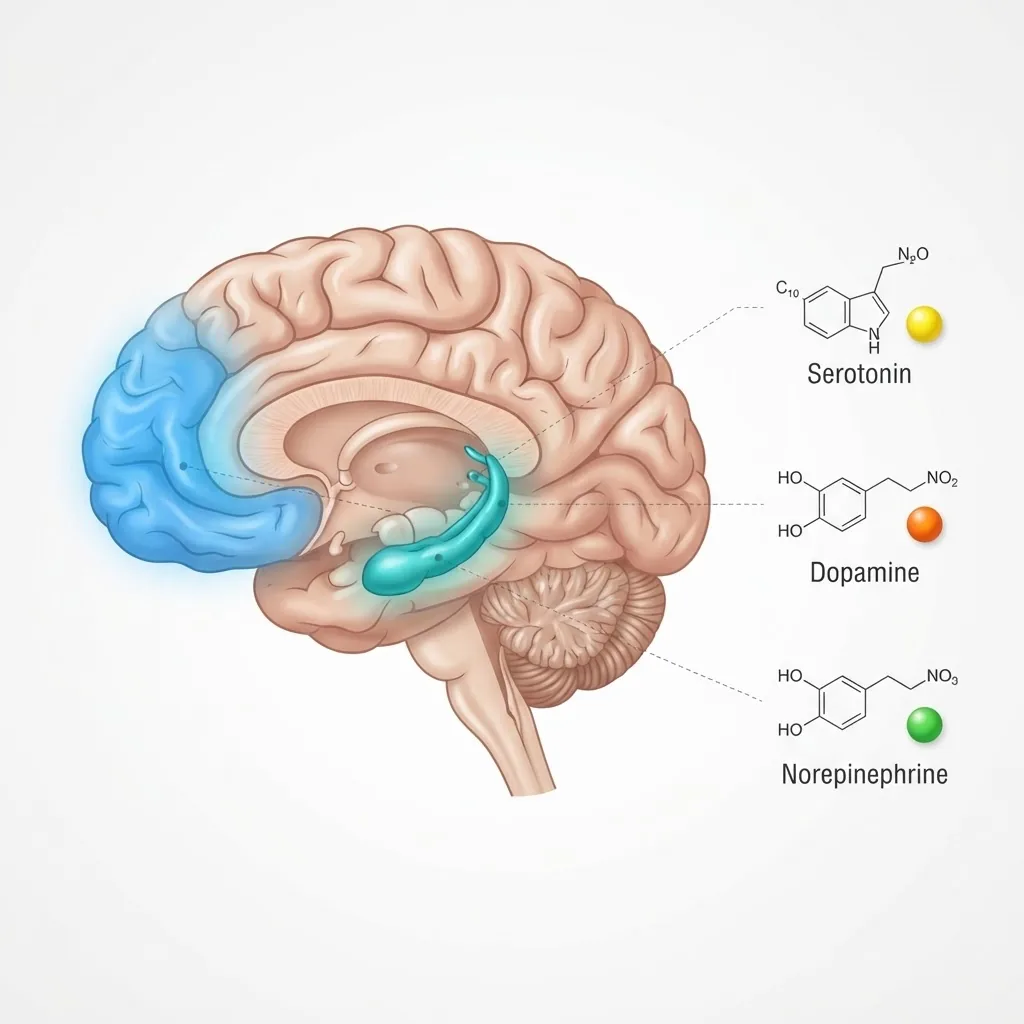
Neurotransmitter Systems and the Monoamine Hypothesis
Answer: Traditional monoamine theory posits that deficits in serotonin, norepinephrine and dopamine transmission contribute to depressive symptoms by altering mood, motivation and cognition, but modern evidence reframes monoamine changes as one node among stress, inflammation and plasticity networks.
Term: Monoamine hypothesis — the idea that reduced monoamine neurotransmitters (serotonin, norepinephrine, dopamine) underlie depression.
Mechanistic detail:
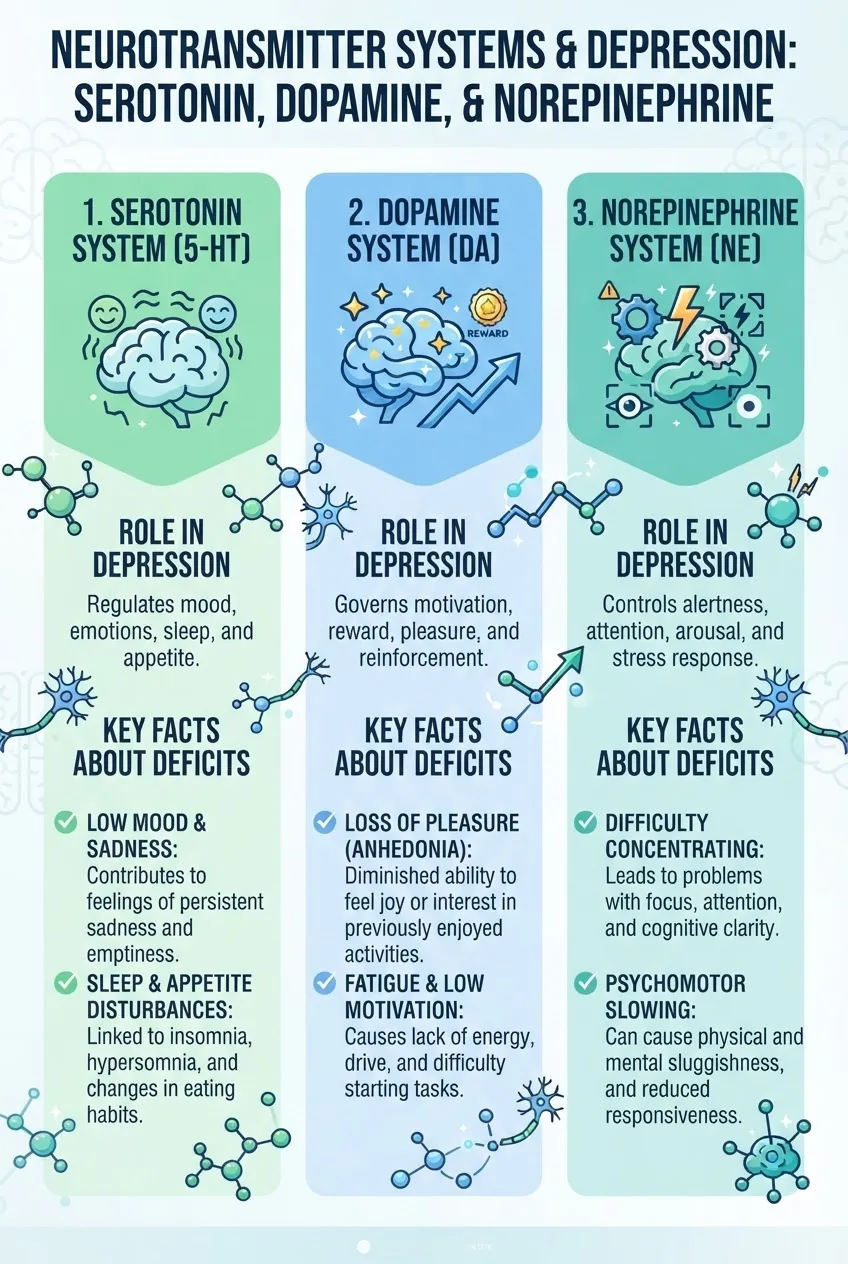
- Serotonin: implicated in mood regulation, emotional processing and sleep; serotonergic deficits are associated with affective bias and reduced resilience to stress.
- Norepinephrine: modulates arousal, attention and response to stress; reduced noradrenergic tone can cause psychomotor slowing and diminished concentration.
- Dopamine: central to reward, motivation and anhedonia; mesolimbic dopamine deficits correlate with reduced motivation and pleasure.
Contemporary synthesis:
- Monoamine changes are often secondary to upstream stressors (e.g., HPA activation) or inflammatory signalling that reduce synaptic monoamines via altered synthesis, reuptake and receptor regulation.
- Antidepressant mechanisms (SSRIs, SNRIs, atypical agents) partially restore monoamine signalling but clinical improvement requires downstream synaptic and circuit-level plasticity.
Clinical relevance: monoamine deficits explain some symptomatic domains (mood, sleep, appetite, motivation) but do not fully predict treatment response or resistance; combine assessment of neurotransmitter-related symptoms with biomarkers and functional imaging where available.
Research tools mentioned: cerebrospinal fluid monoamine metabolite assays, PET imaging for serotonin transporter binding, and plasma measures that are exploratory rather than diagnostic.
Symptom overlap: discuss fatigue pathways and diagnostic overlap in fatigue symptoms in depression.
HPA Axis Dysregulation and Stress Response
Answer: Chronic activation and dysregulation of the hypothalamic-pituitary-adrenal (HPA) axis—marked by altered cortisol rhythms and glucocorticoid receptor resistance—potently contributes to the pathogenesis of depression by impairing neurogenesis, increasing neuronal vulnerability and promoting inflammatory signalling.
Term: HPA axis — the hormonal stress-response system linking the hypothalamus, pituitary gland and adrenal glands to regulate cortisol.
Mechanisms:
- Acute stress activates HPA axis → cortisol release; chronic exposure leads to blunted diurnal variation or sustained hypercortisolemia in many patients.
- Glucocorticoid receptor resistance reduces negative feedback, prolonging cortisol exposure and altering hippocampal neurogenesis.
- Prolonged cortisol exposure causes dendritic atrophy in hippocampus and prefrontal cortex, impairing mood regulation and cognition.
Clinical measurement and tools:
- Salivary or serum cortisol assays and 24-hour profiles to detect flattened diurnal rhythms.
- Dexamethasone suppression tests historically used in research to characterise HPA feedback sensitivity.
Evidence and limits: Elevated cortisol is observed in subsets of depressed patients; however, heterogeneity is large and cortisol abnormalities interact with genetic susceptibility and inflammatory markers. For authoritative reviews see The Lancet Psychiatry and population guidance from Australian Government Department of Health.
Neuroinflammation and Immune System Involvement
Answer: Peripheral and central immune activation—measured by elevated cytokines, acute-phase proteins and microglial activation—contributes causally to depressive pathogenesis by disrupting neurotransmission, reducing neuroplasticity and modifying HPA axis function.
Term: Neuroinflammation — activation of immune signalling within the brain, including microglia and cytokine release that affect neuronal function.
Key mechanisms:
- Pro-inflammatory cytokines (IL-6, TNF-α, IL-1β) reduce monoamine availability by activating indoleamine 2,3-dioxygenase (IDO), shunting tryptophan to kynurenine and lowering serotonin synthesis.
- Cytokines impair synaptic plasticity and lower BDNF expression, contributing to circuit dysfunction.
- Microglial activation can cause synaptic pruning and excitotoxicity in vulnerable regions (hippocampus, PFC).
Biomarkers and measurement:
| Biomarker | What it indicates | Clinical utility |
|---|---|---|
| CRP (C-reactive protein) | Systemic inflammation | Predicts differential response to anti-inflammatory augmentation (exploratory) |
| IL-6, TNF-α | Pro-inflammatory cytokine activity | Research marker; not diagnostic |
| Microglial PET imaging | Central immune activation | Research only; informs pathophysiology and trials |
Clinical implications: elevated inflammation identifies a subgroup less likely to respond to standard monoaminergic treatments and more likely to benefit from adjunctive anti-inflammatory strategies under trial. However, routine clinical testing has limited actionable thresholds; consult current trials and guidance (see WHO mental health resources).
Neuroplasticity and Brain Structural Changes
Answer: Depression is associated with reduced neuroplasticity—lower BDNF expression and impaired synaptogenesis—plus measurable volume and connectivity changes in hippocampus and prefrontal cortex that reflect cumulative stress exposure and predict poorer functional recovery.
Term: BDNF (brain-derived neurotrophic factor) — a neurotrophin critical for neuronal survival, synaptic plasticity and learning.
Structural and functional findings:
- Hippocampus: reduced volume and impaired neurogenesis correlate with memory deficits and HPA axis dysregulation.
- Prefrontal cortex (PFC): decreased grey matter and hypoconnectivity with limbic regions correlate with impaired executive control and emotion regulation.
- Anterior cingulate cortex: altered activity predicts treatment response in some studies.
Mechanistic links:
- Stress and cortisol reduce BDNF transcription, causing synaptic loss and dendritic atrophy in hippocampus and PFC.
- Inflammation further suppresses BDNF and interferes with long-term potentiation.
- Antidepressant therapies and psychosocial interventions can restore BDNF and connectivity over weeks to months.
Measurement and timeline: MRI volumetrics and functional MRI reveal group-level changes; changes in BDNF and neuroplasticity markers can emerge within 4–12 weeks of effective interventions. Caveat: inter-individual variability limits diagnostic utility.
Transition: Biological mechanisms intersect with genetic and epigenetic predispositions that influence vulnerability and resilience; the next section reviews these contributions.
Genetic and Epigenetic Contributions to Depression Pathogenesis
Answer: Genetic predisposition confers modest but significant heritability for depression via numerous small-effect variants and rare loci, while epigenetic modifications mediate environmental impacts—together producing gene–environment interactions that alter neurobiology and clinical trajectory.
Term: Heritability — the proportion of observed variation in a trait (e.g., depression) attributable to genetic differences in a population.
Genetic architecture:
- Twin and family studies estimate major depressive disorder heritability at roughly 30–40%; individual common variants have small effect sizes.
- Genome-wide association studies (GWAS) have identified numerous loci associated with depression risk, implicating synaptic function, immune signalling, and neuronal development pathways.
- Candidate genes (e.g., SLC6A4, genes affecting HPA regulation) show modest associations and inconsistent replication.
Epigenetics and gene–environment interaction:
- Epigenetic mechanisms (DNA methylation, histone modification, microRNA) modify gene expression without changing DNA sequence and can be altered by early-life stress, trauma and chronic adversity.
- Example: childhood maltreatment associates with methylation changes in genes regulating stress response and BDNF expression, increasing adult depression risk.
- Epigenetic marks can be dynamic—partial reversal following effective therapy has been reported, supporting plasticity in molecular risk.
Clinical example (anonymised):
A 38-year-old with recurrent depression and early childhood adversity showed elevated inflammatory markers and blunted cortisol rhythm; family history suggested genetic risk—integrated management targeted inflammation and stress regulation with measurable symptom improvement over 12 weeks.
Research and limits: polygenic risk scores (PRS) improve population-level prediction but lack individual diagnostic precision; genetic testing is not yet standard for routine clinical decision-making. For genetic overlaps with bipolar disorder, consult bipolar depression diagnostic criteria when considering differential genetic profiles.
Transition: Genetic and molecular susceptibility unfolds in the context of environmental and psychosocial exposures—next we review those contributors and how they drive pathogenesis.
Psychosocial and Environmental Factors Affecting Development of Depression
Answer: Environmental stressors—trauma, chronic life stress, socioeconomic disadvantage and social isolation—act as proximate triggers and chronic drivers of depression by repeatedly activating the HPA axis, altering immune signalling, and producing epigenetic changes that lower resilience.
Term: Psychosocial factors — social and psychological influences such as life events, relationships, employment and socioeconomic status that affect mental health.
Major contributors:
- Acute trauma (e.g., interpersonal violence) can precipitate initial episodes via stress sensitisation and learned helplessness processes.
- Chronic stressors (caregiving burden, financial hardship) maintain HPA activation, increase inflammation and impair sleep—sustaining pathophysiological cascades.
- Socioeconomic disadvantage and social isolation magnify risk and reduce access to buffering supports.
Mechanistic connections:
- Repeated stress potentiates HPA dysregulation and reduces BDNF, leading to structural changes in hippocampus and PFC.
- Stress interacts with genetic vulnerability through epigenetic modifications that alter stress-response genes.
- Psychosocial adversity predicts persistent inflammation and poorer treatment outcomes in many cohorts.
Clinical links and differential presentations:
- Some depression subtypes show particular sensitivity to psychosocial triggers; when discussing subtype-specific triggers, see atypical depression symptoms and treatment.
- Persistent stress can create a self-reinforcing depression cycle of behavioural withdrawal, reduced activity and worsening neurobiology.
Assessment tools: structured psychosocial history, validated stress and trauma scales, and social determinants screening are essential to map environmental drivers and guide targeted psychosocial interventions.
Transition: Pathogenesis concepts inform management choices—especially in treatment-resistant depression where standard interventions may fail without mechanistic tailoring.
Clinical Implications of Pathogenesis in Treatment-Resistant Depression
Answer: Understanding pathogenesis guides stratified approaches for treatment-resistant depression (TRD), including biomarker-informed augmentation (anti-inflammatory strategies, HPA modulation), neurostimulation targeting dysfunctional circuits, and precision psychotherapy addressing stress-related drivers to improve outcomes.
Term: Treatment-resistant depression — depression that fails to respond adequately to at least two evidence-based antidepressant trials of adequate dose and duration.

Clinical principles derived from pathogenesis:
- Phenotype stratification: identify inflammatory, HPA-dysregulated, or neuroplasticity-impaired subtypes to guide augmentation or alternative modalities.
- Multimodal interventions: combine pharmacological, neurostimulatory and psychosocial treatments for circuit restoration rather than monoamine-only focus.
- Biomarker-informed decisions: use CRP, cortisol profiles and neuroimaging selectively to inform trials and eligibility for experimental therapies.
Selected treatment implications (bullet list):
- Inflammation-elevated patients: consider anti-inflammatory augmentation or referral for clinical trials targeting cytokine pathways.
- HPA-dysregulated profiles: therapies aiming at stress regulation (psychotherapy, adjunctive medications affecting cortisol pathways) may be prioritized.
- Low BDNF/neuroplasticity: consider interventions that enhance synaptogenesis (ketamine/esketamine where indicated, neurostimulation, exercise prescription).
- Circuit dysfunction: consider targeted neurostimulation (rTMS, ECT) for PFC–limbic dysconnectivity.
- Complex psychosocial drivers: integrate social, occupational and trauma-focused therapy to remove sustaining inputs.
Practical case vignette (anonymised):
A 52-year-old with recurrent TRD, elevated CRP and persistent anhedonia had partial SSRI response. Biomarker-informed augmentation with an anti-inflammatory agent in a supervised trial plus rTMS to dorsolateral PFC and graded behavioural activation produced significant remission at 10 weeks.
Clinical workflow recommendations:
- Comprehensive re-evaluation of diagnosis and adherence, ruling out bipolar depression and medical mimics (refer to bipolar depression diagnostic criteria).
- Obtain targeted biomarkers (CRP, fasting labs, cortisol profile) and consider neuroimaging if structural pathology suspected.
- Apply mechanistic augmentation: anti-inflammatory, HPA-targeting, or neuroplasticity-enhancing strategies guided by the dominant pathophysiology.
- Consider advanced interventions: rTMS, ECT, ketamine/esketamine programs where indicated, and inclusion in clinical trials for novel biologics.
- Address psychosocial drivers concurrently (trauma therapy, social prescriptions, vocational rehabilitation).
Linking to treatment resources: For detailed practical strategies and medication/therapy options informed by pathogenesis, see the pillar on treatment for treatment resistant depression. Additional resources for phenotype-specific management include high functioning depression management, major depressive disorder treatment, psychotic depression treatment options, and relapse prevention resources such as severe depression relapse prevention.
Special considerations:
- High-functioning or subthreshold patients may mask biological severity; tailored assessment is essential (see high functioning depression management).
- Medication and therapy choices should reflect pathophysiology; for a pragmatic overview see medication and therapy for treatment resistant depression.
- Coordinate multidisciplinary care, including psychiatry, psychology, primary care, social work and specialised services for inflammation- or HPA-targeted trials.
Limitations and evidence caveats: biomarker thresholds and mechanistic stratification remain investigational; many augmentation strategies are supported by emerging trial data but lack definitive large-scale guideline endorsement. According to a 2024 Australian Government mental health report, implementation of biomarker-guided psychiatry is an evolving priority with pilot programs underway.
Transition: Ongoing research aims to deliver more precise biomarkers and therapies—next we summarise future directions.
Future Directions and Research in Depression Pathogenesis
Answer: Future research focuses on validating biomarkers, refining precision psychiatry algorithms, developing targeted immunomodulators and neuroplasticity enhancers, and conducting stratified clinical trials to test mechanism-led interventions with the aim of improving remission rates and answering whether durable cures are possible.
Term: Biomarker — an objectively measured indicator of biological or pathogenic processes that can inform diagnosis, prognosis or treatment selection.
Key research avenues:
- Biomarker panels combining inflammatory markers (CRP, cytokines), HPA measures and neuroimaging signatures to stratify patients for trials.
- Novel therapeutics: cytokine antagonists, glutamatergic modulators, and agents that directly enhance synaptogenesis (e.g., fast-acting antidepressants).
- Precision psychiatry frameworks integrating polygenic risk scores, epigenetic profiles and longitudinal phenotyping to personalise care.
Clinical trial landscape and policy context: large adaptive trials are underway testing biomarker-guided approaches; authoritative overviews appear in peer-reviewed journals such as The Lancet Psychiatry, and global health agencies are prioritising mental health innovation (see WHO mental health).
Ethical and implementation challenges include equitable access, standardisation of biomarker assays and careful interpretation to avoid premature clinical adoption. For a patient-centred perspective on long-term outcomes and prospects of cure, consult can depression be cured.
Conclusion and clinical takeaways
Pathogenesis depression is multifactorial—neurotransmitter imbalances, HPA axis dysfunction, neuroinflammation, reduced neuroplasticity, genetic and epigenetic susceptibility, and psychosocial stressors interact to produce diverse clinical phenotypes. For clinicians, integrating mechanistic assessment (targeted biomarkers, cortisol profiling, imaging) with multimodal, personalised interventions improves the likelihood of success in treatment-resistant cases. Review the detailed treatment options and practical protocols in treatment for treatment resistant depression to translate pathogenesis insights into care plans.