

Psychotic depression is a severe form of major depressive disorder where depressive symptoms occur alongside psychosis — hallucinations or delusions — that are usually mood-congruent; it requires urgent psychiatric assessment and combined treatments such as antidepressants plus antipsychotics or electroconvulsive therapy for effective recovery.
Understanding Psychotic Depression
Answer: Psychotic depression describes major depression accompanied by psychotic symptoms (hallucinations or delusions) that typically align with mood; it is clinically distinct because psychosis intensifies risk, functional impairment and guides combined treatment approaches.
Term: psychotic depression — a subtype of major depressive disorder characterised by prominent depressive symptoms together with psychotic features such as hallucinations or delusions.
What is Psychotic Depression?
Answer: Psychotic depression is major depression with psychotic features; the psychosis is usually mood-congruent (themes match low mood) and can include auditory hallucinations or nihilistic delusions, making it more severe and more likely to need combined medical and procedural treatments.
Depression and psychosis are overlapping syndromes: depression affects mood, cognition and motivation while psychosis affects perception and belief. When they co-occur the clinical picture requires urgent risk assessment (suicide, self-harm, inability to self-care) and specialised management pathways used in Australian mental health services.

Clinical teams in Sydney often follow stepped-care pathways where initial assessments occur with a GP or community mental health team and escalate to psychiatric inpatient care or specialised clinics when psychosis or high risk is present. According to a 2023 Australian Government report, clear referral pathways reduce delays to effective treatment.
How Does Psychotic Depression Differ from Other Depressive Disorders?
Answer: Psychotic depression differs primarily by the presence of psychotic symptoms during depressive episodes; this contrasts with major depressive disorder without psychosis, bipolar depression (where mood swings include mania), and atypical depression which has different symptom patterns.
Brief comparison:
| Feature | Psychotic Depression | Other Depressive Disorders |
|---|---|---|
| Psychotic symptoms | Present (hallucinations/delusions) | Absent |
| Mood variability | Persistent severe low mood | May include atypical features or bipolarity |
| Treatment urgency | Higher (often combined therapies, ECT considered) | Standard antidepressant and psychotherapy routes |
When distinguishing subtypes clinicians screen for history of mania, psychosis outside mood episodes, and substance or medical causes before confirming a primary diagnosis.
For contrasts with low-mood subtypes see atypical depression symptoms and treatment.
Transition: Recognising the constellation of symptoms is the first clinical step; the next section lists symptom clusters clinicians assess.
Symptoms of Psychotic Depression
Answer: Symptoms combine core depressive signs (low mood, anergia, sleep/appetite change) with psychotic features (hallucinations, delusions), cognitive impairment and functional decline; assessment uses structured tools and risk screening to guide urgent care.
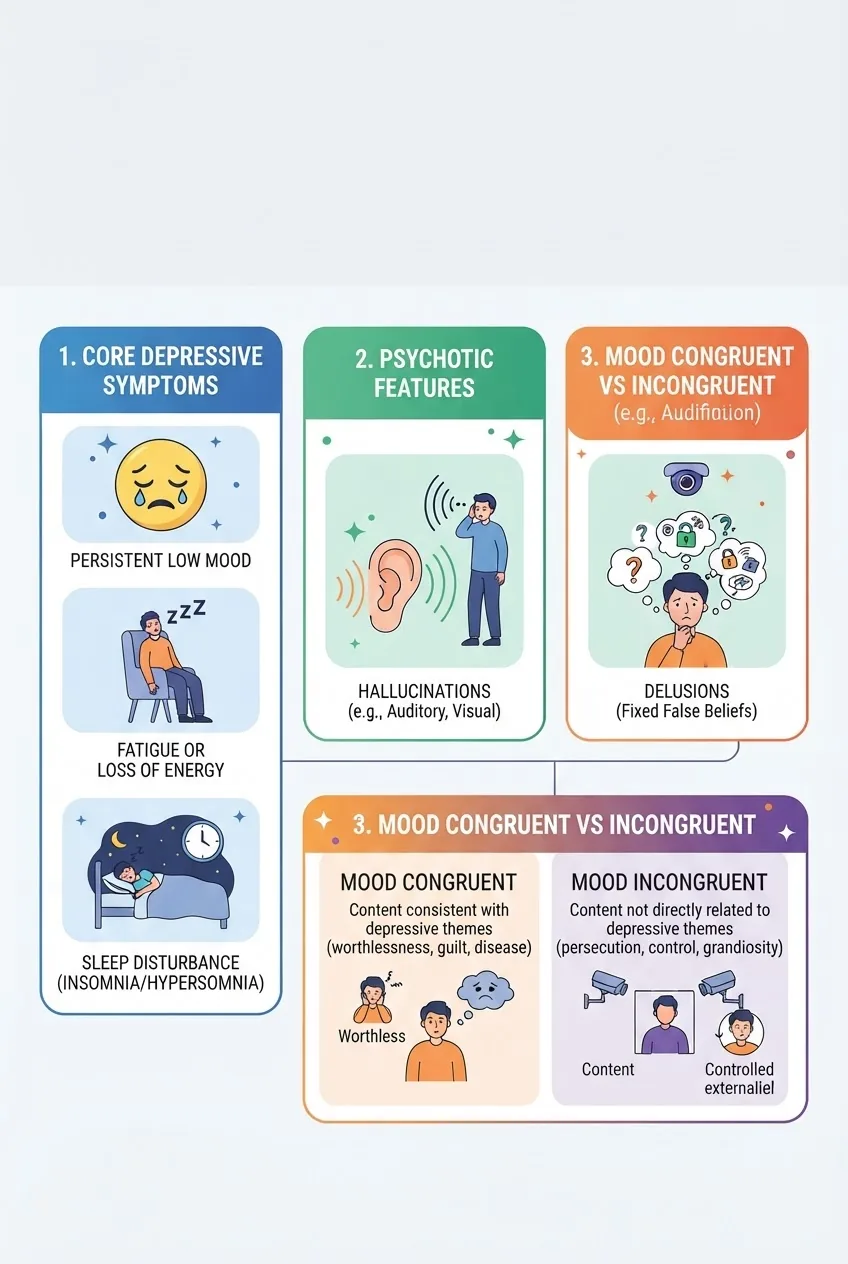
Core Depressive Symptoms
Answer: Core depressive symptoms include persistent low mood, reduced interest (anhedonia), fatigue, sleep and appetite disturbance, psychomotor changes, concentration problems, worthlessness/guilt, and suicidal ideation; these often precede or accompany psychotic features.
Term: anhedonia — marked loss of interest or pleasure in previously enjoyable activities.
- Low mood and withdrawn affect — persistent sadness or emotional numbness for most of the day, nearly every day.
- Anhedonia — inability to feel pleasure; withdrawing from social contact and routines.
- Fatigue and low energy — overwhelming tiredness that limits daily function; clinicians screen with validated scales for overlap with medical causes; see fatigue and depression symptoms.
- Sleep disturbance — insomnia or hypersomnia; changes are common and can worsen psychotic symptoms.
- Appetite/weight changes — significant loss or gain.
- Cognitive slowing — poor concentration, indecision, memory difficulties.
- Suicidal ideation or behaviour — elevated risk; presence of psychosis increases immediacy of risk assessment.
Clinicians often quantify severity with depression scales and cognitive testing to track response to treatment. For milder functional impairment comparisons see high functioning depression management.
Psychotic Features: Hallucinations and Delusions
Answer: Psychotic features in depression are mainly auditory hallucinations (hearing critical or mood-related voices) and mood-congruent delusions (guilt, worthlessness, nihilism); these are evidence-based markers guiding combined pharmacological and procedural treatments.
Term: hallucination — a sensory perception experienced without external stimulus; delusion — a fixed false belief held despite evidence to the contrary.
- Auditory hallucinations — voices commenting or criticizing; often mood-linked.
- Delusions of guilt or worthlessness — e.g., believing one is morally ruined or responsible for catastrophic events.
- Nihilistic or somatic delusions — believing internal organs are rotten or dead; these raise high-risk flags.
Mood Congruent vs. Mood Incongruent Psychotic Symptoms
Answer: Mood-congruent psychotic symptoms are thematically consistent with depressive content (guilt, punishment), whereas mood-incongruent symptoms (e.g., grandiosity) do not match depressive mood; this distinction affects differential diagnosis and prognosis.
Term: mood-congruent psychotic features — psychotic content that aligns with the individual’s current mood.
Mood-congruent symptoms typically indicate primary mood disorder with psychosis, while mood-incongruent symptoms prompt evaluation for schizoaffective disorder or primary psychotic disorders. Diagnostic nuance guides treatment choice and expected response.
Associated Cognitive and Functional Impairments
Answer: Psychotic depression often causes marked cognitive slowing, executive dysfunction and severe functional decline (work, self-care, social roles); these impairments are important targets for rehabilitation and psychosocial interventions.
- Decision-making and planning deficits
- Reduced daily living skills requiring carer input
- Occupational and social withdrawal; risk of chronic disability if untreated
Transition: Knowing symptom clusters supports targeted assessment; the next section outlines causes and risk factors clinicians consider when forming a diagnosis and management plan.
Causes and Risk Factors for Psychotic Depression
Answer: Causes are multifactorial: genetic predisposition, neurobiological changes (neurotransmitter imbalance), severe stressors, medical or substance triggers, and prior mood disorder history all increase risk for psychotic depression.
Term: neurotransmitter imbalance — alterations in brain chemical signalling (e.g., serotonin, dopamine) that affect mood and perception.
Key risk factors include:
- Biological vulnerabilities — family history of mood or psychotic disorders; twin and family studies suggest heritable risk.
- Neurochemical factors — dysregulation of monoamines and dopaminergic circuits implicated in psychosis and mood disorders; see pathogenesis of depression for deeper discussion.
- Severe psychosocial stressors — bereavement, trauma, social isolation and financial strain can precipitate episodes.
- Medical and neurological conditions — thyroid disease, neurodegenerative disorders and infections can present with depressive and psychotic symptoms.
- Substance use — intoxication or withdrawal (alcohol, stimulants) may cause or worsen psychosis.
- Older age — late-life depression with psychosis sometimes links to cerebrovascular disease or dementia.
According to a 2022 peer-reviewed study, biological and psychosocial contributors interact, with cumulative stressors increasing the likelihood of psychotic features emerging in a depressive episode.
Transition: Identifying causes and risk factors informs structured diagnostic assessment, which is the focus of the next section.
Diagnosis and Assessment
Answer: Diagnosis combines clinical interview, collateral history, standardised rating scales, medical and substance screens, and differential diagnosis to confirm major depression with psychotic features and rule out other causes.
Term: clinical interview — a structured conversation evaluating symptoms, onset, course, history and risk.
Key diagnostic steps clinicians follow:
- Comprehensive psychiatric history, current mental state exam and focused risk assessment (suicide, capacity, self-care).
- Collateral information from family or carers to confirm psychotic content and functional decline.
- Use of structured instruments (e.g., Hamilton Depression Rating Scale, Brief Psychiatric Rating Scale) to quantify severity.
- Medical evaluation including blood tests (thyroid, B12, liver, renal), toxicology screen, and neuroimaging when organic cause suspected.
- Consideration of DSM-5 diagnostic criteria and ruling out bipolar disorder, schizoaffective disorder or substance/medication-induced psychosis — see DSM-5 depression diagnostic criteria and the broader DSM-5 depressive disorders overview.
- When bipolar features are suspected, rule out with targeted history and consider bipolar depression diagnostic criteria consultation.
According to the DSM-5 and clinical guidance, psychotic symptoms must be present during the mood episode to classify as major depression with psychotic features; persistent psychosis outside mood episodes suggests alternative diagnoses.
Transition: Once diagnosed, treatment planning must balance efficacy and safety for an often severe and treatment-resistant presentation.
Treatment Options for Psychotic Depression
Answer: Effective treatment combines antidepressant and antipsychotic medication, and when indicated, electroconvulsive therapy (ECT); psychotherapy, psychoeducation and multidisciplinary care are essential adjuncts, especially in treatment-resistant cases.
Term: treatment-resistant depression — generally defined as inadequate response to two or more adequate antidepressant trials, though definitions vary with comorbidities.
Pharmacological Treatments
Answer: First-line pharmacological strategy for psychotic depression is a combination of an antidepressant and an antipsychotic; if inadequate, clinicians consider switching medications, optimising doses, or referring for ECT in line with Australian guidelines.
Combination therapy is supported by clinical trials showing higher remission rates than antidepressant monotherapy in psychotic depression. Typical approaches include:
- Antidepressant classes: selective serotonin reuptake inhibitors (SSRIs, e.g., sertraline, escitalopram), serotonin-norepinephrine reuptake inhibitors (SNRIs, e.g., venlafaxine), and older tricyclics for specific cases.
- Antipsychotics: second-generation antipsychotics (e.g., risperidone, olanzapine, quetiapine) are commonly used adjuncts; evidence supports their use to reduce psychotic symptoms and improve mood response.
- Augmentation strategies: for treatment-resistant psychotic depression clinicians may use higher-dose antidepressants, antipsychotic switching, or adjunctive agents under specialist supervision.
Medication trade-offs and side-effect management:
- Metabolic effects — atypical antipsychotics can cause weight gain, dyslipidaemia and glucose dysregulation; baseline and ongoing metabolic monitoring is standard.
- Extrapyramidal symptoms (EPS) — higher-potency antipsychotics risk EPS; clinicians may choose lower-risk agents or add anticholinergic medications briefly.
- Antidepressant side-effects — sexual dysfunction, GI symptoms, insomnia; dose adjustments or switching agents mitigate these.
- Adherence challenges — psychosis and cognitive impairment reduce adherence; practical steps include simplified dosing, family involvement, depot antipsychotics when appropriate, and clear psychoeducation.
According to a 2021 Australian Government clinical guidance document, combined antidepressant–antipsychotic therapy is a recommended initial pharmacological approach for psychotic depression presenting in hospital or community settings. Australian Government Department of Health mental health guidelines outline monitoring and consent pathways.
For deeper strategies on medication sequencing and psychotherapy in treatment-resistant contexts, see treatment for treatment resistant depression.
When comparing to non-psychotic major depression treatment pathways see major depressive disorder treatment.
Medication case example (anonymised, Sydney clinic): a 48-year-old presented with severe depressive symptoms and auditory hallucinations; after community psychiatry review, risperidone was added to an SSRI with close metabolic monitoring and weekly home nursing support, producing agitation reduction within two weeks and mood improvement by six weeks.
Electroconvulsive Therapy (ECT)
Answer: ECT is highly effective for severe psychotic depression, particularly when rapid response is needed or when pharmacotherapy fails; typical courses range 6–12 treatments with carefully monitored anaesthesia and consent procedures.
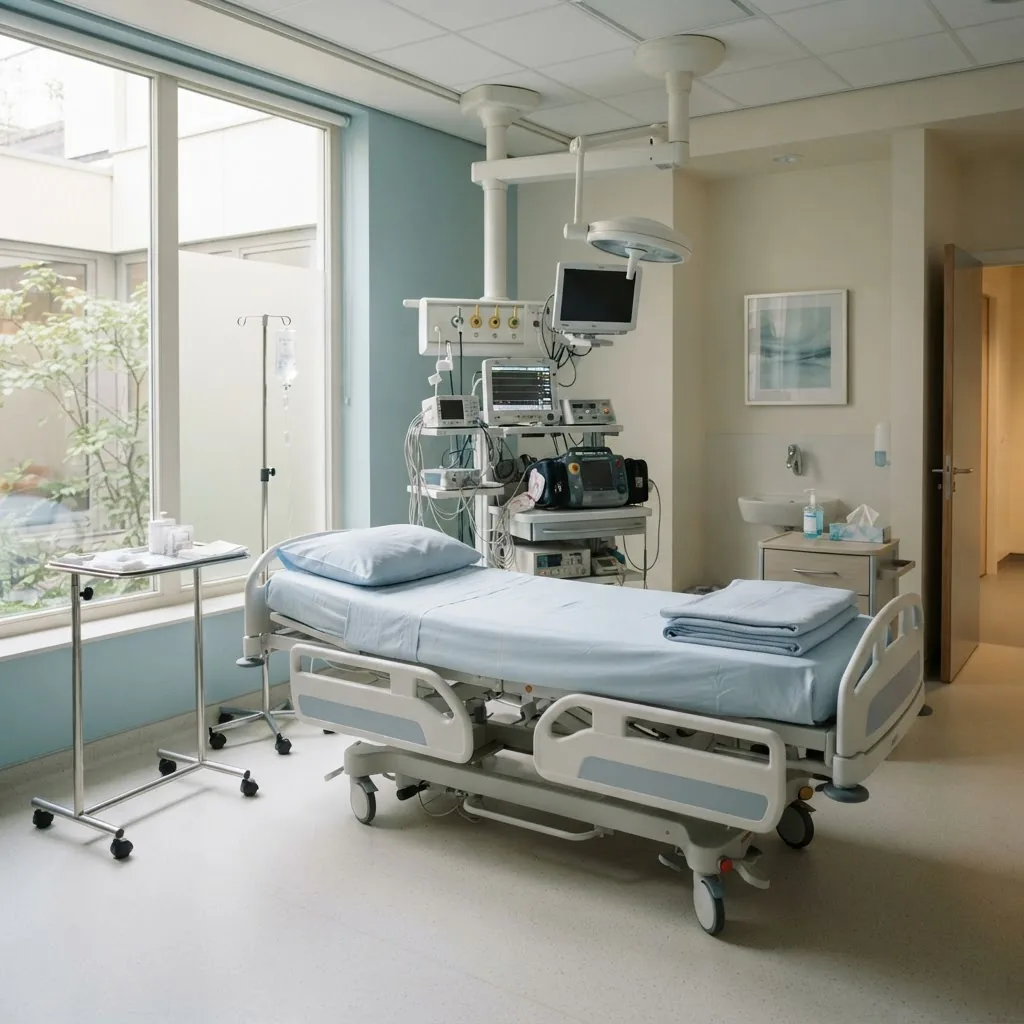
Term: ECT (electroconvulsive therapy) — a controlled medical procedure that induces brief seizures under anaesthesia to produce antidepressant and antipsychotic effects.
Indications and effectiveness:
- Severe suicidality or refusal of food/fluids, catatonia, or failure of combined pharmacotherapy.
- Clinical trials and meta-analyses show ECT often provides faster and higher remission rates for psychotic depression than medication alone; according to a 2018 peer-reviewed meta-analysis, ECT achieved superior short-term remission rates in psychotic depression cohorts.
- Typical outpatient or inpatient course: 2–3 sessions per week over 2–4 weeks, tailored to response.
Side effects and counselling: transient memory disturbance is the most common cognitive side-effect; informed consent, baseline cognitive testing and follow-up rehabilitation are standard. Australian hospitals have clear consent processes guided by federal and state clinical governance frameworks.
Transition: Combining medical and procedural interventions with psychological care and social support gives the best chance for sustained recovery.
Psychotherapy and Supportive Treatments
Answer: Psychotherapy (adapted CBT), family therapy, psychoeducation and rehabilitation improve adherence, coping and functional recovery, and are essential alongside pharmacological or ECT treatment.
Specific psychosocial strategies:
- Cognitive Behavioural Therapy for psychosis (CBTp) — adapts standard CBT to address distress from hallucinations/delusions and challenge maladaptive beliefs linked to depression.
- Family therapy and psychoeducation — educates carers on symptom management, medication adherence and crisis planning.
- Occupational therapy and supported employment — assist graded return to work and daily living skills.
- Peer support and community mental health services — provide lived-experience and practical assistance during recovery.
Psychotherapy is not a substitute for medical treatment when psychosis is active but is crucial during stabilization and relapse prevention phases.
Multidisciplinary Care Approach in Sydney, Australia
Answer: Multidisciplinary care—psychiatrists, psychologists, GPs, pharmacists, social workers and allied health—co‑ordinates medication, therapy, social supports and physical health monitoring in line with local clinical pathways.
Typical roles:
- Psychiatrist: diagnostic oversight, medication and ECT decisions.
- Psychologist: CBTp and recovery-focused therapy.
- GP: initial assessment, ongoing physical health monitoring and shared-care prescribing.
- Pharmacist: medication reconciliation and adherence strategies.
- Social worker/case manager: coordinate housing, financial aid and community support.
Experience example: a Sydney tertiary service runs a psychotic depression pathway where rapid referral to an inpatient unit for acute risk is followed by a 12-week outpatient combined program with psychiatry-led medication management and psychologist-delivered CBTp; this reduces readmissions and improves functional outcomes, according to a 2022 service evaluation.
External resources: for clinical guideline detail and local policy consult the Australian Government Department of Health mental health guidelines and international evidence summaries such as the National Institute of Mental Health.
Transition: When standard treatments do not produce remission, structured treatment-resistant strategies and monitoring are essential; the next section covers prognosis and long-term management.
Prognosis and Managing Treatment-Resistant Psychotic Depression
Answer: Prognosis varies: many achieve remission with combined treatments including ECT, but relapse risk is higher than non-psychotic depression; treatment-resistant cases require stepwise specialist interventions, relapse prevention plans and long-term monitoring.
Factors Influencing Recovery and Relapse
Answer: Recovery is influenced by episode severity, speed of treatment initiation, adequacy of combined interventions, comorbidities, social supports, and adherence; persistent psychosis or delayed treatment predicts worse outcomes.
Key influencers include:
- Early access to combined pharmacological and ECT interventions.
- Engagement with psychotherapy and social supports; strategies for breaking the depression cycle support relapse prevention.
- Management of medical comorbidity and substance use.
- Adherence to maintenance medication and follow-up.
- Presence of early-life adversity or chronic stressors increases relapse risk; for prevention guidance see resources on relapse management.
According to a 2020 peer-reviewed clinical review, relapse rates for psychotic depression are higher than for non-psychotic major depression, particularly where maintenance treatment is stopped prematurely; structured relapse prevention reduces recurrence.
Strategies for Treatment-Resistant Cases
Answer: For treatment-resistant psychotic depression, clinicians follow stepwise escalation: verify diagnosis, optimise combined medication, consider switching antipsychotics, use ECT if not yet tried or as relapse-management, and involve tertiary services for novel or adjunctive options.
Practical steps clinicians may take:
- Confirm adherence and adequate dosing; address side-effects and drug interactions.
- Consider therapeutic drug monitoring when available and reassess for bipolar spectrum features or organic causes.
- Switch or augment antipsychotic agents; consider depot formulations to improve adherence.
- Reassess candidacy for ECT if remission not achieved; ECT remains highly effective for resistant psychotic depression.
- Consider specialist referrals to tertiary mood disorder clinics or clinical trials for novel agents under supervision.
According to a 2021 international meta-analysis, combining strategies (pharmacological optimisation + ECT + psychosocial intervention) yields the best outcomes in treatment-resistant psychotic depression cohorts.
Importance of Ongoing Monitoring and Support
Answer: Long-term success depends on monitoring mental state, metabolic and cognitive side effects, social supports and functioning; maintenance medication and a written relapse prevention plan reduce recurrence.
Recommended monitoring includes regular psychiatric review, metabolic screening every 3–6 months for antipsychotic therapy, cognitive assessments post-ECT, and family-inclusive crisis planning. Practical tips for clinicians and families:
- Use shared-care plans between psychiatrists and GPs with documented medication and monitoring schedules.
- Set clear early-warning signs and rapid-access pathways for relapse (phone numbers, urgent review appointments).
- Provide psychoeducation about side-effect management to improve adherence.
When considering long-term outcomes patients and clinicians should balance relapse prevention with side-effect burden; decisions should be individualised with informed consent and regular review.
Questions about ultimate recovery and cure are common; see can depression be cured? for a detailed discussion of recovery trajectories.
Transition: For people seeking care, knowing local resources and referral pathways speeds access to appropriate multidisciplinary treatment.
Where to Seek Help in Sydney
Answer: Seek urgent assessment from a GP, local emergency department or community mental health service; specialist tertiary mood disorder clinics and private psychiatrists in Sydney provide multidisciplinary care for psychotic depression.
Local resources and referral options:
- Primary care (GP) for initial assessment, urgent referral and shared-care coordination.
- Public mental health community teams and hospital emergency departments for acute risk or severe psychosis.
- Private psychiatrists and specialised mood-disorder clinics for ECT, complex medication management and psychotherapy coordination.
- Support services such as Lifeline (13 11 14) and local peer-support groups.
For epidemiological context on service demand and prevalence, consult the national data: depression prevalence in Australia.
Transition: Below are concise FAQs addressing common immediate questions and steps to take.