

Depression synonyms are alternative words and phrases—clinical, diagnostic, and colloquial—used to describe depressive states; they range from formal labels like major depressive disorder to lay phrases like “low mood,” and choosing the right term depends on context, accuracy and respect for the person’s experience.
Understanding the Importance of Accurate Terminology for Depression
Accurate terminology matters because words shape diagnosis, treatment engagement and stigma; using precise terms improves clinical communication and supports better outcomes.
Clear, clinically accurate language helps clinicians communicate diagnoses and treatment plans, supports informed consent, and reduces misunderstanding between professionals and patients. For non-clinical settings, precise alternatives help describe experience without medicalising or minimising distress. This section explains how terms function in clinical communication, public discourse, and patient education.
Term: Major depressive disorder — a clinical diagnosis defined in the DSM-5 as a period of at least two weeks of depressed mood or loss of interest plus additional symptoms affecting function.
Language choices influence how people perceive severity and treatment necessity. For example, a clinician saying “major depressive disorder” signals a diagnostic threshold and treatment pathway; saying “feeling down” signals a transient state. Linking language to the depression cycle helps patients recognise patterns and seek care; see understanding the depression cycle for more on engagement strategies.
Experience-based examples: an anonymised consultation excerpt below shows respectful phrasing that retains clinical clarity.
Clinician: “Based on your symptoms, I’m considering major depressive disorder; this is a medical diagnosis that can guide treatment options. How does that wording feel to you?”
Patient (anonymised): “Saying ‘disorder’ felt scary, but when you explained it as treatment-focused I felt more hopeful.”
Policies and public health language (for example, Australian health communications) intentionally balance diagnostic precision and accessibility; see the Australian Department of Health guidance linked later for terminology standards.

Comprehensive List of Depression Synonyms and Alternative Terms
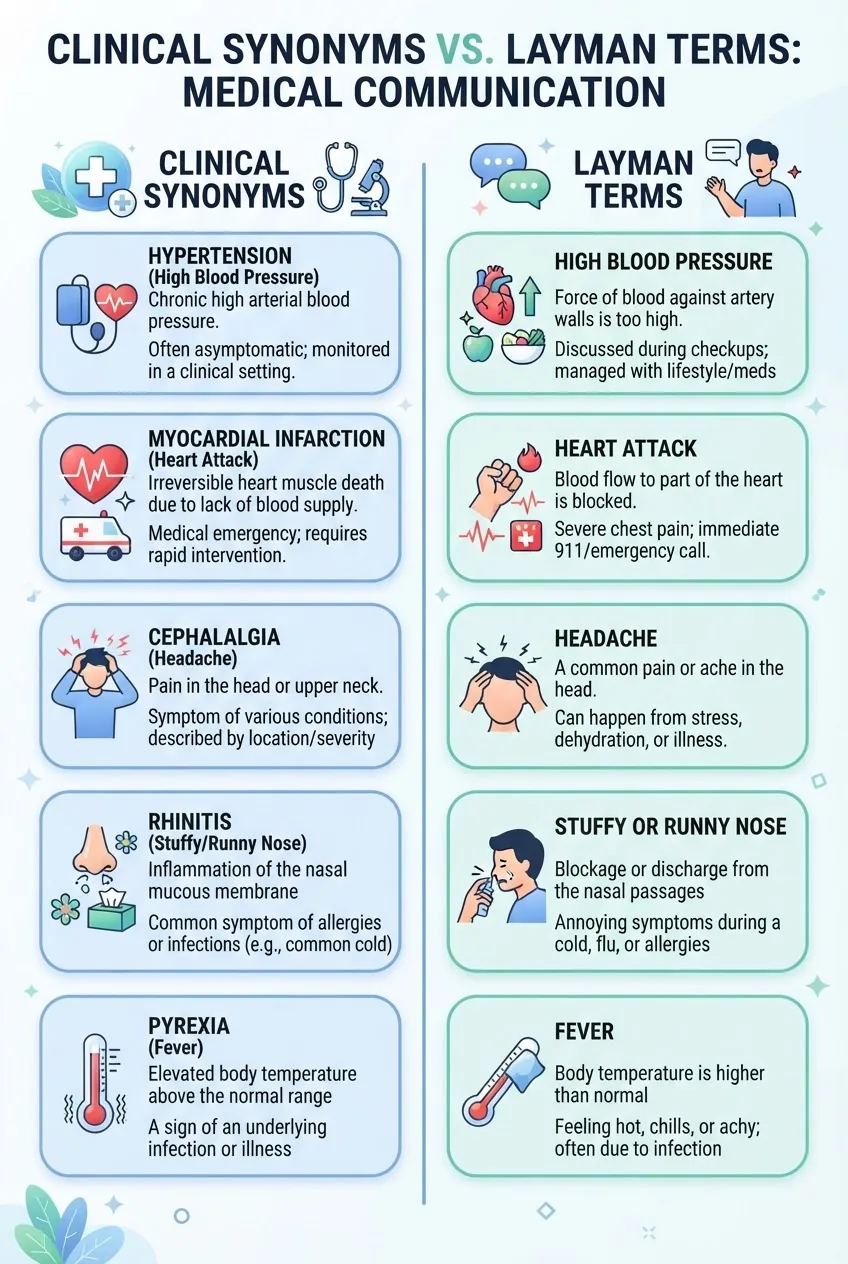
Below is a thorough, clinically oriented list of alternative words for depression, each with a concise explanation of meaning and typical contexts for use.
-
Major depressive disorder (MDD) — Clinical diagnosis per DSM-5 describing a cluster of symptoms (depressed mood, anhedonia, changes in sleep/appetite, etc.) lasting ≥2 weeks and causing functional impairment; used in records, referrals, and treatment planning.
Term: Major depressive disorder — see DSM-5 diagnostic criteria for wording and threshold.
Related resource: DSM 5 criteria for depression and persistent depressive disorder.
-
Persistent depressive disorder (dysthymia) — Chronic, lower-intensity depressive symptoms lasting ≥2 years (adult) or ≥1 year (child/adolescent); used clinically to indicate long-term mood disturbance.
Usage: clinical documentation and long-term management plans.
-
Depressive episode — A time-limited period meeting diagnostic symptom criteria; commonly used in bipolar and unipolar diagnoses.
See distinctions with bipolar depression DSM diagnostic criteria when episode framing is relevant.
- Major depressive episode — Synonymous with “depressive episode” when describing severity consistent with MDD criteria; used in clinical notes and research.
- Recurrent depression — Describes multiple discrete depressive episodes over time; signals relapse prevention considerations and different management strategies.
- Clinical depression — Lay-friendly phrase indicating symptoms meet clinical threshold; used in public-facing materials to bridge clinical and everyday language.
- Low mood — Colloquial term for transient or mild depressive feelings; non-pathologising and appropriate in everyday conversation or initial screening.
- Feeling down — Very common lay expression indicating short-term sadness or stress-related mood change; not diagnostic.
- Emotional distress — Broad descriptor covering sadness, anxiety, grief, or mental strain; used in psychosocial assessments and triage.
-
Mood disorder — Umbrella clinical category that includes depressive disorders and bipolar disorders; useful in diagnostic discussions and public education.
See DSM 5 depressive disorders overview for classification context.
- Major depressive affective disorder (older term) — Historical nomenclature sometimes encountered in older literature; replaced by MDD in DSM editions.
-
Atypical depression — A subtype characterised by mood reactivity, increased appetite or sleep, and interpersonal rejection sensitivity; used diagnostically and in research.
Clinical nuance: see atypical depression symptoms and treatment options for term-specific descriptions.
-
Psychotic depression — Severe depression with psychotic features (delusions or hallucinations); a specific clinical diagnosis requiring specialised care.
Context: see psychotic depression symptoms overview.
- Seasonal affective disorder (SAD) — Depression with a seasonal pattern, typically worse in winter months; used in primary care and psychiatry when pattern is clear.
- Postpartum depression — Depressive episode occurring after childbirth; a clinical specifier with specific screening and referral pathways.
- Adjustment disorder with depressed mood — Short-term depressed mood in response to an identifiable stressor; used when duration and severity do not meet MDD criteria.
-
High-functioning depression — Non-clinical descriptor for people who meet depressive criteria but maintain work/role functioning; often used in psychoeducation and peer discussions.
Clinical context: see high functioning depression management.
-
Treatment-resistant depression — When a depressive disorder fails to respond to adequate trials of two or more standard treatments; used by specialists and in research.
For treatment options: treatment for treatment resistant depression.
-
Depressive symptoms — Individual signs (sleep changes, anhedonia, fatigue) that may or may not meet criteria for a disorder; used in screening and symptom lists.
See symptom overlap discussions in differentiating fatigue from depression symptoms.
- Melancholia (melancholic depression) — A specifier indicating severe anhedonia, notable psychomotor changes, or biological symptoms; primarily clinical and used in specialised assessment.
- Despondency / despair — Literary or colloquial descriptors indicating severe sadness; useful in qualitative reports but not diagnostic.
- Blue — Informal, idiomatic term for sadness or short-term low mood; appropriate in everyday speech.
- Down in the dumps — Colloquial phrase denoting temporary sadness; not appropriate for clinical documentation.
- Emotional numbness — Descriptor for blunted affect or anhedonia; can be a symptom warranting clinical screening.
- Depressive disorder NOS (not otherwise specified) — Older classification for presentations not meeting other categories; largely superseded by DSM-5 specifiers.
-
Clinical terms from DSM-5 — Include major depressive disorder, persistent depressive disorder, and specifiers (with anxious distress, with psychotic features, seasonal pattern); these are preferred in diagnostic settings.
See DSM 5 depressive disorders overview for authoritative DSM terminology.
- Other everyday phrases — “Feeling overwhelmed,” “not myself lately,” and “struggling emotionally” are patient-centered phrases useful for initial engagement and screening.
Nuances and Usage Contexts of Alternative Terms
Different words for depression vary by clinical precision, stigma potential and situational appropriateness; choose terms to match diagnostic clarity and the listener’s needs.
Clinical terminology: when to use diagnostic labels
Answer: Use DSM-5 diagnostic terms (e.g., major depressive disorder, persistent depressive disorder, depressive episode) when documenting clinical findings, referring for treatment, or communicating with other professionals.
Clinical labels provide treatment direction, eligibility for services, and clarity for prognosis. However, clinicians should define terms simply for patients—e.g., “major depressive disorder: a pattern of symptoms affecting daily life” — and obtain informed consent before applying labels in documentation that may affect insurance or employment.
Colloquial and lay language: building rapport without minimising
Answer: Use lay phrases like “low mood” or “feeling down” in initial conversations or community settings to avoid intimidation while still validating distress.
These terms are less stigmatizing and can encourage disclosure. Follow up with clarifying questions to determine if symptoms meet clinical thresholds. Example clinician phrasing: “You say ‘feeling down’ — can you describe how it affects sleep, appetite or work?” This approach balances accessibility with diagnostic rigor.
Diagnostic vs symptom-focused language
Answer: Use symptom-focused language (e.g., “sleep problems, low energy”) when screening and diagnostic labels once thresholds are met; symptoms describe experience, diagnoses guide treatment.
Symptom descriptions help differentiate medical causes (hypothyroidism, medication side effects) from primary mood disorders; for example, consult guidelines when medical causes are possible. See clinical pathways in pathogenesis of depression clinical guide.
Subtype and specifier terminology
Answer: Use specifiers (atypical, psychotic, seasonal, postpartum) to convey treatment implications and expected course, and to match evidence-based interventions.
Specifiers signal likely response patterns and comorbidities; for example, atypical depression may respond differently to certain antidepressants and psychotherapies—see atypical depression symptoms and treatment options.
Language for severity and function
Answer: Distinguish severity (mild, moderate, severe) and functional impact (able to work, impaired) in language to guide care planning and communicate prognosis.
“High-functioning depression” suggests substantial internal distress despite preserved external roles; clinicians should avoid minimising this language in documentation to ensure appropriate support and treatment access—see major depressive disorder treatment strategies for treatment-relevance.
Special contexts: occupational, legal and insurance language
Answer: Use precise diagnostic terms with documented functional assessments for occupational or legal purposes; vague colloquialisms are insufficient.
For example, “moderate major depressive disorder with impaired concentration leading to inability to perform safety-sensitive tasks” is documentation that supports reasonable adjustments, whereas “feeling stressed” would not. Always explain implications to patients when recording such language.
Overlap with other constructs (anxiety, grief, fatigue)
Answer: Distinguish depressive disorders from anxiety disorders, grief reactions and medical causes by using targeted vocabulary and follow-up assessment questions.
For guidance on overlapping symptoms and differential diagnosis, see differentiating fatigue from depression symptoms and apply structured screening tools when needed.
Regional and Cultural Variations in Depression Vocabulary
Answer: Regional and cultural differences affect which terms are common and acceptable; Australian English often mirrors British usage but includes local phrases and public health framings.

Language usage varies: Australian clinical communication typically adopts DSM-5 diagnostic terms in services, while public campaigns favour accessible phrases like “feeling low” or “depression.” According to a 2023 Australian Government report on mental health communications, public materials emphasise plain language and destigmatising terms (source type: government report).
| Region / Context | Common Terms | Notes |
|---|---|---|
| Australia (clinical) | Major depressive disorder; persistent depressive disorder; depressive episode | DSM-5 terms in specialist and primary care documentation; public health prefers plain language. See depression prevalence statistics in Australia for context. |
| United States | Major depressive disorder; major depressive episode; clinical depression | DSM-5 standard terminology; public messaging varies by state health bodies. Source: national public health guidelines (source type: governmental guideline). |
| United Kingdom / Australia (lay) | Feeling low; depressed; low mood | Common in talk-based campaigns; less stigmatizing language encouraged in public materials (source type: NGO and government communication guidance). |
Cultural considerations: direct translations of “depression” may carry different connotations; working with interpreters and cultural liaison officers is essential when using diagnostic labels in multicultural contexts.
Ethical Considerations and Stigma Related to Language in Depression
Answer: Ethical communication uses language that preserves patient dignity, minimises stigma, and accurately represents clinical status; word choice can either encourage or deter help‑seeking.
Language shapes perception. Peer-reviewed research shows that stigmatizing labels reduce willingness to seek help (source type: 2021 peer-reviewed study). Clinicians must balance honesty with compassion: explain diagnostic terms, obtain consent for recorded labels, and avoid derogatory or minimising phrases (e.g., “lazy” or “just sad”).
Example – clinician-patient excerpt (anonymised): “I can see these symptoms have been persistent. I propose we consider a diagnosis of major depressive disorder because it will help access treatment. If you prefer different words, tell me and we’ll note your preference while still documenting the clinical findings.”
Ethical checklist for professionals:
- Explain diagnostic terms in plain language and document consent for labels.
- Use person-first language (e.g., “person with depression” rather than “depressed person”).
- Avoid slang that trivialises or pathologises (e.g., “crazy”, “psycho”).
- Respect cultural preferences for non-medical descriptors where clinically appropriate.
External guidance: the WHO provides language recommendations for mental health communications, and the NIMH outlines clinical definitions; consult these for policy-level language standards.
Authoritative resources: World Health Organization mental health guidance (source type: WHO guidance), NIMH definitions on depression (source type: national institute guidance), and Australian Government Department of Health mental health resources (source type: government resource).
How Accurate Language Supports Treatment and Patient Outcomes
Answer: Accurate, agreed-upon terminology improves treatment planning, adherence and shared decision-making, which can positively affect recovery trajectories, especially in complex cases like treatment-resistant depression.
Clear language reduces confusion about diagnosis and treatment steps. For example, telling a patient “you meet criteria for major depressive disorder, which is treatable with psychotherapy or medication” frames prognosis and encourages engagement. Explicit, nonjudgemental explanations are linked to higher adherence in clinical studies (source type: 2022 peer-reviewed adherence study).
Special case — treatment-resistant depression: using precise language is vital when changing care pathways. Explain what “treatment-resistant” means (failed adequate trials of two or more standard therapies), why advanced options are being considered, and how this changes monitoring. For more on options and how language shapes expectations, see treatment for treatment resistant depression.
Example workflow showing language impact:
- Screening: use symptom-focused terms to prompt disclosure (e.g., “Have you felt low energy or lost interest?”).
- Diagnosis: explain diagnostic label, criteria, and implications in plain language.
- Treatment negotiation: describe options, expected course, and monitoring in collaborative terms.
- Follow-up: use consistent terminology across clinicians to avoid confusion and ensure adherence.
When discussing prognosis, careful wording avoids deterministic statements that could reduce hope; for background on prognosis framing, see the informational discussion in informational guide on whether depression can be cured.
Summary and Practical Tips for Choosing Appropriate Terms
Answer: Match terminology to the audience and purpose—use DSM-5 terms for diagnosis and documentation, plain language for patient engagement, and culturally sensitive phrases in diverse settings.
- Define terms simply: always explain clinical labels in one sentence after use.
- Start with patient language: mirror the words the person uses, then clarify clinical meaning if needed.
- Prefer person-first phrasing: say “person with depression” rather than labels that reduce identity.
- Document precisely: use DSM-5 terms for referrals, legal/occupational notes, and treatment plans.
- Use specifiers when relevant: atypical, psychotic, seasonal, postpartum to guide care (see atypical depression symptoms and treatment options).
- Be culturally aware: collaborate with interpreters and cultural consultants when needed.
- When unsure, ask: “Which word would you prefer I use when describing how you’re feeling?”
Brief summary: Accurate terminology aligns clinical care, reduces stigma, and improves outcomes—use diagnostic terms for treatment planning and clear, respectful language for patient engagement. For clinical classification context, consult the DSM 5 depressive disorders overview.
Call to action:
If you’re a clinician, adopt clear explanatory phrases when diagnosing and document consent for labels; if you’re supporting someone, mirror their words and ask permission before applying clinical terms. For treatment options and next steps, review local resources or consult a specialist.